Hope Table Lamp: A Ceramic Gap That Shapes Light and Touch

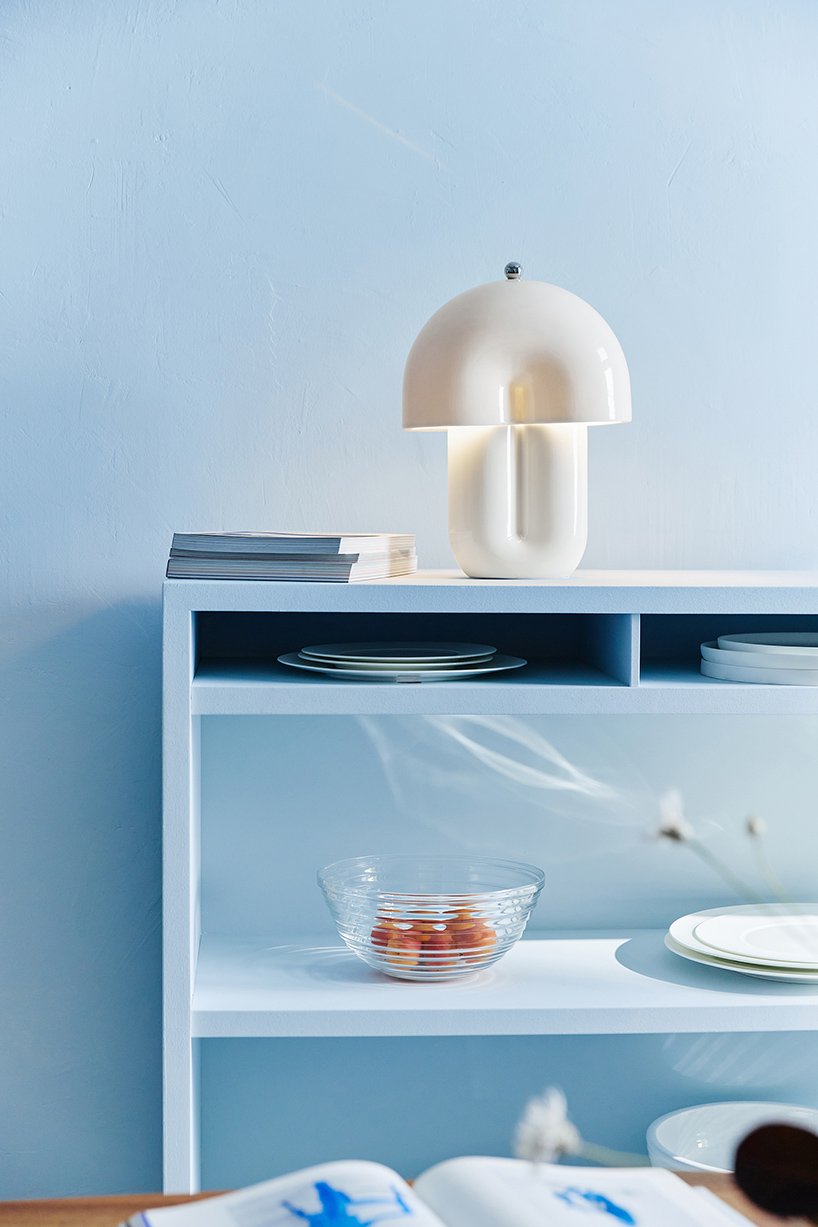
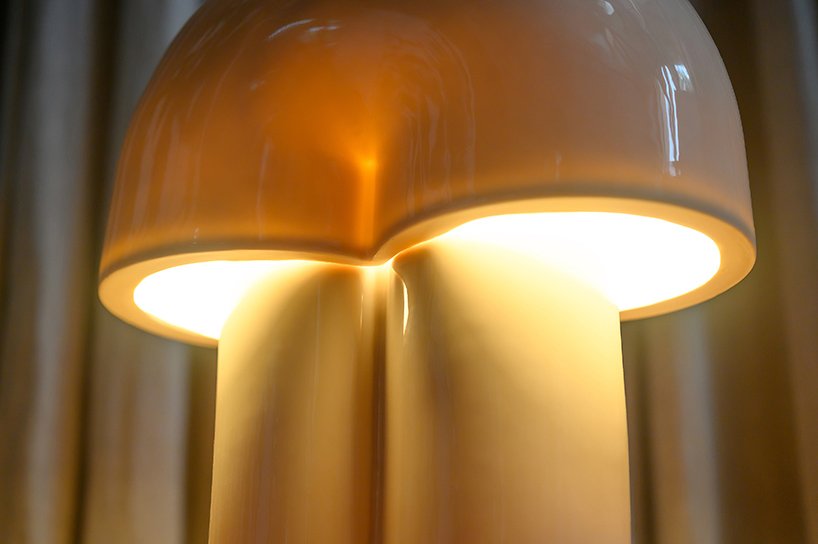
In the Hope table lamp, the shade and base read as parts of the same ceramic body. A narrow horizontal opening interrupts that continuity: the rounded upper piece seems to lift from the lower support, allowing light to emerge through the space between them. The design is most useful to examine as a small lighting assembly—how it controls visibility, how a hand reaches it and how it sits beside furniture—rather than as a decorative silhouette alone.
Light through a divided shell
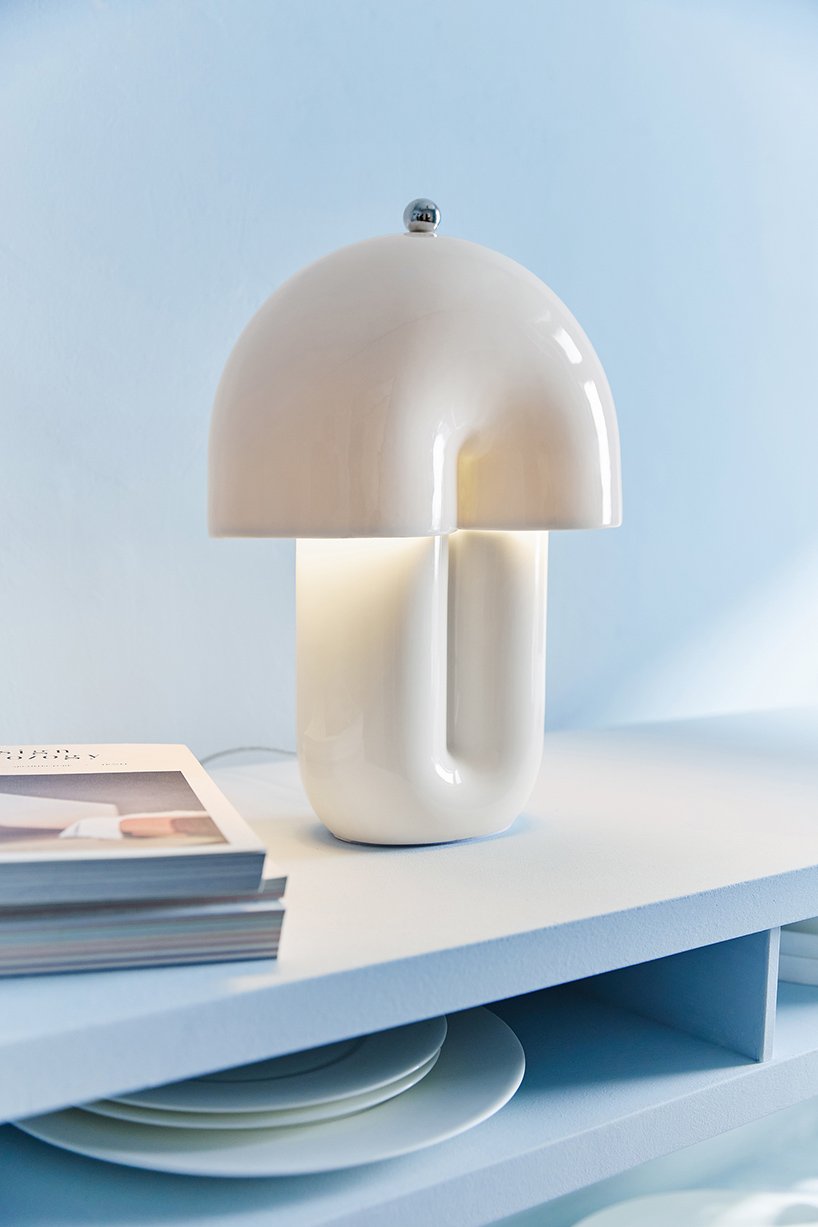
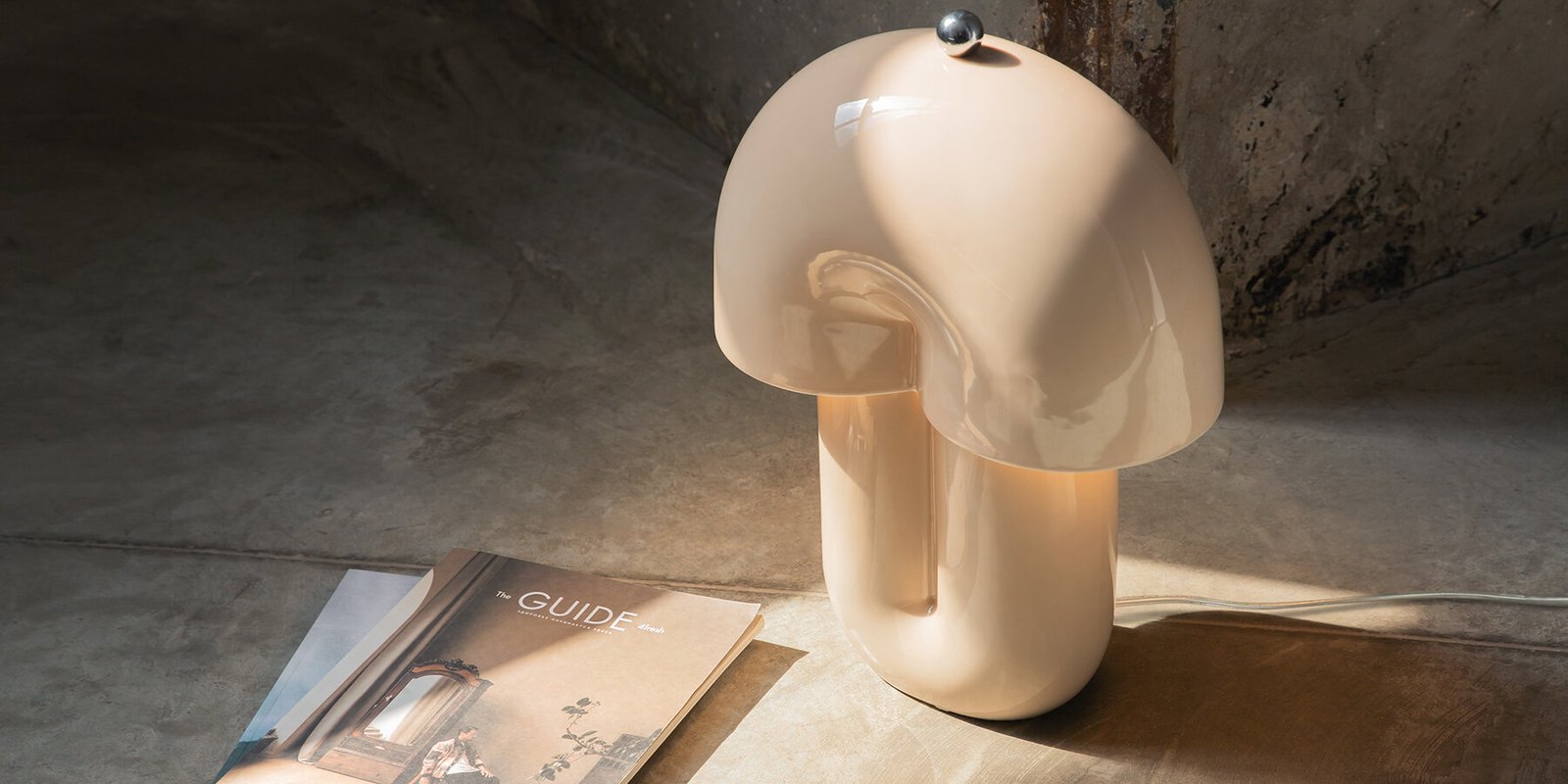
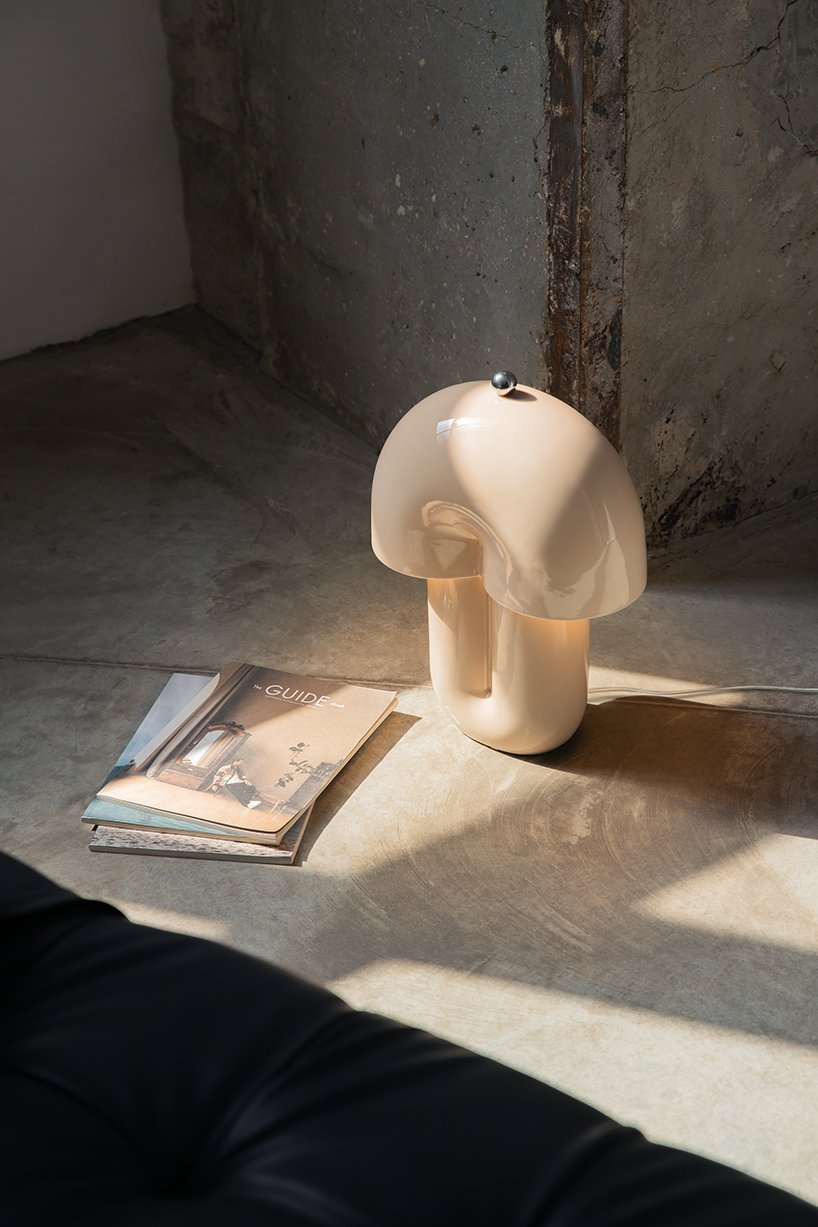
The lamp combines ceramic elements with concealed LED boards, a metal structure and an acrylic diffuser. Light emerges beneath the curved upper envelope and interacts with the inner surfaces. In the photographs, the illuminated gap remains the brightest part of an otherwise substantial body; the outer surface still reads as a solid object when the light is off.
This arrangement changes the relationship between the visible shade and the source. Rather than displaying a bulb inside an open frame, the fixture builds a layered boundary around it. Its effectiveness in a particular room still depends on placement and viewing angle, not simply on the presence of a concealed LED.
A control at the top
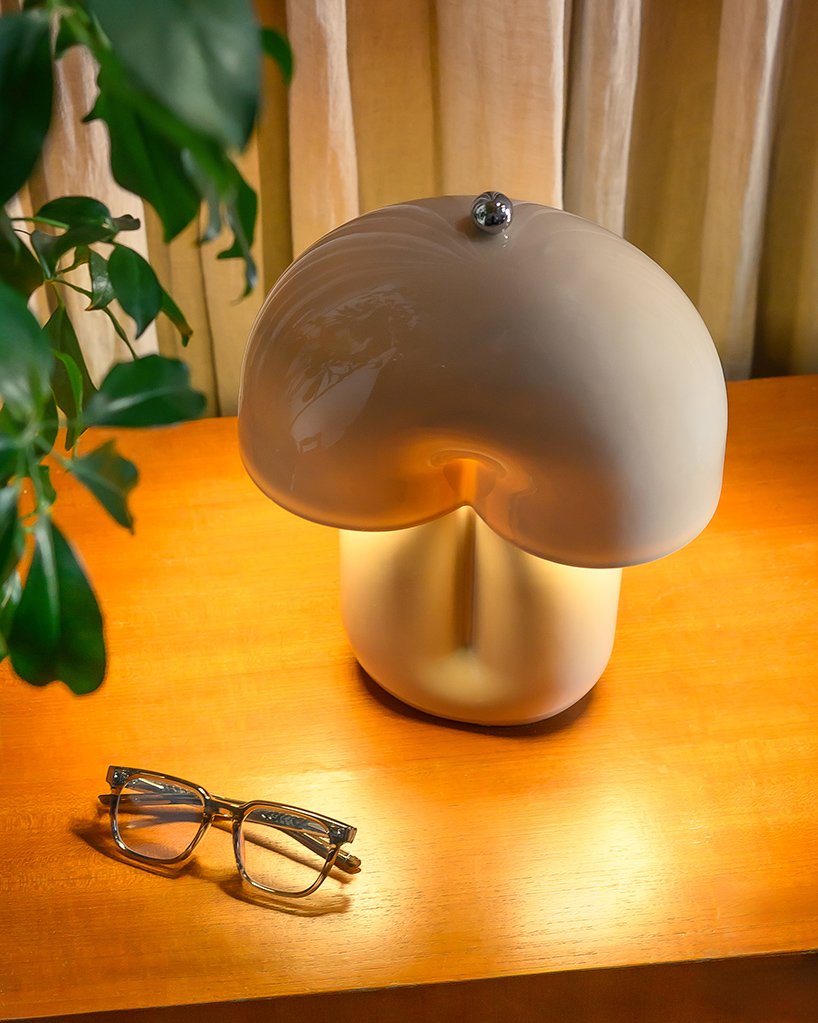
A small metal sphere at the apex acts as the touch switch and brightness control. Chrome and brass finishes are offered for this detail. The control sits where the hand can identify it by position, avoiding a separate visual interruption across the ceramic shell.
The published dimensions—355 mm high, 260 mm wide and 84 mm deep—describe a relatively shallow body. That can matter on a narrow console or side table, but the usable surface must also accommodate the cable and leave enough room to reach the top without knocking the fixture.


Material continuity is not the whole maintenance story
The ceramic envelope replaces the familiar contrast between a metal stand and a fabric shade. Yet the lamp remains a multi-part object with electronics, a diffuser and mechanical connections. Its long-term usefulness depends on access to those parts, the availability of replacements and careful handling of the ceramic shell. A high proportion of one material alone does not demonstrate that a complete lighting fixture will be easy to recycle.
On a bedside table, dimming offers a way to move from a brighter setting to a quieter background presence. It should not be confused with evidence of a particular glare rating, task illuminance or sleep benefit. Those would require specifications or measurements beyond the visual arrangement.
Credits: Design: Alexey Danilin for Maytoni. Photography: Sebastian Kruthoffer, Pavel Dunaev and Vlad Buk, credited individually below.


✦ ArchUp Editorial Insight
A compact table light has to reconcile a visible object, a concealed light source and a control that can be found without searching along a cable. Hope brings those requirements into one ceramic assembly: a gap releases the light, curved surfaces shape its appearance, and the small sphere at the top provides the switching and dimming point. The result is an object whose use can be understood through a single hand movement, while the split body gives the light an intermediate surface before it reaches the room. That does not, by itself, establish reading comfort or suitability for every bedside position. The height of the adjacent furniture, the seated eye level and the available dimming range remain important. ArchUp sees the stronger design lesson in coordination, not in the replacement of a conventional shade alone. The ceramic body, LED board, metal connection and control must work as an assembly that can also be maintained. A material that is durable in normal use can still break in handling, and an integrated light source shifts attention toward repair access. The design becomes more convincing when tactile simplicity is matched by a clear route for servicing its concealed components.