Turtle Stool: Moving the Seat and Its Storage Together


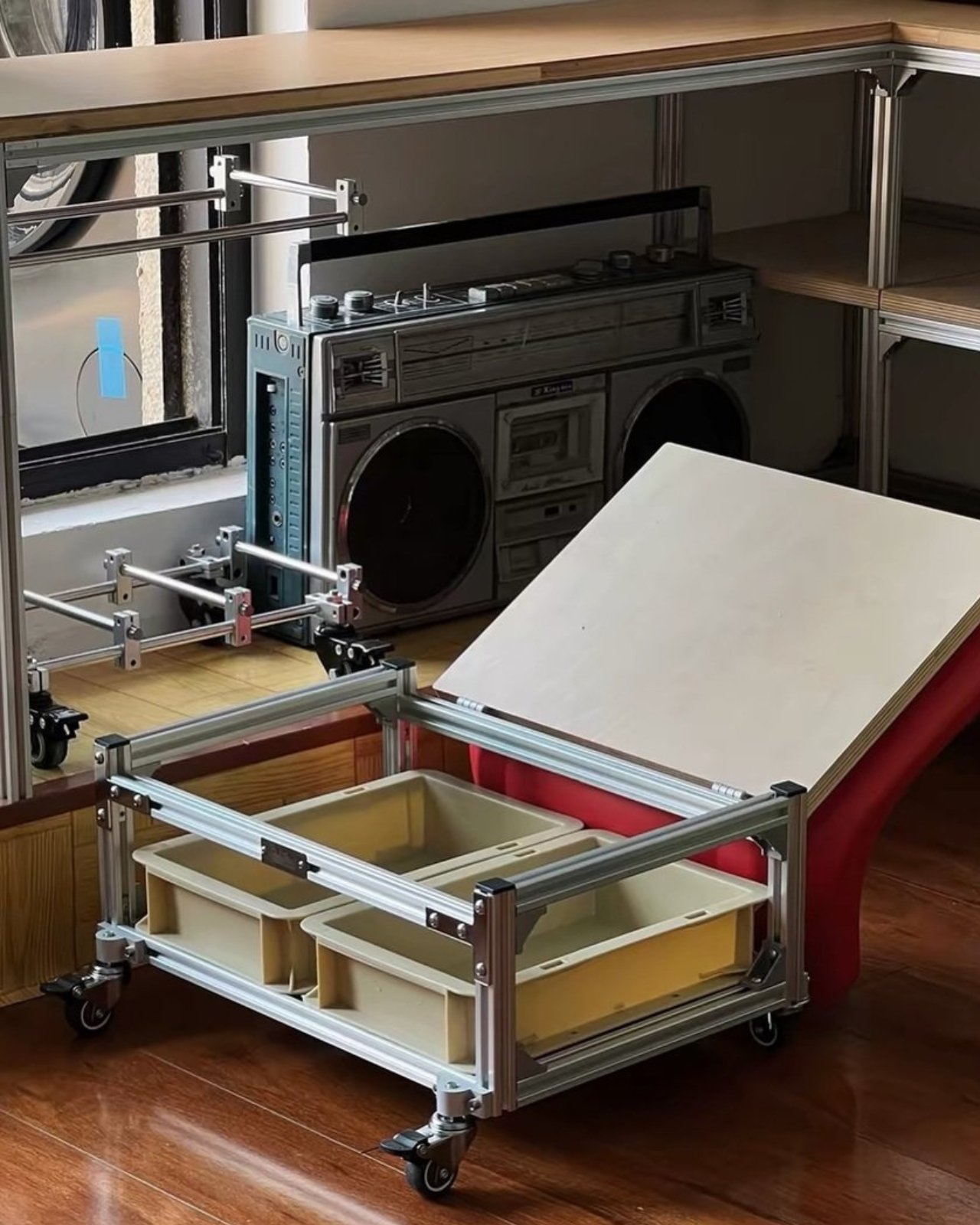
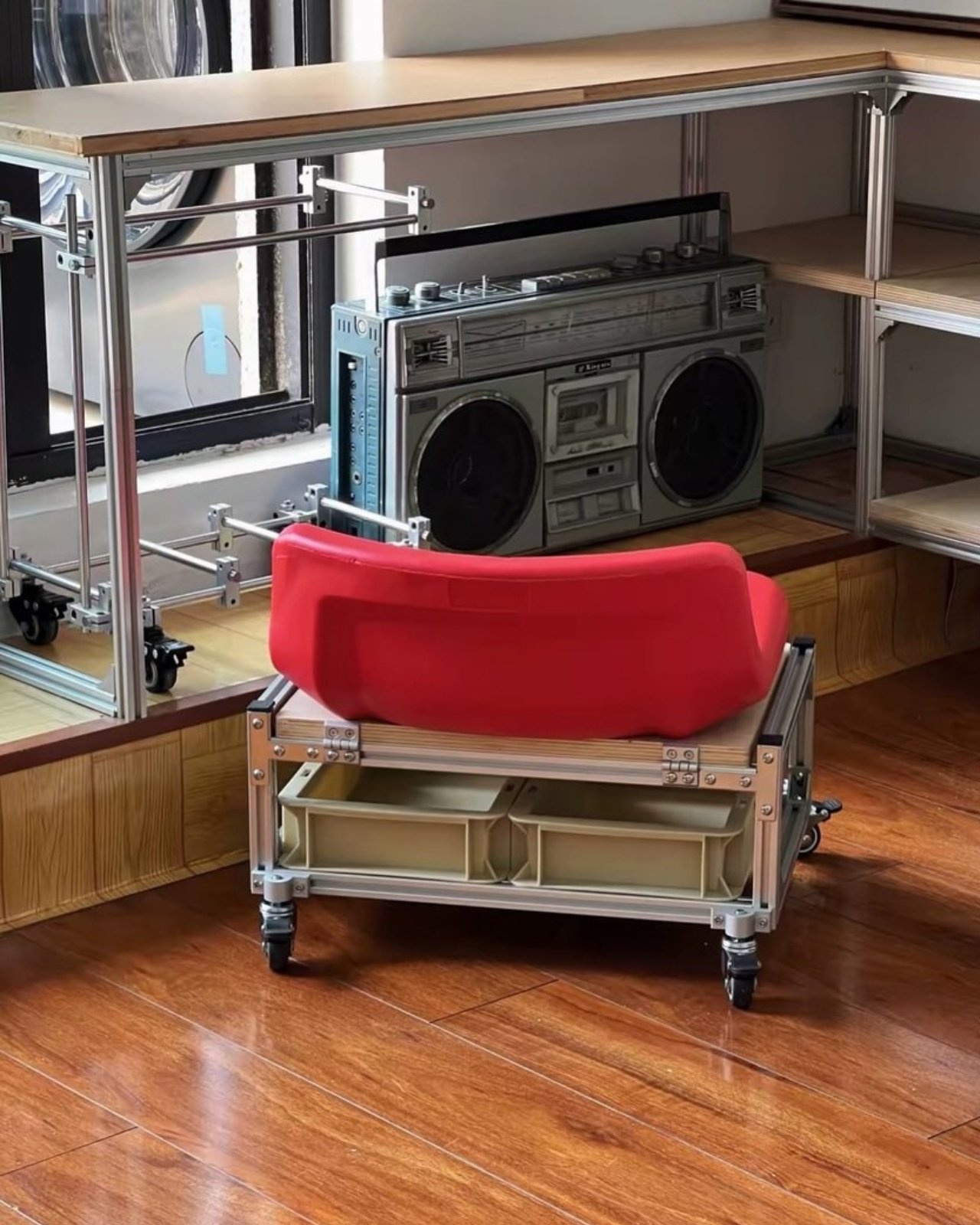
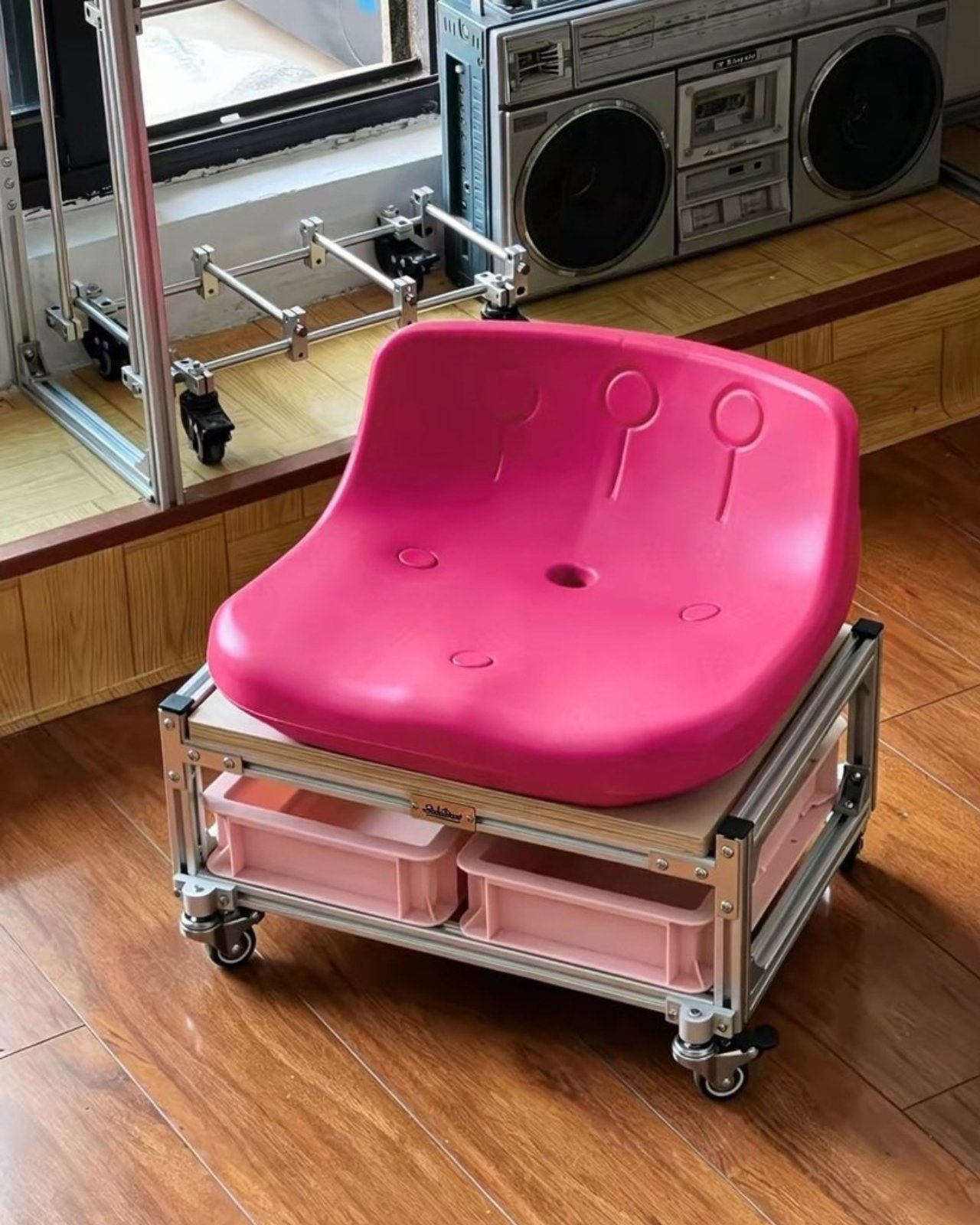
Turtle Stool is a low seat built over a compact storage frame. Two containers occupy the space beneath the sitting surface, while small casters allow the whole assembly to move across the floor. Its design interest is not simply that a chair can hold objects: it brings the storage to the same position as the person using it.
A frame that can be read
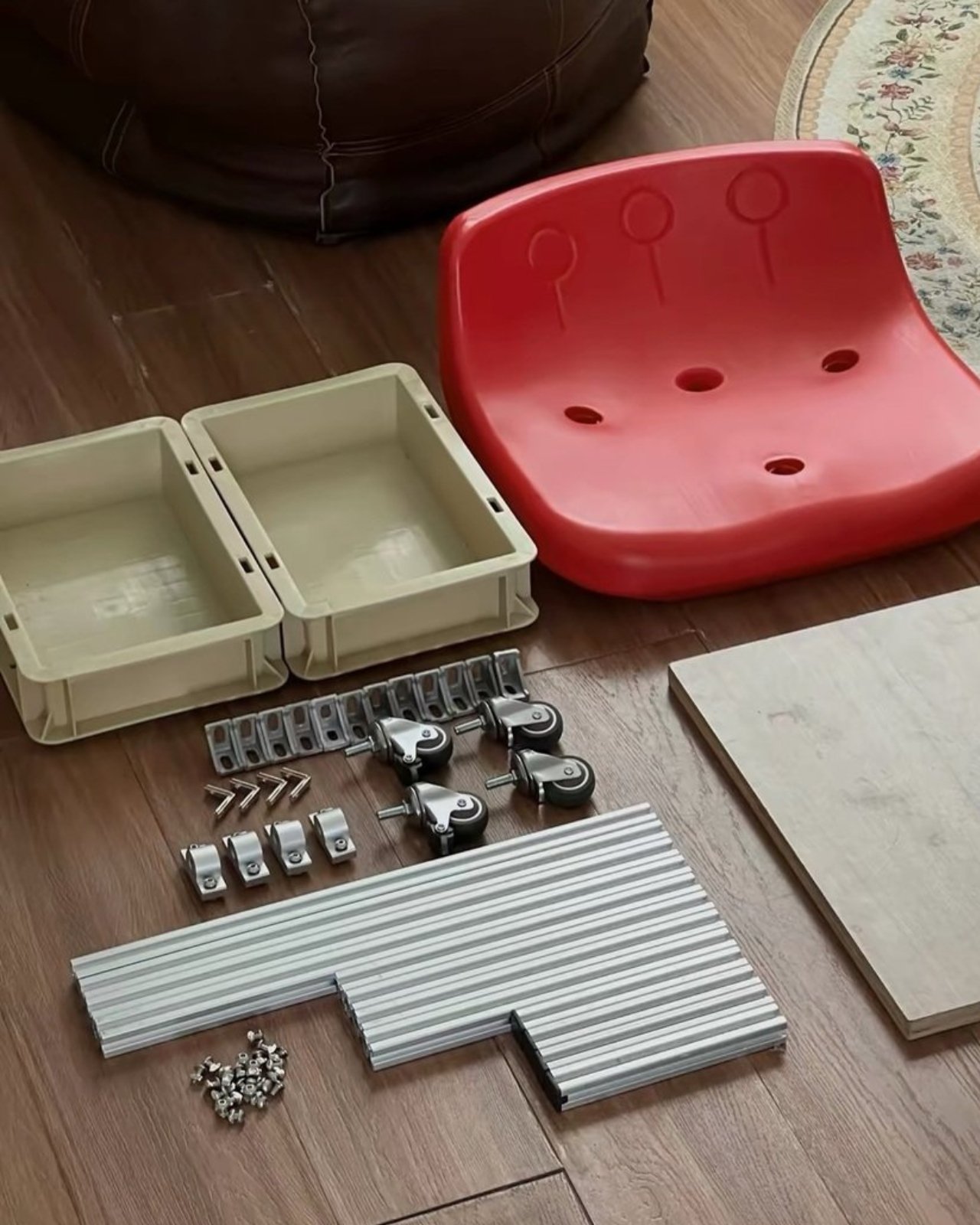
The base uses aluminum extrusions connected mechanically rather than concealed inside a continuous shell. The grooves, corners and fasteners remain visible. Above them sits a rounded molded seat; below, the bins fit within the rectangular frame. The soft outline of the seat and the straight members of the base do different jobs instead of imitating one another.
The disassembled view makes that separation particularly clear. Seat, containers, extrusion lengths, corner fittings and wheels are distinct components. This offers a useful basis for assembly and possible repair, although the availability of replacement parts and the rated loading cannot be established from the photographs alone.
Storage changes the footprint of a task
For a low-level task or a temporary hobby station, a separate toolbox or trolley can occupy as much useful floor area as the seat itself. Placing two bins beneath the sitter reduces that separation. The containers also provide a straightforward division between objects, rather than one undifferentiated cavity.
There are limits to the apparent compactness. Retrieving a bin needs free space beside the frame, and a loaded container changes the weight distribution. A layout that parks the stool tightly between other furniture may make its storage less convenient than the overall dimensions suggest.
Mobility and the need to stay still
The casters turn a fixed sitting place into movable equipment. That can help when one activity is spread along a low work area, but the same freedom requires attention to floor joints, rugs and unwanted rolling during sitting or standing. The published views do not establish a tested load rating or a verified braking arrangement, so the piece should not be presented as suitable for every user or task.
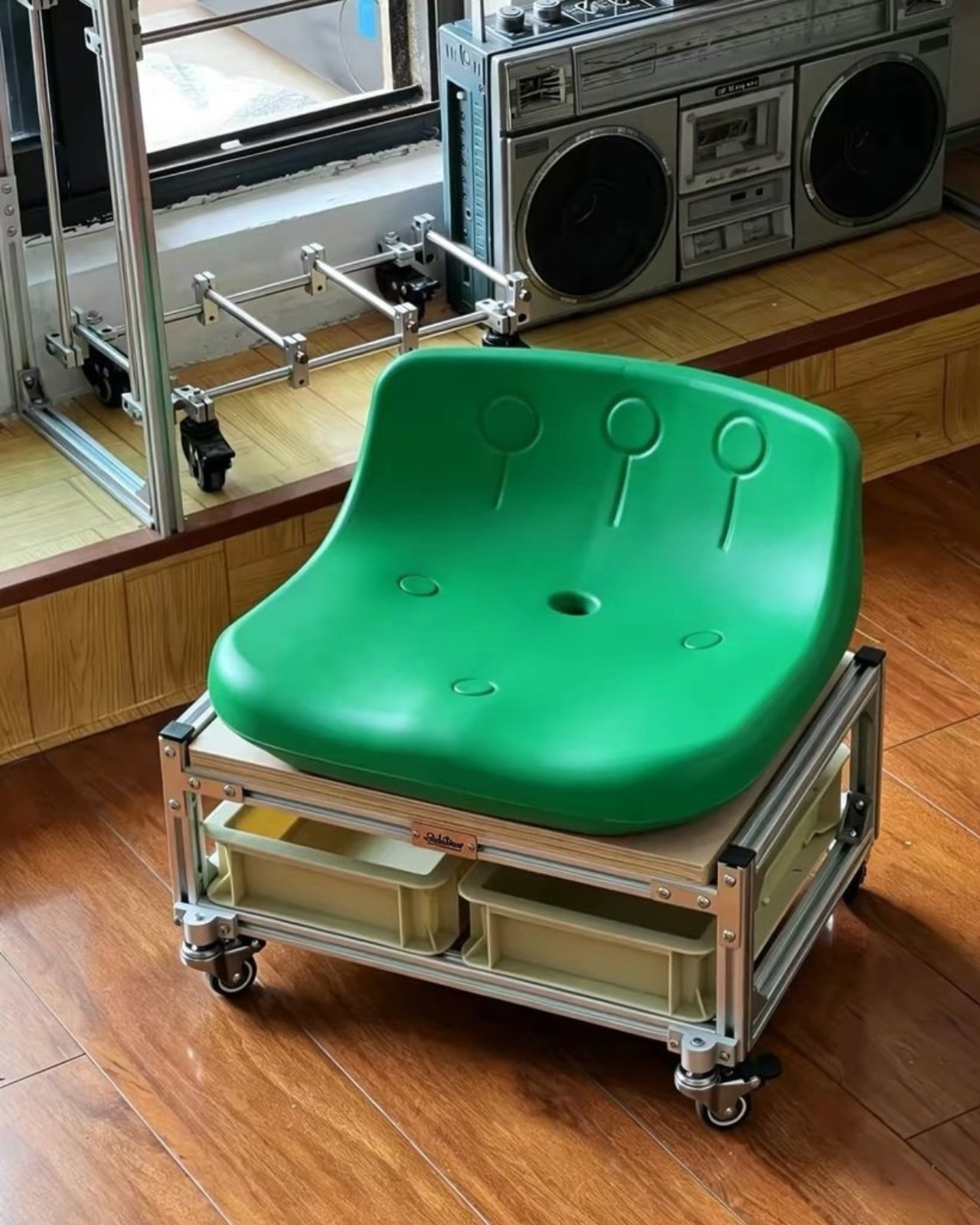
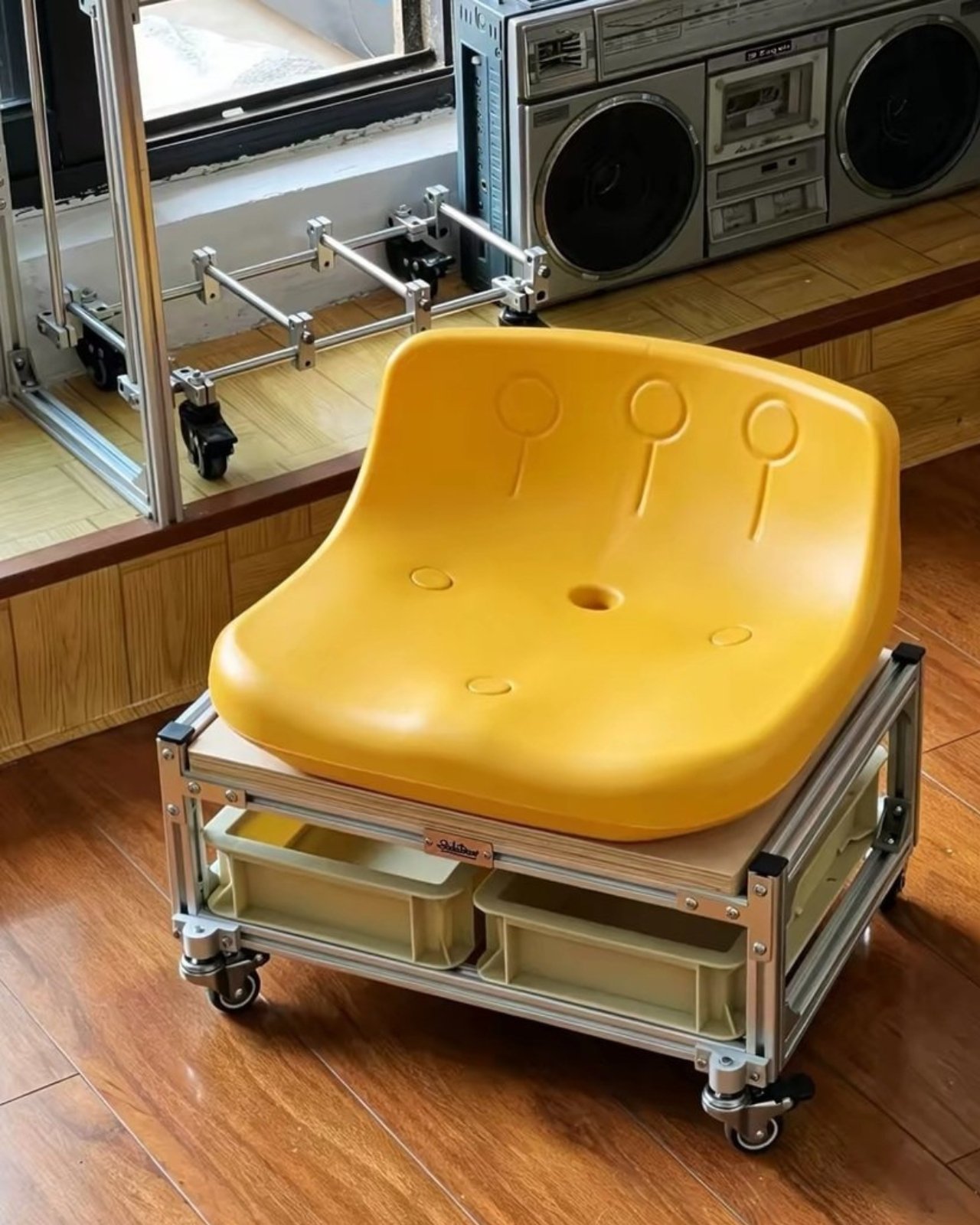
Red, pink, green and yellow seat versions appear in the images. The color changes the object’s presence in a room without concealing its modular base. It remains a hybrid between furniture and a small mobile storage unit, not a conventional lounge chair.
Credits: Storage-frame design and assembly concept: Qingshan, Soda Box. The molded seat is an existing component; authorship of its original form is not established. Image rights belong to their respective owners.
✦ ArchUp Editorial Insight
Combining a seat with storage addresses a specific spatial problem: small tasks often require both a place to sit and a nearby surface or container for tools. Turtle Stool places two bins inside the support frame and adds casters, so those functions move together rather than occupying separate pieces of furniture. The bolted aluminum structure is important to that proposition. Its connections remain legible, and the photographed kit shows how the compact object is assembled from distinct parts instead of a single molded base. ArchUp reads this as a useful approach to adaptable domestic equipment, particularly where a hobby corner or occasional work area shares space with other activities. But mobility is also the main trade-off. A seat that can roll needs appropriate stability, a suitable floor and a means of controlling unwanted movement; storage should not be loaded in ways that undermine balance. The low sitting position likewise makes sense only for tasks and users that can accommodate it. The design is therefore more convincing as a task-specific hybrid than as a universal chair. Its value lies in reducing the distance between the body and its working materials, while keeping assembly and eventual repair visible.