
Japanese Architectural Design Revealed for West Residence Tower in Jumeirah Islands

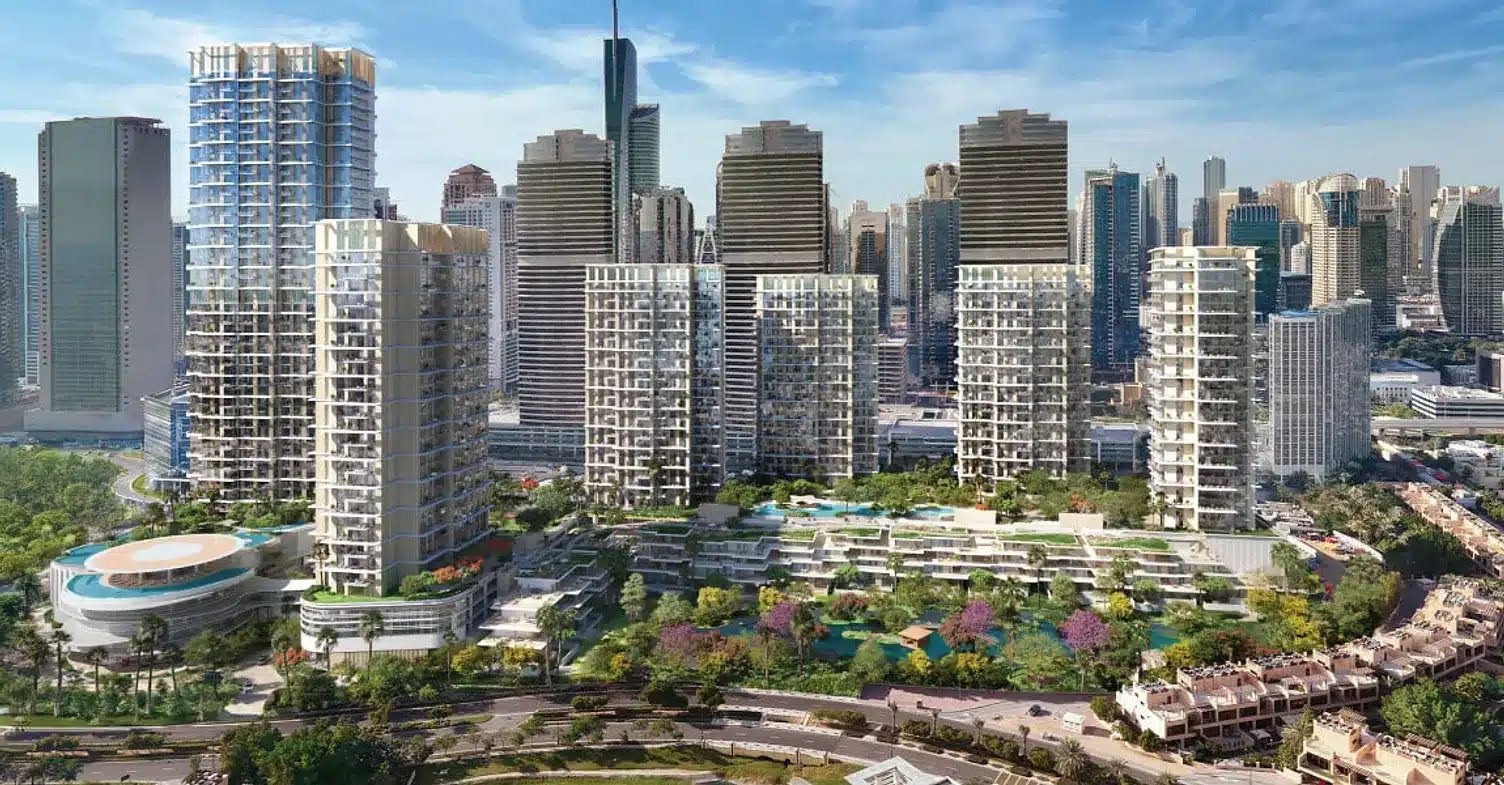
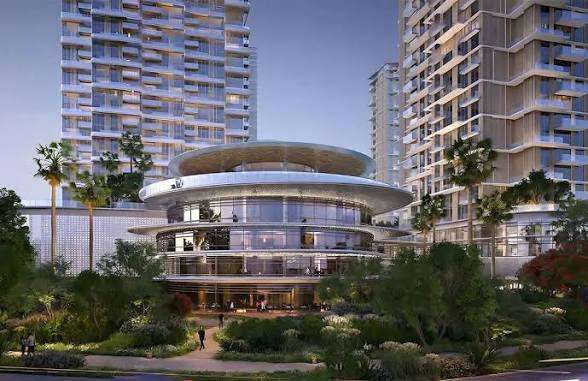
The West Residence tower, a 46 storey residential building, has begun construction in Jumeirah Islands, Dubai. It is the first phase of the Serenia District project and includes 419 units. Its form reflects Japanese architectural design principles centered on openness, material simplicity, and environmental continuity. This approach favors functional clarity over ornamental excess a common trait in contemporary high-rise buildings.
Design Concept
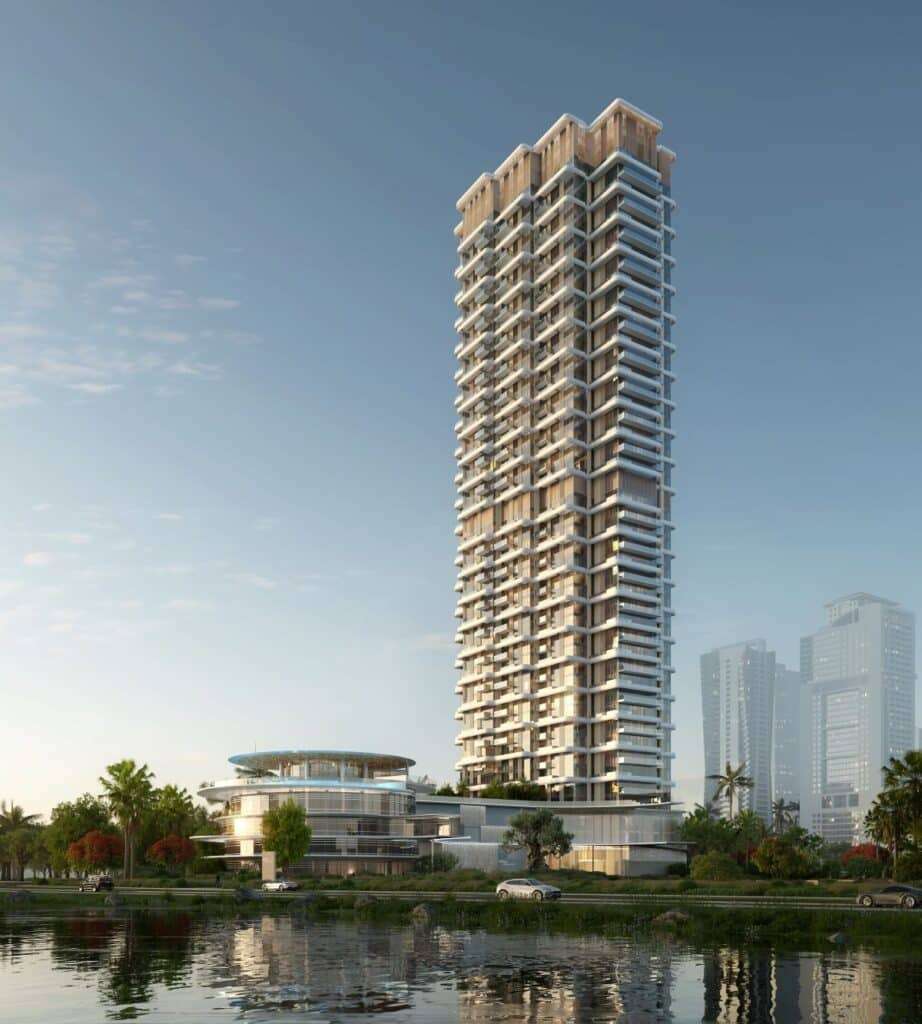
The design was led by a Japanese architectural firm following the philosophy of Ireko, which emphasizes clean lines and seamless transitions between indoor and outdoor spaces. Floor to ceiling glass facades and expansive balconies enhance natural daylight and broaden external views. The interior layout ensures resident privacy through careful unit placement. This approach aligns with global trends in interior design that seek spatial efficiency without compromising experiential quality. The project marks a new addition to the firm’s international portfolio, documented in its public archive.
Materials & Construction
Natural stone and wood tone finishes define the exterior. Minimalist details are paired with dynamic nighttime lighting. The structure uses conventional reinforced concrete, aligning with regional high rise norms found in building materials research. Full height glazing suggests advanced thermal and acoustic engineering standard in desert-climate construction. The estimated cost is AED 760 million, with completion expected in Q4 2028.
Urban and City Impact
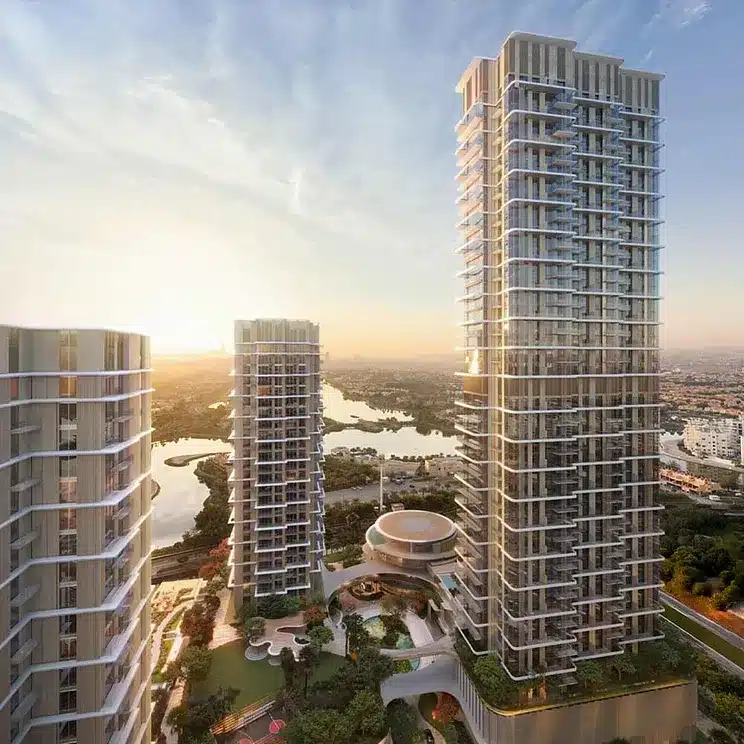
The tower sits near major urban corridors in Jumeirah Islands. It supports Dubai’s trend of luxury enclaves over mixed-use districts. The masterplan includes six buildings, shared amenities, and landscaped paths. Analysts often critique such Gulf cities for favoring exclusivity over public access. Green zones exist but remain privatized. This contrasts with open-access ideals in recent design competition briefs on civic space.
Sustainability Considerations
Daylighting and restrained material use hint at passive sustainability tactics. Yet, no certified benchmarks or energy data are cited. The project’s ecological impact remains ambiguous against regional sustainability expectations. Without performance metrics, claims of environmental responsibility lack verification.
As Dubai adds more high density residential buildings, doubts grow about their long term social and ecological effects. Can serenity in design coexist with true urban integration? Or does this tranquility rely on restricted public access?
Architectural Snapshot: A 46 storey residential tower in Dubai applies Japanese spatial principles to a luxury high-rise typology within a privatized masterplan.
ArchUp Editorial Insight
The West Residence Tower deploys Japanese architectural spatial rhetoric within Dubai’s luxury enclave model, framing minimalism as neutrality while operating within a privatized masterplan. Nikken Sekkei’s Ireko concept is technically refined but functionally complicit its clean lines mask exclusivity rather than challenge it. Though the restraint in materiality and daylight strategy shows discipline, the project avoids confronting Dubai’s systemic urban fragmentation. One merit remains: it resists decorative overload common in Gulf towers. Yet without public permeability or measurable sustainability, its serenity risks becoming aesthetic insulation calm for the few, silence for the city.





ArchUp: Technical Analysis of the West Residence Tower in Jumeirah Islands
This article provides a technical analysis of the West Residence Tower as a case study in integrating Japanese architectural concepts with luxurious development models in an urban oasis context. To enhance archival value, we present the following key technical and design data:
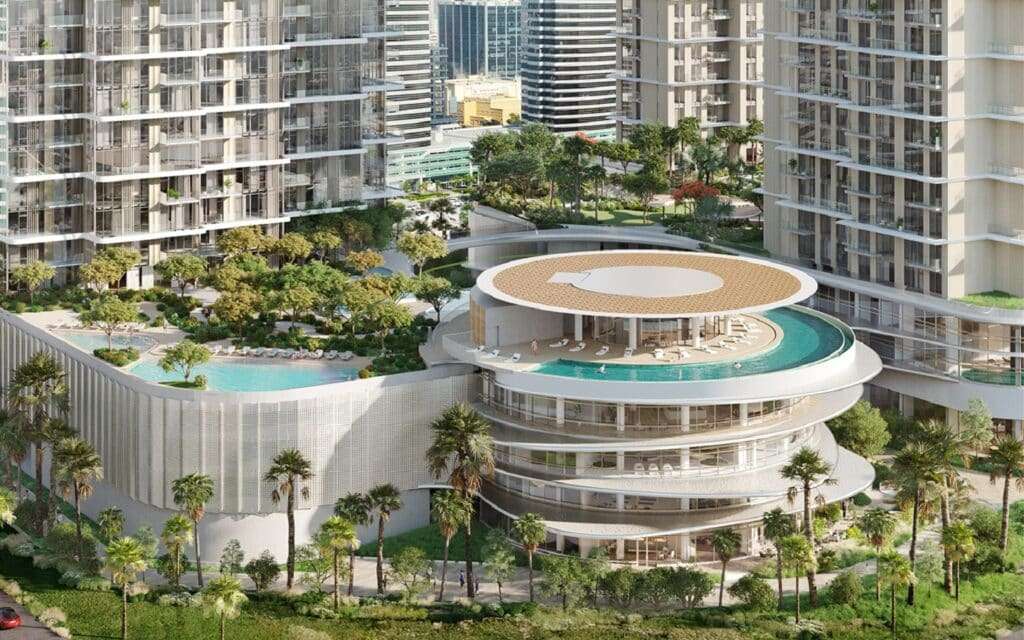
The tower consists of 46 floors containing 419 residential units, with a construction cost of 760 million UAE dirhams (approximately $207 million). The structure employs traditional reinforced concrete, centered around a circular core amenities building. Approximately 70% of the facades feature floor-to-ceiling glazing, supported by a custom metal framing system that reduces the thermal transmittance (U-value) to below 1.8 W/m²·K for climate control.
The interior design applies principles of simplicity (Shizen) and spatial continuity. Unit sizes range from 85 square meters for compact apartments to 320 square meters for penthouses, with an average space utilization efficiency of 85%. The rhythmic, stepped balconies constitute 20% of the facade surface, providing private outdoor spaces and creating dynamic patterns of light and shadow. The central circular amenities hub integrates pools and relaxation zones covering a total area of over 5,000 square meters.
In terms of environmental and social performance, the project lacks a declaration of adherence to certified sustainability standards (such as LEED or ESTIDAMA). It relies on passive strategies like natural lighting and limited cross-ventilation via balconies, but does not mention renewable energy systems or water recycling. Situated within the private “Sirenia District” masterplan, it achieves high privacy but limits public integration and access to green spaces and shared amenities—a common model for development on Dubai’s artificial islands.
Related Link: Please refer to this article for a comparison of luxurious residential development models in different urban contexts:
A House Melting into the Garden Redefines the Boundaries of Dwelling in Madrid
https://archup.net/floating-housing-development-by-mast-in-rotterdam/