Jeddah Tower Construction Update: December 2025

Significant Progress in the JEC Tower Project
One of the world’s most ambitious skyscraper projects is showing new momentum after a long period of stagnation. Saudi Arabia’s JEC Tower has reached the 69th floor of its central core, a notable development considering the project’s complex history spanning more than a decade.
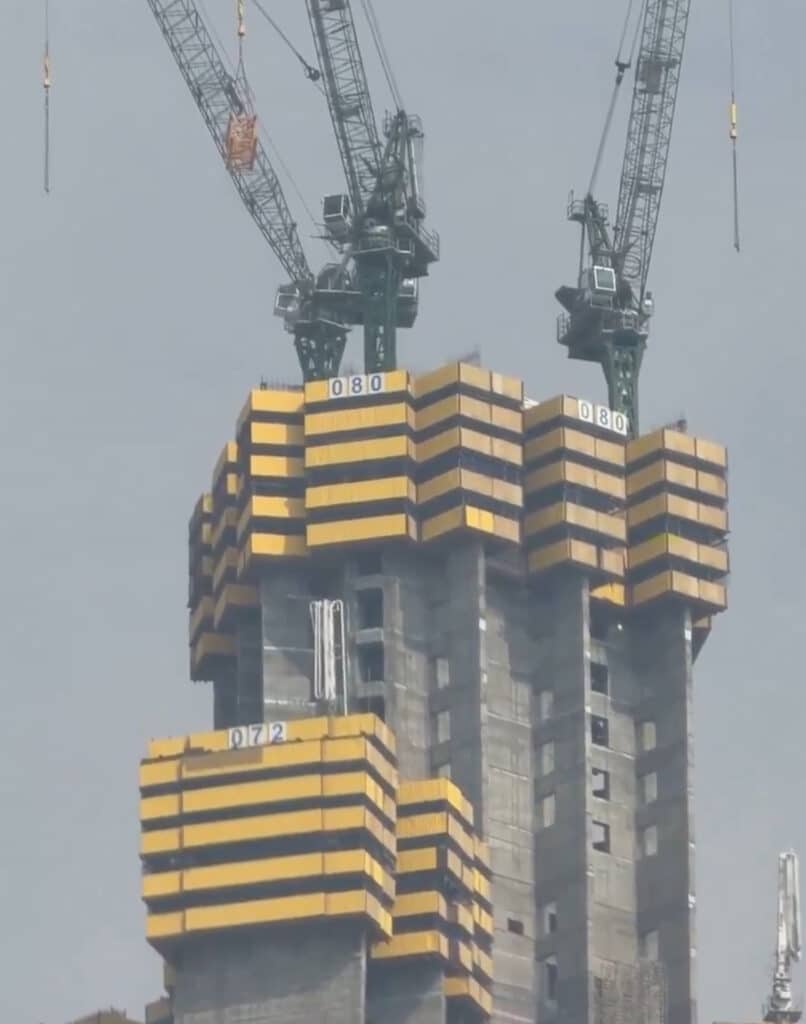
On Sunday, December 07, 2025, Jeddah Tower achieved significant construction milestones with the completion of the 80th floor and the commencement of reinforcement work for the 81st. In parallel, the tower’s wings saw the completion of the 72nd floor as reinforcement began for the 73rd. Regarding the actual floor slabs—visible as structural lines across the building’s width—work is currently being finalized on levels 66 through 69, marking a substantial leap from the 48-49 level mark where the project stood prior to the resumption of construction.
Resumption of Work After Years of Delays
After a series of postponements and a construction hiatus that raised doubts about its completion, the project appears to have regained momentum recently. Architects AS+GG have reconfirmed the completion date as August 2028, an announcement that, at least theoretically, indicates a clear execution plan this time.
Identity Shifts and Emphasis on Extraordinary Height
Frequent Name Changes
The tower has gone through several name changes; it began as the Kingdom Tower, then became the Jeddah Tower, before officially being named JEC Tower after the Jeddah Economic Company. Despite the name changes, the goal remained the same: to create an unprecedented architectural landmark in the region.
Height Beyond the Ordinary
According to AS+GG, the tower will reach over one kilometer in height, surpassing Dubai’s Burj Khalifa by a significant margin. To illustrate the scale of this height, it is approximately:
- Twice the height of One World Trade Center in New York.
- More than three times the height of The Shard in London.
Thus, the tower stands as an example of ambitious advancements in construction technology, despite the considerable engineering challenges that still remain.

Interior Features and Operational Structure of the Tower
Massive Operational Capabilities
Upon completion, JEC Tower is expected to house approximately 59 elevators serving at least 157 floors. These figures indicate a complex operational system designed to accommodate heavy daily traffic within the tower. In addition, the tower will feature:
- An observation deck expected to be the highest in the world,
- A luxury hotel,
- Office spaces,
- Residential units tailored for a demographic capable of affording accommodation in a building of this magnitude.
While these elements reflect diversified usage, they also highlight the operational challenges the tower management will face.
Structural Progress and Its Impact on the City Skyline
Differences in Construction Speed Between Sections
Currently, the central core leads the vertical construction, while the side wings lag by about five floors. Nevertheless, construction teams continue to work at a steady pace to maintain overall progress. The tower has already begun reshaping Jeddah’s skyline, even though it remains under construction.
Tangible Signs of Momentum Resumption
More Stable Construction Pace
Work on the project resumed in January after a long pause, but notably, there has been a significant acceleration in recent months. About 50% of the concrete has been poured, a major milestone for a project of this complexity.
Recent Images Reflect Greater Confidence
AS+GG released photos from November showcasing the extent of progress achieved. Typically, interim images are only shared when there is tangible confidence in the project’s seriousness. Furthermore, the August 2028 completion date reflects, at least at this stage, the adoption of a realistic timeline rather than the optimistic estimates that accompanied previous phases. For more details on projects like this, see the Archive.

Realistic Progress Despite the Project’s Complex History
Overcoming the Phase of Doubts
The current progress of JEC Tower represents a significant turning point, especially considering its history filled with delays and pauses. Many had doubted whether the project could ever be completed, making the achievement of surpassing the 69th floor a milestone that restores confidence in the construction trajectory.
Completion Date: Between Boldness and Realism
Setting August 2028 as the target completion date reflects bold expectations, particularly since less than four years remain, and the project involves construction on a scale never before attempted globally. Engineering challenges increase with height, requiring non-traditional solutions to wind loads and structural stresses. Nevertheless, completing half of the concrete work and having clear, tangible progress on site makes the vision more attainable than it appeared in previous phases.
Next Year: A True Test of the Project’s Resilience
The AS+GG team indicates that the coming period will witness significant updates as the tower continues to rise. Next year will be crucial for assessing whether the current pace can be maintained. By this time next year, it should become clear whether the 2028 completion target is realistic or overly optimistic. For insights on similar projects, see Projects.
Early Impact on the City Skyline Despite Incompletion
Although the tower is still under construction, it has already begun to assert its presence on Jeddah’s skyline. Regardless of the completion date, the city is moving toward having its first one-kilometer-tall landmark. The remaining question is: Will this goal be achieved on the announced schedule, or will construction require more time than planned?

✦ ArchUp Editorial Insight
From an architectural and engineering standpoint, JEC Tower exemplifies the capability to execute massive projects that exceed conventional limits in both height and structural complexity. This is clearly reflected in the ongoing progress of the central core and the sophisticated operational structure. Features such as the observation deck, diverse office and residential spaces demonstrate an effort to integrate multiple functions within a single building, a common trend in modern vertical architectural projects.
However, the project raises several concerns when viewed from practical and environmental perspectives:
- Engineering Challenges: The tower’s extreme height increases complexities related to wind loads and structural stresses, making adherence to the established timeline a major challenge.
- Sustainability and Environment: Sustainability measures and energy efficiency techniques have not been explicitly highlighted, an essential aspect of contemporary architecture, especially for mega-projects.
- Functionality and Long-Term Use: The high density of elevators and multi-use spaces requires precise operational management, which may affect user and resident experience over time if operational solutions are not carefully designed.
- Impact on the City: Despite the noticeable visual transformation of Jeddah’s skyline, the project could pose challenges to surrounding infrastructure and transportation if city planning does not anticipate them in advance.
JEC Tower can serve as a valuable case study for supertall vertical projects, particularly in terms of:
- Analyzing sequential construction strategies for the core and side wings.
- Studying engineering challenges associated with extreme heights and the impact of wind on structural stability.
- Understanding the need for architectural and operational coordination between residential, commercial, and public facilities within a single building.
The project offers a valuable learning opportunity in architectural design, structural engineering, and management of large vertical buildings, despite the significant challenges that may affect its sustainability and the feasibility of completing it on schedule. For more resources, visit Research and the Archive.