La Cañada House: Spatial Design and Nature

General Context and Relationship with Nature
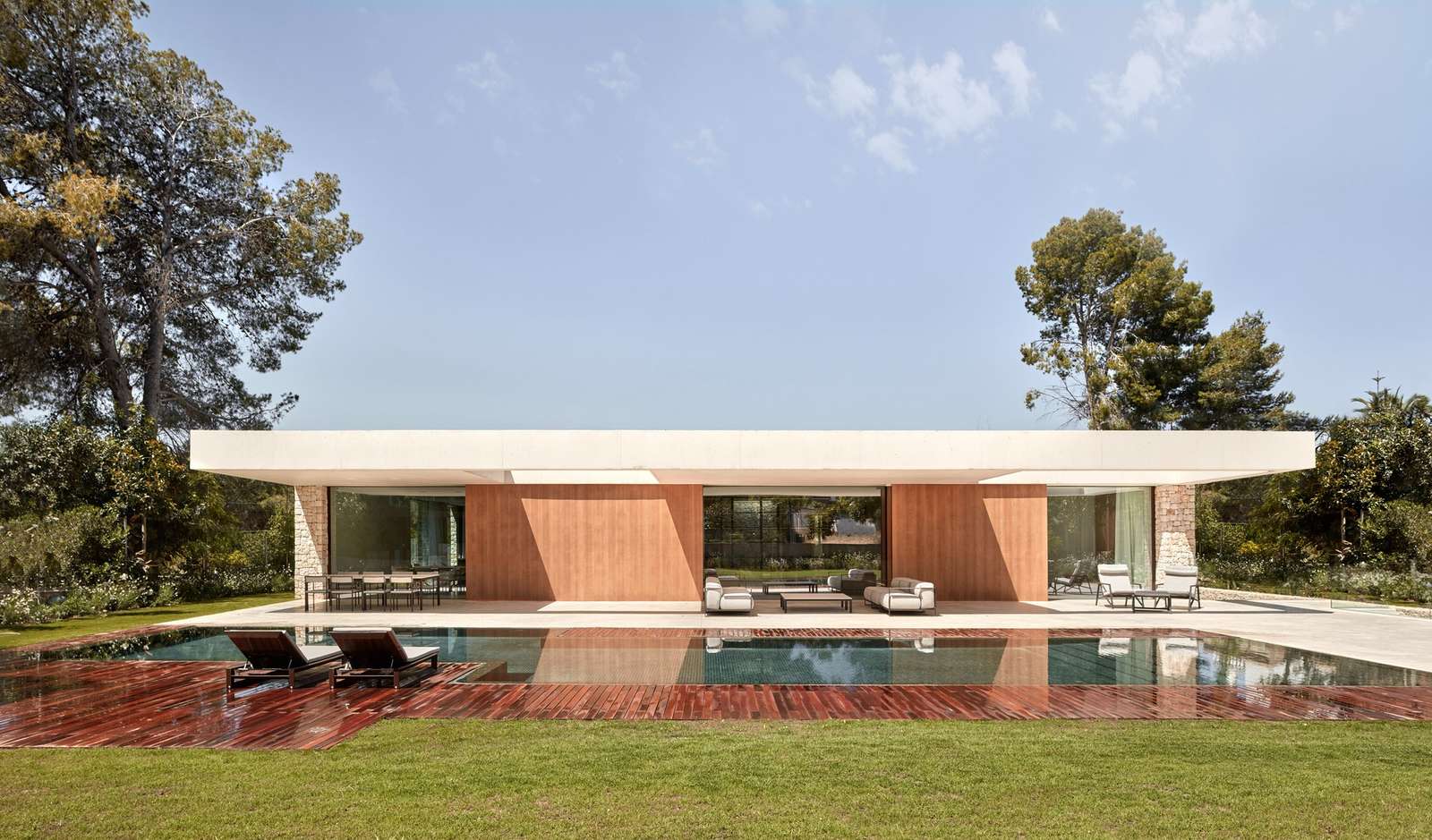
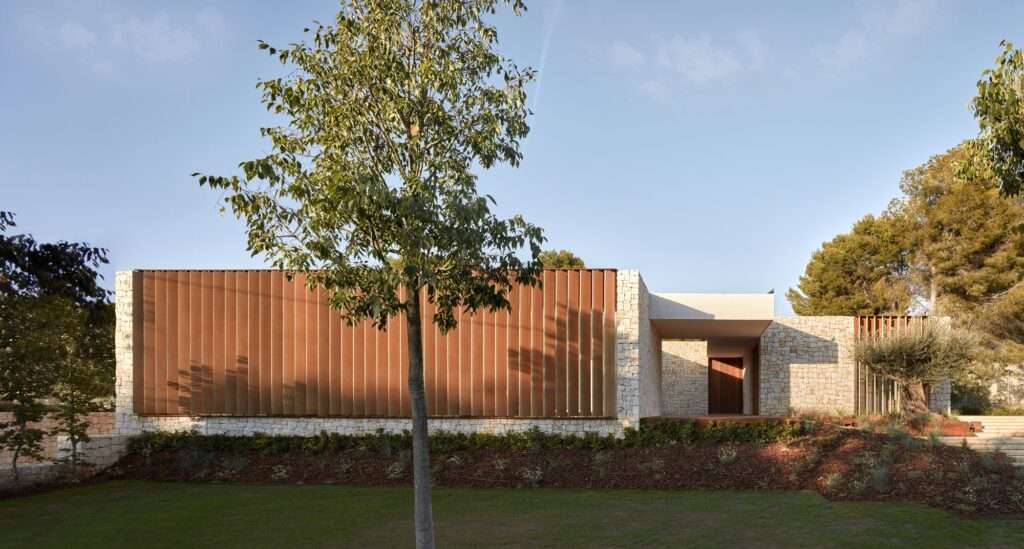
The house is located in the La Cañada area near Valencia, within a residential fabric surrounded by an existing vegetal canopy. The site is characterized by its openness to the immediate surroundings, where pine and palm trees form a natural backdrop that frames the architectural mass and defines its relationship with the environment.
Spatial Organization and the Central Courtyard
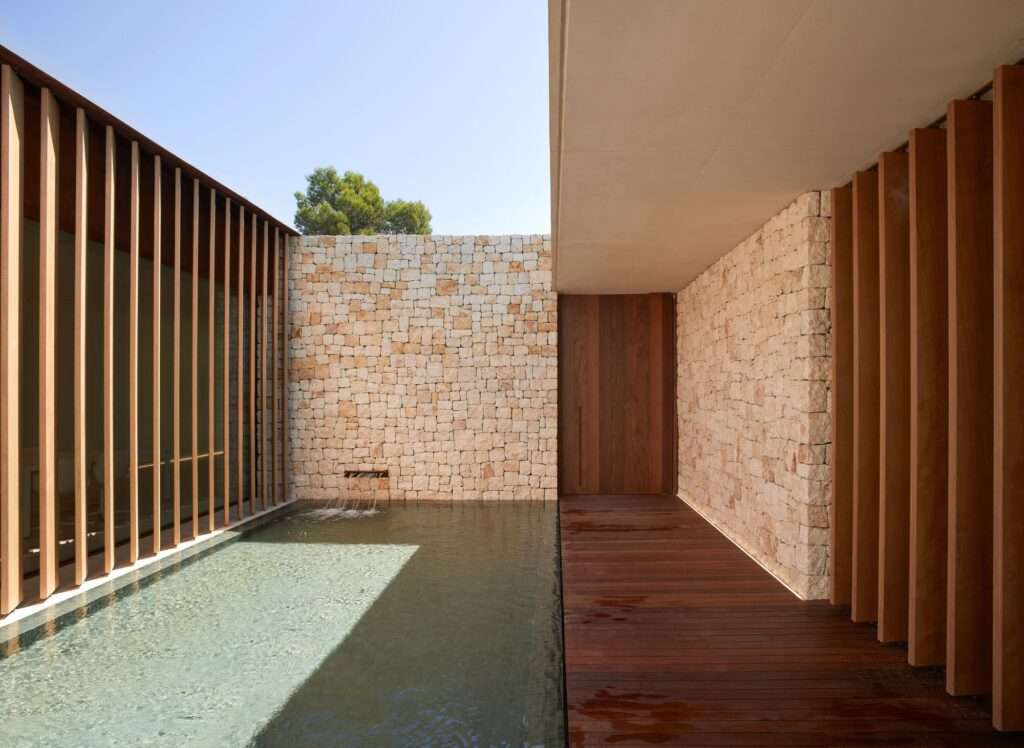
The architectural composition is based on the idea of a house that tends toward inwardness while maintaining a structured internal openness. For this reason, the square plan is penetrated by several voids, the most significant being a large central courtyard that acts as the heart of the project. This courtyard performs multiple overlapping functions; it defines the entrance, organizes the distribution of rooms, and provides visual connectivity between them. In addition, an internal water feature enhances the sense of spatial expansion through the reflection of interior facades and the sky, transforming the experience of entry into a more gradual sequence.
Horizontal Elements and the Relationship with the Garden
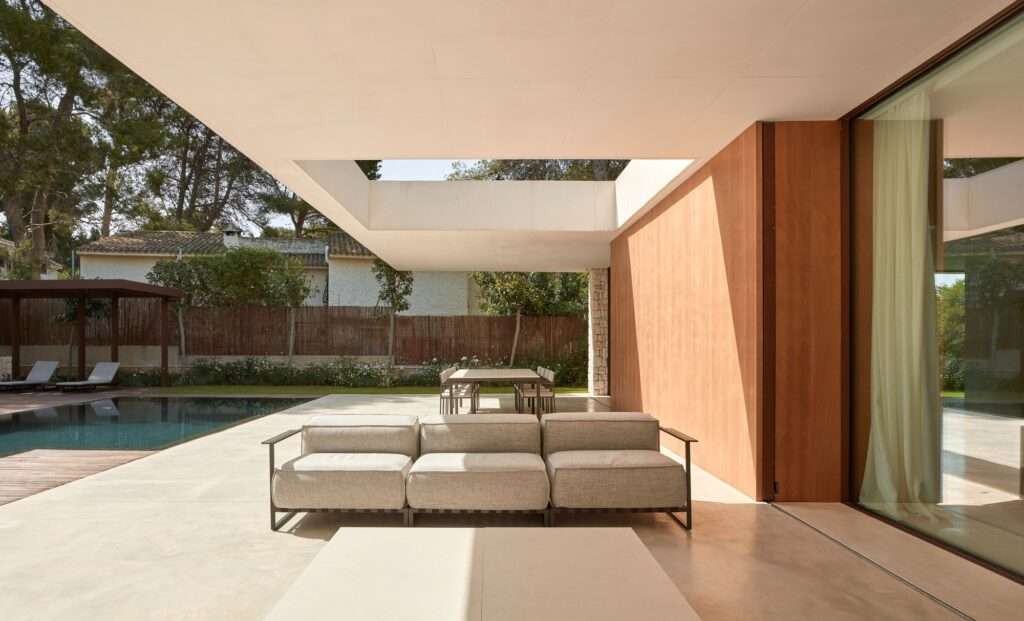
On the opposite side, a horizontal white concrete volume extends to frame the pool and the garden. This extension includes openings that allow natural light to enter, while also accommodating outdoor living areas usable in both summer and winter depending on sun exposure. In this way, a direct relationship is established between interior and exterior spaces through a single roof element.
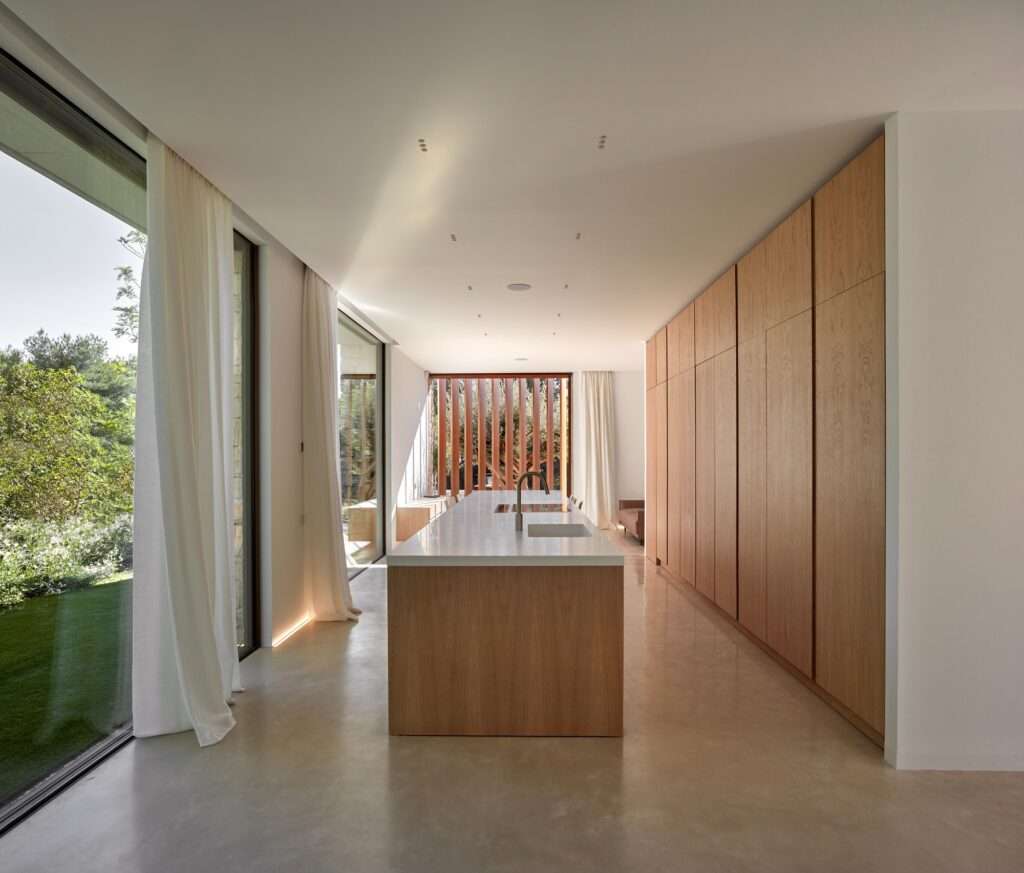
Horizontal Organization and Functional Hierarchy
The design is based on a single level above ground to emphasize the horizontal character of the architectural mass, creating a clear human scale. In contrast, the basement level is dedicated to service spaces, with natural lighting and ventilation provided through a sunken courtyard on the northern façade, ensuring functional continuity despite the vertical separation of uses.
Interior Distribution and Visual Relationships
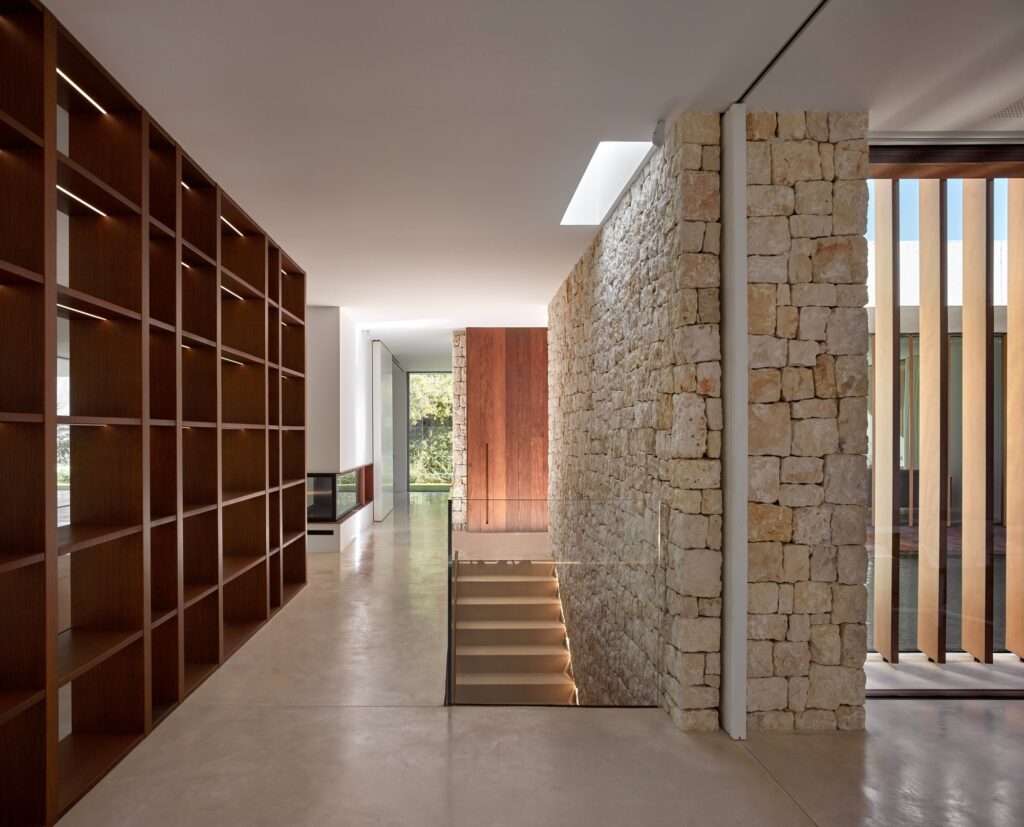
The entrance is positioned at the center of the house, allowing a direct and straightforward separation between day and night areas. Additionally, the interior spaces are designed as a continuous system that enables fluid movement and visual permeability. Elements such as a double-sided fireplace and low storage units strengthen visual connections between spaces, while the central courtyard further reinforces this linkage between the different wings.
Materials and Relationship with the External Environment
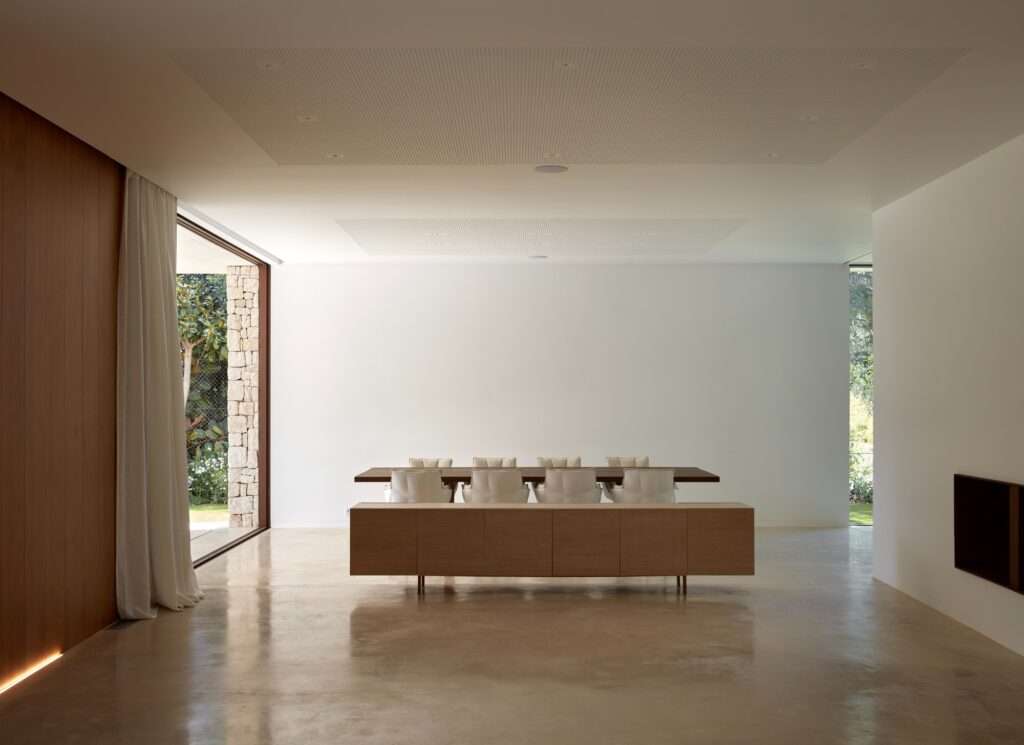
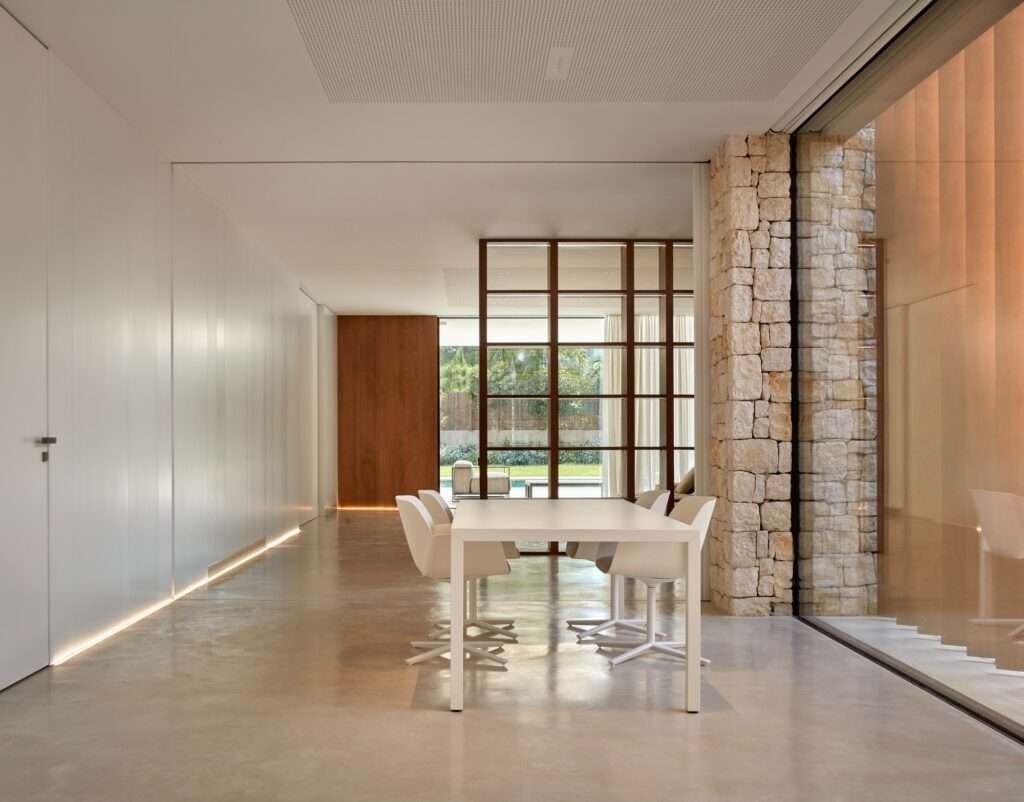
The structural system relies on thick stone walls that provide protection and thermal mass for the interior spaces. In contrast, large glazed openings equipped with adjustable wooden louvers, either concealed or integrated within the walls, allow control over light and views. Hidden sliding windows further enhance openness to the exterior while preserving clear boundaries when needed.
Roof and Structural Mass
A projecting roof made of exposed white concrete defines the entrance and shelters the veranda. This element acts as a dense structural envelope that encloses the interior spaces, with a clear emphasis on white color and polished surfaces as part of the overall composition. This treatment allows the garden to be framed against a neutral backdrop composed of smoked glass, lacquered surfaces, and smooth concrete flooring.
Water as a Spatial Element
Water is used as a complementary architectural element within the composition. The water layer at the entrance, together with the longitudinal pool, enhances the perception of spatial expansion and moderates the surrounding microclimate. Its role therefore extends beyond aesthetics, actively shaping spatial perception and experience.
Unity of Design Language
The project is based on a strong coherence in design language between the architectural mass and interior details. All elements follow the same generative philosophy, including furniture designed specifically within the project framework. This results in a clear visual and functional continuity across all levels of the design, extending even to the surrounding garden.
✦ ArchUp Editorial Insight
The La Cañada house near Valencia operates less as an autonomous architectural decision and more as a direct outcome of suburban residential market logic and low-density land subdivision systems. Its primary driver is a social demand for privacy and controlled exposure within a semi-urban real estate context, reinforced by climatic conditions requiring careful management of heat and natural light.
Regulatory constraints related to building ratios and construction costs encourage a single-level horizontal distribution with partially embedded service areas, achieving both thermal efficiency and clear circulation logic. The central courtyard and water surface function as environmental adaptation devices that simultaneously address ventilation, lighting, and visual insulation. The white concrete envelope and controlled openings represent a standardized response to operational sustainability and maintenance requirements.
Ultimately, the project emerges as a balancing equation between market pressure, climatic control, and construction economics.