Casa Pinhal: Architecture and Mountain Topography

Relationship between Topography and Design
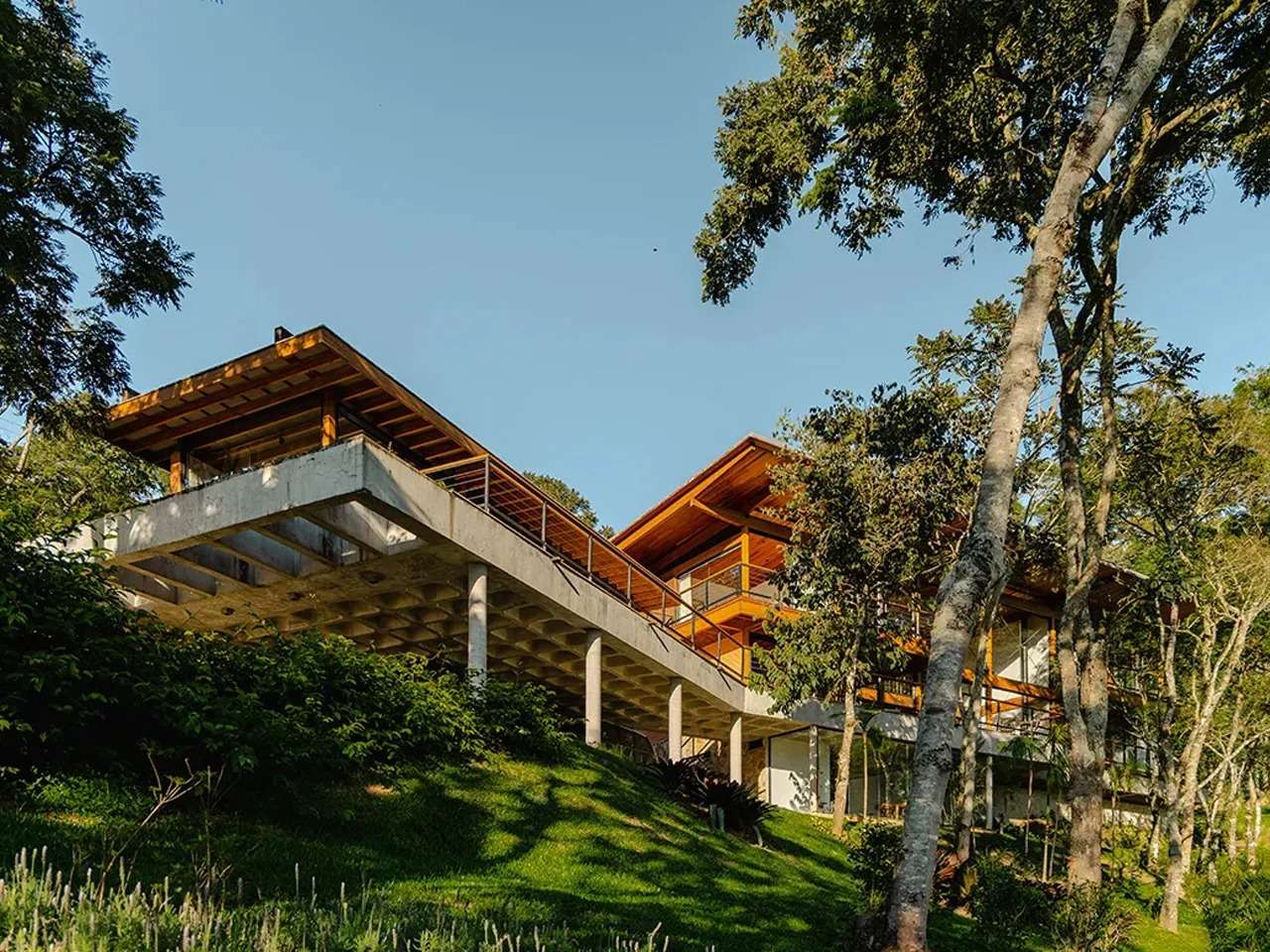
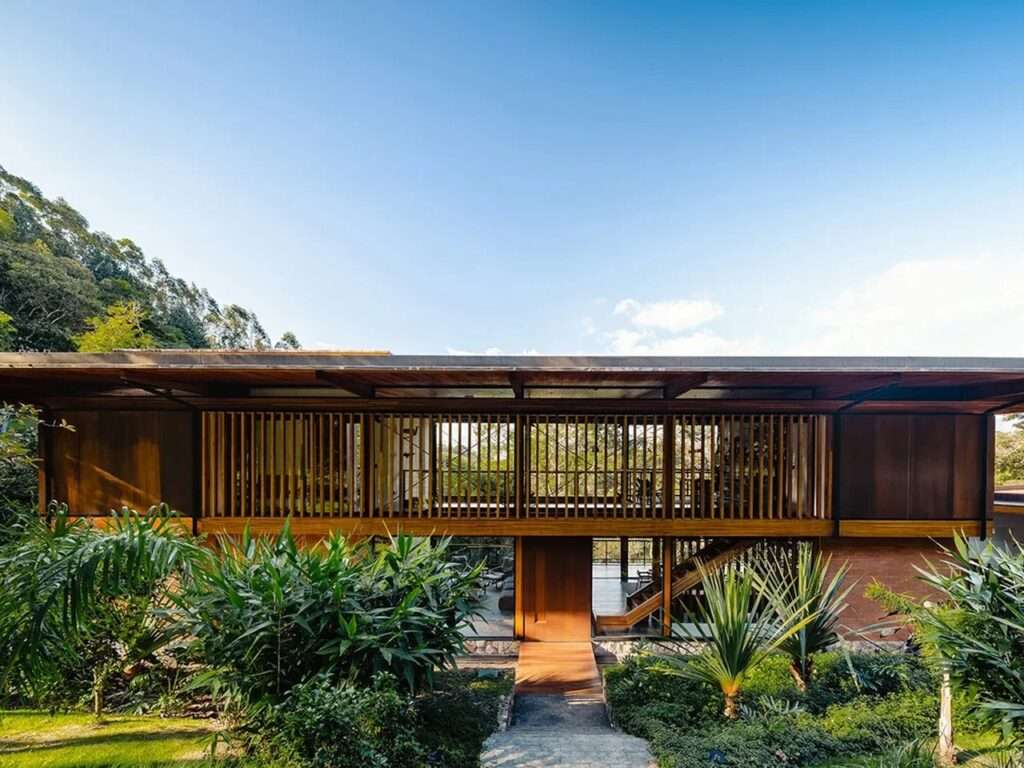
The Casa Pinhal project is located in a mountainous area within the Serra da Mantiqueira range, on a steep slope covered with dense native vegetation. The Design treated the site as a fundamental element in shaping the project, rather than attempting to modify the surrounding nature or impose a separate configuration upon it.
Minimizing Impact on the Land
The project adopted a principle of minimizing ground contact to the lowest possible level, which is reflected in the way the Architecture mass is distributed across the site. This approach allowed the preservation of a large portion of the natural cover and reduced the Buildings impact on the existing topography.
Movement Experience within the Natural Environment
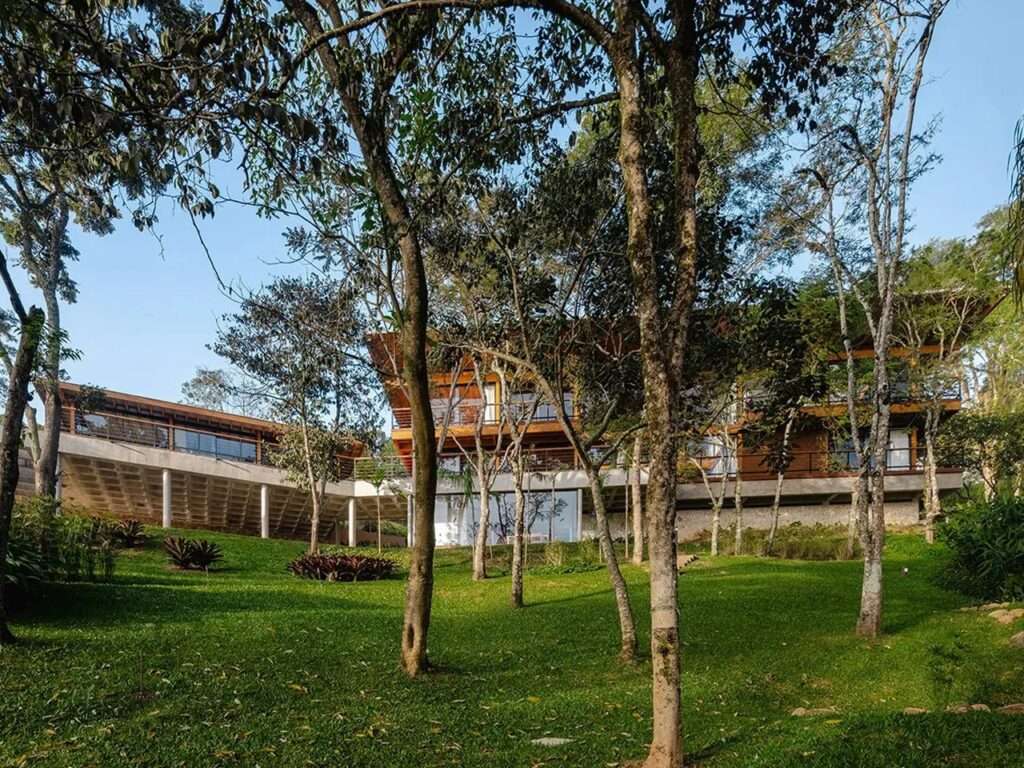
As a result of this approach, the residence became closer to a path that flows between trees rather than an isolated architectural volume detached from its surroundings. This case study demonstrates how architectural design can adapt to site conditions without relying on intensive structural interventions.
Structural System and Construction Techniques
The project relies on a structural system combining glued laminated timber (MLC) and a timber frame structure, using eucalyptus wood within a prefabricated system that reduces intervention in the natural site. The system consists of timber columns and beams, a trapezoidal sandwich roof, dry floor slabs, and structural walls functioning as an integrated unit. This approach aligns with best practices in Construction and the use of innovative Building Materials.
The prefabricated nature of the system also contributed to reducing construction time, as 40 cubic meters of glued laminated timber were installed in just 30 days. This reflects the difference between this type of system and conventional concrete construction techniques in terms of installation speed and reduced structural footprint. For further technical insights, you can refer to the Material Datasheets available online.


Relationship Between Materials and the Surrounding Environment
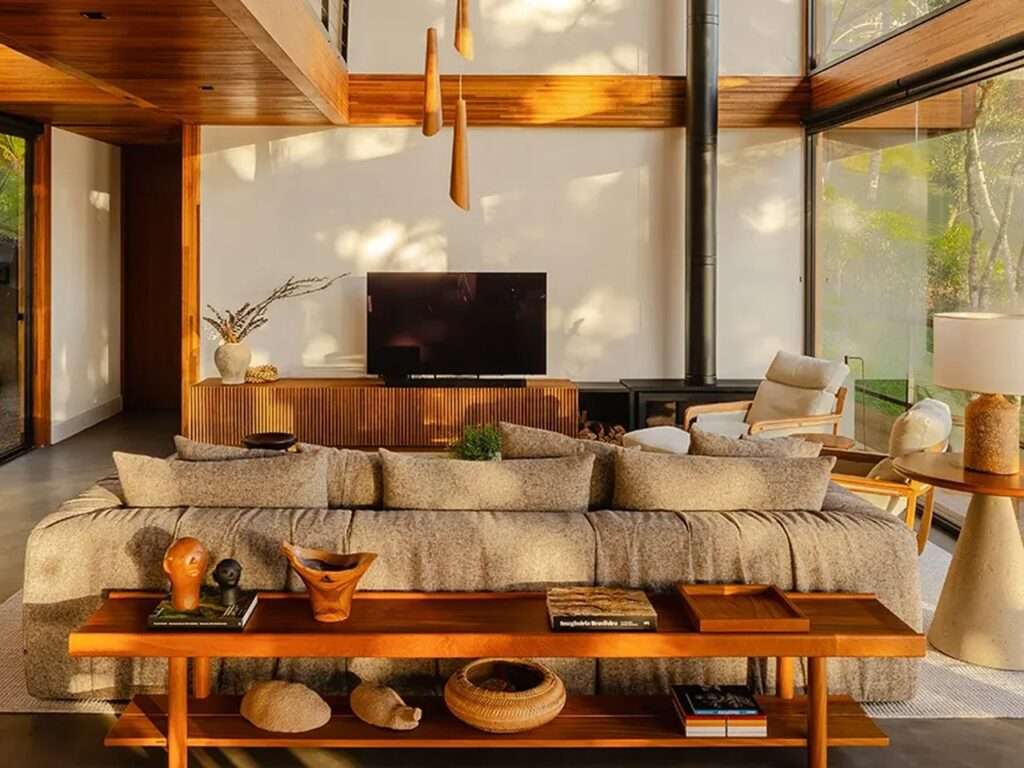
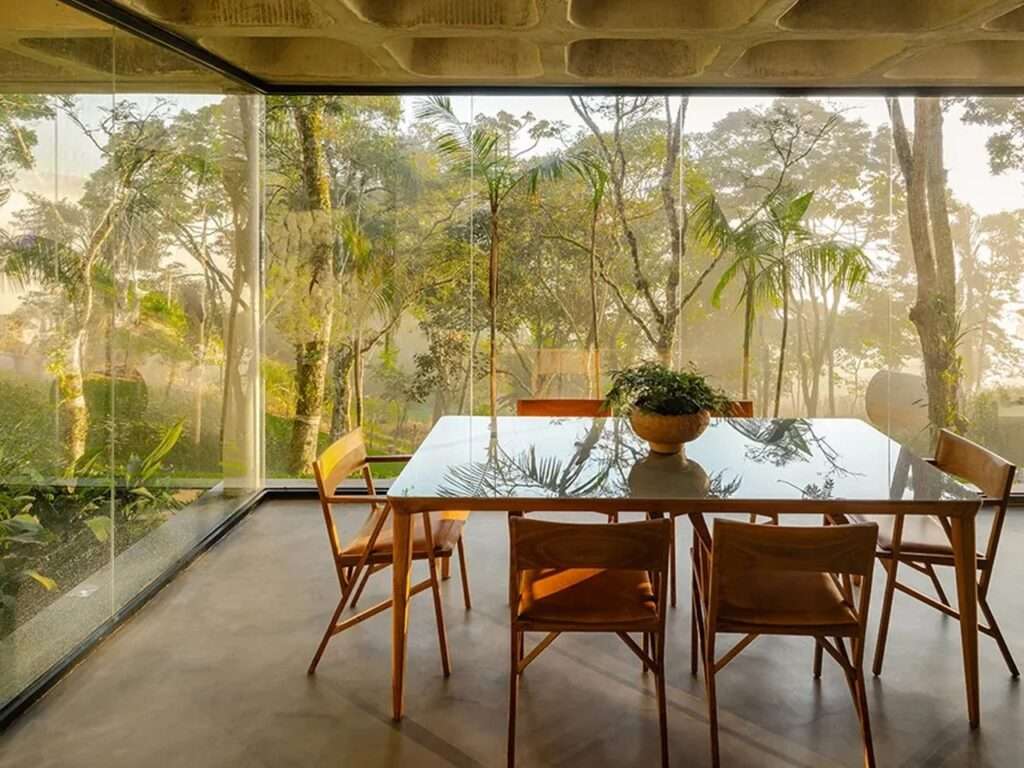
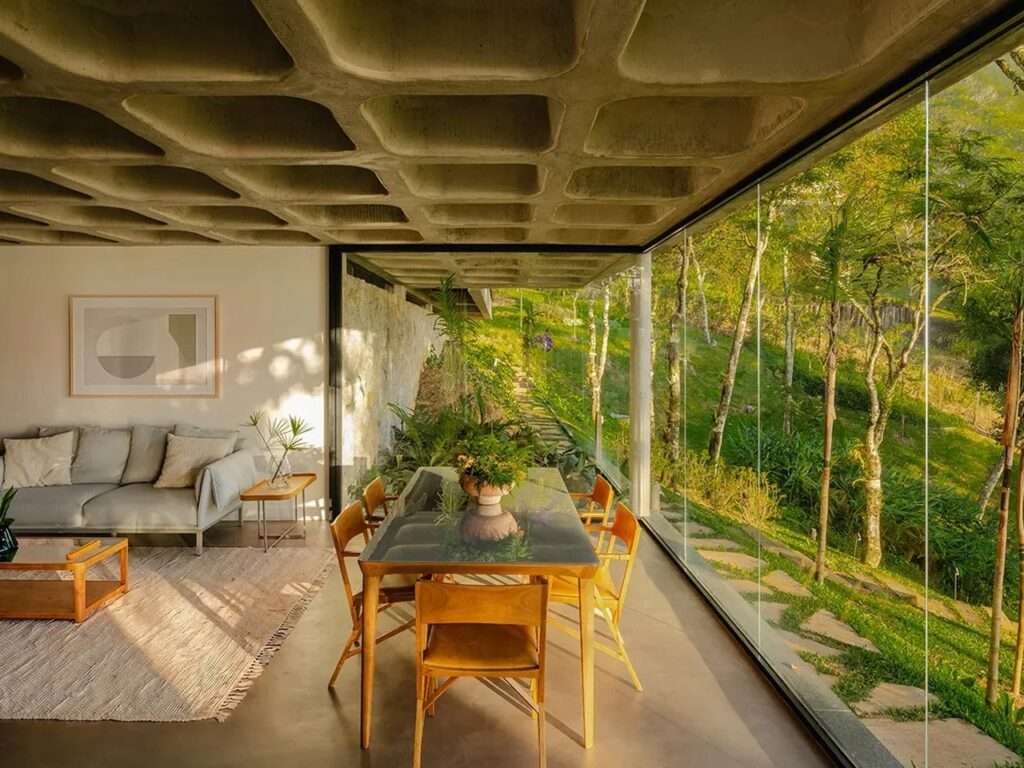
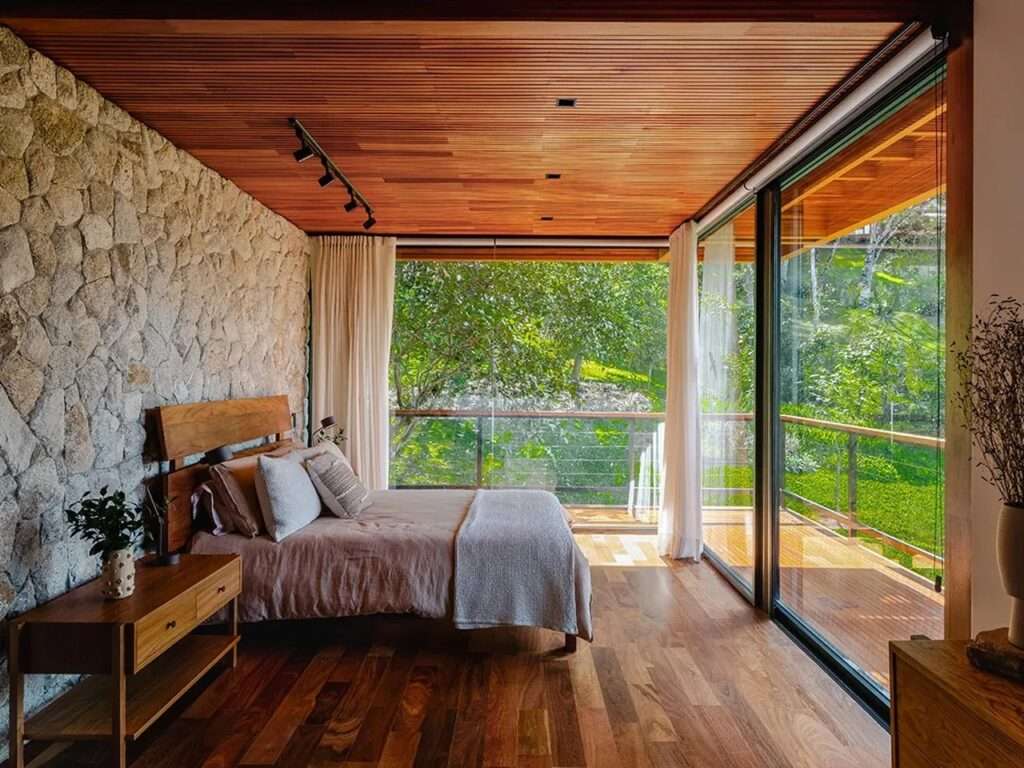
Indoors, the project relies on a mix of wood, concrete, and expansive glass facades to define the spatial experience. The use of these materials appears more closely tied to the natural context due to the density of the surrounding forest, where glass surfaces connect interior spaces with the external landscape without the need for complex visual elements. This integration of Interior Design with the natural setting is a key feature of the project.
At night, the perception of space shifts as lighting reflects on wood, concrete, and glass, emphasizing the material qualities and giving the structure a different character from its daytime presence.
Sustainability as a Design Strategy
The project demonstrates an approach that integrates sustainability into structural and site-related decisions rather than treating it as an isolated component. The construction site was selected in an area where native vegetation had already been under environmental pressure, with the aim of reducing impact on the most sensitive parts of the site. This decision reflects ongoing discussions in the Research community about sustainable practices.
This approach reflects an architectural tendency focused on controlling intervention in the natural environment by minimizing alterations to the terrain and relying on relatively lightweight structural solutions compared to traditional systems. Similar strategies can be observed in other Projects documented in mountainous regions.

✦ ArchUp Editorial Insight
The Casa Pinhal project reflects a broader shift in the production of high-cost residential architecture toward lightweight and prefabricated building systems, driven by factors related to risk management, labor efficiency, and compliance with land-use regulations in sensitive mountainous environments. The use of glued laminated timber and dry assembly systems is not merely a technical choice, but a mechanism for reducing exposure to risks such as terrain instability, insurance constraints, and construction complexity in rugged sites. Structural elevation and reduced ground contact represent an operational compromise between investment pressures and natural site behavior, rather than a formal design gesture. Similarly, the discourse of vegetation preservation becomes a dual-function element that combines environmental compliance with value production within a residential market increasingly reliant on sustainability indicators as an economic differentiator. For more case studies and updates, visit the Archive or browse the latest Top News in architecture.