Lane Cove House: Industrial and Historical Urban Layers

Spatial and Historical Context of the Project
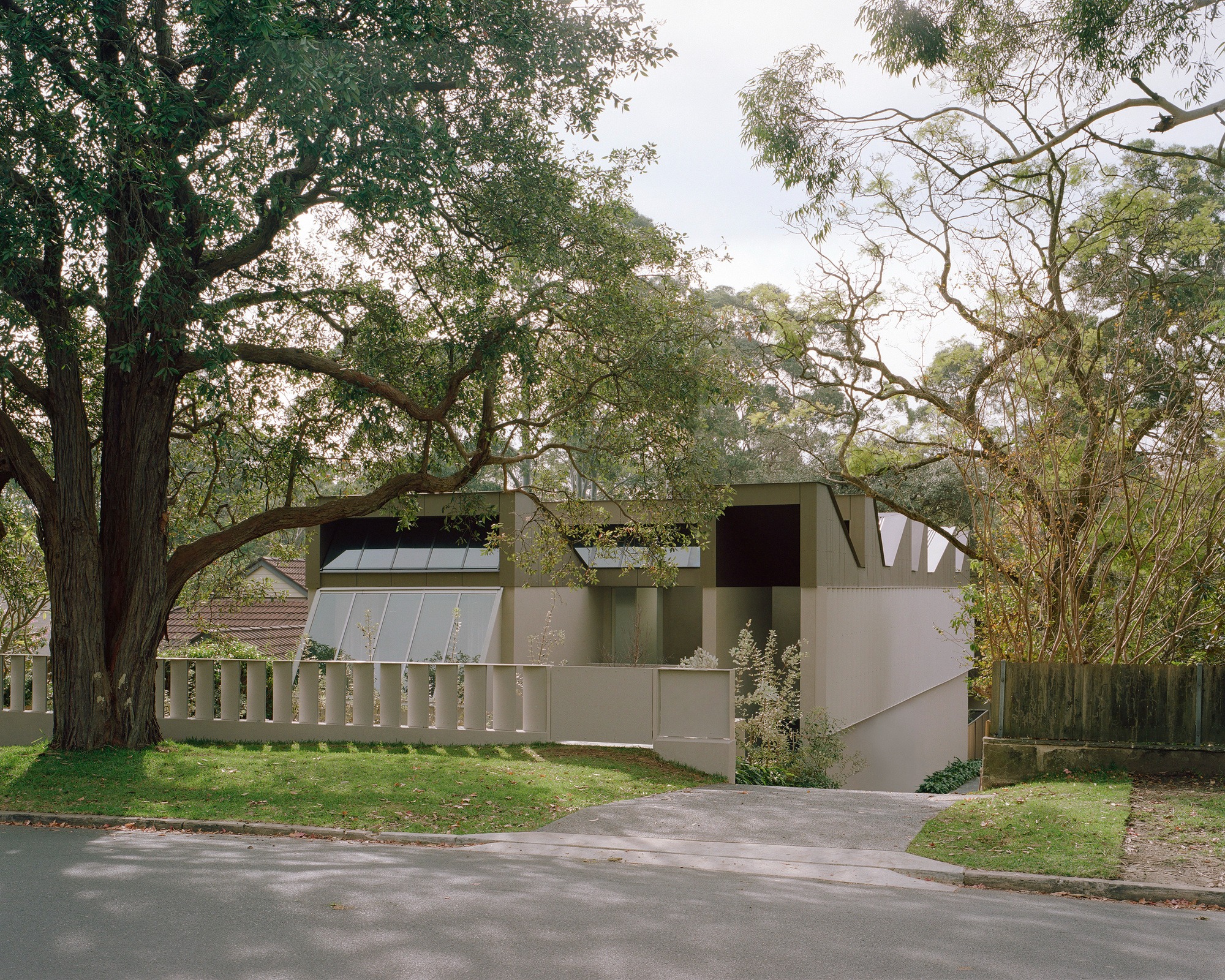
The Lane Cove House project is located in the Lane Cove area within the city of Cities, a region whose identity is shaped by accumulated layers of history that are reflected in its current urban fabric.
Historical Continuity and Urban Transformations
The early history of the area is linked to agricultural activity, followed later by transformations resulting from settlement periods after the presence of Indigenous peoples. Over time, land grants contributed to shaping the residential subdivision patterns seen today, which established the suburban character of the area.
Relationship Between Design and Place
Within this context, the design emerges as a direct response to the surrounding environment, combining a sense of stability rooted in the site’s history with a quiet integration into the natural landscape. In this way, the house becomes an integrated element within a spatial fabric that unites history with urban transformation.
| Field | Details |
|---|---|
| Architects | Lachlan Seegers Architect |
| Year | 2025 |
| Photographs | Rory Gardiner |
| Category | Houses |
| City | Lane Cove |
| Country | Australia |

Industrial Transformation of the Area
Over time, the region underwent a clear transformation from a productive agricultural landscape into an industrial environment. This shift was primarily driven by its proximity to the harbor, which made it a strategic location for shipping activities and timber processing.
On the other hand, traces of this industrial phase remain visible today, particularly in some of the older Buildings. This is especially evident in structures with sawtooth roofs, which were originally designed to enhance natural lighting and ventilation within factory spaces.

Reinterpretation of the Sawtooth Roof
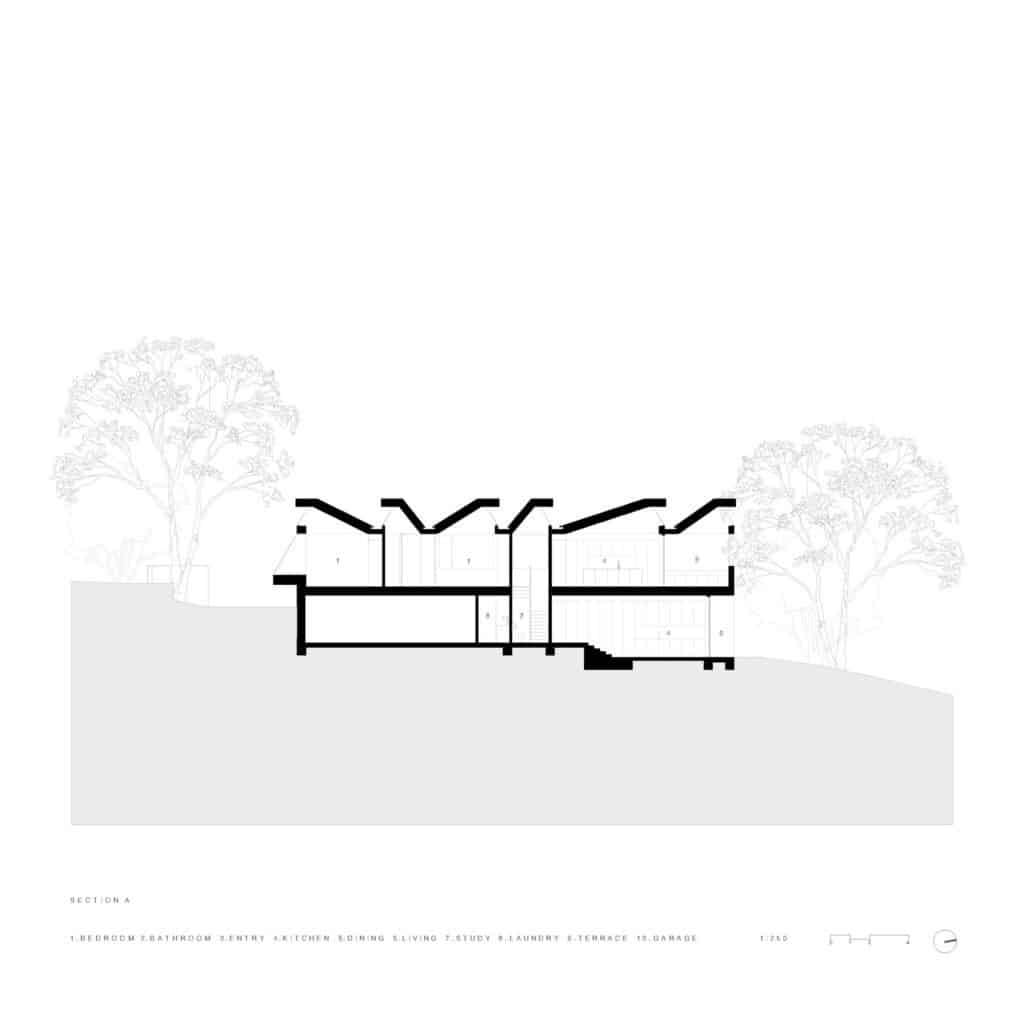
Drawing on the region’s layered local history, Lane Cove House reinterprets the sawtooth roof form in a contemporary language that bridges its industrial heritage with modern Architecture expression.
Functionally, this element is not merely a historical reference; it actively enhances the quality of natural light within the interior spaces. Almost every room is designed to establish a direct relationship with the sky, offering constantly changing light conditions.
As a result, this orientation creates a continuous daily interaction between the user and the shifting patterns of light throughout the day and across seasons, reinforcing a strong sense of temporal dynamism within the home.


Integration with the Surrounding Garden
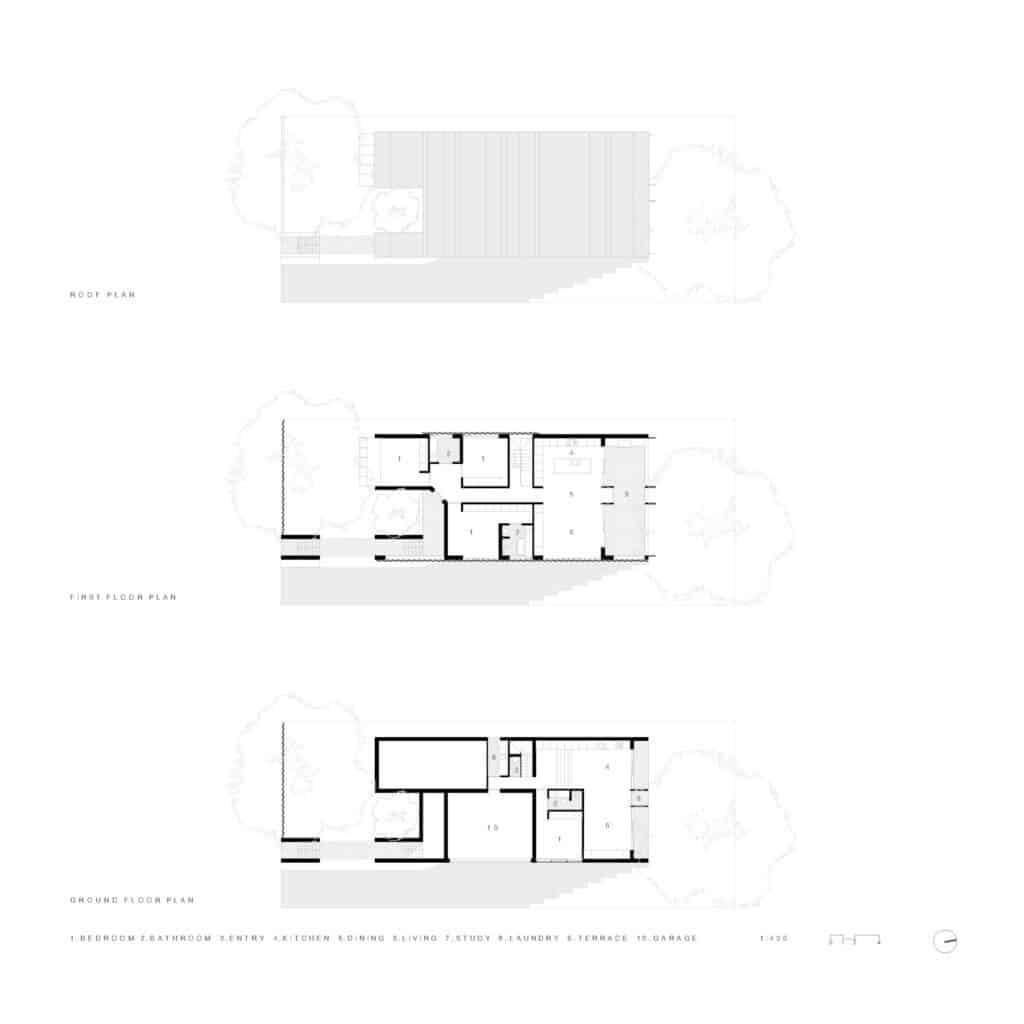
The Interior Design of Lane Cove House is rooted in a deep relationship with the surrounding garden, where the house is not presented as an isolated mass within the natural landscape, but rather as a sequence of spatial volumes interwoven with the external environment.
Through expansive openings, carefully composed courtyards, and framed views toward the canopy of mature trees, the garden is gradually drawn into the architectural experience.
In this way, the green spaces become a calm extension of daily living, offering environments for retreat, contemplation, and quiet engagement with nature.
Color Identity and Its Relationship to the Site
The visual identity of Lane Cove House is defined by a chromatic balance between a dark green roof and a neutral-toned base, serving as a direct expression of its relationship with the surrounding natural landscape.
In terms of inspiration, this palette reflects the view of the site from the harbor side, where the deep green evokes the dense tree canopy of the Lane Cove area, while the neutral tones mirror the reflections and calmness of the water below.
Inside, this color language continues in a more subtle manner through varied tones and textures, creating a visually and sensorially cohesive environment that strengthens the connection to both the natural and historical context of the site without detachment.


Furniture as an Extension of the Natural Landscape
The colors of the furnishings inside Lane Cove House reflect the presence of deciduous maple trees visible from within the interior spaces, as well as their broader distribution across the suburban landscape of the Lane Cove area.
Through this visual continuity, the interior elements are not treated as independent design choices, but rather as a precise response to the external environment, strengthening the relationship between indoors and outdoors.
Ultimately, the house becomes a cohesive architectural narrative that weaves together history, light, and nature, unfolding through a sequence of residential spaces that are calm in character yet rich in visual drama.

✦ ArchUp Editorial Insight
Lane Cove House emerges as a direct spatial consequence of accumulated regulatory and historical transformations within the Lane Cove area, where agricultural land grants and post-settlement subdivisions have reshaped a low-density suburban market structure within Sydney’s urban fabric.
The structural driver lies in land subdivision systems and planning constraints associated with residential zoning, alongside proximity to coastal logistical routes that historically encouraged light industrial uses relying on sawtooth roof structures as solutions for controlling daylight and reducing energy dependence. Regulatory inertia in residential redevelopment preserves a fragmented logic of land division, while supply chain constraints and Construction costs reinforce the reproduction of familiar architectural envelopes rather than enabling structural transformation.
The reinterpretation of the sawtooth roof operates as a mediating strategy between industrial memory and contemporary residential patterns of occupation, translating natural light into a controlled functional distribution within interior spaces. Meanwhile, the integration of the garden acts as an absorption mechanism for land value within a stabilized suburban capital gradient.