The Architecture of Prestige: How the Internal Void Shapes Human Authority

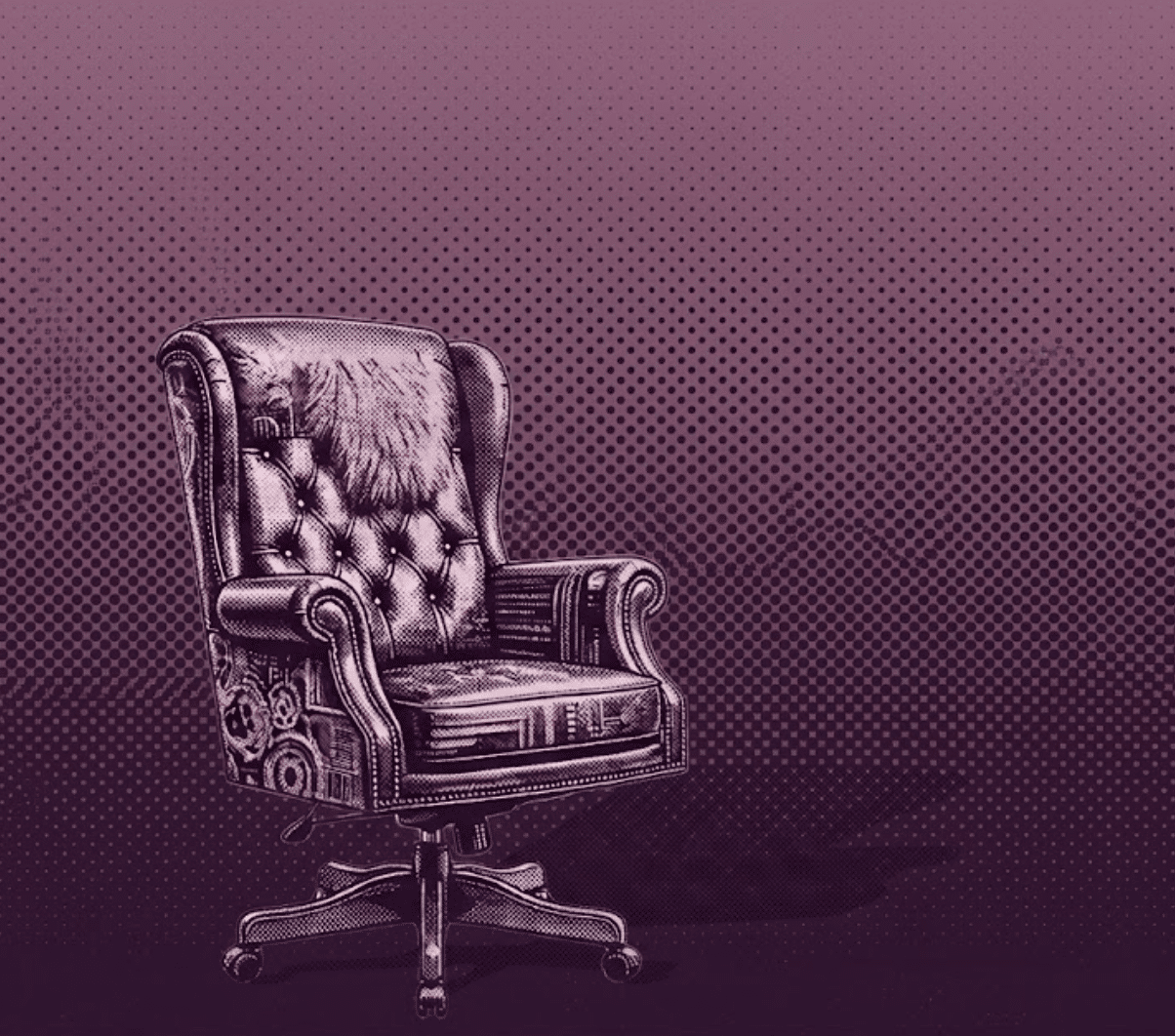
An analytical study on the relationship between spatial design and the psychological weight of authority, exploring focal points, religious hierarchy, and the internal void.
In a cinematic sequence that appeared ordinary at first glance, I recently observed a profound moment in a narrative chronicling a man’s ascent from poverty to the absolute summit of power. The climactic beat was not a financial merger or a violent confrontation, but a nearly silent encounter with a piece of furniture. The protagonist was invited to sit in the director’s chair, the seat of the patriarch, the ultimate vessel of authority. He hesitated. He touched the mahogany frame. He circled it like a predator or perhaps a supplicant. He sat, then rose abruptly. He sat again. The shot lasted over two minutes. To a casual viewer, this might seem like a self-indulgent stretch of screen time. However, through the lens of Architecture, those two minutes were an exhaustive lesson in the profound weight of the internal void. The conflict was not over the physical object of the chair, but over the invisible spatial territory it commanded. It was an admission that in the built environment, we do not merely inhabit rooms; we negotiate with the history and expectations embedded within their centers.
This observation leads to a structural truth that is often overlooked in contemporary Design. We frequently discuss walls, materials, and the technicalities of building skins, yet the element that most deeply affects human behavior is what we leave behind: the void. The chair in that scene was not a functional artifact. It was a concentrated symbolic center holding the layers of legacy, fear, and institutional merit. It revealed that prestige is not constructed through sheer scale or expensive ornamentation. Rather, it is harvested from the delicate relationship between the human body and the surrounding space. When we design for authority, we are not merely specifying a layout; we are orchestrating a psychological encounter.
In traditional spatial logic, there has always been a clear distinction between those who use a space and those who symbolically own it. Consider the Minbar in a mosque or the judge’s bench in a courtroom. These are not merely elevated platforms for acoustic or visual clarity. When a person occupies these specific coordinates, they do not just gain visibility; they inherit the spatial authority of the entire room. The architecture does not merely serve the function; it defines who has the right to appear and who is expected to listen. This is evident in many monumental Projects where the architecture acts as a silent enforcer of hierarchy. The Focal Point is never just a visual destination for the eye. In the architecture of power, the focal point is a behavioral and psychological magnet. Whether it is a presidential desk at the end of a long hall or a high altar facing a congregation, these are not aesthetic choices but structural decisions that reorder the social contracts within the room.
The construction of prestige is rarely an instantaneous event. It is built through the management of psychological distance and architectural sequence. In classical planning, we see a recurring rhythm: the entrance leads to a corridor, which opens into a hall, which eventually culminates at the platform. This is not a matter of waste or inefficiency. Every step is a recalibration of the human spirit. You do not arrive at the center of power immediately; you are prepared for it. In the great cathedrals of Europe or the historic palaces of the Middle East, this progression is a calculated strategy to create a “psychological distance” before one reaches the core. This remains a vital area of Architectural Research as we move through 2026, where the speed of digital life often threatens to flatten these necessary architectural transitions.
We find a compelling historical and religious reference to this phenomenon in the narrative of the Throne of Bilqis. The throne was not merely a seat; it was a total representation of a kingdom’s sovereignty. When its location was shifted, it was not the furniture that changed, but the entire perceptual equation of authority. This reflects a deep philosophical reality: authority does not reside in the person alone, but in the spatial void they occupy. If you move the center, you move the power. This is why the protagonist in our opening scene hesitated. He understood that sitting was an act of recognition. He was accepting the responsibility, the legacy, and the psychological burden of the space. The chair was not light; it was heavy with the gravity of those who sat there before him.
In our current era, we are witnessing a symptomatic failure in many high-budget Cities. We see vast halls and immense lobbies that, despite their cost, are entirely devoid of prestige. The reason for this is often a lack of a clear focal point or a failure to respect the necessity of sequence. A large space without a behavioral center is merely a hollow volume. It fails to dictate how a person should feel or act. According to recent reports on the state of the industry, the obsession with “open plan” and “flexible space” has often led to a liquidation of the very spatial hierarchies that give a building its dignity. When the Focal Point is unclear, the architecture fails to hold the human presence.
True prestige in the built environment is not an ornament. It is not a function of volume or the price of the marble. It is a precise relationship between position, movement, and the point of focus. As we track the News of contemporary developments, it becomes evident that the most successful spaces are those that manage this relationship with quiet confidence. They do not shout their importance; they enforce it through the way they organize the human body. Some spaces precede you. Before you even enter them, you know how to behave. You lower your voice in a sanctuary, you stand straight in a court, and you move with deliberation in an executive office. These are not written rules but architectural commands. The space itself imposes a behavioral code.
The architectural question of 2026 remains the synergy between design and inhabitant. Architecture sets the stage, but the human presence fills it. A vacant throne is a haunting image precisely because it is a stage waiting for an actor. When the right person occupies the right coordinate, the room reaches its full potential as a center of gravity. Conversely, a magnificent hall can feel absurd if occupied by someone who does not understand the weight of its void. This tension is at the heart of modern Construction, where we are struggling to build new centers of authority that don’t feel like mere stage sets.
In conclusion, the cinematic scene that lasted two minutes was not an indulgent pause but a pure architectural moment. It was the realization that sitting is an act of alignment with a spatial system. The protagonist’s hesitation was a recognition of the fact that prestige is a shared burden between the chair and the person. A city or a building that forgets how to create these centers of dignity is a city that is losing its urbanity. As we look toward future Competitions and master plans, we must remember that the most critical material we manage is not the concrete or the glass, but the human dignity we house within the void. A building is successful not when it is filled with things, but when it is filled with meaning.
✦ ArchUp Editorial Insight
The construction of prestige is a clinical symptom of the management of “psychological distance” and institutionalized legacy. Non-architectural data reveals that the internal void functions as a behavioral magnet, dictating social hierarchies through the orchestration of spatial sequences and the weight of legacy. This decision framework prioritizes the “Focal Point”—such as the minbar or the judicial bench—as a silent enforcer of authority rather than a functional artifact. Consequently, the architectural outcome is the reordering of social contracts within the room, where built massing serves primarily to frame the void that houses the body of power. In 2026 Cities, the liquidation of these hierarchies in “open-plan” models reflects a symptom of institutional ambiguity, finalizing the transition of architecture from a vessel of meaning to a hollow volume of administrative caution. True spatial authority is a logical byproduct of a fiduciary responsibility to protect human dignity within the void.