Lava Lamps: Between Nostalgia and Contemporary Innovation

Lava Lamp: A Design Icon and Nostalgia Symbol
If there is an object that embodies the spirit of the 1960s and continued to influence design into the 1990s, it is the Lava Lamp. This lamp was more than just a lighting device; it became a cultural symbol associated with the quirky, colorful designs that defined that era.
A Comeback Among Millennials
In recent years, the Lava Lamp has witnessed a strong resurgence, particularly among millennials, becoming a familiar nostalgic element of childhood memories. This revival reflects a desire among newer generations to connect with designs that carry an artistic, innovative character and bold colors, far from the practical simplicity of modern devices.
Innovation and Creativity in Design
In 2025, Mathmos unveiled new editions of this classic lamp in collaboration with Dutch designer Sabine Marcelis, who had previously designed lamps in yellow and burgundy. This collaboration demonstrates a clear focus on innovation and renewal while maintaining the classic character, through two distinguished releases: a giant lamp standing 296 cm tall and a light green reissue of the famous Astro Lamp originally launched in 1963.
Analytical Insight
This type of lamp reflects the evolving relationship between design and cultural memories. The lamp is not only an aesthetic object but also serves as a bridge between past and present, showing how classic pieces can adapt to modern tastes while retaining their original identity.
The Creative Ambition Behind the “Column” Lava Lamp
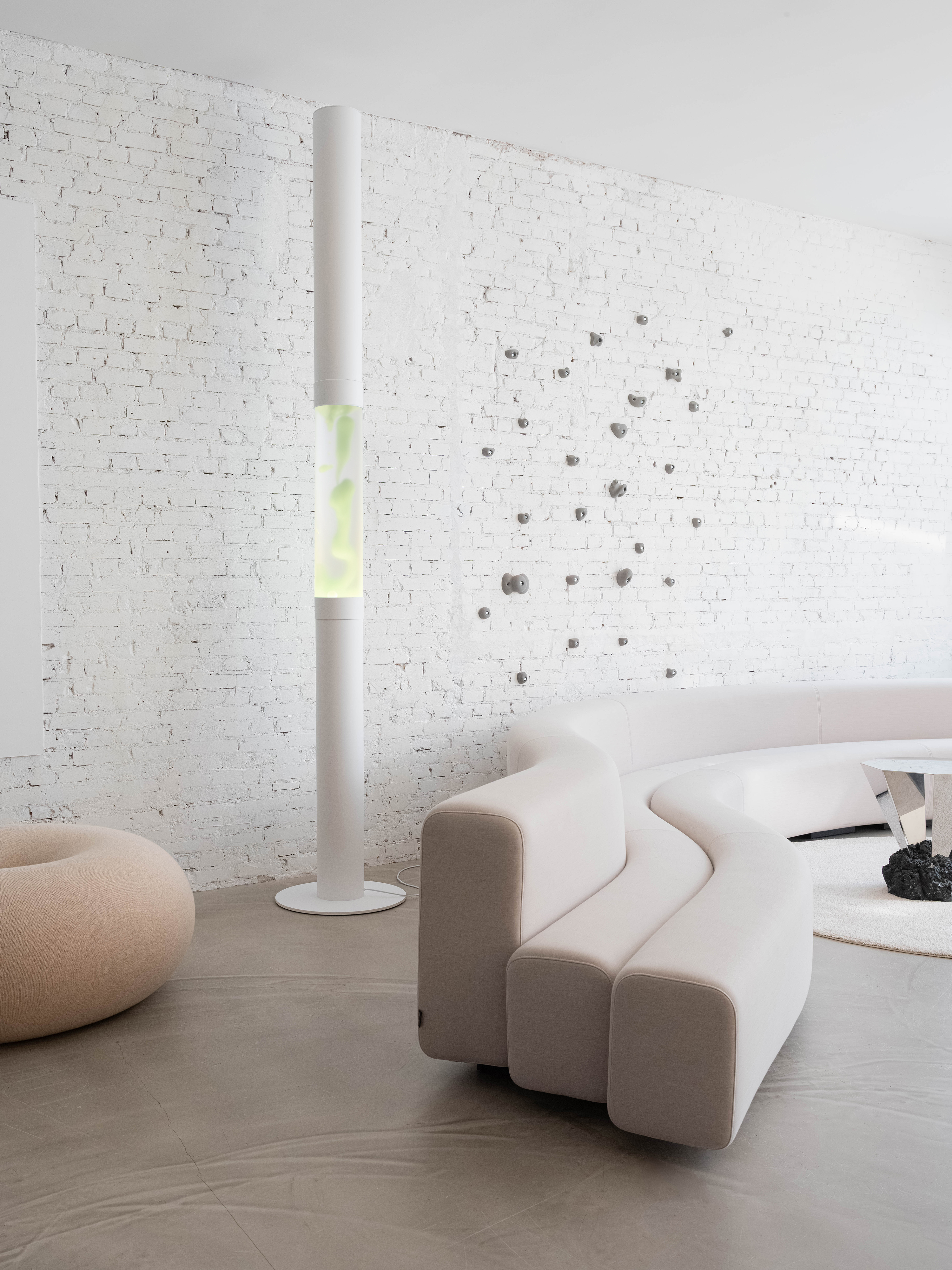
The Column Lamp was inspired by Dutch designer Sabine Marcelis’ vision of light sculptures stretching from floor to ceiling, becoming a living model of pure psychedelic imagination, reimagined on an architectural scale. This vision reflects the intersection of architectural art and experimental lighting, where the lamp transforms into an artwork in its own right, not merely a source of light.
Design and Movement
The lamp stands approximately 3 meters tall and features a slender glass cylinder containing lava blocks that move with mesmerizing slowness, giving the scene a sense of a luminous sculpture and the internal life of the material. This slow motion creates a visual experience that blends nostalgia with a futuristic character, harmonizing past and present designs in a tangible artistic way.
Colors and Customization
Three candy-inspired colors were chosen to enhance the visual appeal: Bubblegum (pink), Peach (light orange), and Honeydew (light green). This color variety allows the lamp to harmonize with different environments while reflecting meticulous attention to detail and a sensory experience for the viewer.
Cultural and Analytical Reflection
The Column Lamp exemplifies how a creative vision can be transformed into a complete architectural visual experience. It embodies the idea that light can become a form of sculpture, demonstrating how contemporary art pieces can reinterpret classic symbols in innovative and eye-catching ways.
Reissuing the “Astro” Lamp: A Return to the Roots
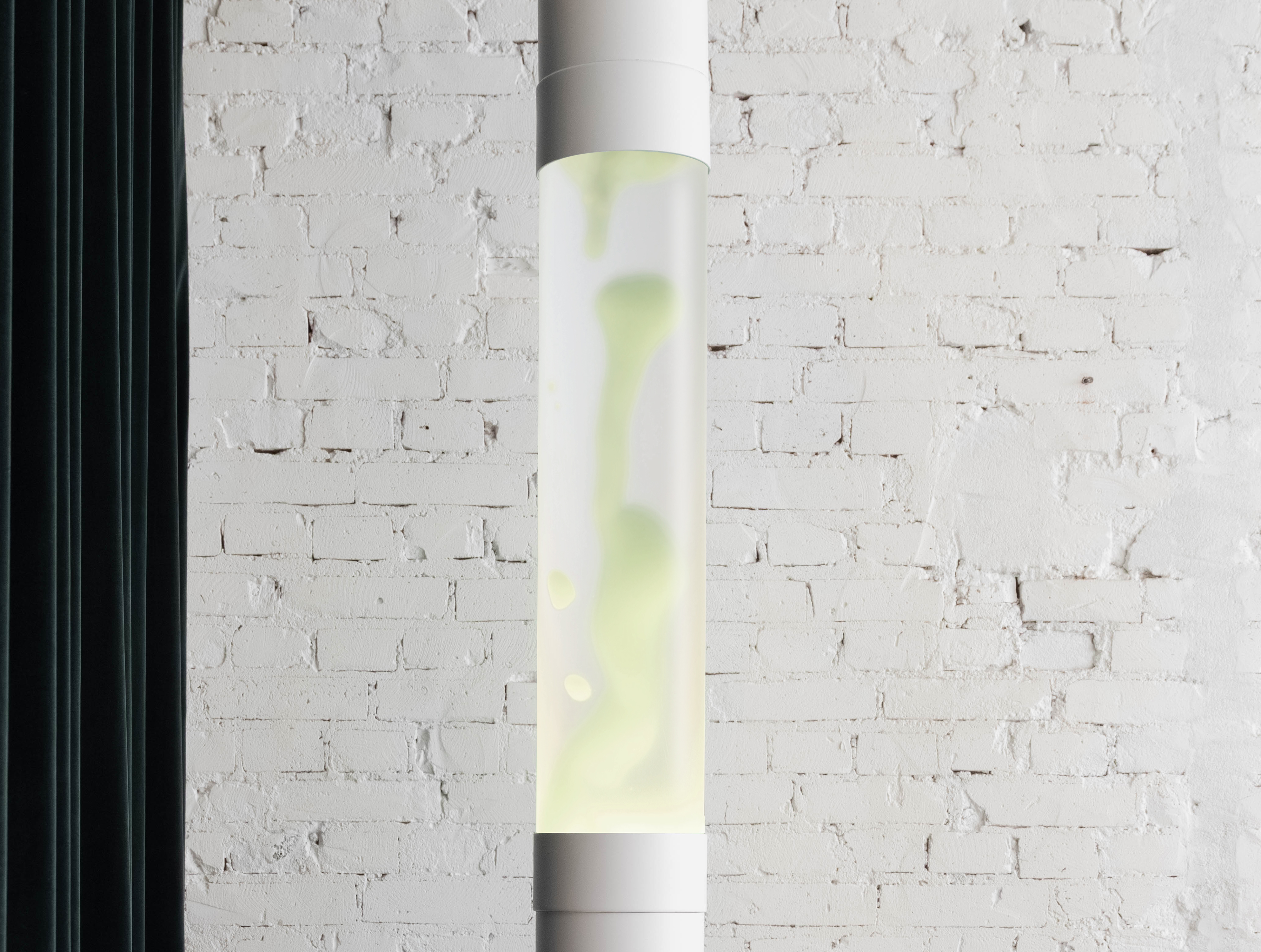
Mathmos, in collaboration with designer Sabine Marcelis, is reintroducing a limited edition of the original “Astro” Lava Lamp, restricted to 1,000 pieces. This lamp represents the first original model of lava lamps, designed by British inventor Edward Craven Walker in 1963, inspired by an era fascinated with modern technology and space exploration.
Design Details of the New Edition
This edition features frosted glass, with details meticulously crafted by Marcelis, and Honeydew lava manually filled to ensure balanced movement and color. A matte mint-green aluminum base and cap were added, giving the lamp a blend of classic character and contemporary touches.
Cultural and Analytical Perspective
This new edition reflects a renewed interest in historical design while preserving the original innovative spirit that defined the 1960s. It also demonstrates how classic pieces can engage modern senses, delivering a visual experience that combines nostalgia with modernity simultaneously.
Reinventing Lava Lamps
Designer Sabine Marcelis and Mathmos continue to innovate Lava Lamps in new forms that blend art and architectural design. This innovation includes a sculptural model that defines space, alongside a reissue of the classic model that started the lamp’s history, reflecting the ability of vintage designs to renew themselves and stay relevant in contemporary times.
Classic Design in a Contemporary Context
These editions reaffirm the cultural and aesthetic significance of Lava Lamps, which are not merely lighting devices but symbols of renewed classic design that attract design enthusiasts and those nostalgic for the 1990s. This trend also reflects designers’ desire to merge nostalgia with contemporary innovation, offering art pieces that harmonize the past and present.
✦ ArchUp Editorial Insight
The Lava Lamp project provides a clear example of how simple ideas can be transformed into visually captivating art pieces. Creativity is manifested in the slow movement of the internal blocks and the color gradients inspired by nature and confectionery, adding a nostalgic charm to the design. The project also reflects the designers’ commitment to preserving the lamps’ historical identity while attempting to introduce contemporary elements, which is commendable from a cultural design perspective.
However, there are several aspects that require deeper architectural consideration. Firstly, the enormous size of some editions, such as the 3-meter-tall Column Lamp, raises questions about functionality and spatial proportion in various architectural environments, as integrating such pieces into typical interiors may necessitate rearranging surrounding design elements. Secondly, the experimental and kinetic nature of the lamps may make them more prone to wear or damage compared to stable traditional designs, limiting their practical application in large-scale architectural projects.
Furthermore, while the project holds strong aesthetic value, its impact on advancing architectural lighting understanding or spatial interaction remains limited; it focuses more on an individual visual experience rather than serving as a functional element or comprehensive architectural solution. Nonetheless, the concept could be leveraged to integrate artistic elements within public spaces or exhibitions, where it can act as a visual stimulus and create a dialogue between design and the surrounding space.
In summary, the project represents an eye-catching and imaginative experience, yet it requires deeper study regarding its practical applicability in various architectural settings, balancing aesthetics with functionality.
Prepared by the ArchUp Editorial Team
Don’t miss the chance to explore more from Architecture in fields like Buildings and Design on the ArchUp website.