Lincoln Memorial Reflecting Pool to Be Painted American Flag Blue Under New Plan

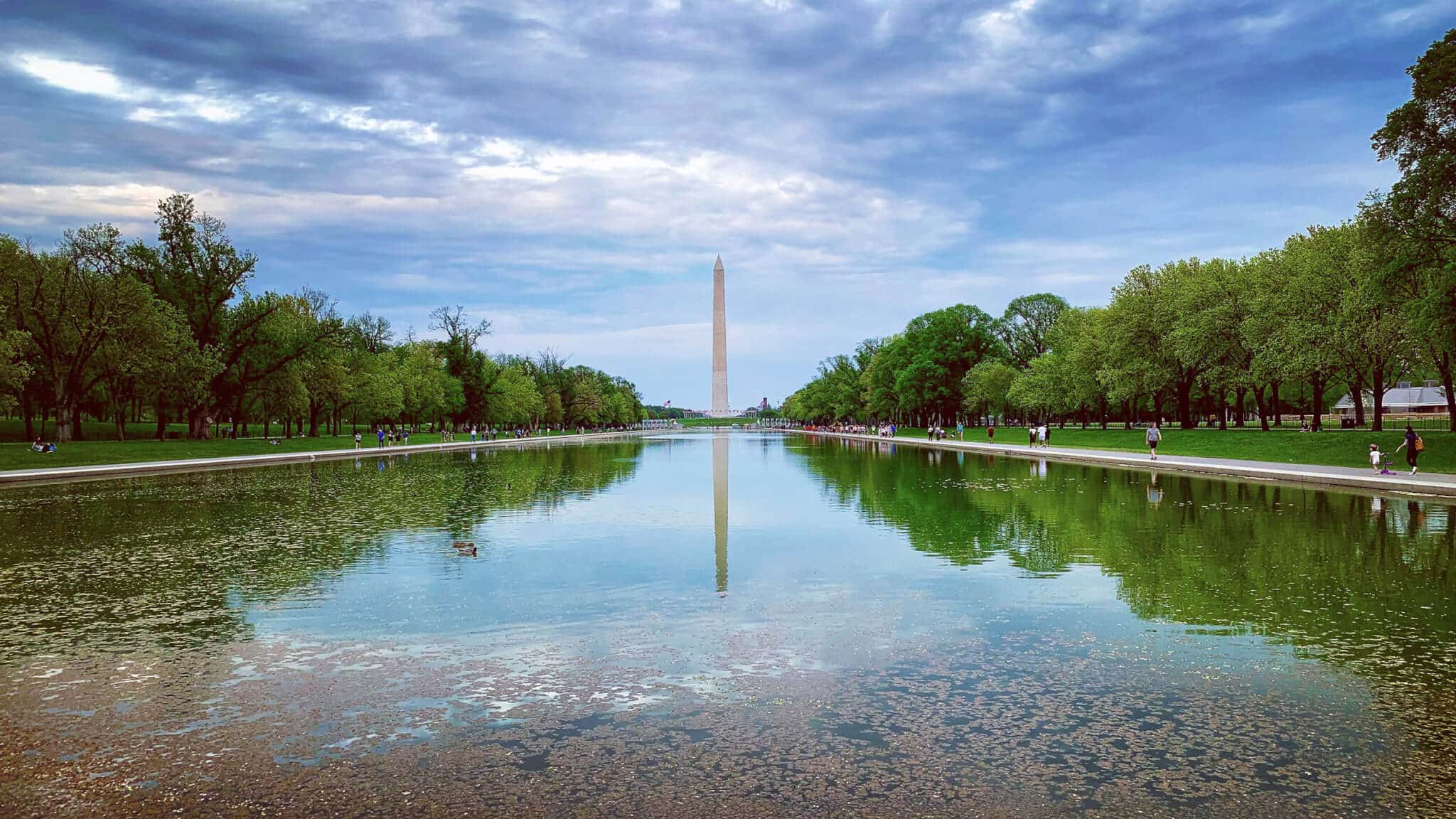
President Trump announced plans to repaint the Lincoln Memorial Reflecting Pool in Washington, D.C. He described the basin as unclean and ordered a cleaning and repainting effort. The project aims to finish before July 4 as part of broader federal updates tied to national commemorations.
Cleaning and Coating the Historic Basin
The plan calls for private contractors to scrub the granite lining before applying an American flag blue coating. Crews will begin work soon and expect to finish within two weeks. The project budget ranges between $1 million and $2 million.
The Reflecting Pool measures 2,030 feet long and 170 feet wide. Its V-shaped section ranges from 18 to 30 inches deep. Builders installed the current granite lining in 1923, the year the memorial complex reached completion. The site remains one of the most recognized works of American https://archup.net/architecture/.
Officials previously considered replacing the granite with new stone. However, estimates reached $300 million and required years of https://archup.net/construction/. The repainting strategy reduces both time and cost, according to federal statements.
Historical Context and Public Debate
The Reflecting Pool has hosted major civic events for decades. It framed the 1963 I Have a Dream speech and continues to anchor large gatherings. As one of Washington’s most symbolic https://archup.net/building/, it carries architectural and cultural weight.
Multiple lawsuits now challenge several federal projects in the capital. Advocacy groups and public officials question the scope and process of ongoing work. Meanwhile, other anniversary initiatives include renovations to civic https://archup.net/building/ and public spaces across the city.
The project falls under the Department of the Interior. Officials argue the work addresses maintenance concerns. However, critics debate whether painting historic stone aligns with long-term https://archup.net/sustainability/ goals and preservation standards.
Part of Broader Changes in Washington
The repainting effort coincides with additional proposals in Washington, D.C. Plans include updates to federal facilities and commemorative structures. These efforts reflect a wider push to reshape symbolic sites within the capital’s urban framework.
Such changes influence how residents and visitors experience national landmarks. They also affect discussions around https://archup.net/cities/ identity and heritage management. As reported in recent https://archup.net/news/, the outcome of pending legal actions may determine how quickly these projects proceed.
A Quick Architectural Snapshot
Location: National Mall, Washington, D.C.
Length: 2,030 feet
Width: 170 feet
Depth: 18 to 30 inches
Original completion: 1923
Current update: Granite cleaning and blue coating
Estimated cost: $1 million to $2 million
Timeline: Two weeks, targeted before July 4
✦ ArchUp Editorial Insight
The decision to apply a synthetic coating over historic granite reflects an prioritization of immediate visual impact over traditional preservation cycles. Architecture serves as a symptom of shifting administrative values where speed and cost-efficiency dictate the lifespan of public infrastructure. By opting for a million-dollar paint job instead of a three-hundred-million-dollar stone replacement, the project reveals an economic strategy centered on high-visibility maintenance. This approach signals a move away from permanent material permanence toward more temporary, interventionist solutions in urban spaces. The resulting transformation of the National Mall demonstrates how political timelines and budgetary constraints override the slow pace of classic masonry restoration.
This project is the logical outcome of accelerated delivery requirements + fiscal austerity measures + the institutionalization of branding within public space.