Altus Transformable Rooftop Cabin Redefines Tent Design

Transformations in Roof Tent Design
The camping experience has long been negatively affected by factors such as weak materials, complex installation, and the instability of traditional extensions. With the emergence of hard-shell tents, this field has begun to witness a notable shift toward more durable and organized solutions. As a result, the diversity of models and functions has increased, leading to a dense design environment filled with multiple options that respond to different needs.
The Hard-Shell Cabin as a Design Case Study
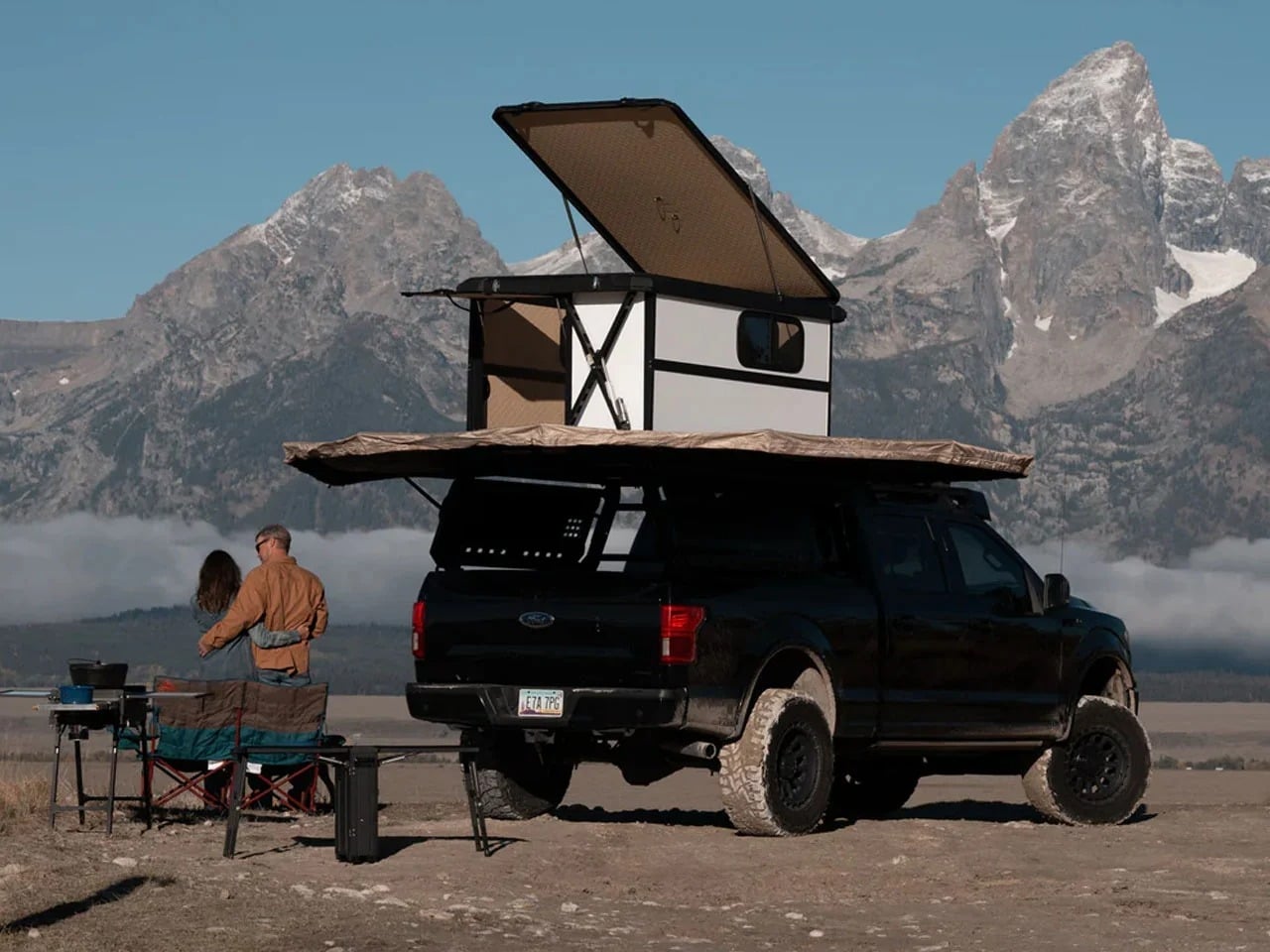
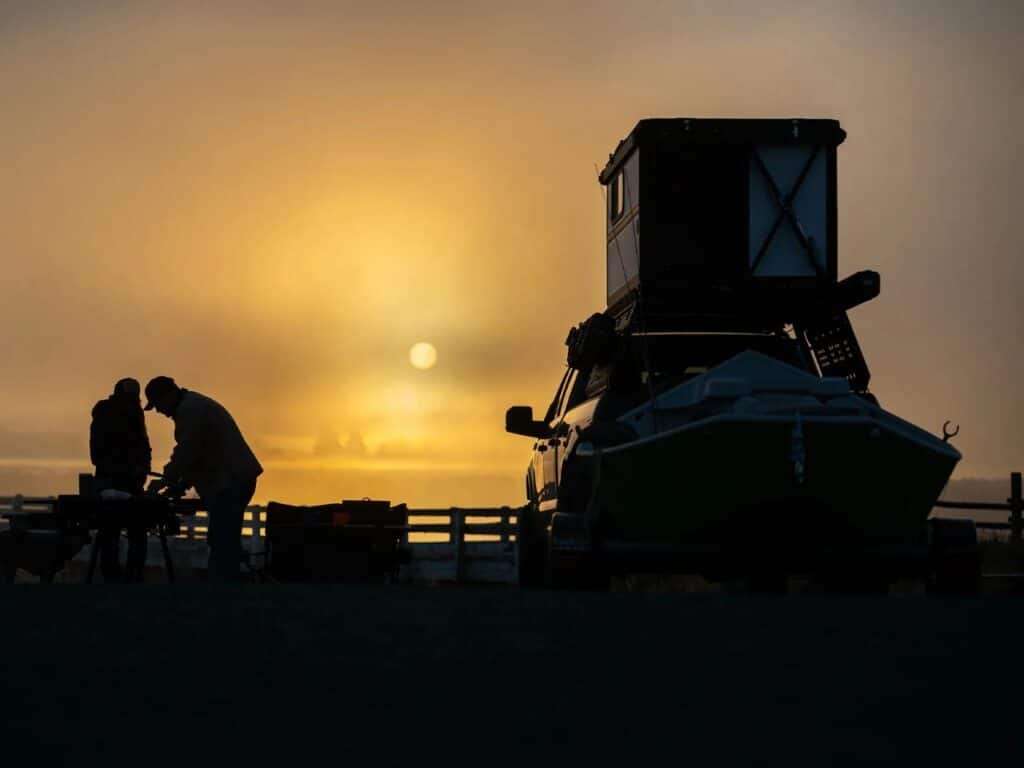
The Altus – Hardwall Rooftop Cabin is presented as a case study within this transformation, relying on the idea of integration between form and function. The model is available in two different sizes without any change in functionality, and it is offered as a rigid-walled unit capable of transforming from a low-profile position during movement into a living space with greater height. This transition reflects an attempt to reduce the gap between transportation requirements and actual use, within a single cohesive system.

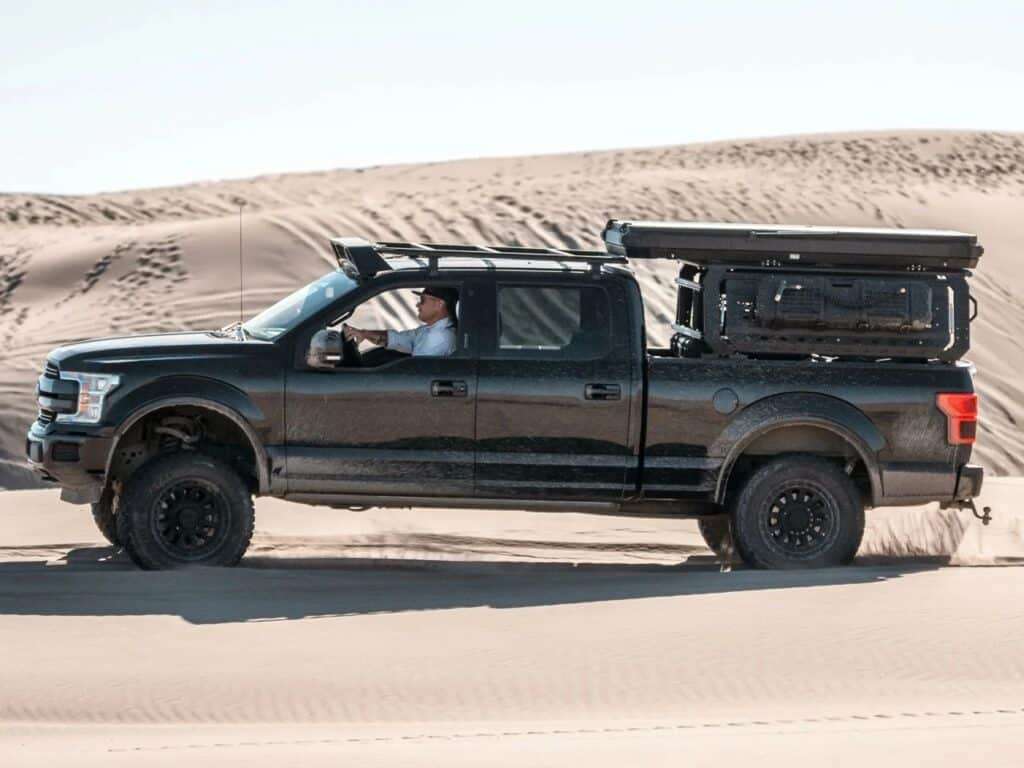
Opening Mechanism and Spatial Transformation
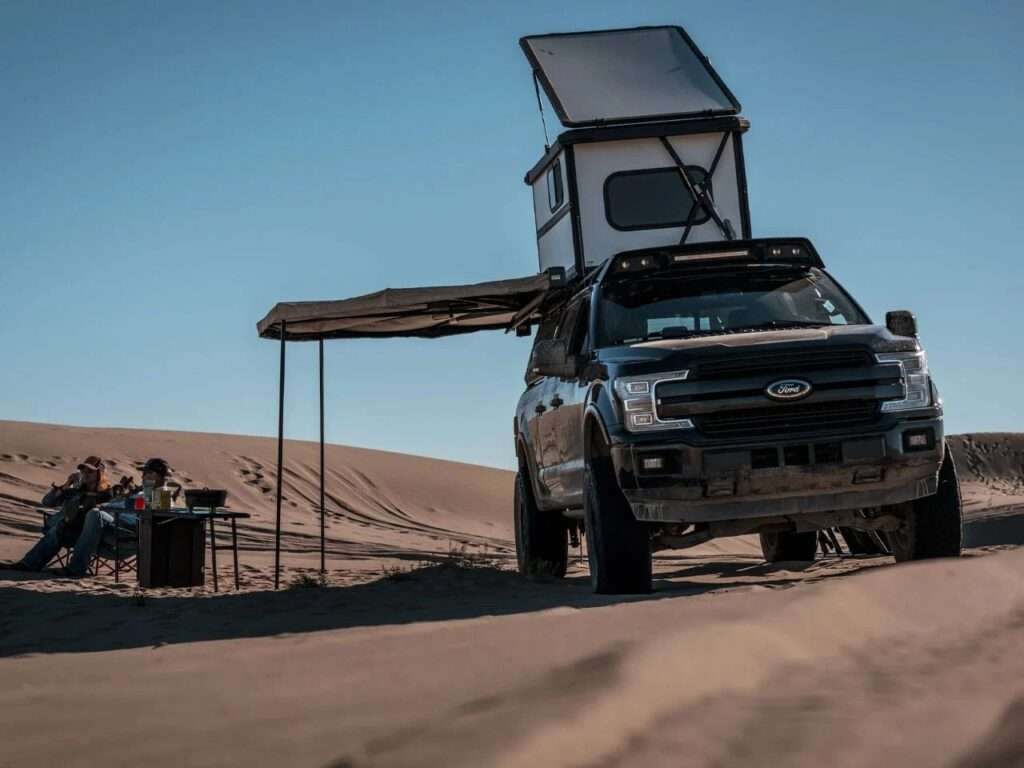
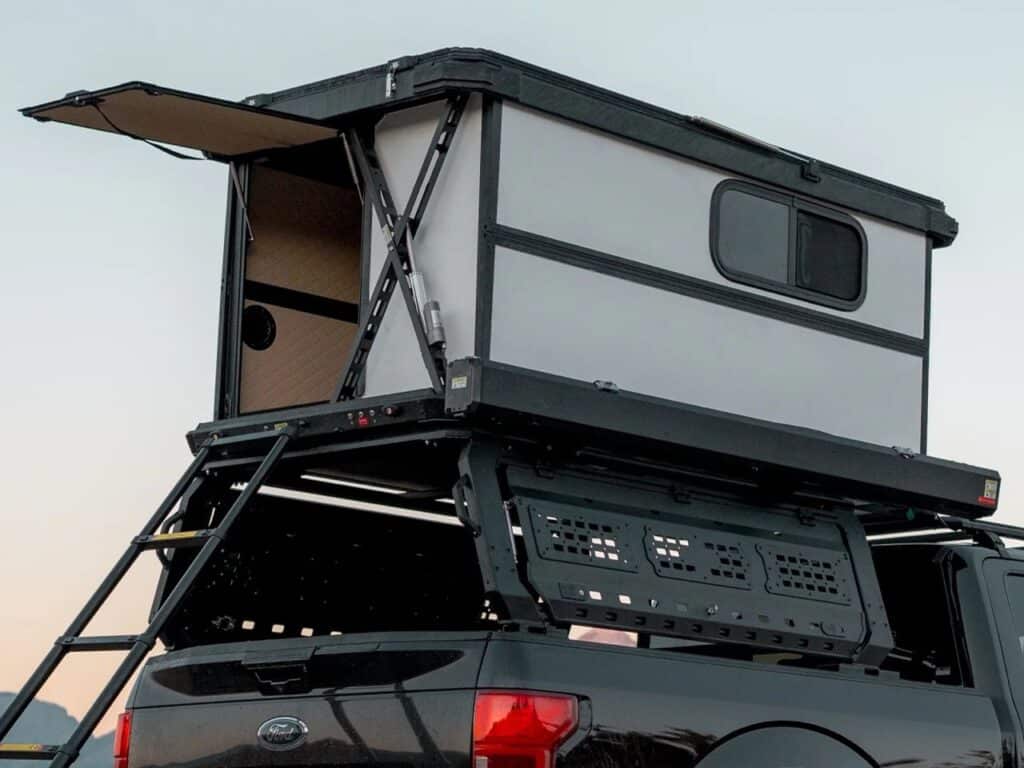
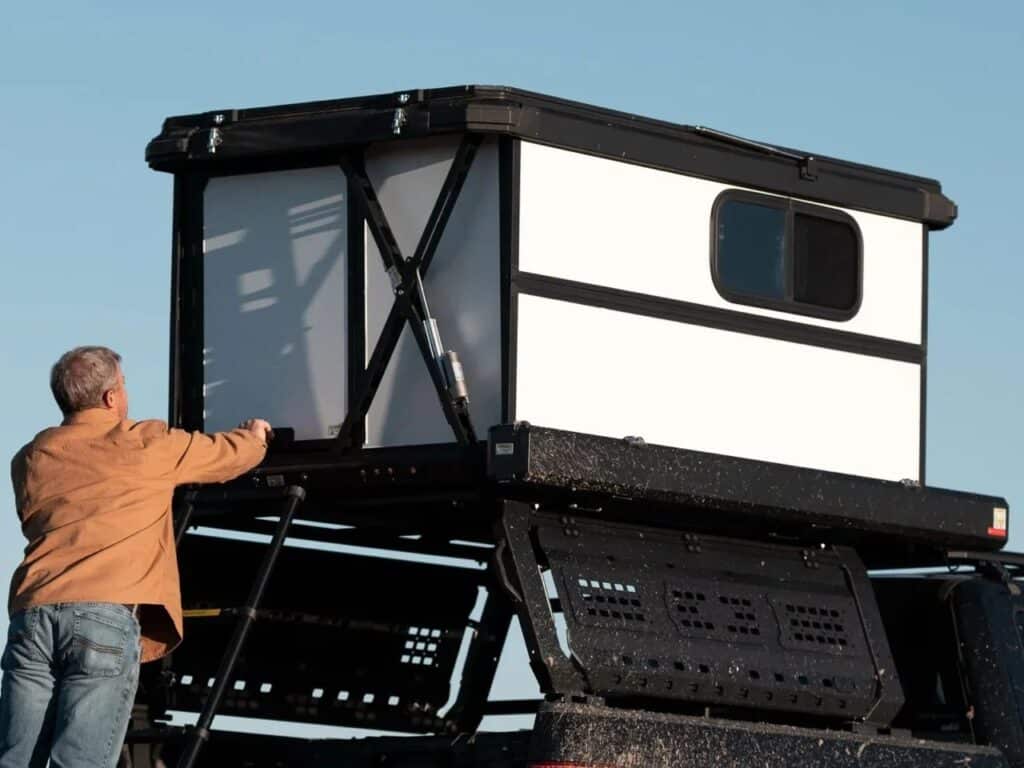
The cabin relies on an electric lifting system that enables the reconfiguration of space within a relatively short period of time, although the exact timing is not confirmed. The process begins by raising the side panels to form the main structure, after which the front and rear facades are folded independently once the sides are secured. In addition, a manual operation option is available, indicating flexibility in handling different usage conditions, whether with or without a power source.
The Liftable Roof and Spatial Reconfiguration
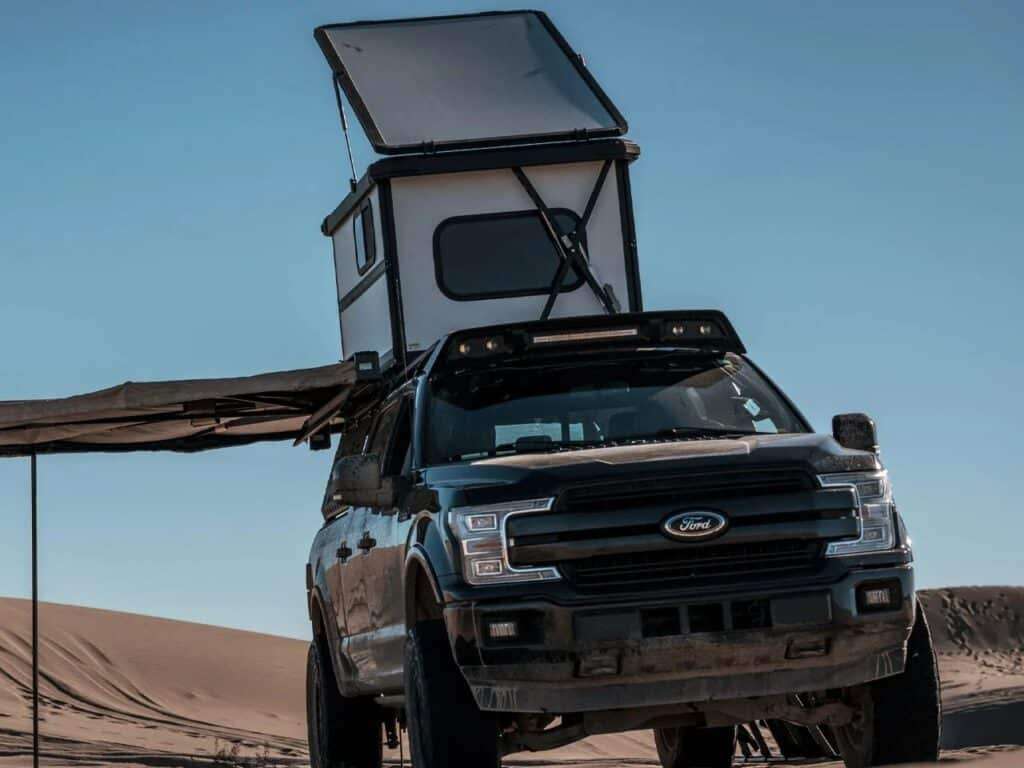
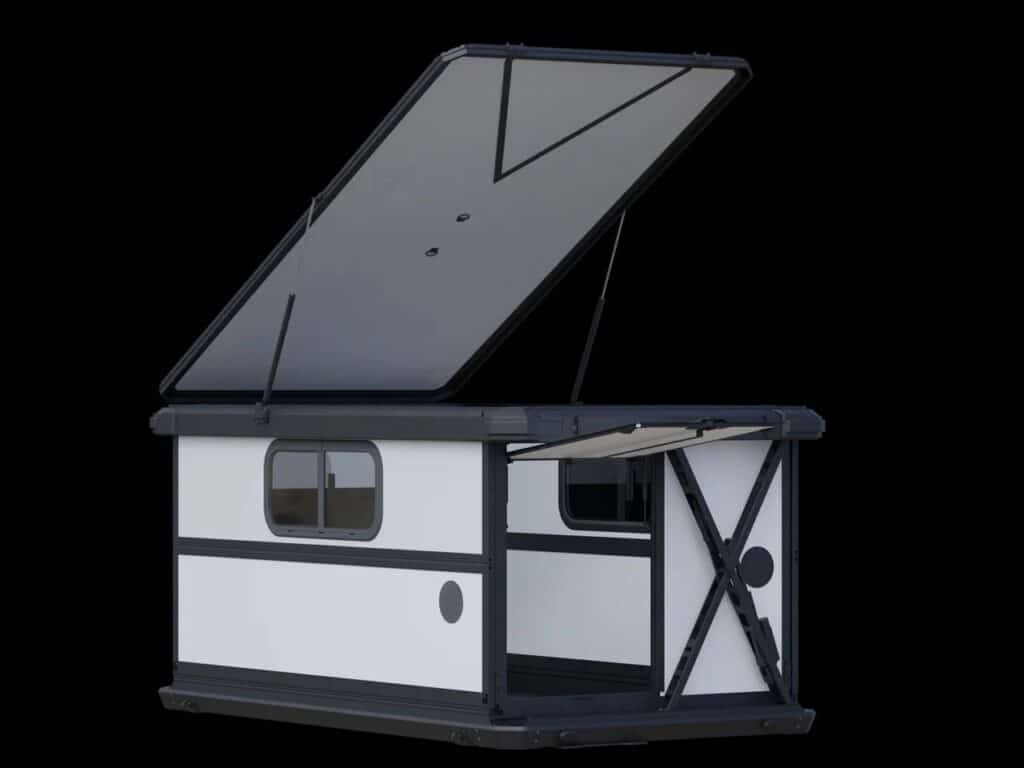
The structure consists of a cubic unit topped with a liftable roof system mounted on a rear hinge. When opened, the roof rises from the front side to provide sufficient standing height, transforming the interior space into a more comfortably usable human environment. This configuration also creates an elevated viewing point, while complete closure is required during severe weather conditions to ensure insulation and protection.
Materials and Structural Properties
The cabin is built on aluminum alloy frames combined with PET panels, a choice that reflects a balance between lightness and durability. This results in a relatively limited overall weight, with only slight differences between the standard and XL versions. In addition, the varying dimensions allow the larger version to accommodate more users while maintaining a unified design language that includes sliding side windows and a hinged roof system.
Mounting System and Vehicle Integration
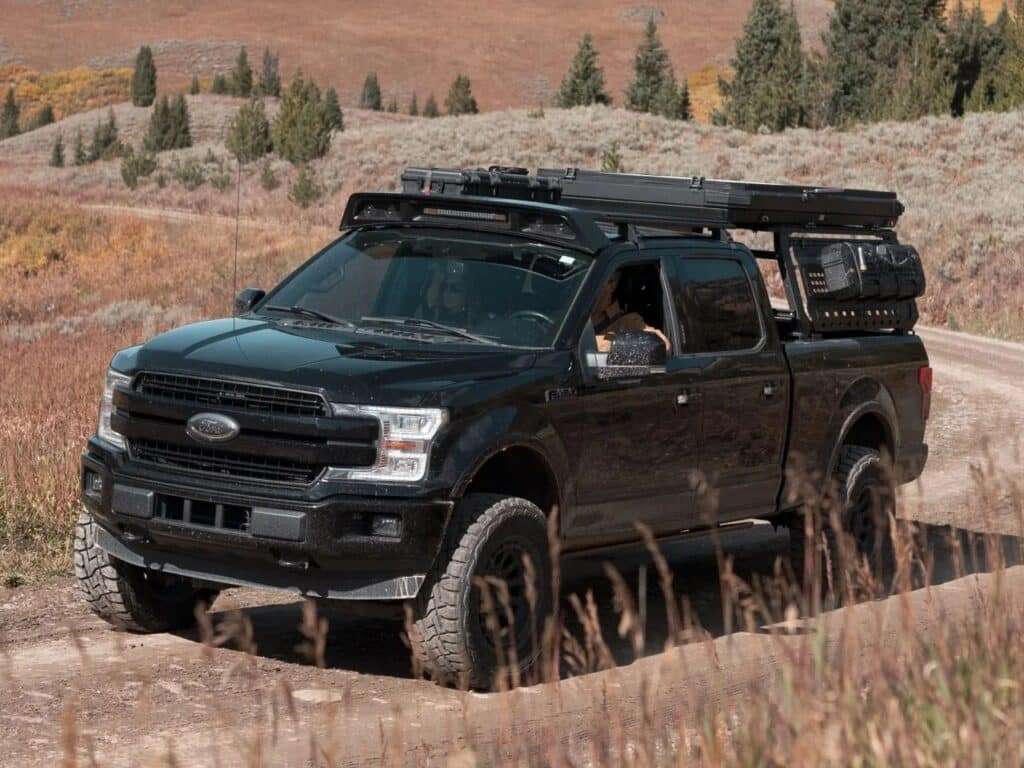
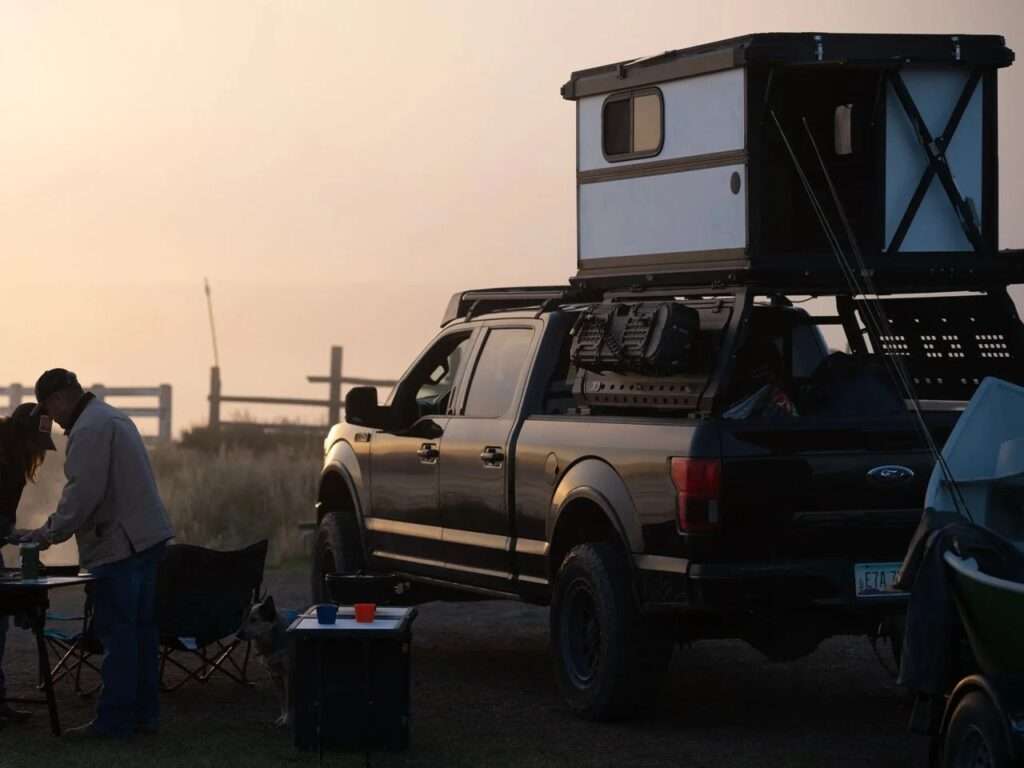
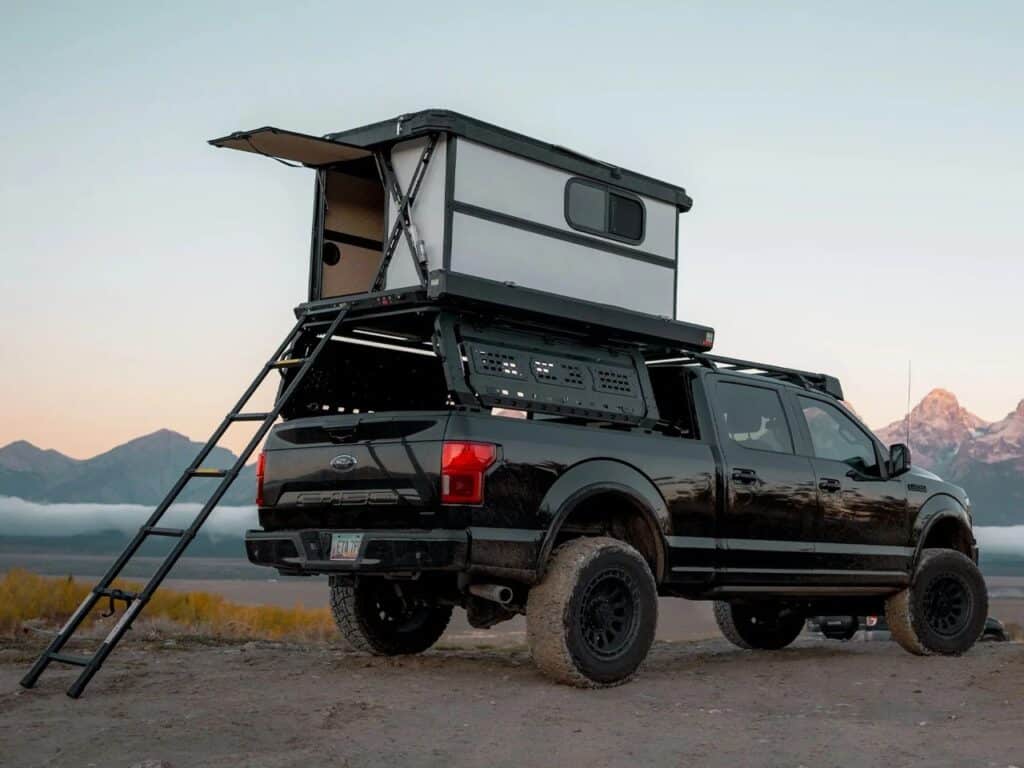
The cabin design is connected to a mounting system installed on trucks and four-wheel-drive vehicles, highlighting its integration with the means of transport. This attachment relies on dedicated rack systems that are added separately, indicating a flexible installation structure that depends on additional equipment. Accordingly, this system reflects a tendency to transform the vehicle roof into a functional extension suitable for temporary habitation.

✦ ArchUp Editorial Insight
The Altus hard-wall cabin appears as a spatial product of capital redistribution within the market of mobility and temporary habitation, where the investment return model drives the integration of transport and living functions into a single deployable unit. The primary catalyst lies in the intersection between the recreational vehicle industry and the growing demand for flexible living units, transforming the vehicle roof into an additional investment platform for each vehicle.
Regulatory constraints related to vehicle weight, safety standards, and insurance requirements impose a sequential engineering disassembly of the opening system, relying on aluminum alloys and composite panels as solutions to reduce operational risks and accelerate deployment. The final outcome is not so much a design expression as it is a compromise between transport efficiency and the limits of temporary habitation, where dwelling is redefined as a foldable extension embedded within a broader logistical structure governed by the logic of continuous mobility.