Minneapolis Yamasaki Office Tower to Become Boutique Hotel in 2028

Developer Chad Tepley has purchased a historic Minneapolis office building for $7.1 million. He plans to convert it into a 165-room hotel. The project will transform the former insurance headquarters at 20 Washington Avenue South. It targets a 2028 opening
A Porch to the City
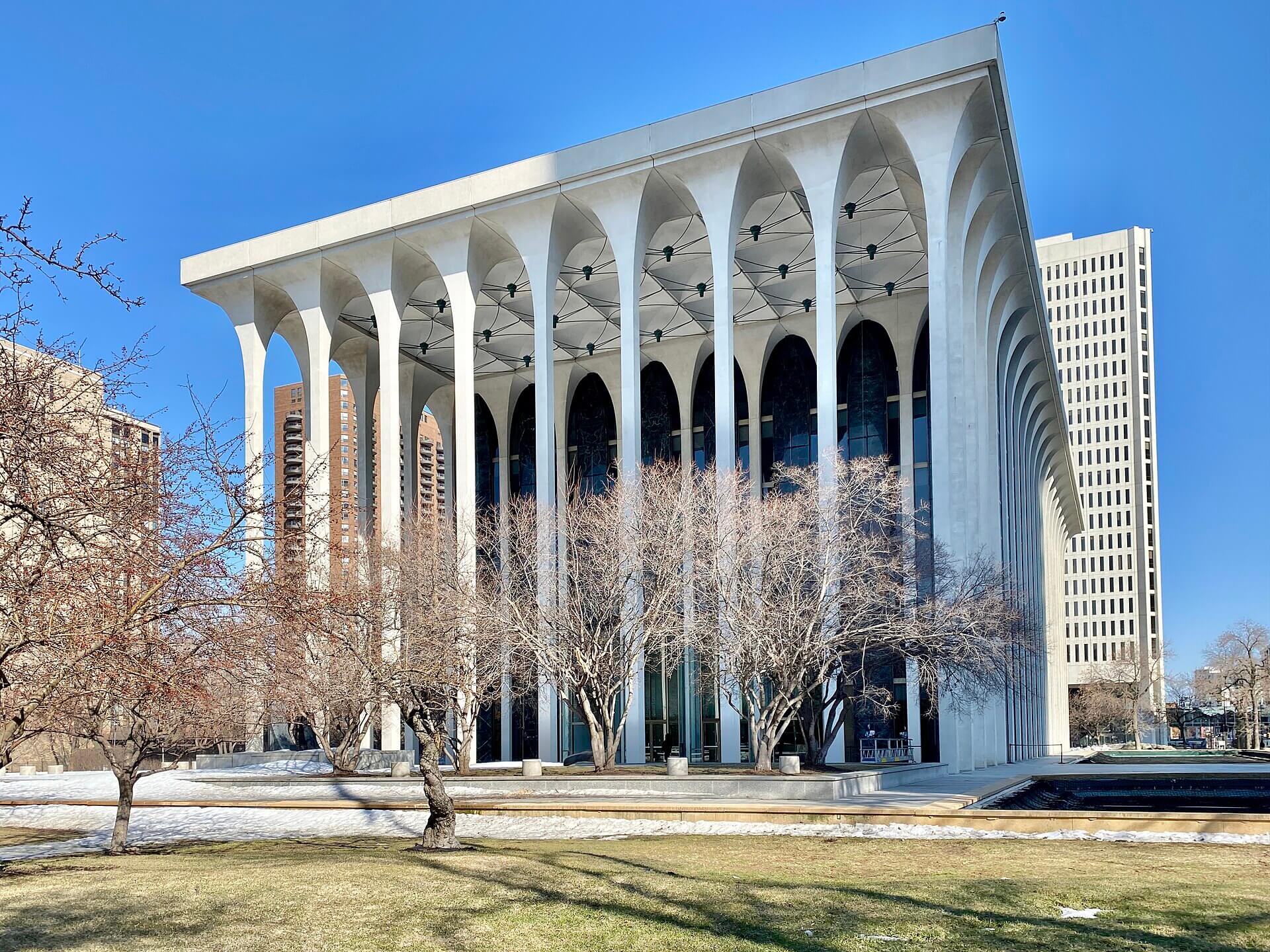
The project centers on a distinctive 85-foot portico. Tepley calls this space “the porch to the city.” The developer will add a 17,000-square-foot patio on top of this structure. A ballroom and pool deck will occupy the former mechanical penthouse. A restaurant will line the reflecting pools.
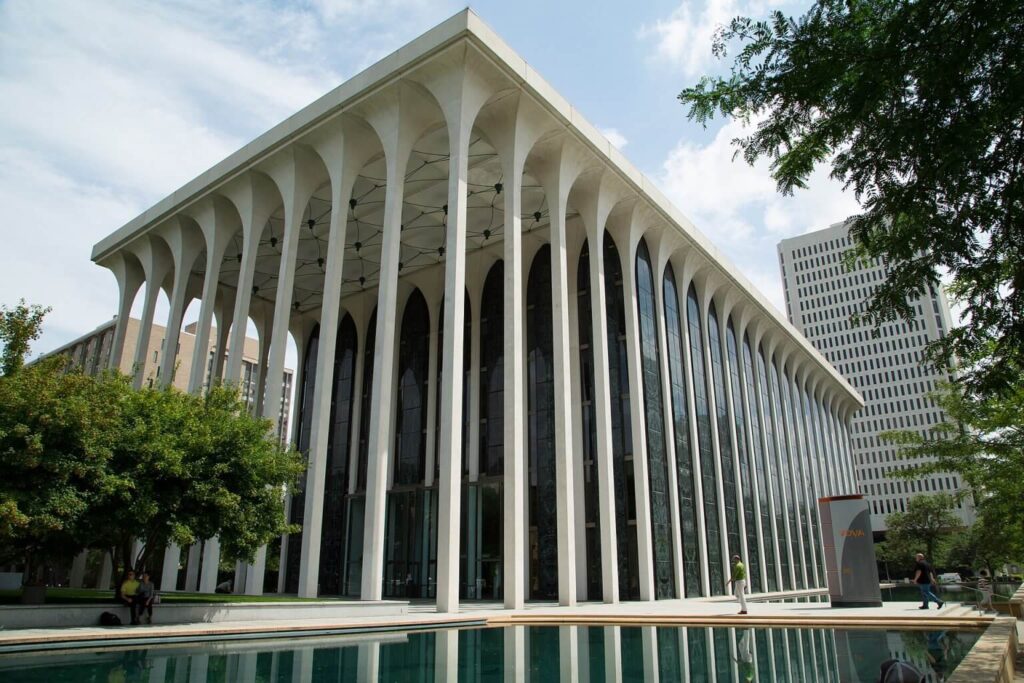
Detail of the colonnade and vaulted ceiling structure at the New York State Theater, showcasing its elegant structural rhythm. Image © Wikimedia Commons
The original design treated the site as “a park with a building in it.” The portico used cable-tension vaulting to create transparency. Pedestrians could look through the structure toward the Hennepin Avenue Bridge. However, the design did not invite public entry.
From Insurance HQ to Vacant Monument
Northwestern National Life commissioned the project for 500 employees. The facility included medical exam rooms with x-ray and electrocardiograph equipment. The company later became ReliaStar, then ING, then Voya Financial. Voya vacated the property in 2023.
The building reflects mid-century ideals about civic architecture. Its green Vermont marble panels and delicate proportions aimed to create serenity. Moreover, the design prioritized human scale over monumental heaviness. The architect believed buildings should comfort daily users.
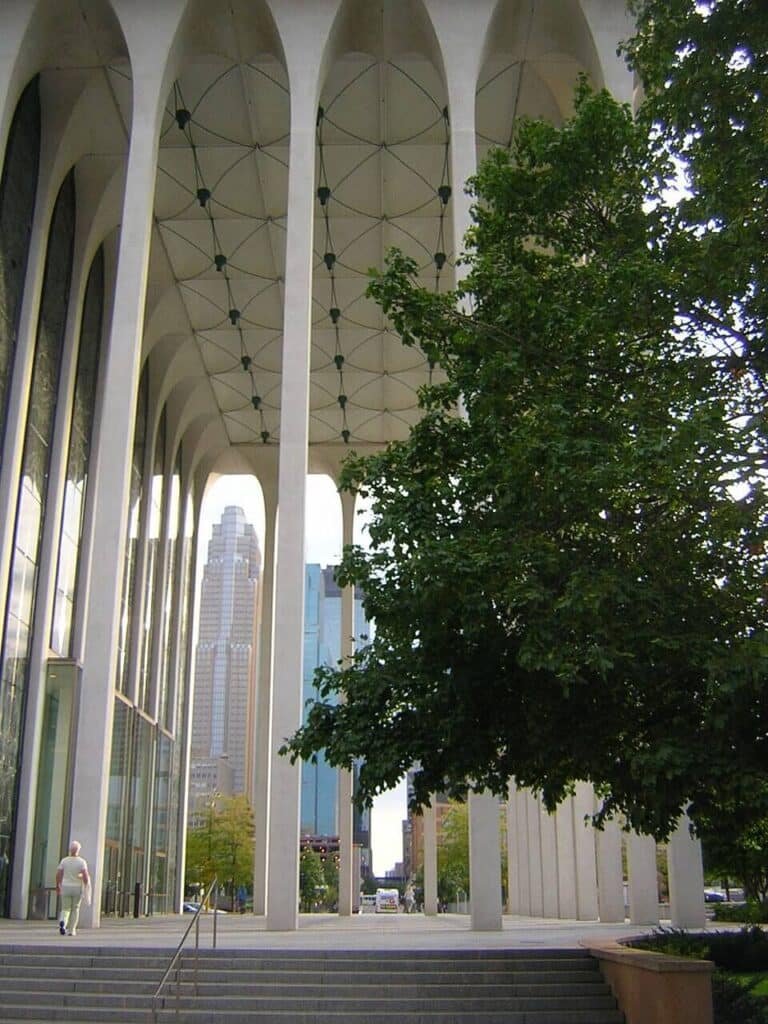
Side view of the theater at Lincoln Center with its reflecting pool and repetitive white arches. Image © Wikimedia Commons
Security and Public Access
The project reverses decades of increasing seclusion. After 2001, security retrofits affected similar towers nationwide. Photographers on these grounds faced removal. The transparent portico became a protected barrier rather than an open invitation.
Therefore, the hotel conversion carries symbolic weight. Guests will finally walk through the porch for purposes beyond work or photography. The rooftop deck and pool will activate long-dormant spaces. This construction project may restore the original civic intention.
Historic Preservation and Timeline
Tepley seeks historic tax credits to support the development. Financing must hold for the 2028 target. The project joins a broader trend of adaptive reuse in Midwestern cities. Such conversions preserve embodied carbon and existing materials.
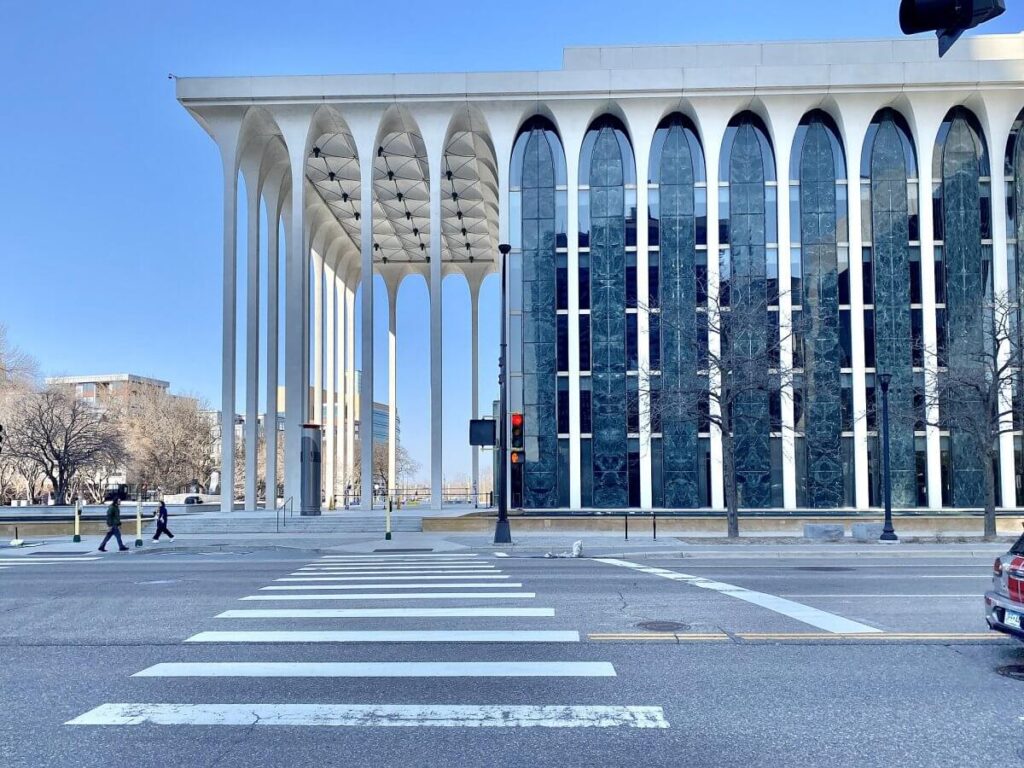
Corner perspective of the New York State Theater highlighting its elevated structure and surrounding landscape. Image © Wikimedia Commons
Meanwhile, the reflecting pools and landscaped grounds require careful restoration. The sustainability implications of reuse versus demolition favor this approach. The developer must balance modern hospitality codes with historic fabric.
A Quick Architectural Snapshot
An 85-foot portico of green Vermont marble and cable-tension vaulting frames a Minneapolis streetscape. For six decades, the public could look through but never enter. In 2028, hotel guests will finally walk through the porch. The columns remain. The purpose changes.
✦ ArchUp Editorial Insight
Adaptive reuse projects reveal economic pressures more than design values. Insurance companies once needed centralized headquarters with medical facilities to assess risk in-house. Remote work and outsourced underwriting eliminated that need. Voya Financial vacated the property in 2023 because the economics of a single-use office no longer worked.
Meanwhile, hospitality developers chase experiential assets in post-industrial downtowns. Historic tax credits reduce capital risk. The portico becomes a marketing feature rather than a civic gesture. The reflecting pools shift from corporate amenity to Instagram backdrop.
Security retrofits after 2001 trained property managers to treat transparency as liability. Now revenue demands override those protocols. The public gains access not through deliberate urban planning but through market opportunity.
This project is the logical outcome of obsolete corporate real estate + hospitality sector expansion + tax credit arbitrage.