

Low-Tech Forest Reading Room: A Radical Experiment in Reuse and Autonomy

A Sanctuary of Salvaged Materials in the Dutch Woods
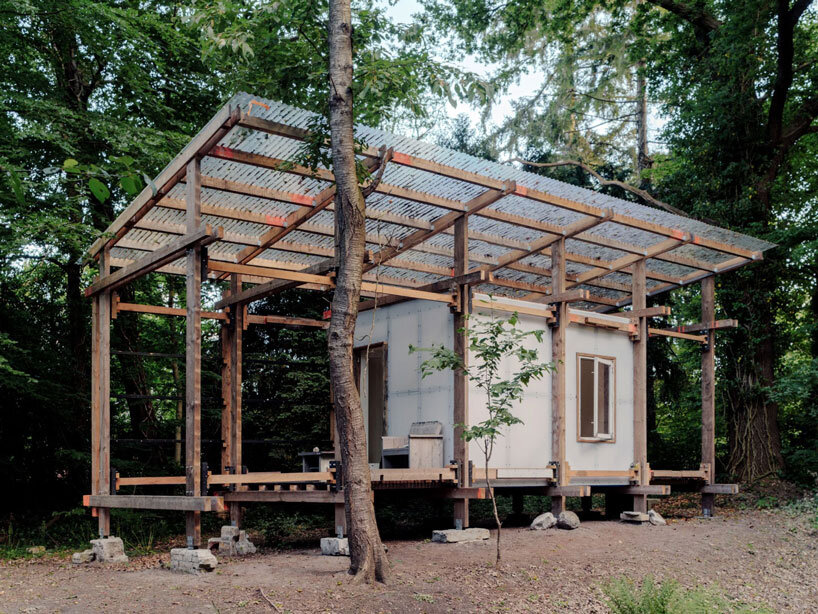
Nestled within Frederiksoord’s UNESCO-listed nursery in the Netherlands, the Forest Reading Room is a low-tech retreat designed by Rotterdam-based studio METHOD as part of DeProef, a new arts and ecology hub. Constructed from 98% salvaged materials, this experimental pavilion challenges conventional architecture by prioritizing reuse, improvisation, and repair over industrial efficiency. Its design emerges as a tactile rebuttal to modernity, weaving historical context, material ethics, and environmental stewardship into a single, poetic structure.
Historical Roots: From Utopian Experiment to Radical Resistance
Frederiksoord’s legacy as a 19th-century social housing experiment a tightly controlled agricultural colony aimed at eradicating urban poverty informs the project’s ethos. While initially utopian, the colony’s rigid systems soon revealed oppressive undertones. In response, settlers formed pioneer colonies, building improvised homes from scavenged materials. METHOD’s pavilion echoes this spirit of resistance, transforming reclaimed resources into a space for contemplation and community.
Architectural Autonomy: The “Emergent Design” Methodology
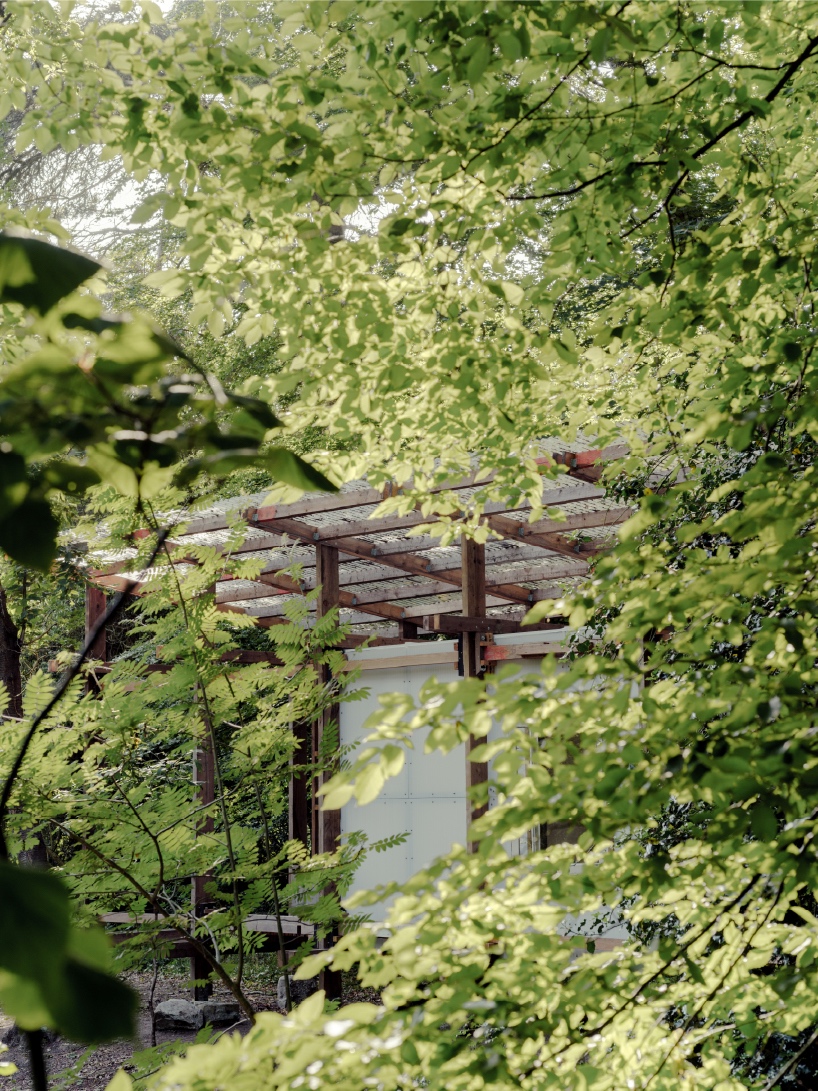
METHOD’s approach, termed emergent design, rejects top-down planning in favor of site-responsive, iterative processes. The studio avoided contractors and prefab systems, instead handcrafting the pavilion on a modest budget. Key principles guided the project:
- Material Radicalism: 30% of materials were sourced directly from DeProef’s site, including discarded farm wool, reclaimed metal mesh, and concrete curbs.
- Carbon Consciousness: The structure sequesters 7 tons of CO₂, achieving a near-zero material footprint (MPG score: 0.16 vs. the Dutch legal threshold of 0.80).
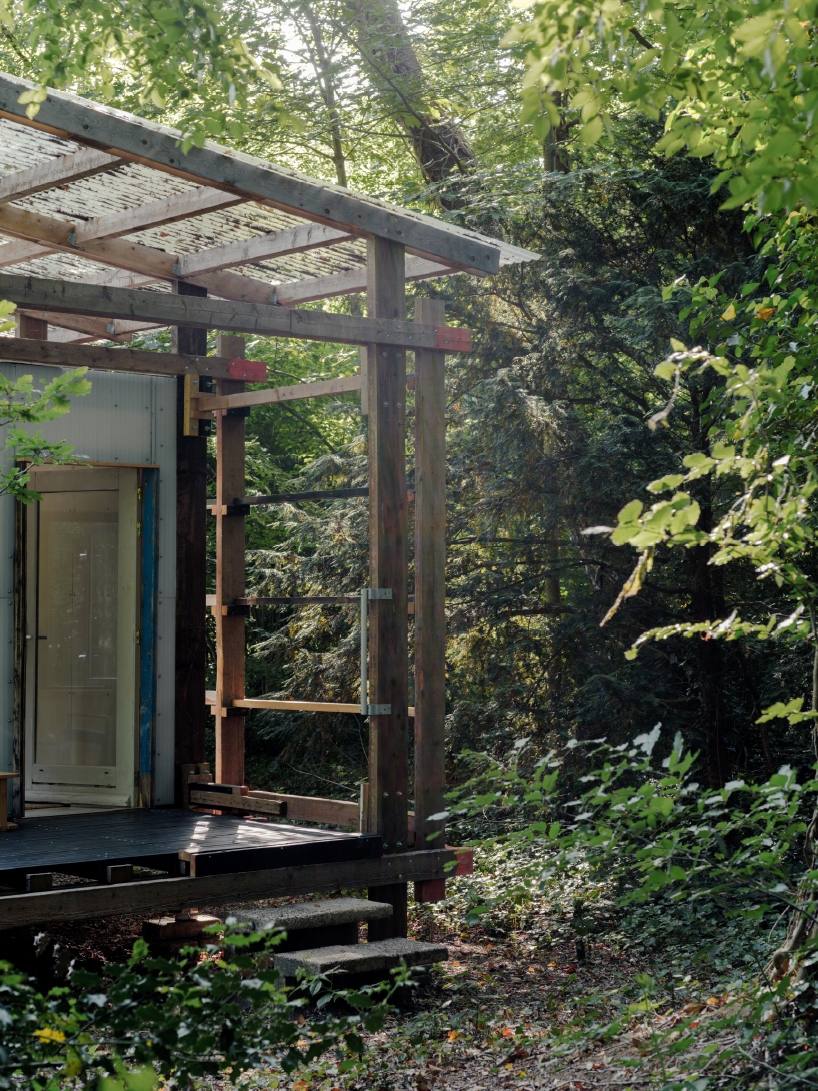
- Handmade Imperfection: Every component was cleaned, adapted, or reassembled on-site acrylic panels became cladding, U-shaped concrete blocks morphed into steps, and raw wool was hand-washed for insulation.
Spatial Poetry: Blending Craft, Ecology, and Community
The Reading Room’s design avoids uniformity, embracing site-specific improvisation. A semi-transparent roof bathes the interior in dappled light, while glass doors align with forest paths to invite wandering. Salvaged aluminum bars serve as handrails, and reclaimed greenhouse panels form partitions. This intentional roughness celebrates maintenance and repair as design strategies, proving that circular architecture can be both ecologically rigorous and aesthetically resonant.
Why This Matters for the Future of Design
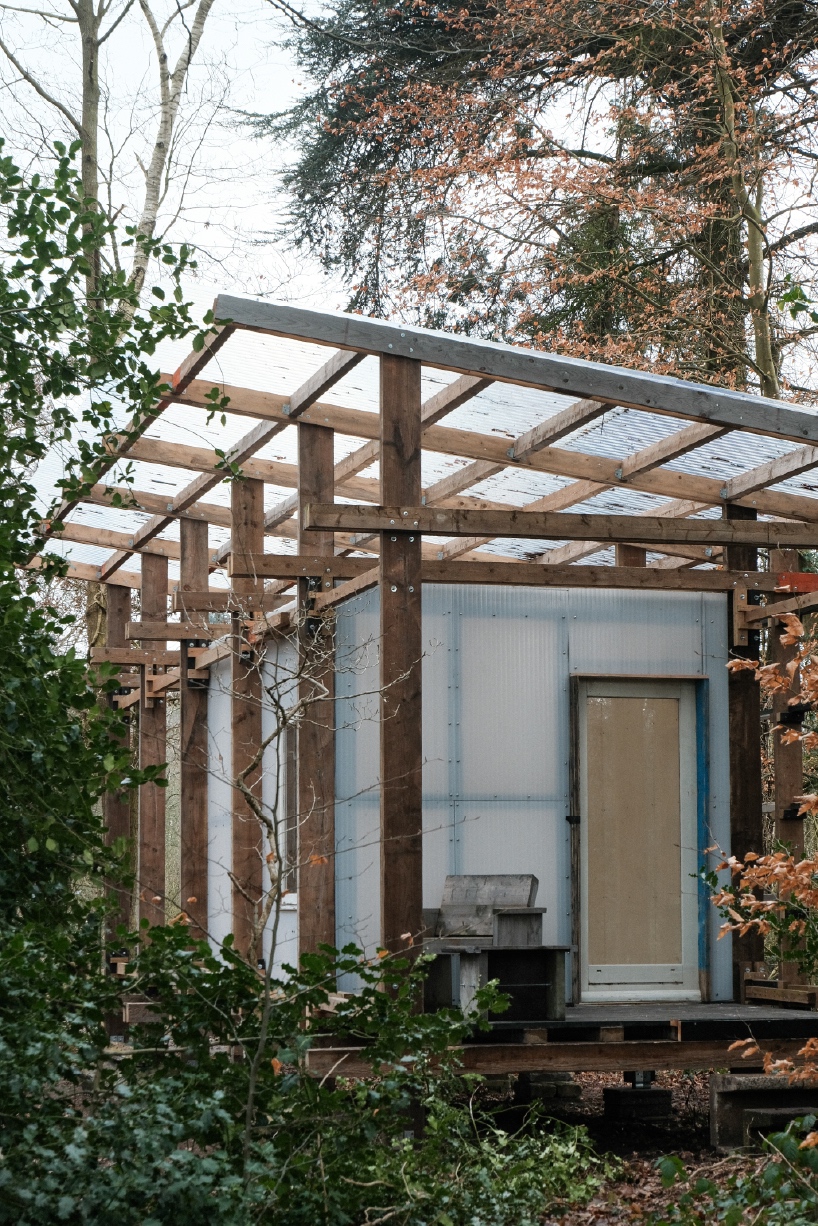
The pavilion reframes reuse not as a constraint but as a design language. It demonstrates how low-tech, high-care approaches can reduce waste while fostering tactile beauty and public engagement. In an era obsessed with speed and novelty, METHOD’s work asks: Can architecture become an act of custodianship rather than consumption?
✦ ArchUp Editorial Insight
The Forest Reading Room reimagines sustainability as a dialogue between history, materiality, and hands-on craft. METHOD’s rejection of industrial efficiency in favor of radical reuse is both inspiring and provocative, offering a tangible alternative to disposable design. However, the project’s reliance on highly skilled manual labor raises questions about scalability can such methods translate to larger urban contexts without sacrificing accessibility? Despite this, the pavilion’s greatest strength lies in its quiet defiance: it proves that ecological architecture need not sacrifice poetry for pragmatism, blending environmental rigor with profound spatial storytelling.
Brought to you by the ArchUp Editorial Team
Inspiration starts here. Dive deeper into Architecture, Interior Design, Research, Cities, Design, and cutting-edge Projectson ArchUp.


