
NEOM Architectural Critique: Political Agenda or Design Flaw?


Global media outlets are scrutinizing Saudi Arabia’s NEOM project. However, this intense focus prompts a critical question. Is the widespread backlash a valid NEOM architectural critique or a geopolitical maneuver? The conversation often occurs on political pages, not in specialized architecture journals. Consequently, this framing suggests the motives may extend beyond pure design analysis.
A Challenge to Global Standards
NEOM’s developers pitched a revolutionary vision from its inception. They promised zero-emissions cities and a complete reimagining of urban infrastructure. This bold approach disrupts established global norms for development. Moreover, it places pressure on other nations to either innovate or discredit the project as unrealistic.
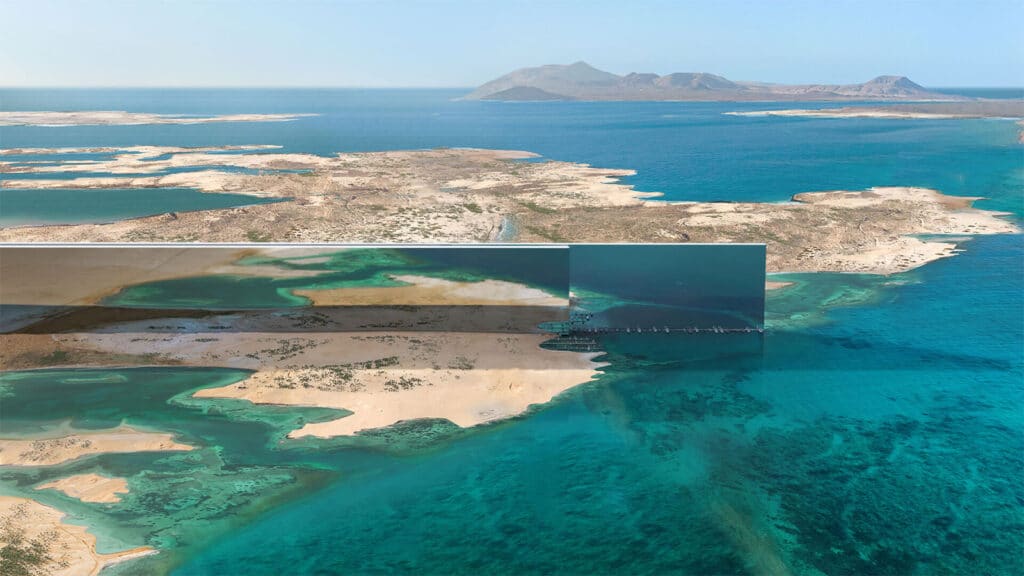
Much of the criticism, therefore, does not originate from architectural or urban planning experts. Instead, general global news platforms are driving the narrative. When non-specialized media attacks a project with such political fervor, the discussion shifts from an objective critique to a biased editorial. The project becomes a tool for political discourse, losing its neutrality.
Redefining Sustainability and Success
From an architectural standpoint, NEOM is a large-scale experiment. Its ambitious sustainability goals aim to surpass existing frameworks. The project treats zero emissions as a fundamental requirement, not a marketable add-on. This strategy inherently challenges conventional construction economics. Consequently, what is a structural commitment to the future is often labeled a fantasy.
Additionally, any adjustments to the project’s scale are not necessarily a sign of failure. In the world of gigaprojects, strategic pivots are a sign of intelligence. History’s archive shows that massive urban developments frequently undergo calibration. Redirection is a pragmatic response to a changing global landscape. For example, focusing on immediate goals like the FIFA World Cup 2034 and Expo 2030 is a logical rearrangement of priorities. The latest news reflects this practical shift.
The Lasting Impact of Innovation
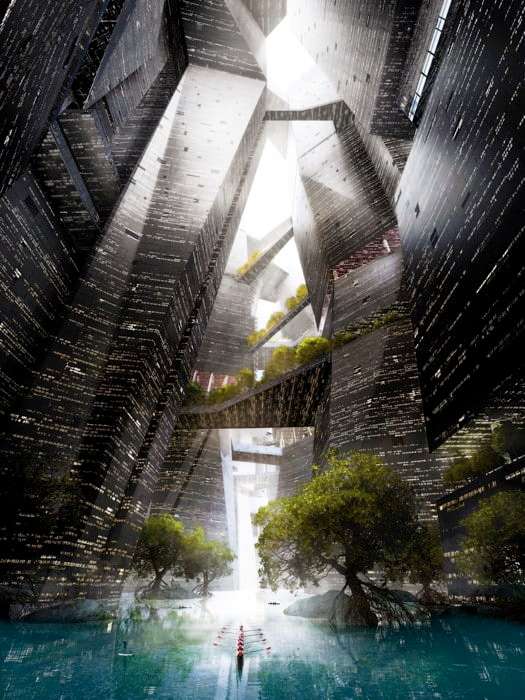
Ultimately, the project’s true legacy may not be its final form. The innovations in building materials and renewable energy are significant. Advanced research into desalination and carbon-neutral logistics will endure. These contributions to architectural design represent a victory over the status quo. The project has already forced a necessary global conversation about the future of cities.
The dialogue surrounding NEOM did exactly what great architecture should: it pushed the boundaries of what is possible. The rest is merely a matter of timing.
What do you believe is the primary driver behind the global critique of NEOM?
A Quick Architectural Snapshot
NEOM is conceptualized as a series of urban structures built on principles of zero emissions and advanced, carbon-neutral logistics. Its infrastructure is designed to rely entirely on renewable energy and innovative materials. The location in northwest Saudi Arabia provides a vast canvas for this territorial-scale urban experiment.
Response completeGemini replied
✦ ArchUp Editorial Insight
The intense international media cycle surrounding NEOM is a predictable outcome of a project that weaponizes sustainability as a geopolitical instrument. When a state bypasses established global certification systems and instead proposes to redefine the metrics of success, it exits the framework of professional evaluation and enters the arena of political power. The resulting backlash from non-specialized media is not an architectural critique; it is the system’s reaction to a participant refusing to play by its rules.
This aligns with architectural research into “gigaprojects,” where initial speculative narratives almost always collide with fiscal and political realities. A strategic pivot towards faster, guaranteed-impact events like the World Cup is a logical recalibration. The physical form of the cities is the symptom; the underlying cause is a collision between sovereign ambition and the established global economic order. The latest news is evidence of this systemic friction.

★ ArchUp Technical Analysis
Technical Analysis of NEOM as a Large-Scale Urban Experiment:
This article provides a technical analysis of the NEOM project as a case study in the design and planning of mega-urban projects.
Foundational Urban Model (“The Line”):
The plan is based on a linear, dense model spanning 170 kilometers, aiming for zero carbon emissions and complete reliance on renewable energy. It targets a 100% car-free environment, relying on electric underground transport and a centralized carbon-neutral logistics system.
Design Philosophy and Performance:
The design focuses on integrating internal natural systems and developing innovative, locally sourced building materials for the desert environment. The project is undergoing continuous strategic calibration, with implementation priorities being adapted for major future events, a transformative approach characteristic of long-term mega-project management.
Related Insight: Please review this article for an in-depth analysis of mega-urban projects:
Planning Future Cities: Between Vision and Practical Implementation





✅ Official ArchUp Technical Review completed for this article.