
Neom’s Vision Recalibrated: The Line Undergoes Major Revision Amid Shift to AI Hub


Recent news confirms a significant strategic shift for the Neom mega-project in Saudi Arabia. The futuristic linear city, known as “The Line,” is undergoing a dramatic reduction in scale as part of a broader realignment. This pivot repositions the development as a major center for AI data and industrial innovation, marking a new chapter for the project on the global architecture platform. While the initial vision is changing, the project’s core mission continues with a revised focus on strategic priorities.
Redefining The Line’s Urban Scale
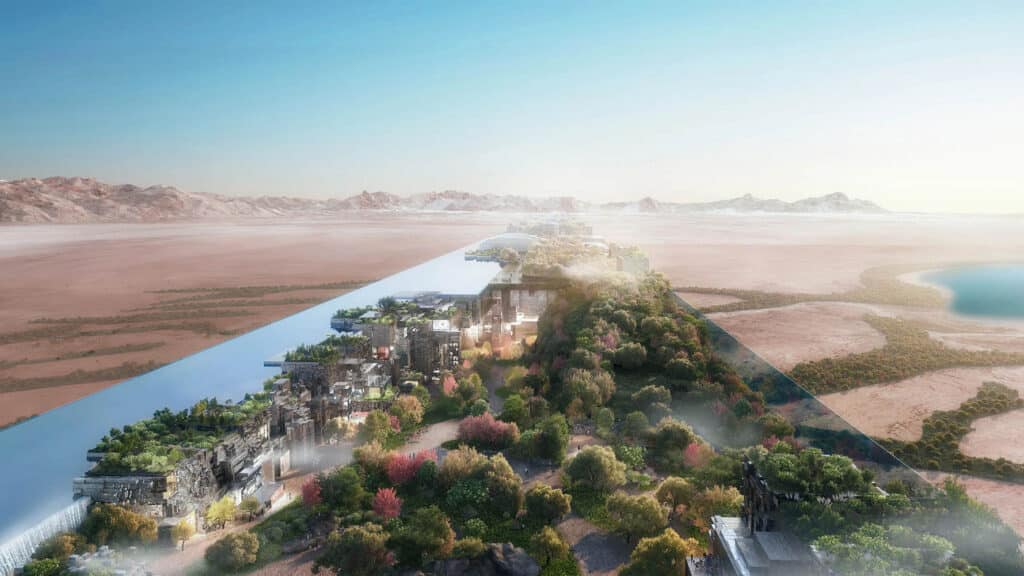
The original masterplan for “The Line” captured global attention with its proposal for a 170-kilometer-long, mirrored city. However, current plans have radically scaled back this ambition. The project’s initial phase will now concentrate on developing a 2.4-kilometer segment, a substantial revision from the original scope. This change directly impacts the project’s approach to future urban planning.
Consequently, officials have adjusted population projections. The development now expects to house fewer than 300,000 residents by 2030, a fraction of the initial 1.5 million target. This decision follows a comprehensive project evaluation that re-prioritizes industrial and technological sectors. The change signals a fundamental rethinking of the project’s architectural design and its role in creating future urban environments.
A New Strategic Focus on Digital Infrastructure
In place of the sprawling linear city, Neom is now pivoting to become a key hub for data centers. Its coastal location provides a significant natural advantage, enabling the use of seawater for cooling systems, which is essential for operating large-scale data facilities efficiently.
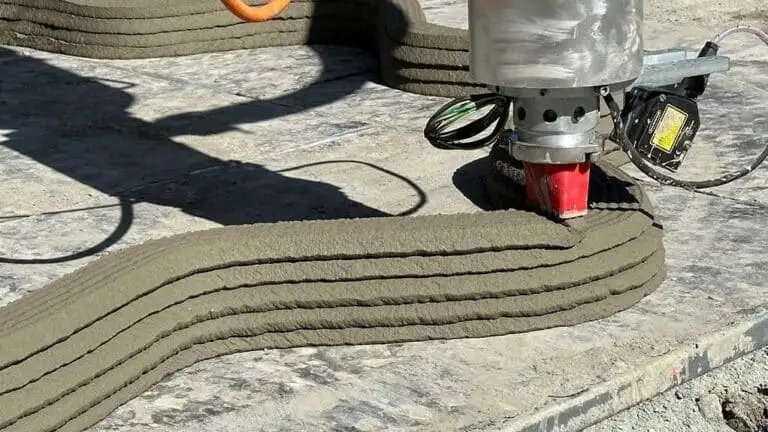
A landmark $5 billion agreement with DataVolt highlights this new direction. The deal involves the construction of a net-zero AI manufacturing facility in Oxagon, one of Neom’s key regional developments. The first phase of this facility aims to be operational by 2028, providing 1.5 gigawatts of power sourced entirely from renewable energy. This move strongly aligns with the project’s long-term commitment to sustainability and green energy solutions. The facility’s design will integrate advanced building materials to achieve its environmental targets.
Project Adjustments and Future Outlook
These strategic adjustments are part of a portfolio-wide review by the Public Investment Fund (PIF), Neom’s owner, to prioritize projects that deliver sustainable, long-term value. An example of this recalibration is the postponement of the 2029 Asian Winter Games, which were originally planned for the Trojena resort. This decision underscores the shift in priorities away from immediate large-scale tourism events and toward foundational economic drivers.
Project officials emphasize that this is not a halt but a strategic refocusing. The development of various buildings continues with a clear emphasis on creating a robust foundation for technology and industry. This evolution turns Neom into a live site for research on integrating next-generation technology with urban development, ensuring the project remains a forward-looking endeavor.
✦ ArchUp Editorial Insight
A portfolio-wide re-evaluation driven by capital constraints and competing fiscal priorities coincides with a strategic pivot towards high-demand digital infrastructure. The prioritization of data centers, enabled by geographic advantages and a commitment to sustainability, represents a shift from speculative urbanism to tangible industrial assets with more immediate revenue potential. The resulting reduction of “The Line” from a 170-kilometer residential spine to a 2.4-kilometer initial phase is a direct consequence. The current architectural program is the logical outcome of de-risking long-term, capital-intensive proposals in favor of infrastructure that generates more predictable returns and aligns with global technology markets.

★ ArchUp Technical Analysis
Technical Analysis of the “The Line” Project Reshuffling in NEOM:
This article provides a technical analysis of the major strategic shift within the NEOM project, focusing on the reassessment of the futuristic city “The Line.”
The most evident transformation is the radical urban scope redefinition. The originally ambitious 170-kilometer length is being drastically scaled back. The initial phase will now focus on a 2.4-kilometer segment, a reduction of ~98.6%.
The new strategic focus centers on shifting from a massive residential city to a global hub for digital infrastructure and data centers. This is highlighted by a landmark $5 billion AI manufacturing facility deal in NEOM’s industrial city, “Oxagon.”
In terms of the investment framework, these adjustments reflect a shift from speculative large-scale development towards investments in tangible technological assets with more predictable returns.
Related Insight: Please review this article to compare another ambitious urban project based on a distinctive planning and technical framework:
‘The New Square’ Reinforces the Infrastructure Foundations of Future Riyadh Downtown




✅ Official ArchUp Technical Review completed for this article.