
Novum Chair: Rethinking Plastic in Furniture Design

The reliance on plastic in furniture manufacturing and the problem of recycling
Furniture manufacturing relies heavily on plastic in injection-molded structures and synthetic fabrics, which has led to its entrenchment within many products, even in advanced designs. Although recycling has been proposed as a solution, statistical reality reflects its limitations, as the global plastic recycling rate does not exceed 19%. In contrast, incineration processes have seen a significant increase of 34%, along with the resulting air-polluting emissions.
A shift in design approach and the question of material
Matthew Watley comes from a hands-on background in carpentry and concrete formwork before moving on to study product design in Vancouver and Melbourne. During a journey in Southeast Asia, where the plastic waste problem is clearly visible, a direct design question emerged for him: the possibility of producing furniture that does not rely on plastic as a primary component. This question redirected his focus toward researching more direct material alternatives in use.

Novum Chair as an Approach to Bio-Composite Material
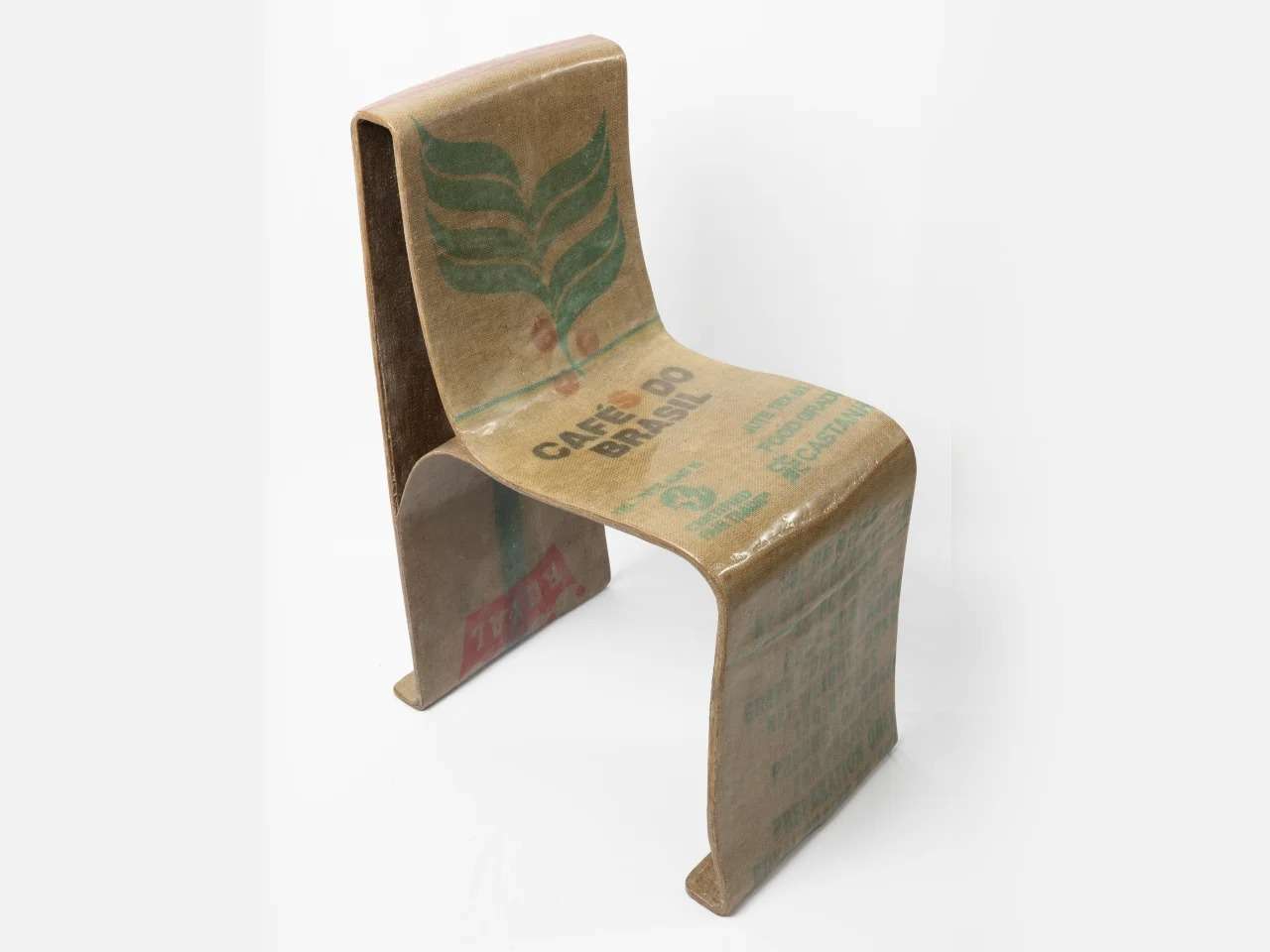
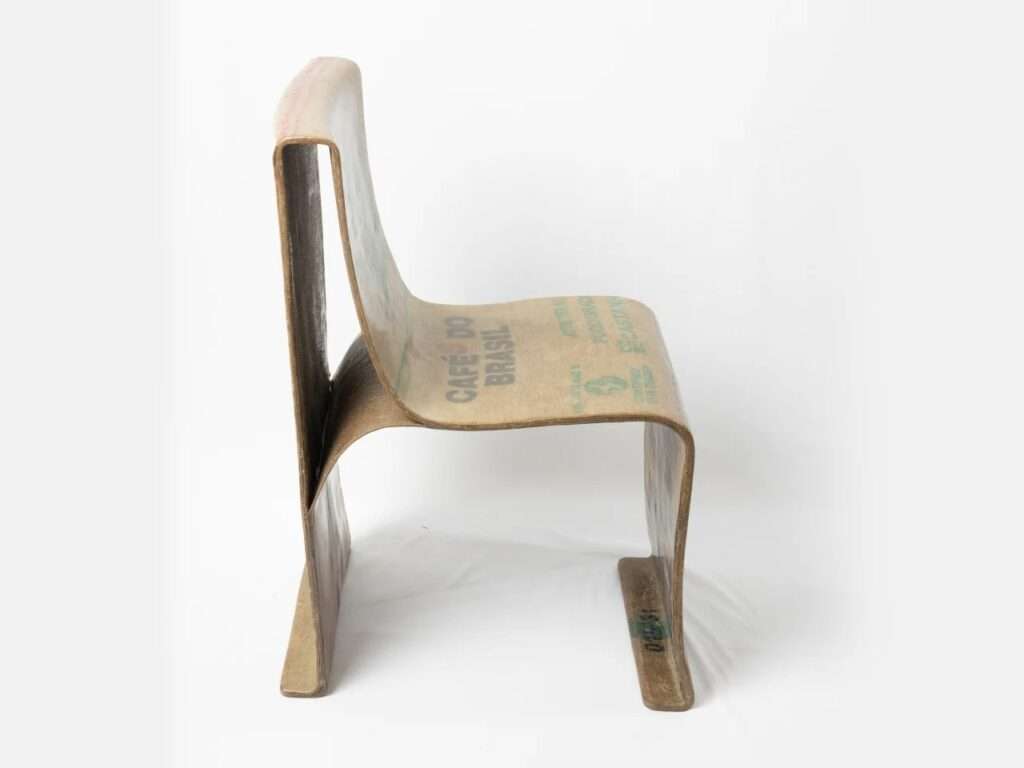
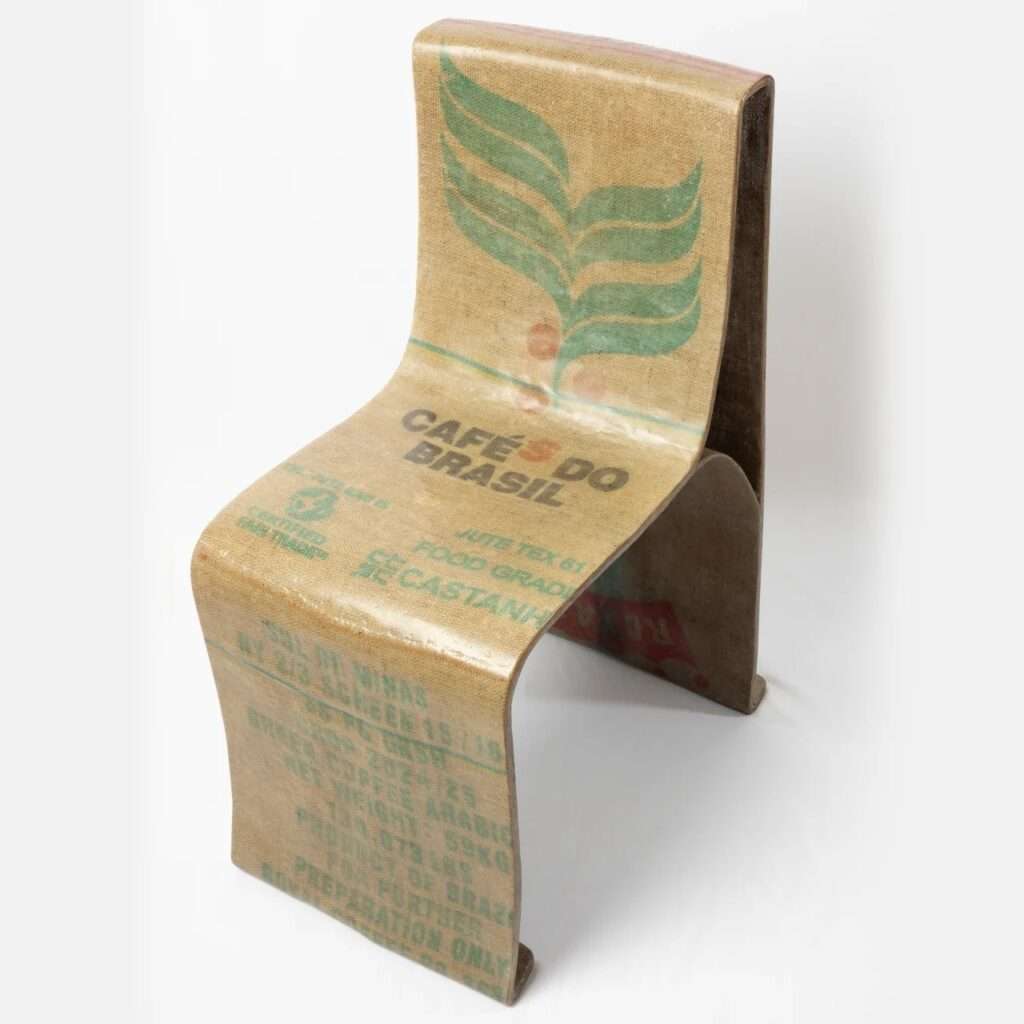
The Novum Chair is presented as a practical case of this direction, relying on a combination of woven natural fibers and a bio-based resin. The fibers form the structure and texture, while the resin performs the binding and hardening process to produce a load-bearing frame. On a formal level, the chair appears as a continuous single shell extending from the backrest to the seat, with a woven surface remaining visible through the resin layer, giving it a character that merges composite materials structure with a direct material presence.
The Chair’s Presence in Interior Spaces
The Novum Chair can be placed in a design studio, a café, or a considered living space without asserting a strong visual dominance. This type of design relies on reducing formal expression in favor of drawing attention to the material itself. As a result, the chair appears as a quiet element within the space rather than a central focal point.

Material Properties and Interaction with Light
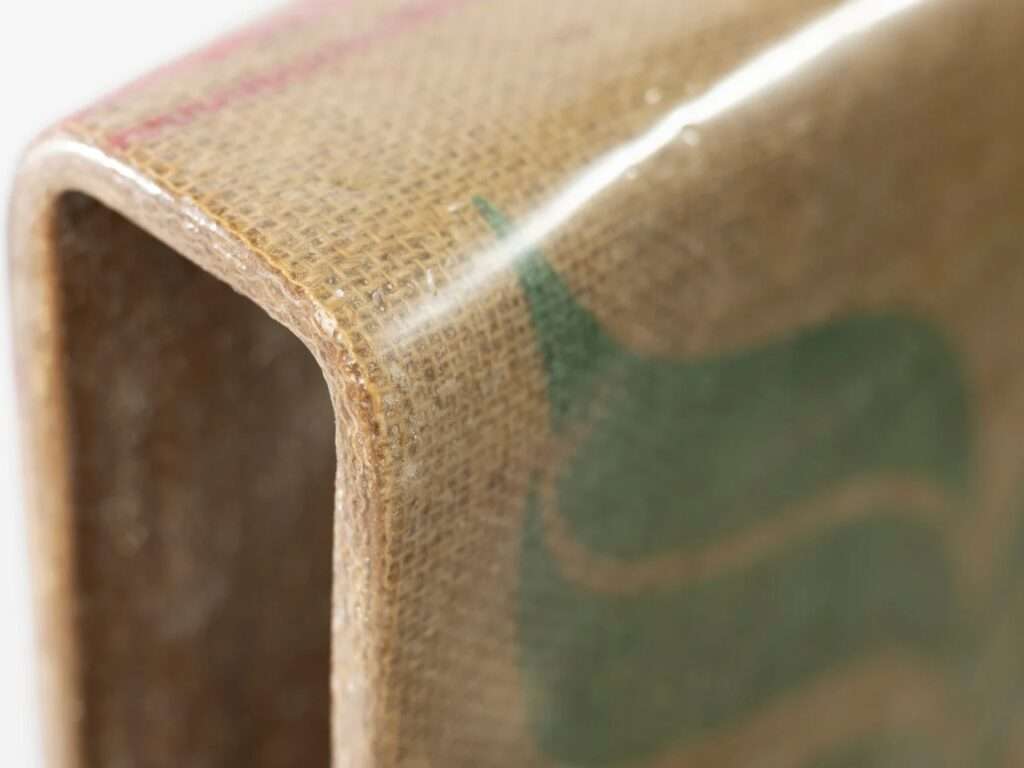
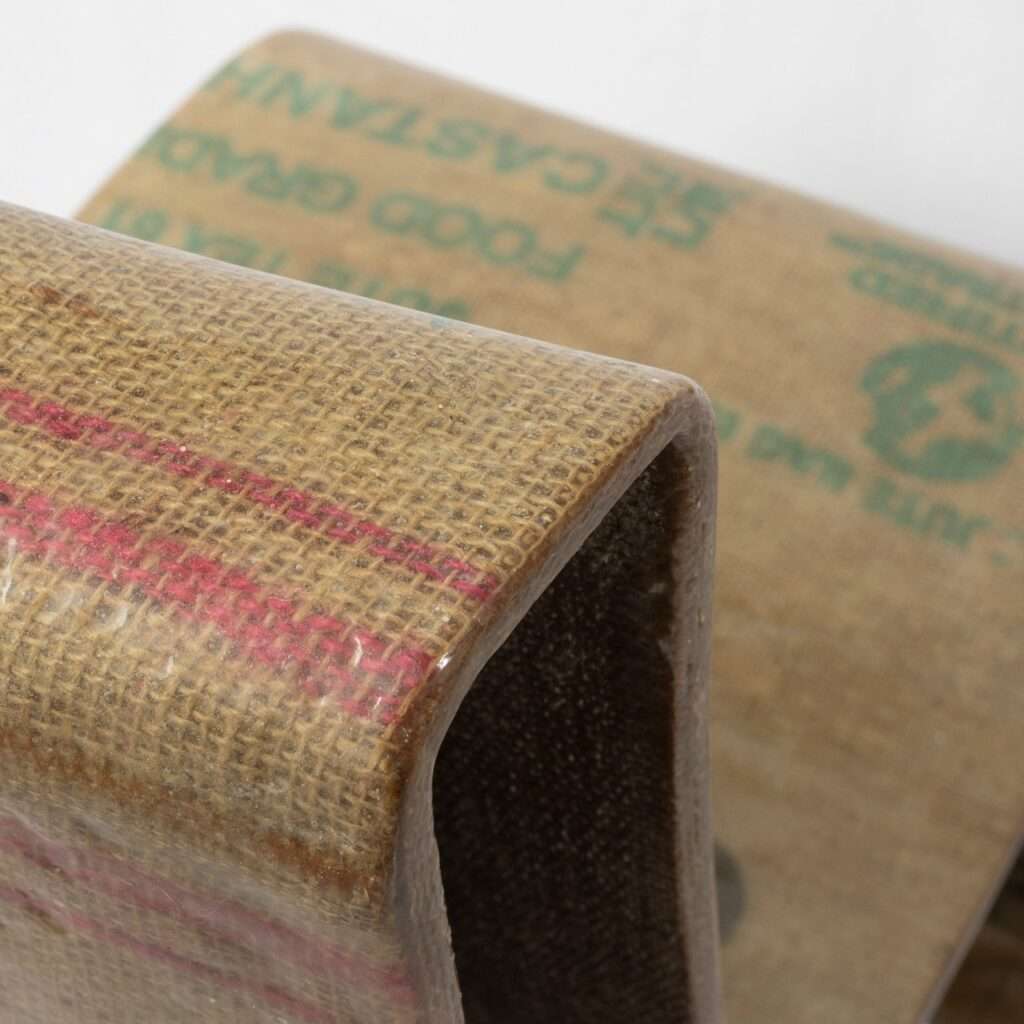
The natural fibers saturated with resin give the chair a surface that shifts in appearance under changing lighting conditions, where the amber tone and texture reveal different qualities depending on the surrounding visual environment. This optical behavior is directly linked to the nature of the composite material and differs from molded plastics, which tend to exhibit greater visual stability and less responsiveness to light variation. The Novum Chair appears again here as a reference point for this behavior.
Recycled Plastic and Bio-Based Alternatives as a Critical Framework
The issue of plastic recycling is often presented as an unresolved solution, as some estimates suggest that reprocessing recycled plastics may be associated with toxicity levels up to ten times higher than the original material. In contrast, natural fibers and bio-based resins do not carry the same degree of environmental burden, although these materials are still not ideal in terms of cost, bio-based content ratio, and availability. Within this context, the Novum Chair is presented as a proof of concept demonstrating the possibility of producing structurally strong and aesthetically refined furniture without direct reliance on plastic, shifting the discussion from a theoretical level to a material experiment applicable to everyday use.
✦ ArchUp Editorial Insight
The reliance on plastic in furniture manufacturing functions as a direct outcome of standardized production systems governed by the economics of injection molding, the optimization of global supply chains, and the weakness of material recovery infrastructures. Within this framework, recycling rates that do not exceed 19% alongside a 34% increase in incineration reflect a structural failure in waste management systems.
Within this context, Matthew Watley’s design trajectory appears not as an independent act of creativity, but as a response shaped by field exposure to material waste in Southeast Asia. The Novum Chair operates as a form of systemic reconfiguration within this framework, replacing petroleum-based polymers with composites of natural fibers and bio-based resin, thereby transforming environmental pressure into a structural decision embedded in the object’s composition.
At the same time, the debate surrounding the toxicity of recycled plastics redefines material selection as a question of risk management rather than purely formal decision-making, where the final product emerges as a negotiated balance between regulatory, logistical, and material constraints.

★ ArchUp Technical Analysis
Technical and Documentary Analysis of the Novum Chair – Product Design:
This article presents a design analysis of the Novum chair as a case study in an alternative material approach to plastic use in furniture manufacturing and recycling. To enhance its archival value, we would like to present the following key technical and design data.
The chair relies on a combination of woven natural fibers (repurposed natural textiles such as jute or coffee sacks) and a bio-based resin, where the fibers shape the structure and texture, while the resin handles binding and hardening to produce a load-bearing framework.
The chair appears as a single continuous shell extending from the backrest to the seat, with a woven surface remaining visible through the translucent resin layer, giving the material an amber-like appearance that changes with lighting.
Estimates indicate that the global proportion of recycled plastic does not exceed 19%, with incineration rising by 34%, while reshaping recycled plastic may be associated with toxicity up to 10 times higher than the original material. The chair can be placed in a design studio, café, or considered living space as a quiet element within the interior.
Related Insight: Please refer to this article to understand the context of modern architectural preservation:
Bio-based Composite Materials in Furniture Design: Between Performance and Sustainability.






✅ Official ArchUp Technical Review completed for this article.
In regards to the article Novum Chair: Rethinking Plastic in Furniture Design: the correct spelling of the designers name is Matthew Whatley, nice read thanks!