Oliver Apex X23: Fiberglass and Off-Grid Integration


Fiberglass Travel Trailers and Off-Grid Working Systems
The integration of fiberglass construction with off-grid capabilities represents a technical trend in the design of travel trailers. This type of solution aims to support long-term mobility by improving reliability and reducing dependence on traditional energy infrastructure. As a result, the focus shifts toward functional autonomy during travel.
Design and Functional Characteristics
Fiberglass travel trailers are typically characterized by their lightweight structure and ease of towing, in addition to their suitability for various climatic conditions. Their design also emphasizes reduced maintenance requirements and extended service life. Consequently, essential living elements are integrated within a limited space, including sleeping, cooking, and daily-use areas, achieving a balance between functionality and spatial efficiency.
Case Study: Oliver Travel Trailers and Model Development
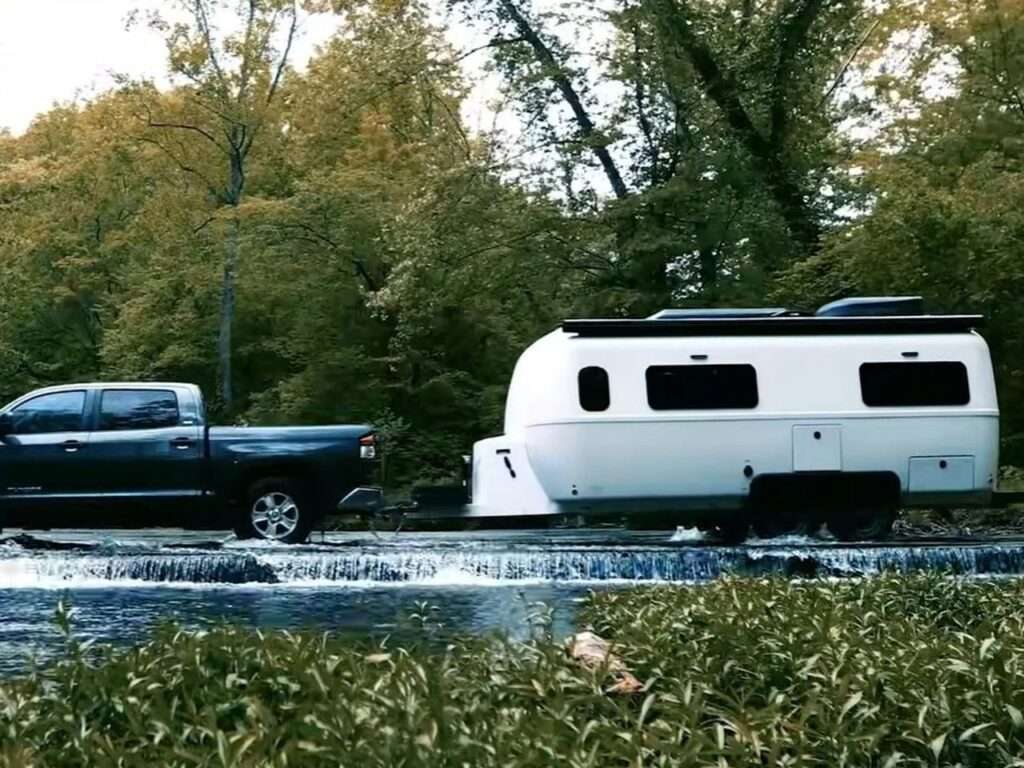
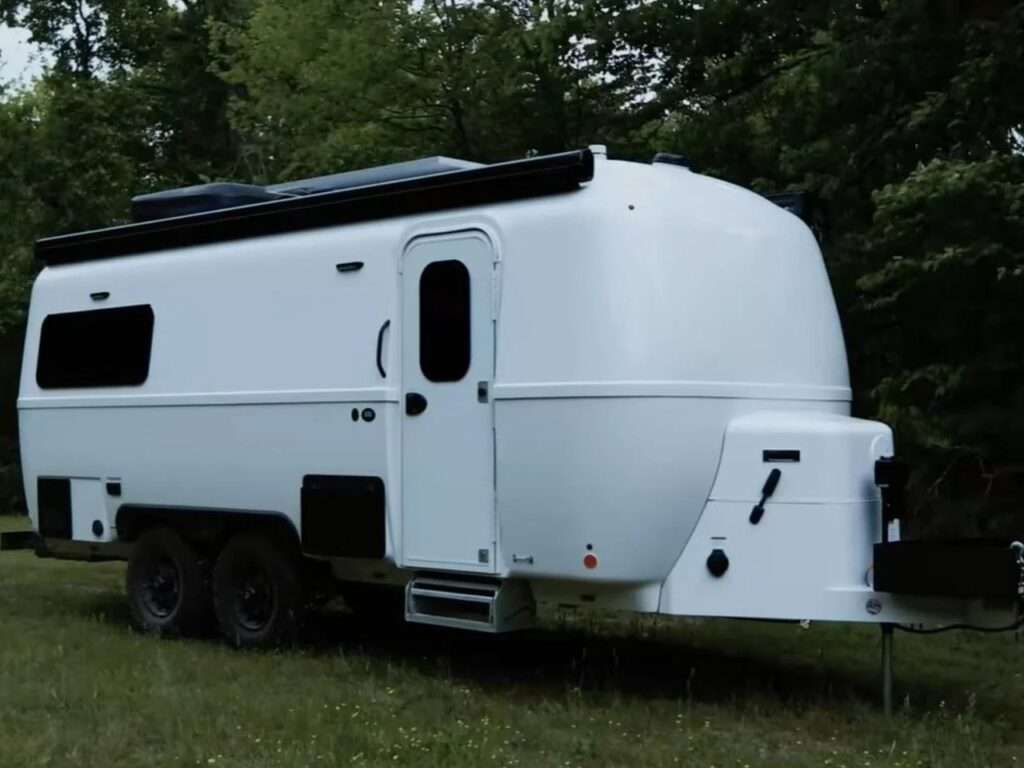
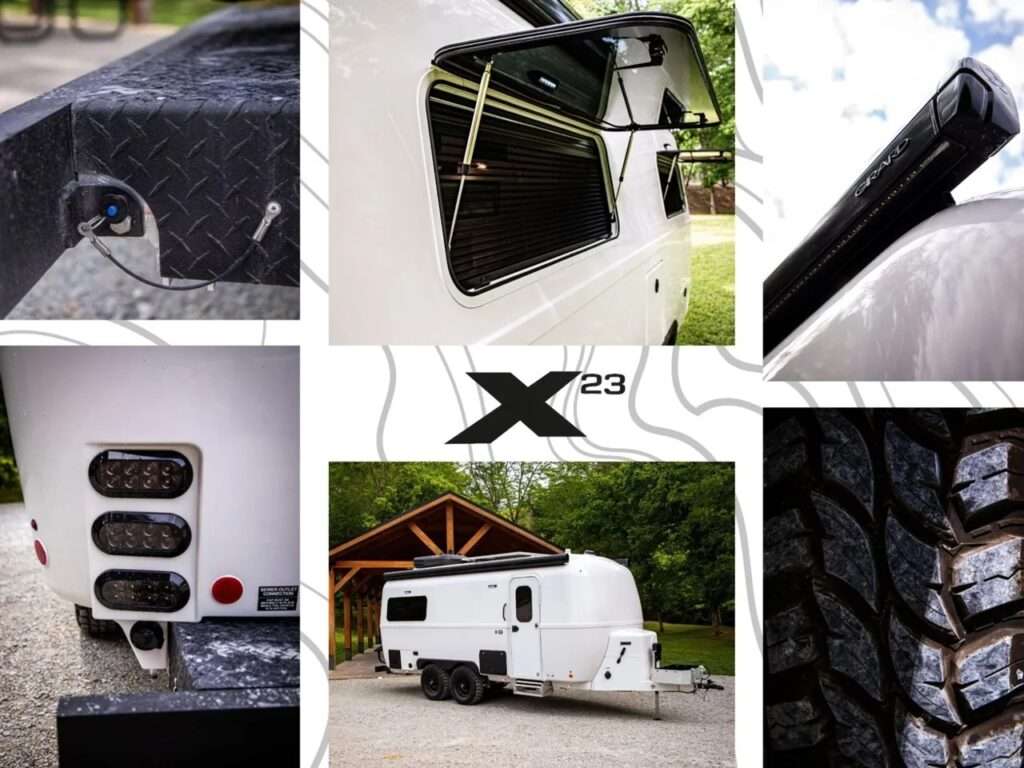
Within this context, Oliver Travel Trailers in Tennessee serves as a practical example of this category of trailers, offering two main models: the Legacy Elite at 18.5 feet and the Legacy Elite II at 23 feet. With expansion in 2027, the Apex X23 model was introduced, featuring a 23-foot fiberglass shell and fully integrated equipment including seating, sleeping, kitchen, and bathroom areas within a four-season-ready design, aimed at enhancing travel independence.
Off-Grid Readiness and Development Context
The Oliver Apex X23 falls within the category of off-grid-capable trailers, relying on a 48-volt power system designed to support independent operation during trips far from organized campgrounds. It has been developed as a factory-configured setup for more remote environments, with limited disclosure of technical details at this stage. It was first unveiled at a specialized adventure and outdoor vehicle exhibition, reflecting an initial launch phase prior to full specification release.
Interior Transformation and Structural System
Despite its external similarity to previous models, the key distinction lies in the reorganization of the interior design around off-grid requirements. The structure is based on a double fiberglass shell with an insulating layer between the inner and outer skins, enhancing sealing and year-round structural stability. Wood elements have been eliminated from the body, reducing risks of decay or mold growth and enabling a more durable interior environment suitable for continuous use under varying natural conditions.


Aerodynamic Performance and Structural Integration
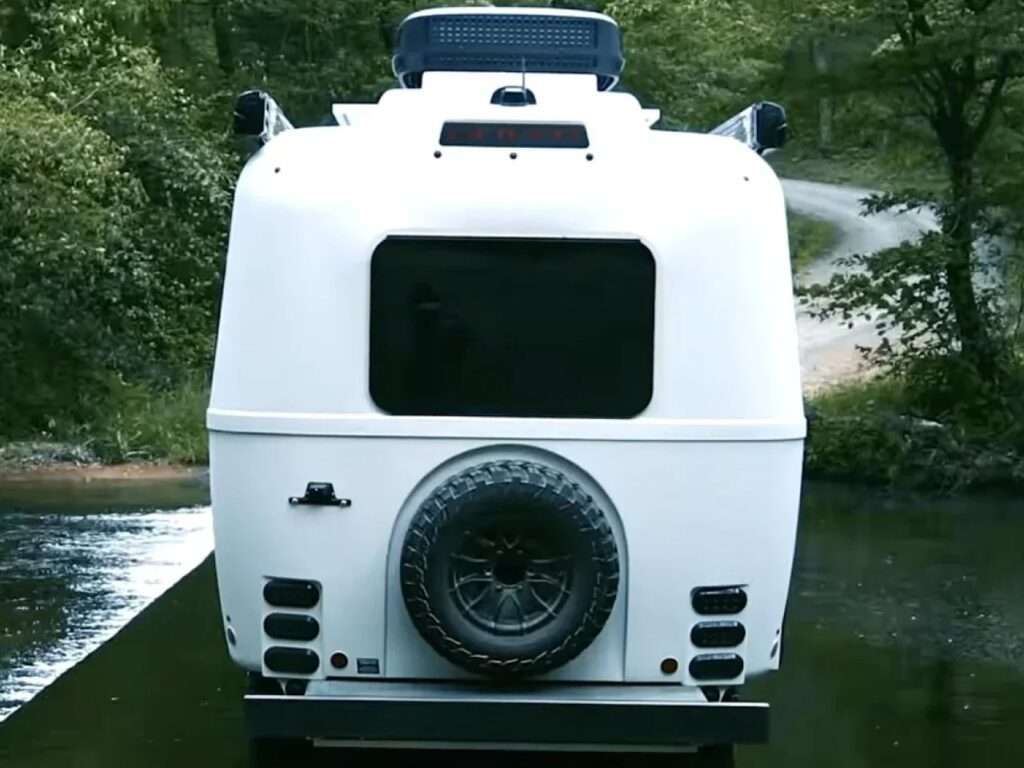
The travel trailer’s design follows an aerodynamic form aimed at reducing air resistance during towing, thereby improving fuel efficiency. The double-shell structure also allows service components such as water tanks and plumbing systems to be integrated within the trailer body, reducing external complexity and enhancing internal system cohesion.
Interior Organization and Living Functions
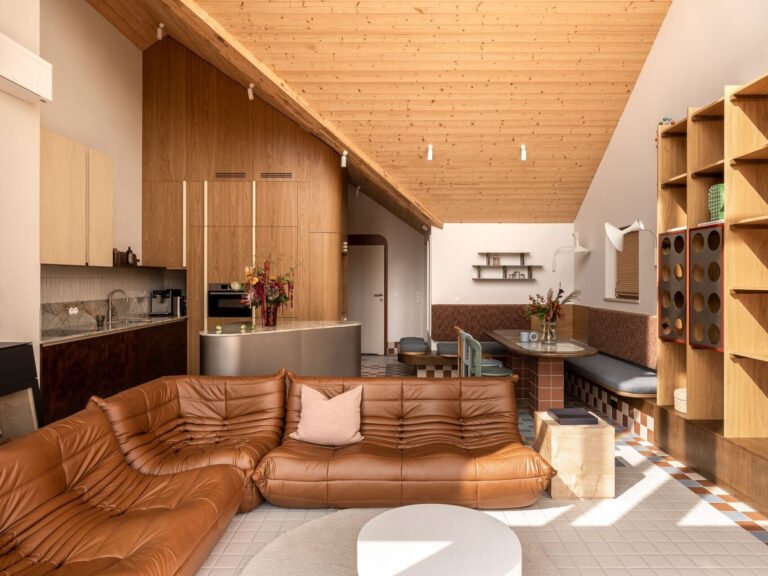
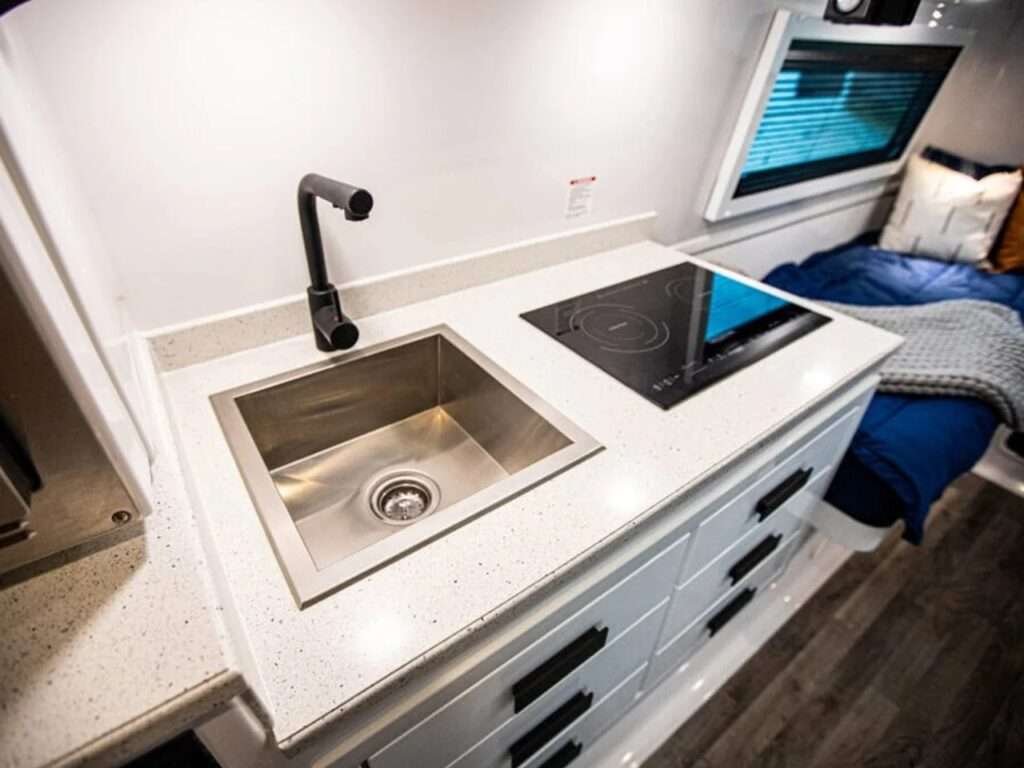
The Interior layout is designed for flexible use, offering a choice between twin beds or a king-size bed. Additionally, the leather-upholstered dinette can be converted into an extra sleeping space for one person, while providing seating for up to seven people. The design includes a semi-integrated kitchen featuring an induction cooktop, refrigerator, and microwave with air-frying capability, along with a bathroom equipped with a shower, all within the 23-foot length, reflecting efficient spatial utilization for off-grid travel.
Energy Systems and Technical Equipment
The model operates on a 48-volt power system supported by a solar array capable of generating up to 1,360 watts, paired with a 3,000-watt inverter. The system is controlled via a central touchscreen interface. Internal cabinetry is integrated into the fiberglass mold to enhance structural cohesion. In terms of pricing, the model starts at approximately $107,000 for the version equipped with a 400-watt solar system, with higher costs for versions featuring greater solar capacity and additional equipment.


✦ ArchUp Editorial Insight
We can read the Oliver Apex X23 as a spatial derivative of North American recreational vehicle economics, where capital allocation shifts toward “mobile autonomy” rather than location-bound housing logic. The structural driver is the intersection of demand for off-grid energy systems, the commodification of solar technology, and the expansion of consumer credit within the recreational transport sector. Regulatory resistance emerges from road mass constraints, insurance risk models, and standardization of fiberglass shell manufacturing, which enforces a double-shell architecture and the integration of mechanical systems within the structure. The resulting spatial outcome is a closed system combining a 48-volt architecture and up to 1,360 watts of solar capacity with a compressed functional distribution of living and sleeping spaces, transforming housing into a mobile asset that merges consumption and autonomy within the same structural equation.