P81 House: Reworking History through Contemporary Industry

Preserving the Historical Character and Reintegrating Original Elements
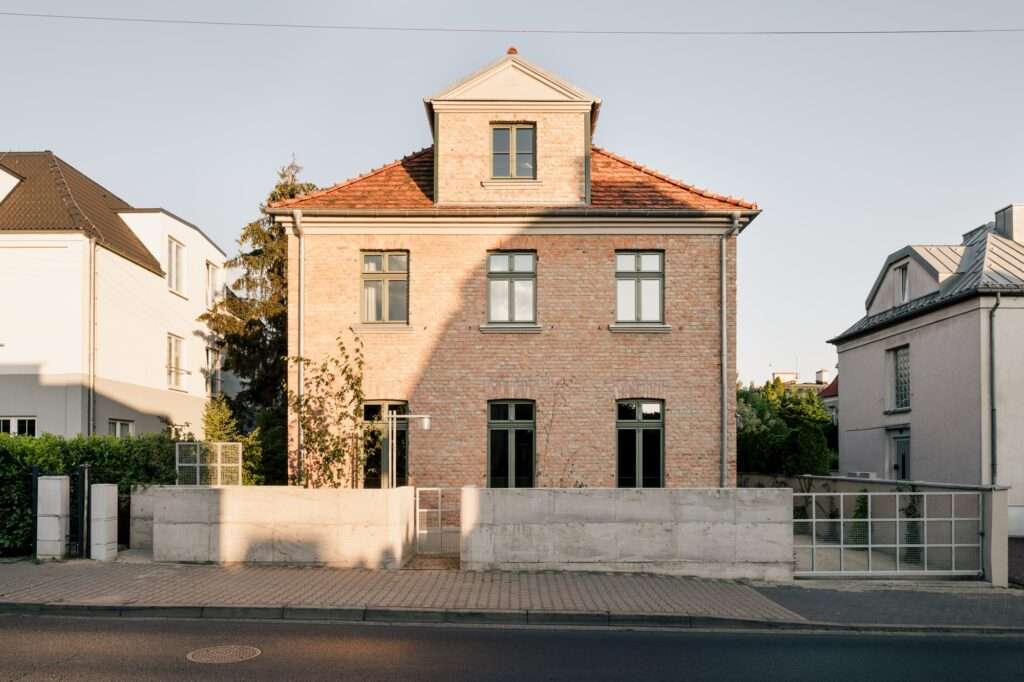
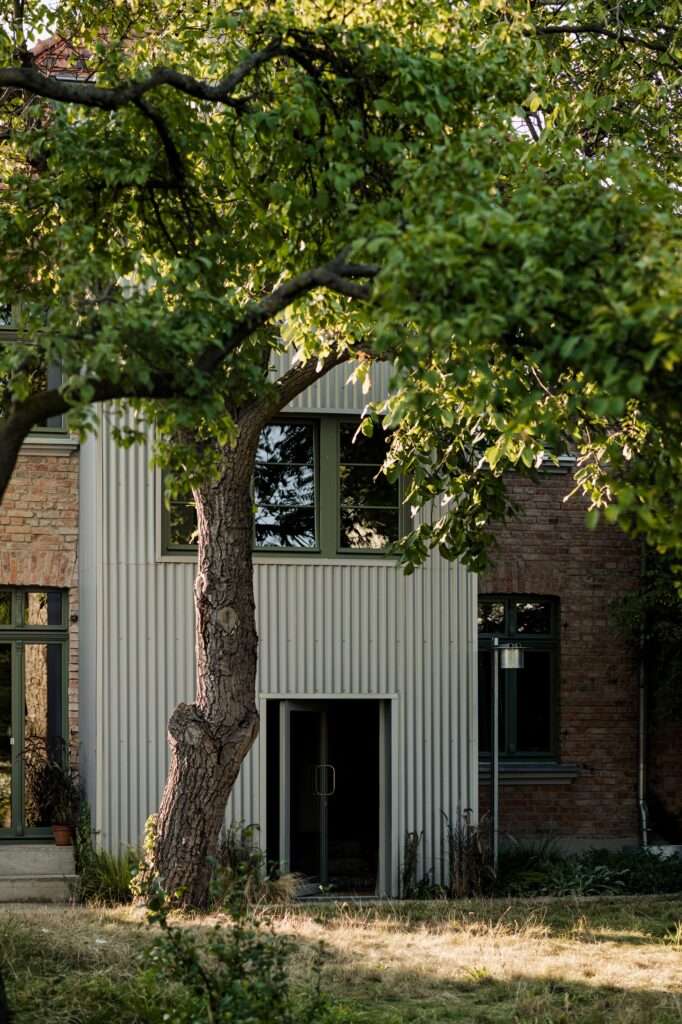
The P81 House is located in the historic district of Poznań and serves as an example of the restoration of pre-war residences while preserving their architectural identity. The project began as an interior design intervention and later evolved into a comprehensive renovation that included the façade, outdoor spaces, and custom-made furniture. The exposure of the original brickwork after the removal of old plaster layers played a key role in shaping the visual identity of the project, while preserving elements such as cornices and window sills, and introducing new windows that echo the original proportions of the building.
Integration of Contemporary Materials within the Existing Structure
The most prominent architectural interventions are concentrated at the garden entrance, where the staircase volume was reshaped using corrugated aluminum panels. This intervention created a clear contrast between the modern industrial character and the original brick structure, with a surface that reflects environmental changes and climatic conditions. This approach demonstrates how contemporary building materials can be integrated into a historic building without erasing its core identity.
Treatment of the Landscape through Functional Elements
The garden design is based on local vegetation and natural meadows to reduce the formal character of the outdoor space. Galvanized steel elements, such as lanterns, the gate, and rainwater collection tanks, were introduced to unify the project’s visual language and connect it to the industrial treatment used in other architectural interventions.
| Field | Information |
|---|---|
| Architects | wiercinski-studio |
| Area | 300 m² |
| Year | 2024 |
| Photographs | Oni Studio |
| Manufacturers | Zangra, wiercinski-studio |
| Lead Architects | Adam Wiercinski |
| Category | Houses, Refurbishment, Interior Design |
| Design Team | wiercinski-studio |
| City | Poznań |
| Country | Poland |
Reorganization of Internal Spaces in Historic Buildings
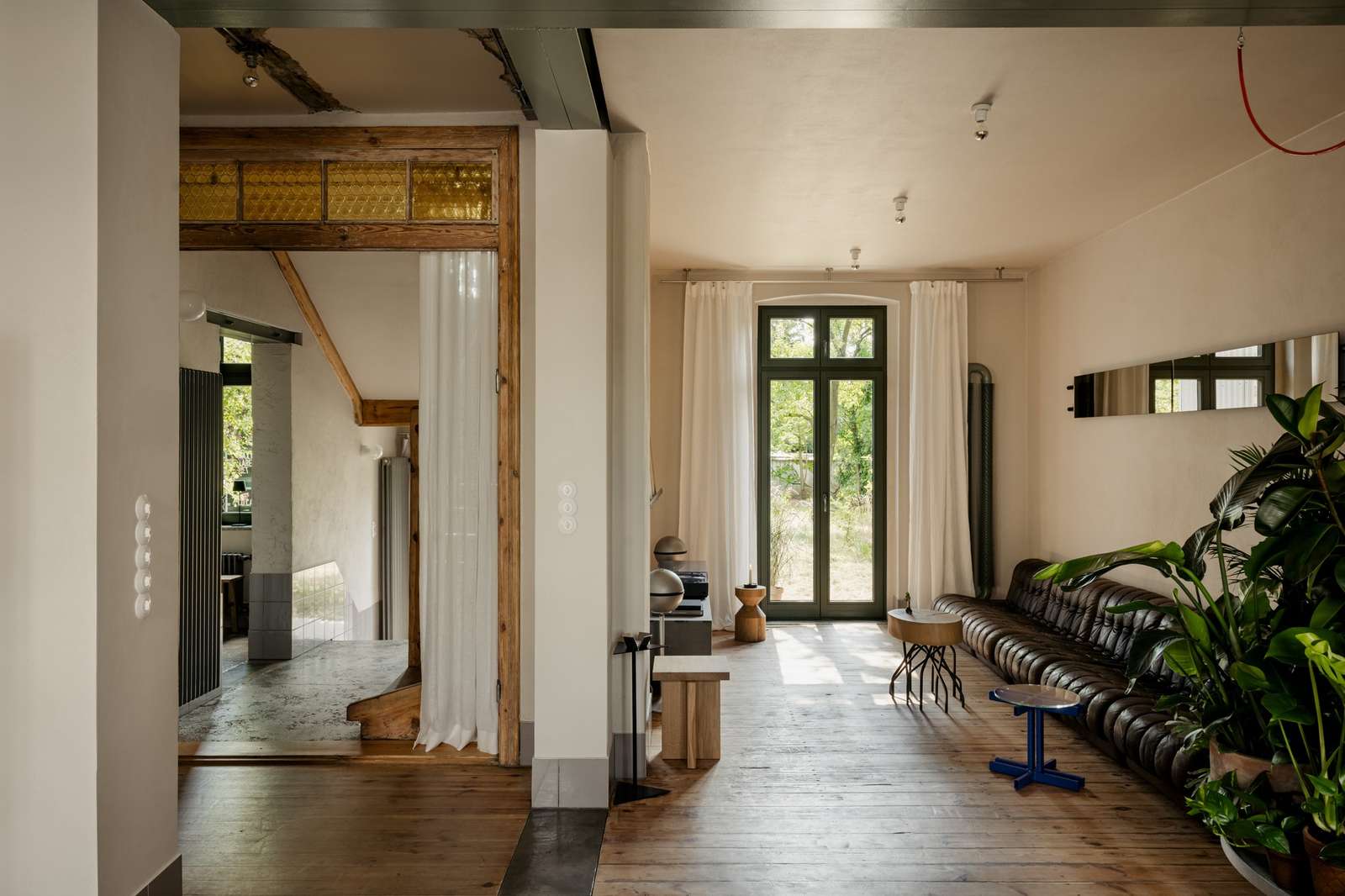
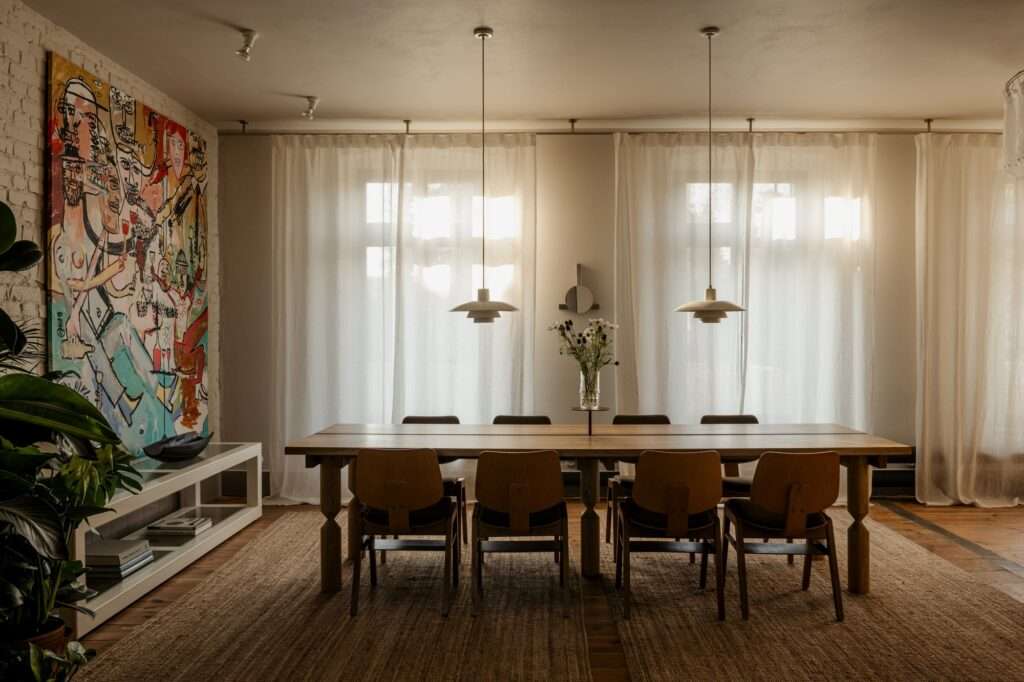
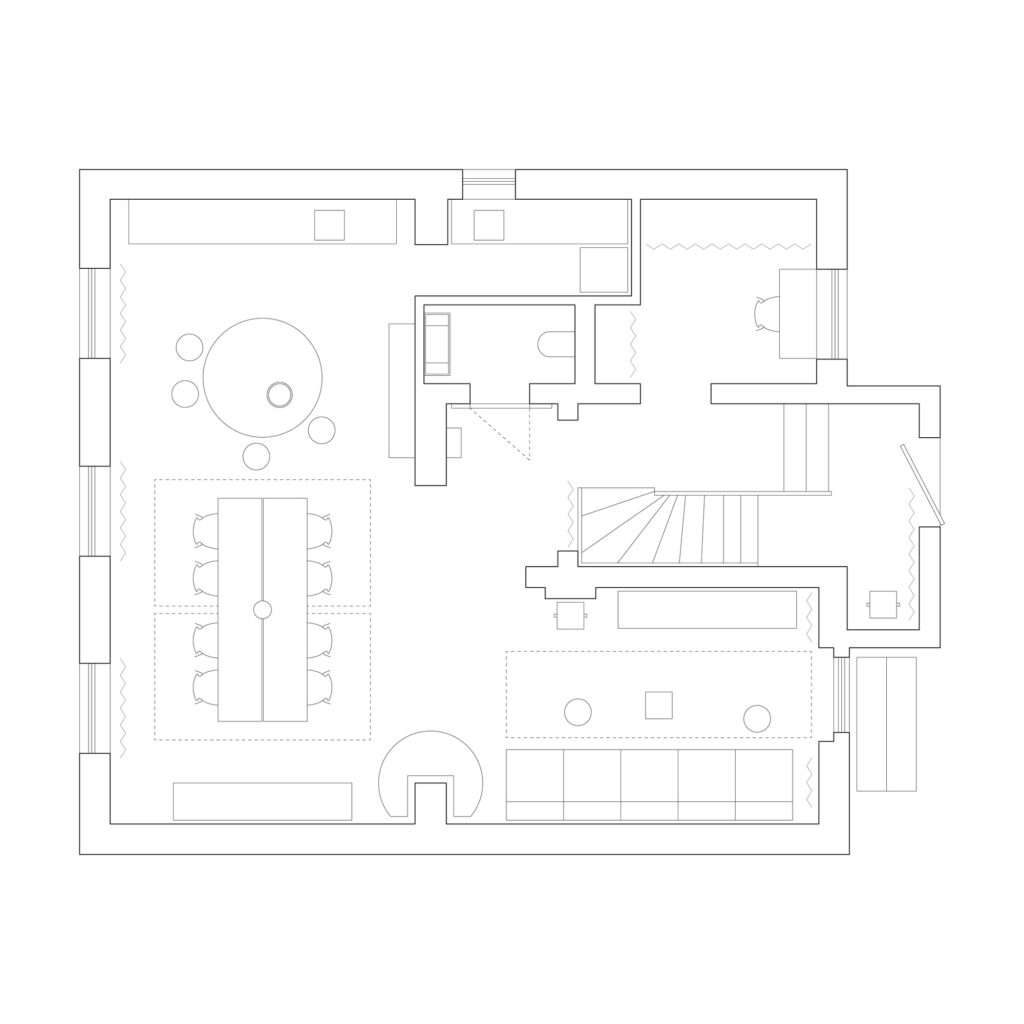
The interior design maintains the building’s original identity while adapting it to the needs of contemporary living. To achieve this, the ground floor was opened up by removing a central wall and replacing it with an exposed steel beam, resulting in a more open and flexible spatial configuration. Light visual elements, such as neon installations and a planted island, were used to mark the location of the former wall without physically redividing the space.
Use of Custom Elements within the Interior Identity
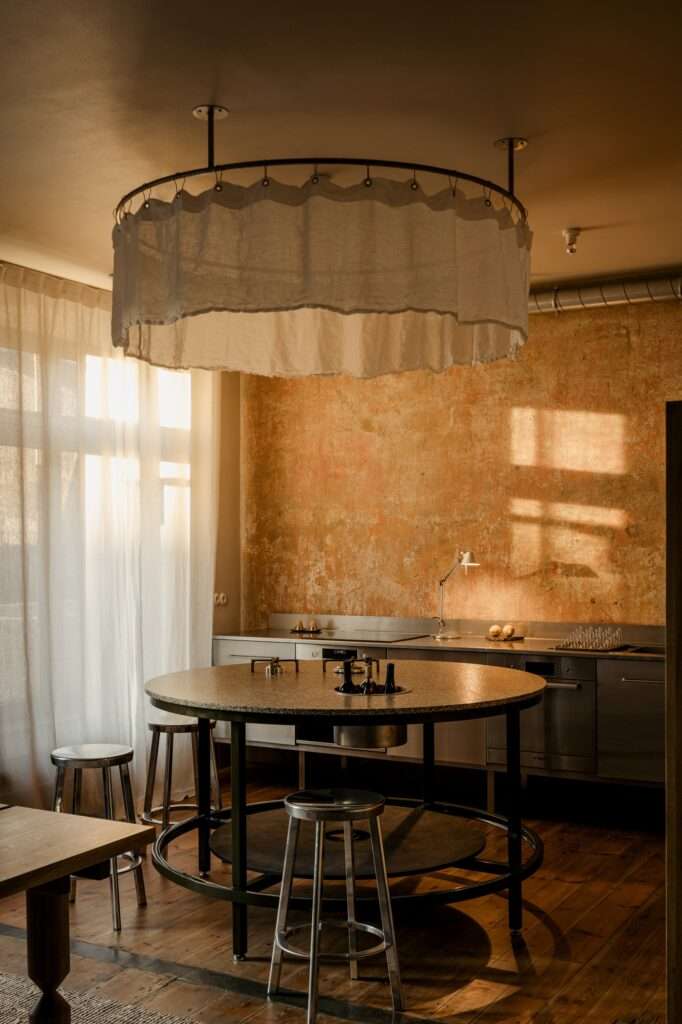
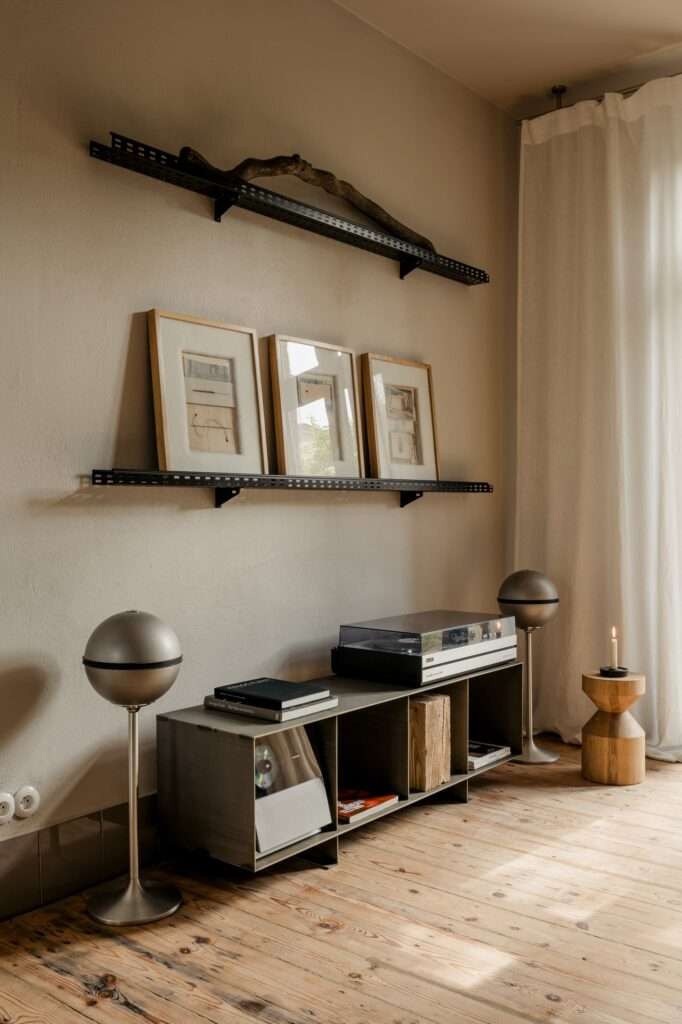
The project includes a series of custom-designed pieces made of raw steel, oak wood, and reinforced glass, aiming to connect new details with the building’s original elements. This is evident in the dining table inspired by the old railing details, as well as the circular kitchen island whose visual presence is softened using linen fabric, preserving the calmness of the open space and the continuity of movement within it.
Use of Local Materials in Interior Finishes
Rather than relying on imported materials, the project employs local Strzegom granite for countertops, sinks, and bathroom cladding. This approach reflects a commitment to integrating local resources into residential spaces while reintroducing traditional materials in contemporary interior applications. For more technical specifications, you can explore the material datasheets available online.
Revealing Historical Layers within the Building
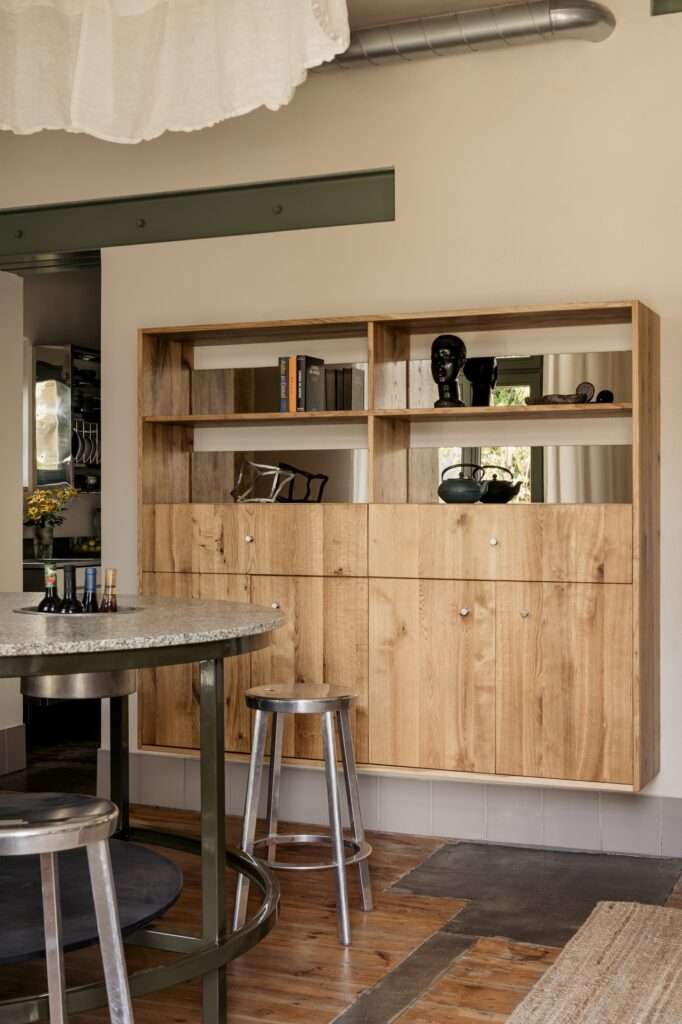
The house preserves several original elements that reveal its architectural history, such as wooden floors and old door frames. Concrete infills within the flooring mark the locations of former walls, illustrating the building’s transformation during its previous use as a multi-apartment villa. This approach keeps traces of the original configuration present within the new spaces instead of concealing them entirely.
Balance between Restoration and Modernity
The development of the P81 House extended over several years, following an approach that treats discoveries made during construction as part of the project’s identity. This allowed the integration of historical details with modern industrial treatments within a simple interior language, while maintaining the presence of both original materials and contemporary interventions.
✦ ArchUp Editorial Insight
Governing the adaptive reuse of a pre-war residential structure within the urban context of Poznań, where heritage preservation requirements and material usage constraints directly reshape the spatial program. The project’s expansion from an interior intervention to a full-scale renovation of façade, site, and furniture reflects a reallocation of funding during execution rather than a fixed design agenda. The exposure of original brickwork was not an aesthetic gesture but a shift in preservation priority, while the retention of cornices and window proportions signals imposed regulatory continuity. Replacing a structural wall with an exposed steel beam represents a rebalancing of loads within spatial efficiency optimization. The use of local materials and the reuse of stone and galvanized steel reflect a logic of reduced logistical complexity. Over three years, on-site discoveries continuously redefined the final configuration as a negotiated outcome between constraints rather than an autonomous design product. Stay updated with similar case studies through the latest architectural news and discussions in the field.