
Orchestra Park Kunshan: Music-Inspired Urban Design

Public Parks as a Standardized Design Typology
Most public parks follow a repetitive design pattern based on fundamental elements such as benches, jogging paths, play areas, and occasionally a fountain. While they fulfill their basic functions, they often lack a clear design vision or an integrated architectural concept. In contrast, the “Orchestra Park” project in Kunshan, China, presents a different case, offering an example of a public space driven by a specific conceptual framework rather than relying solely on conventional functional solutions.
Urban Site and Context
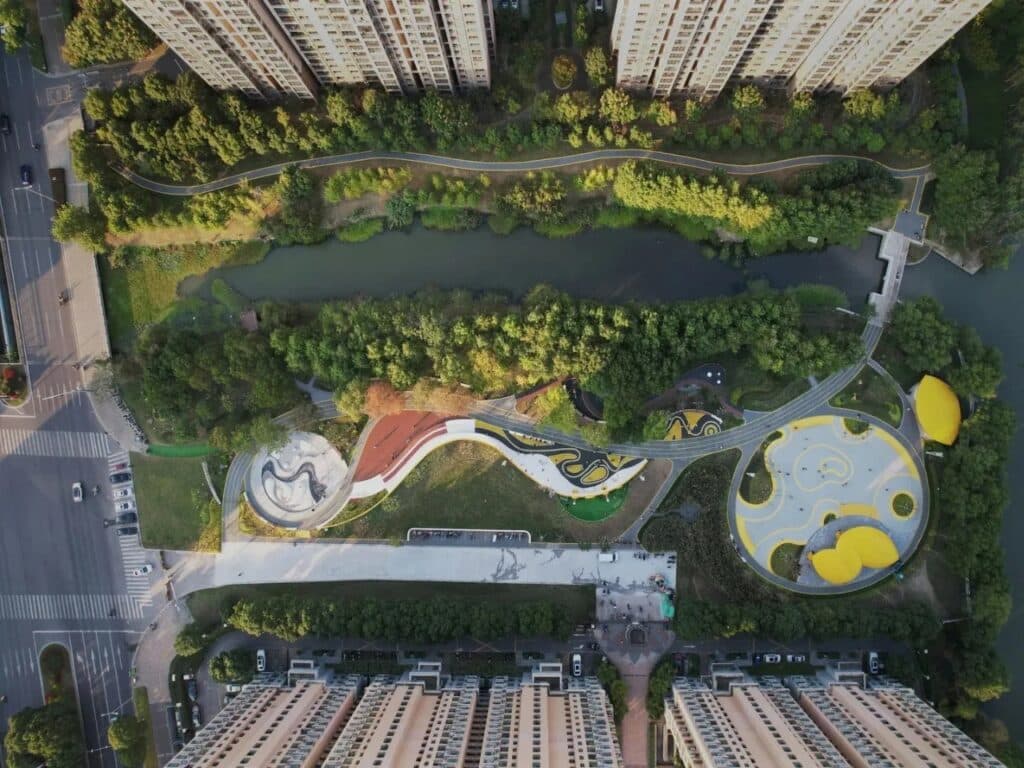
The park is located in the Huaqiao Economic Development Zone, positioned between two high-density residential districts at the confluence of two rivers. It covers an area of 8,500 square meters, a figure that may seem modest in numerical terms but gains greater significance within its urban context. Within this framework, the project becomes an attempt to redefine the use of public space in a dense urban environment, rather than treating it merely as a service void.
Translating Music into Spatial Structure
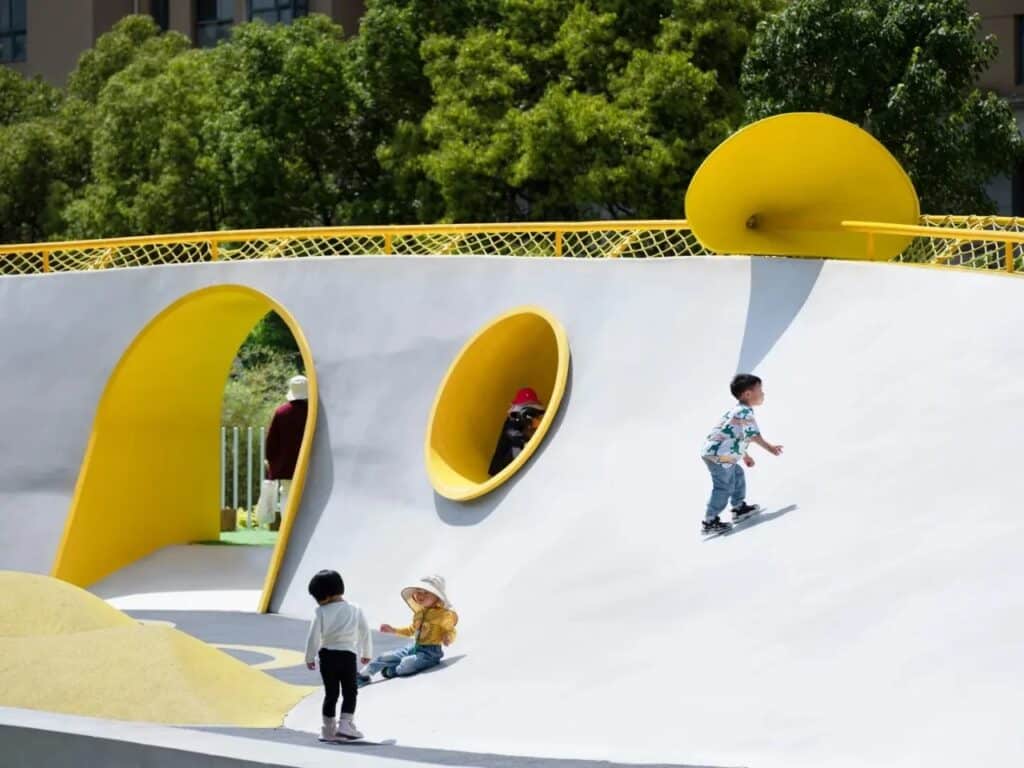
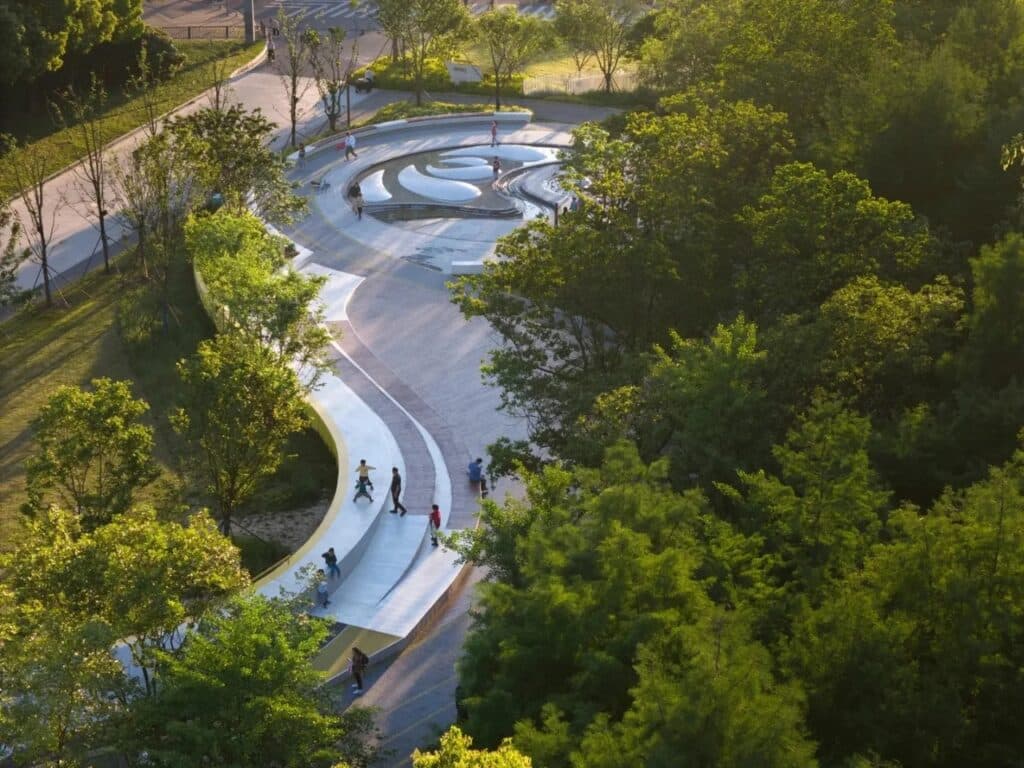
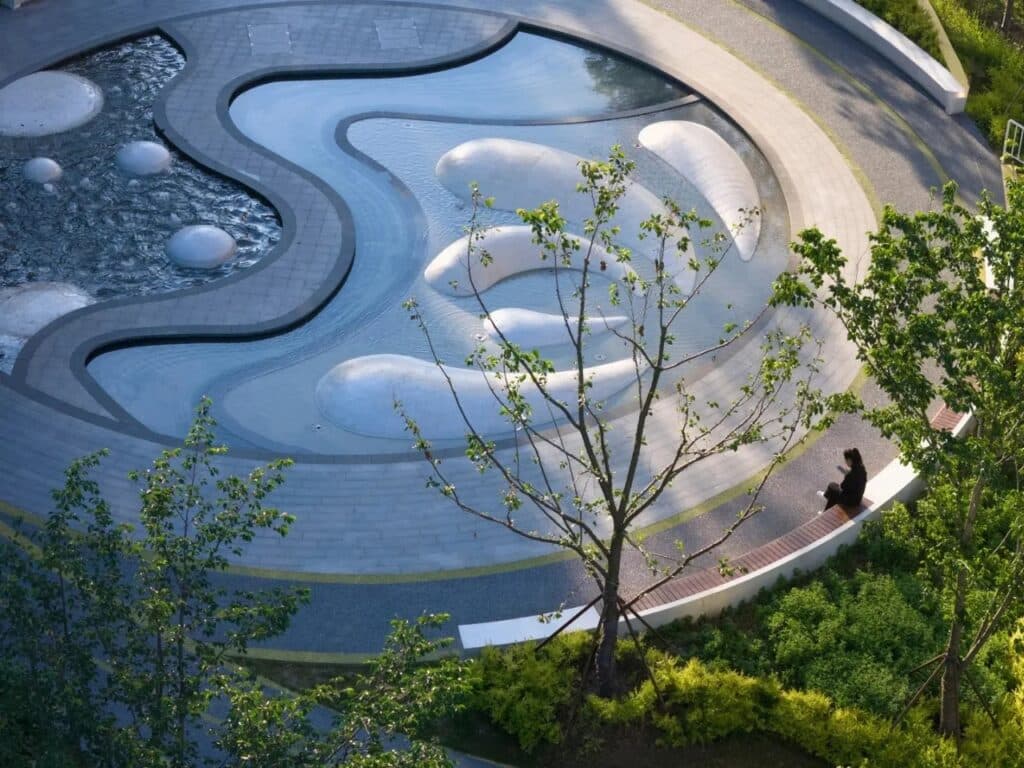
The design is based on the traditional sizhu music of the Jiangnan region, a musical form associated with intangible cultural heritage and characterized by its fluid rhythms. The SoBA studio translated the characteristics of this music into spatial elements within the park, where movement paths follow curves reminiscent of musical instruments, while the overall layout adopts a more fluid configuration rather than rigid divisions. Interactive installations in the form of horn-like structures are distributed across the site, functioning simultaneously as both functional and sculptural elements, in a direct attempt to translate auditory rhythm into spatial and visual organization within the space.
Preserving the Natural Context as a Design Decision
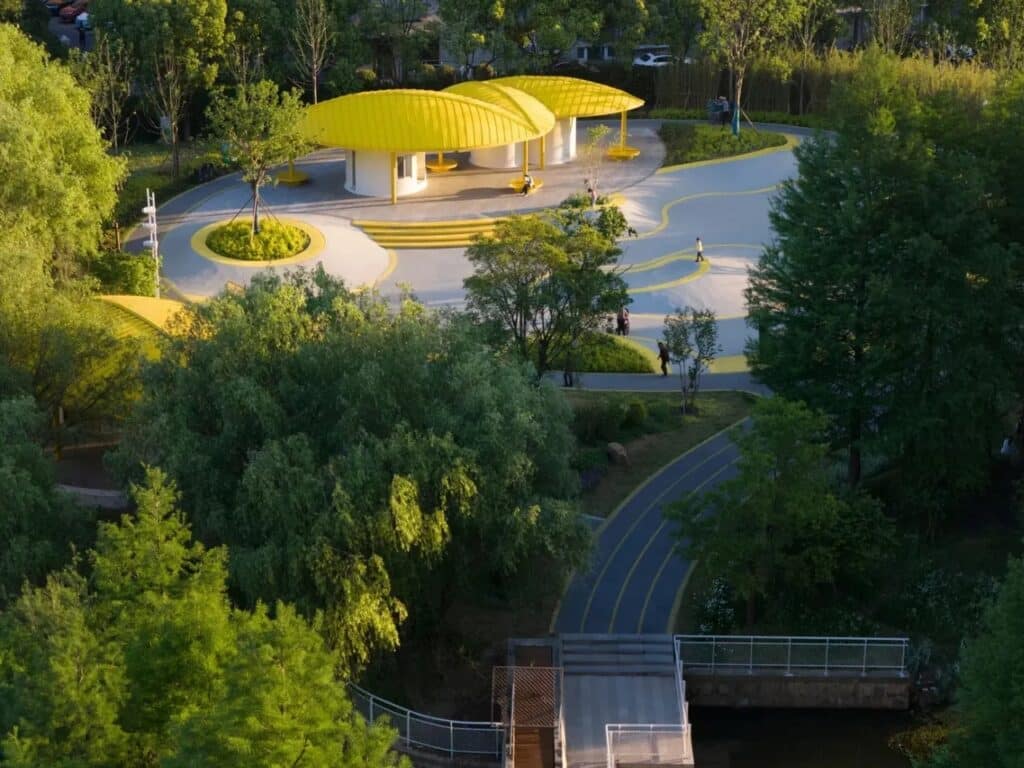
The project demonstrates a clear tendency toward moderating architectural intervention rather than imposing an entirely new model on the site. According to Ru Wan, co-founder of SoBA, the main challenge lies in integrating park facilities while maintaining ecological balance. The site originally contained mature camphor trees and established dawn redwoods, along with nearby wetland areas, and the decision was made to preserve these elements rather than remove them and completely reconfigure the site. This approach positions the project within a different paradigm from many public space developments that disregard natural context in favor of a fully new masterplan.
Multi-Layered Spatial Program
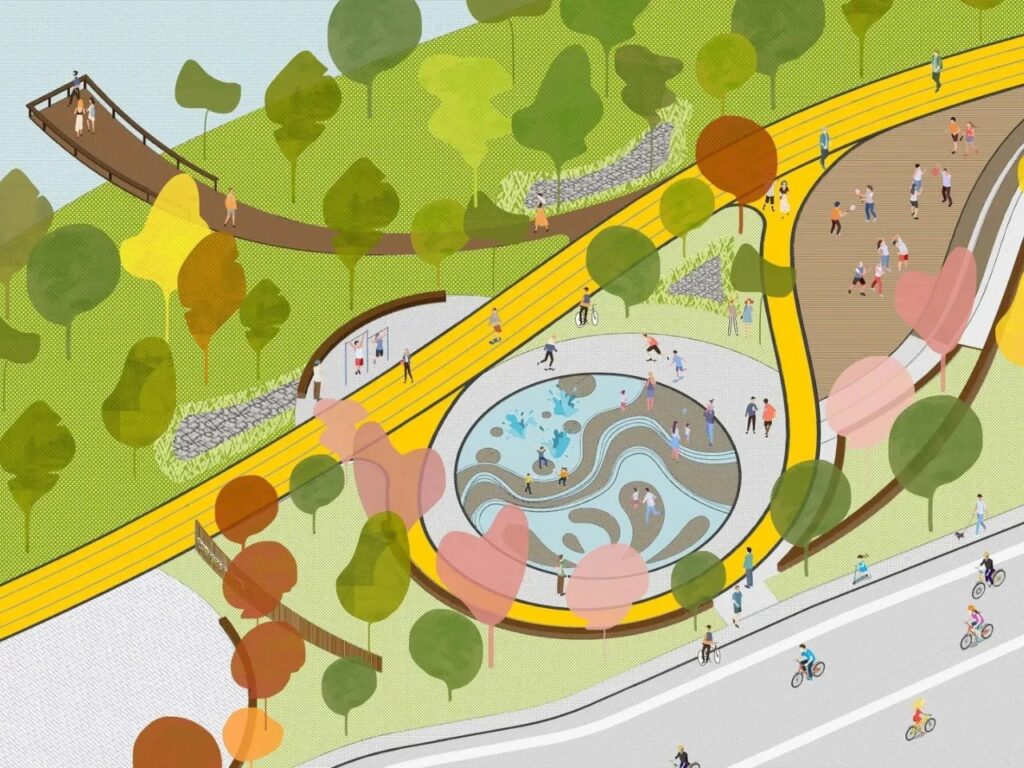
Although the site is less than one hectare in area, its functional program includes a diverse range of uses. These include a skate park, climbing zone, fitness playground, open-air theater, as well as pathways through a bamboo grove and a musical fountain plaza, alongside a small music classroom. An observation platform extends over the wetland area in the northwest corner, connected by a small bridge leading to a winding path that loops around the park and reconnects it to the surrounding residential neighborhoods. This diversity of functions does not result in visual or spatial congestion, but is instead organized into clearly defined layers of use.
Architectural Logic of Composition
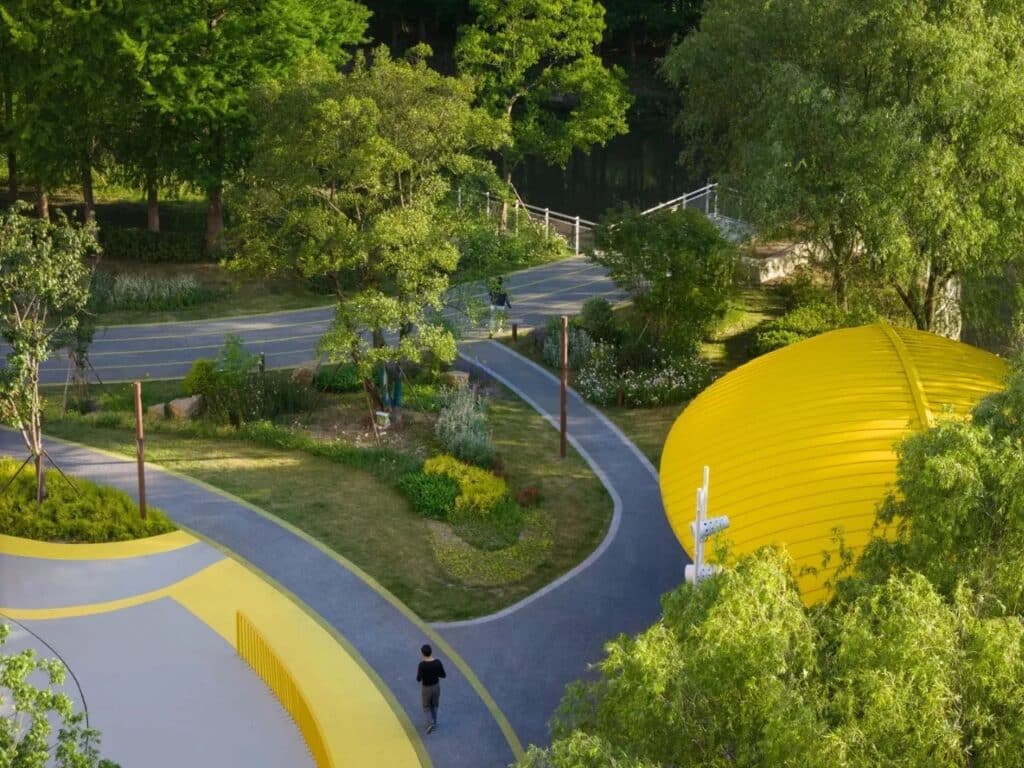
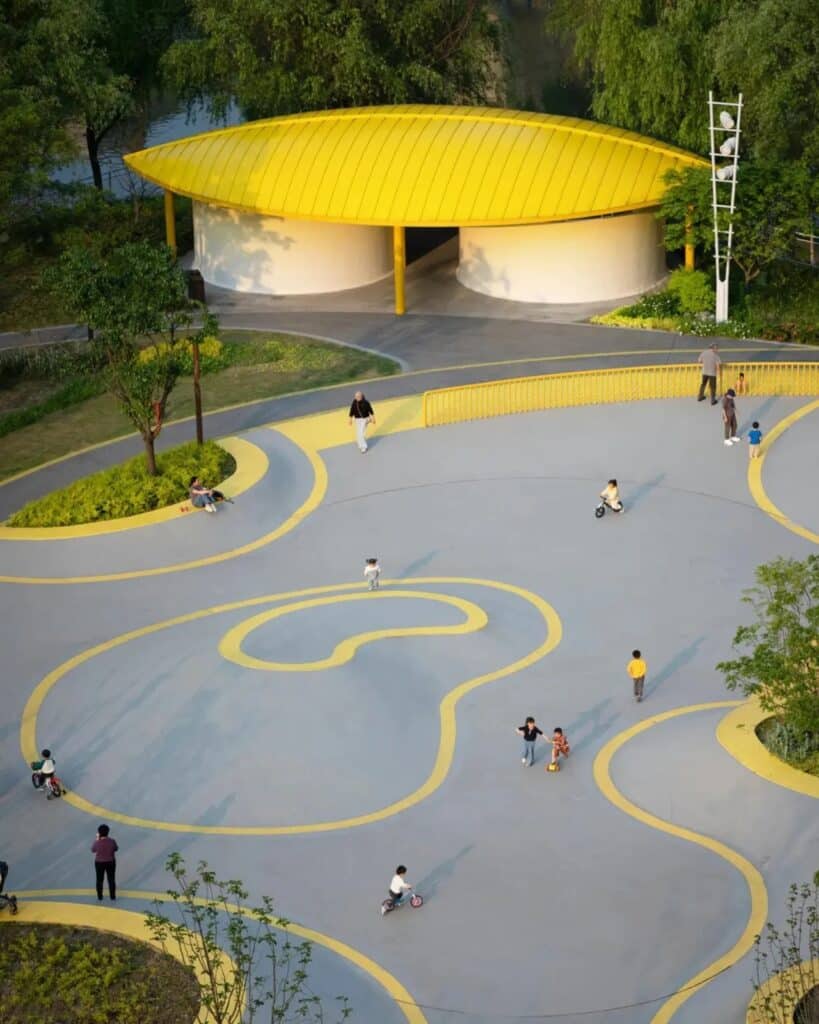
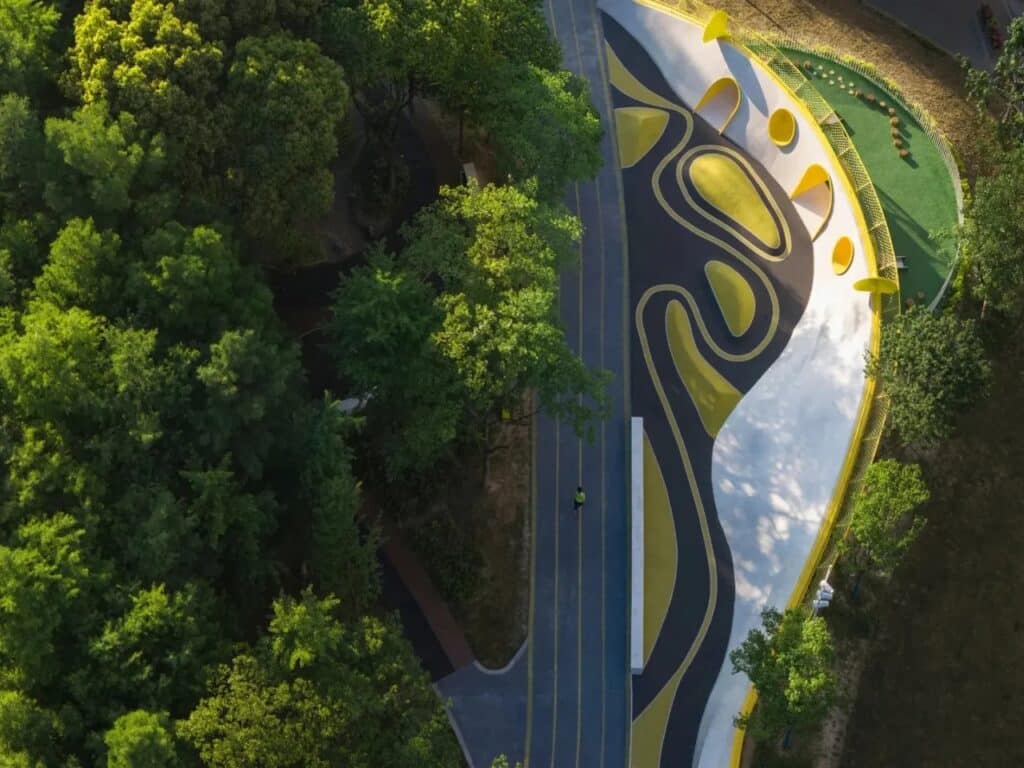
The park is based on a precise geometric system that combines straight lines with tangent arcs to generate a smooth spatial flow across the site. Despite the density of elements, the space does not read as chaotic; instead, it maintains a balance between directionality and flexibility. This composition reflects what the design team describes as a “flexible yet rational form,” where relationships between different spatial components are carefully calibrated rather than sharply separated, allowing the site to be read as a unified whole despite the multiplicity of its parts.
Color as a Visual Organizational Element
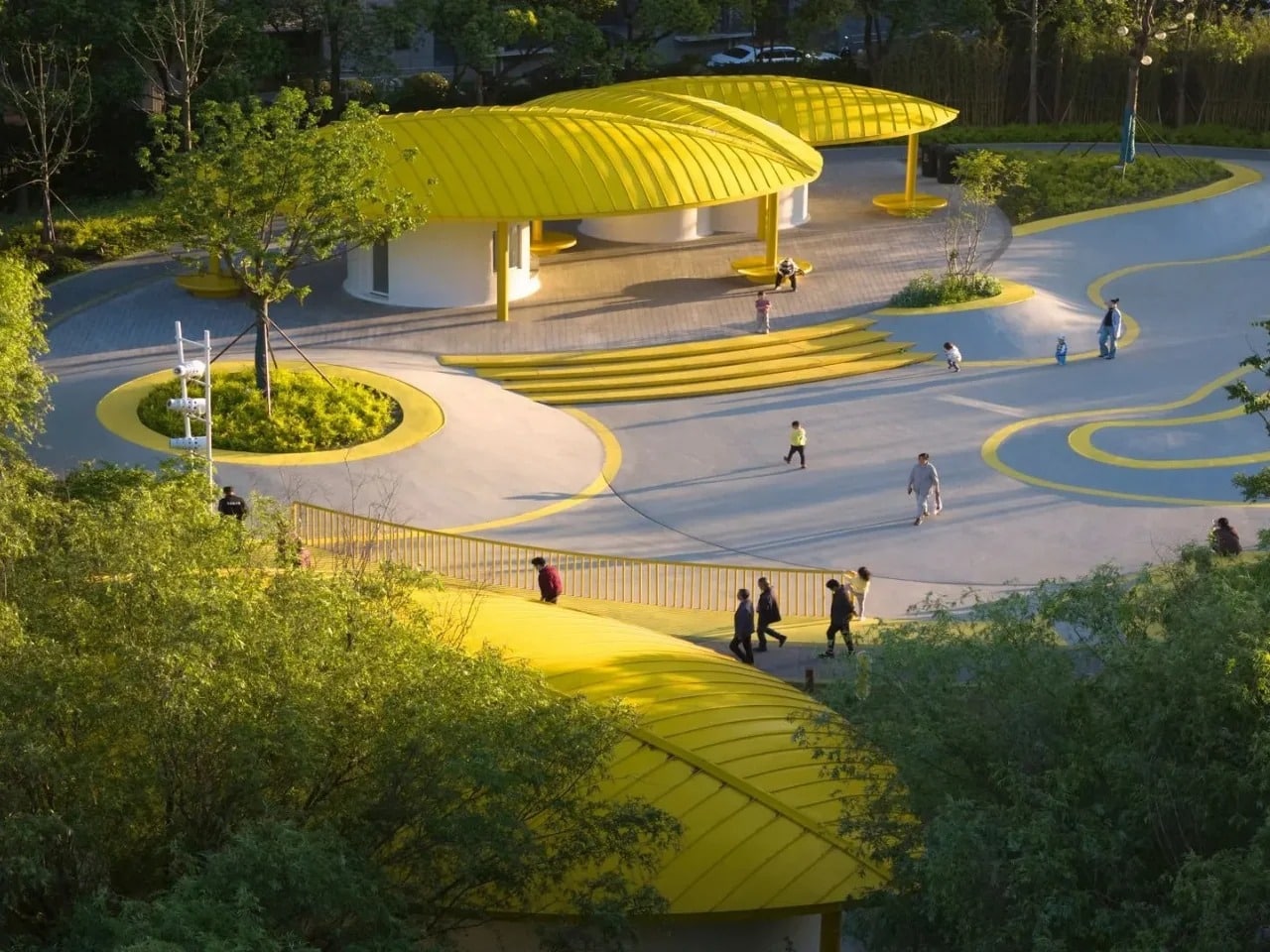
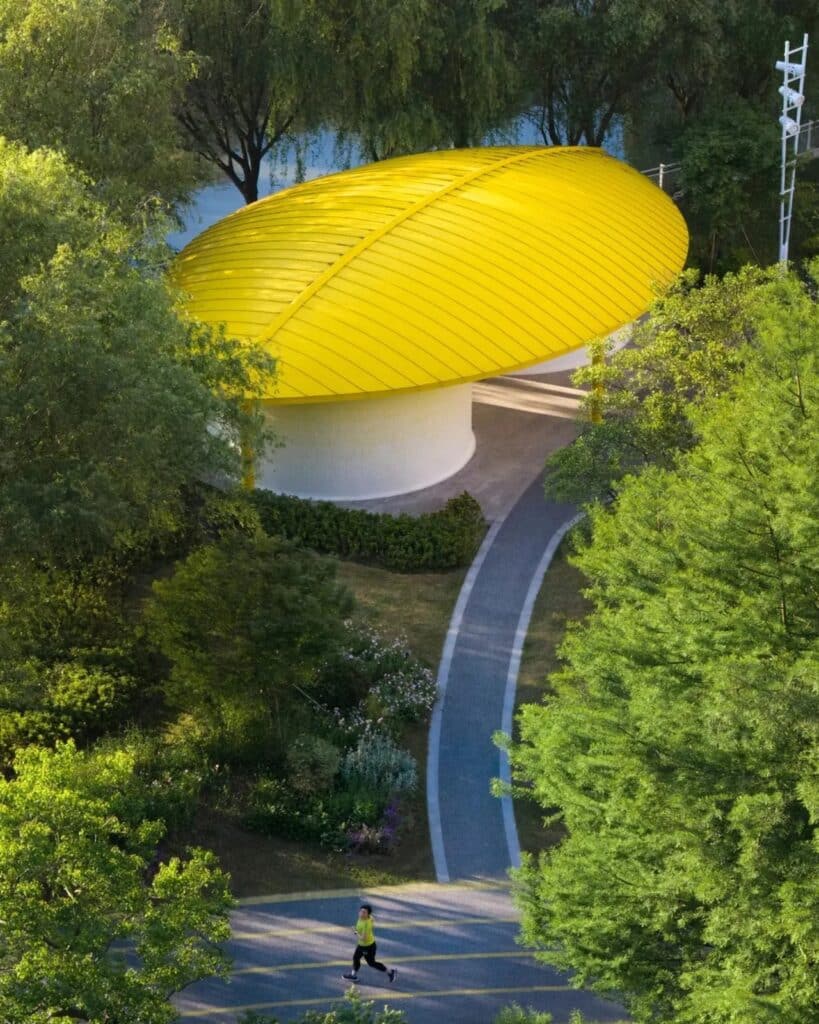
Yellow appears in the project as a key visual component repeated throughout different parts of the park. It is applied to musical installations, barriers, planters, running track lines, as well as tunnels that pierce a curved wall. This intensive use of color within a context that is primarily oriented toward calmness and nature creates a clear contrast, yet remains controlled within a unified visual logic. In this way, color becomes a means of connecting the site’s components rather than serving as a purely decorative element. At the eastern edge, cylindrical restroom facilities appear beneath aluminum canopies shaped like leaves, with the yellow color maintained as a continuous visual language. This extension integrates infrastructure into the spatial experience rather than treating it as a neutral or hidden element.
Flexibility of Use Instead of a Single Prescribed Function
SoBA operates according to a design approach known as “Soft Build,” which emphasizes flexibility and sensitivity toward diverse patterns of use. Within this framework, the park accommodates multiple activities, including children’s play, skateboarding, sports practice, musical engagement, as well as users seeking a quiet space among the trees. No single narrative of use is imposed on the site; instead, space is left open for multiple experiences to unfold within the same architectural framework.
Balancing Ambition with Practical Constraints
Public parks are often subject to reduced design ambition due to budget limitations, regulatory procedures, or the need to accommodate diverse user groups. In this project, this challenge is addressed through reliance on a clear cultural concept that is consistently maintained throughout the design process. Rather than expanding into fragmented solutions, the project is built around this core idea, allowing the remaining elements to develop in relation to it. The result is a public space that remains rooted in its context while simultaneously reflecting it.
✦ ArchUp Editorial Insight
Orchestra Park in Kunshan can be read as a spatial solution emerging from the intersection of low-risk urban land investment policies and environmental preservation requirements in the Huaqiao area. Within this framework, the public space becomes a regulatory compromise between municipal demands to reactivate a marginal waterfront without increasing maintenance costs or complicating operational models. The spatial framework is shaped by constraints imposed by the protection of mature trees and adjacent wetlands, alongside the pressure to accommodate multiple recreational programs for high-density residential populations. Within this context, music does not operate as a cultural reference, but rather as a marketing-driven differentiation mechanism that redistributes programs across overlapping layers of use. This, in turn, enables the reconfiguration of standardized public park models into a more administratively viable format within the constraints of funding limitations and local governance structures.

★ ArchUp Technical Analysis
Technical and Documentary Analysis of Orchestra Park – Kunshan, China:
This article presents an architectural analysis of Orchestra Park as a case study in translating musical characteristics into spatial elements within urban public spaces. To enhance its archival value, we would like to present the following key technical and design data.
The site covers less than one hectare, with the park located between high-density residential blocks near the waterfront, preserving existing old-growth trees (camphor and metasequoia) and nearby wetlands. The design relies on translating the characteristics of Jiangnan Sizhu music into spatial elements, where movement paths follow curves reminiscent of musical instruments, and the overall plan takes on a fluid shape with interactive installations in the form of horns distributed throughout the site.
The functional program includes a skate park, a climbing area, a fitness playground, an open-air theater, paths within a bamboo grove, a musical fountain plaza, a small music classroom, and a viewing platform over the wetlands in the northwestern corner connected by a small bridge and a winding path.
The geometric organization combines straight lines and tangent arcs to generate smooth movement, with yellow as a fundamental visual element repeated in the musical installations, barriers, planters, running track lines, and tunnels penetrating a curved wall, along with cylindrical restroom facilities beneath leaf-shaped aluminum canopies. The park operates according to a “Soft Build” approach focused on flexibility and sensitivity to various multiple uses.
Related Insight: Please refer to this article to understand the context of modern architectural preservation:
Multipurpose Public Parks: Between Cultural Heritage and Sensory Design.




✅ Official ArchUp Technical Review completed for this article.