Pastry shop design using orange circular element


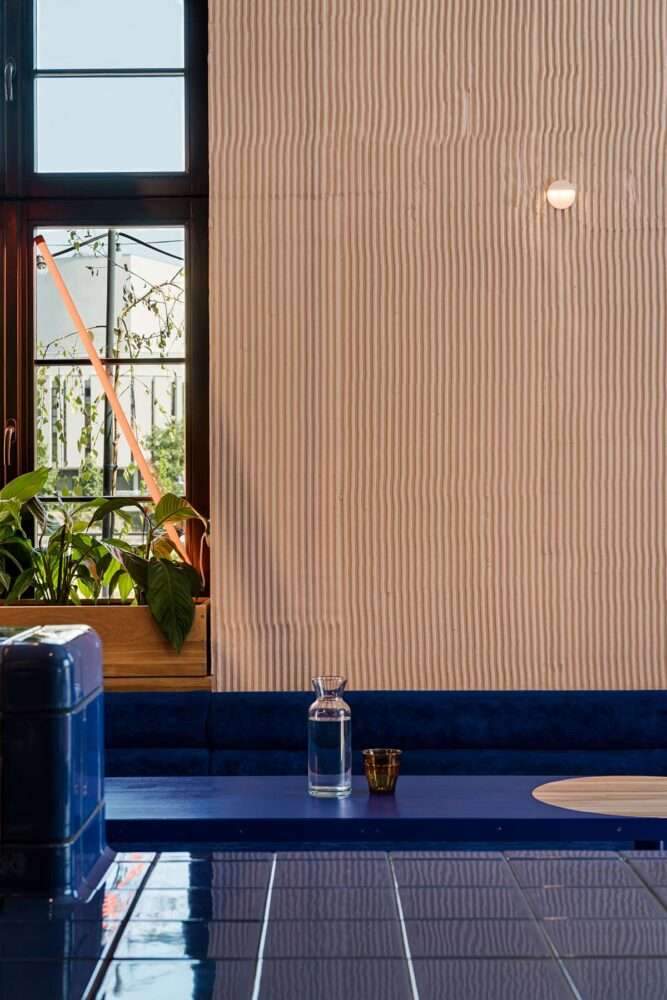
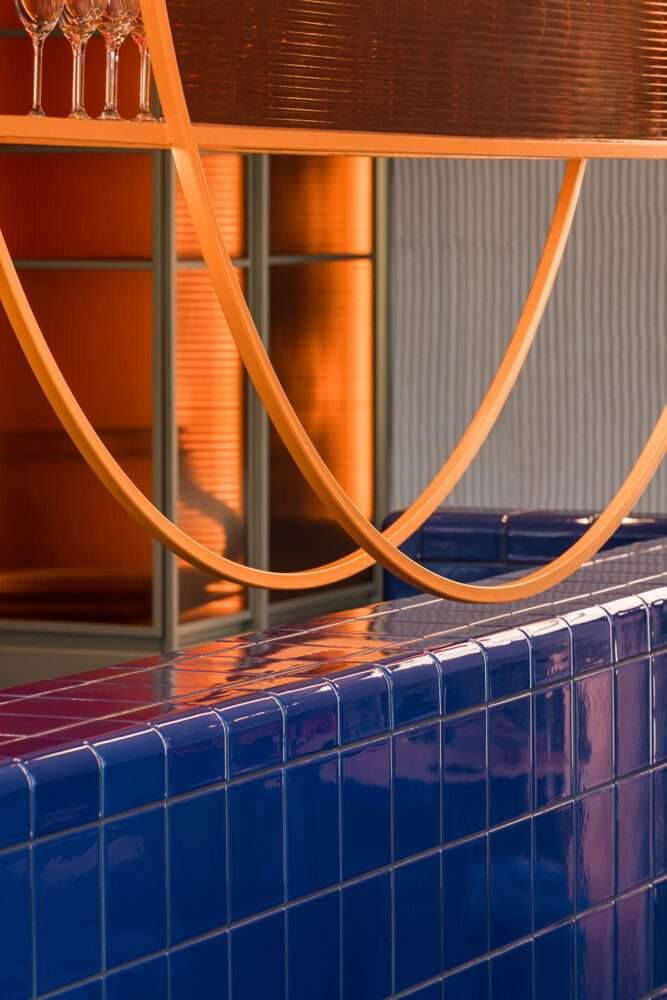
Wroclaw-based architecture firm Znamy się designed a cobalt bar and orange circular element to create a club-like atmosphere and sunset feel.
The project, called Pastry Club Woda,
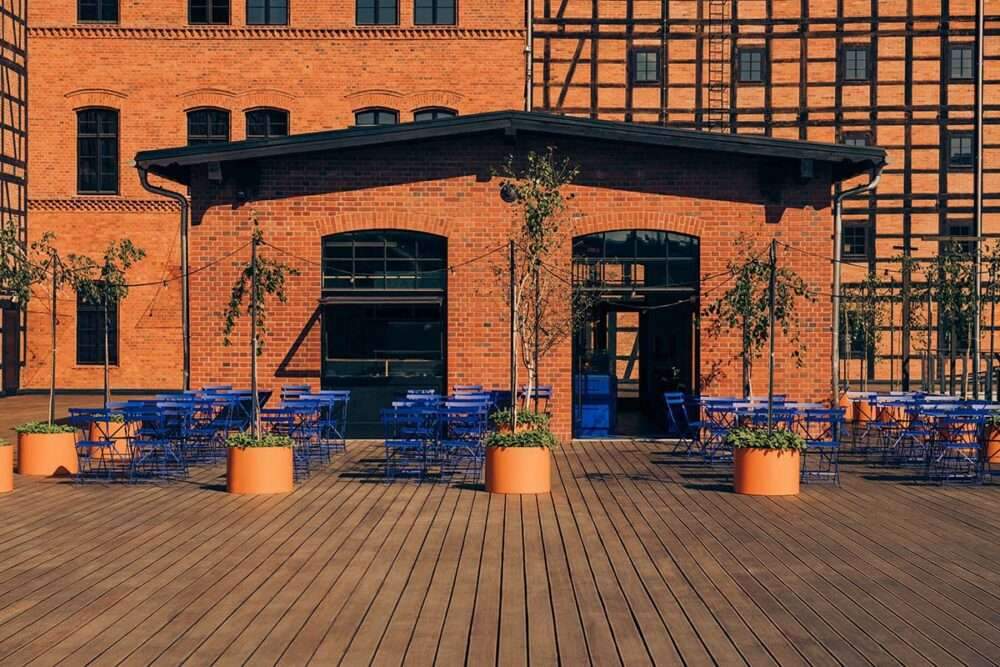
is located in an old boiler within the historic Rother’s Mill complex on Mill Island in Bydgoszcz, Poland.
Bydgoszcz is a bustling part of town and a popular hangout.
The 78 square meter project combines the energies of two functions: pastry and club – along with day and night, water and sun.
Znamy się asked the main question of this project: “Are there more clubs inside a sweet shop or a sweet shop inside a club?”
As the team explained, Mill Island is surrounded by water and is
“a popular place that attracts people with cultural events organized by the city of Bydgoszcz.”
“Besides its recreational functions, Mill Island is also closely associated with inland water grain transport and flour production.”
Contextual elements were the driving factors for emphasizing those aspects in-house, the team noted.

Design features
For this reason, the studio decided to create a colorful space that focuses on different colors and textures.
To do this, they used cobalt-colored flooring, bars and equipment that can literally make water flow inside.
For example, while the streamlined cobalt strip divides the interior in half,
It navigates this way in customer traffic. All flow freely inward to later flow downstream.
Planning and flow do not allow for any sudden shift to the technological field;
The direction of movement is as natural as moving water.
Construction mechanism
The Rother’s Mills complex consists of a grain and flour granary,
as well as a middle section where the historic mill was once located.
This is where the flour is produced, i.e. milling, cooling, sieving and packing,
followed by transporting the finished product to the flour granary.
Different production processes took place on each floor using modern machinery.
Grinding requires the use of millstones with characteristic grooves.
The ground grains have already been moved to the third floor,
Machines called hopper-boys distributed freshly milled flour to cool it.
On the floor, the Hopper boys were drawing squiggly circular shapes.
The product then found its way to the second floor via steel spikes to be sifted into flour, medium, and bran.
Flour packing was the last operation that took place on the ground floor.
When finished, the flour is transported to the granary.
For more architectural news