Sound of Rain: Winning Design Transforms Rainfall Into Architecture on Japan’s Yakushima Island

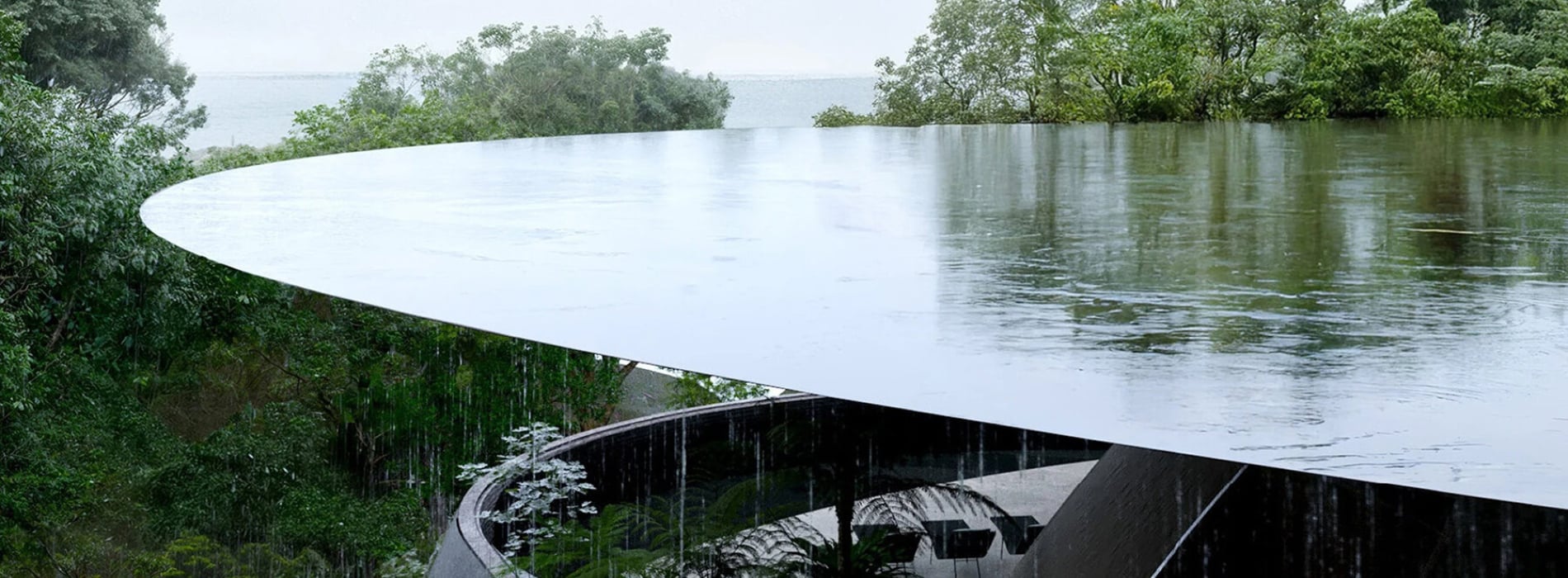
A design competition for Yakushima Island in Japan has revealed its winning entry. The Sound of Rain project treats rainfall as a core architectural element rather than a challenge to overcome. This approach responds directly to the UNESCO World Heritage site’s famously wet climate.
A Roof That Captures Weather
The design centers on a large bowl-shaped roof that curves inward. This architecture collects rainwater and releases it slowly along the edges. The water then forms a continuous rain curtain around the structure. Moreover, this curtain blurs the boundaries between indoor and outdoor spaces.
The curved roof controls water flow in predictable patterns. Therefore, the construction actively shapes movement paths and rest areas. Residents experience rain directly through sound, humidity, and temperature changes. The design transforms weather from obstacle into sensory experience.
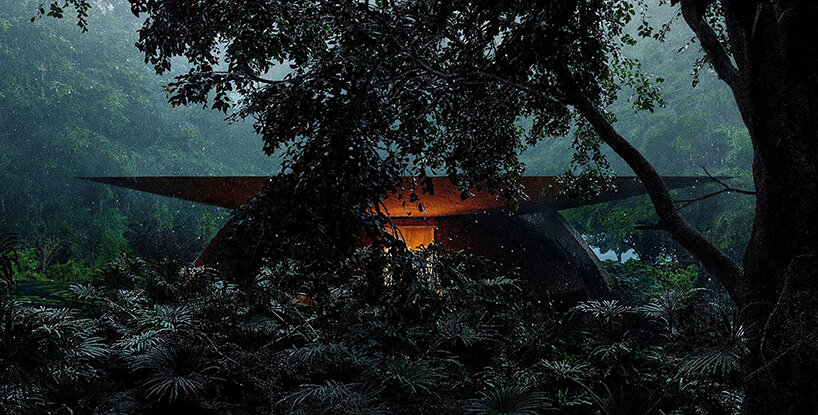
Interior Spaces Embrace Natural Elements
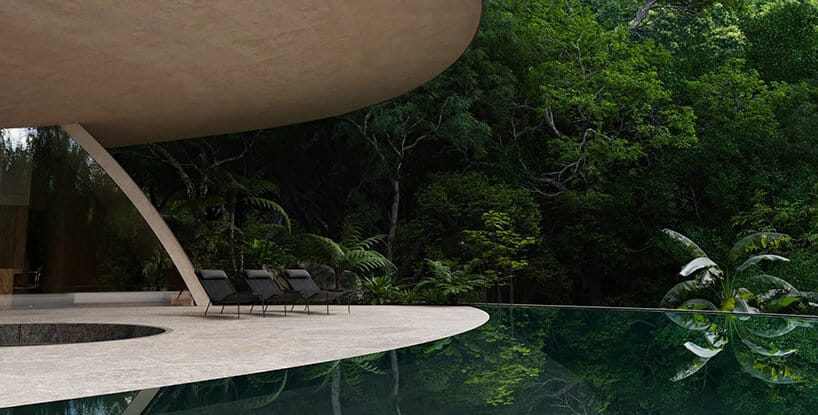
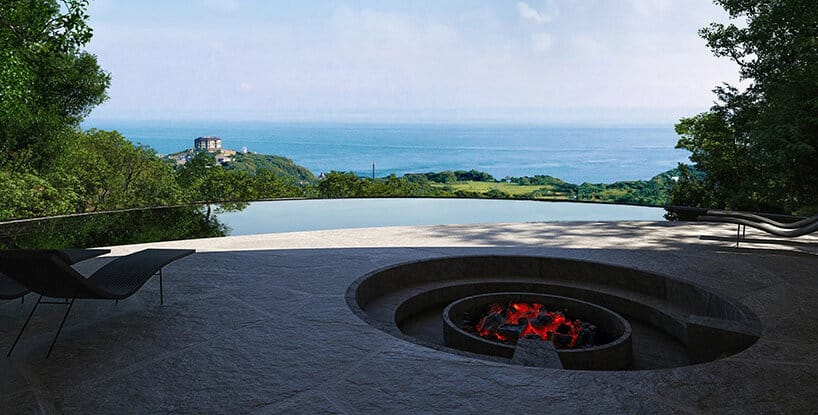
The interior design avoids traditional room divisions. Instead, the layout creates a series of transitional spaces throughout. A circular terrace with a sunken fireplace serves as the main living area. Large windows frame views of distant ocean and surrounding forest.
However, some zones remain partially open intentionally. This allows air and moisture to circulate naturally within the building. The approach achieves balance between privacy and exposure. Meanwhile, simple building materials and smooth curves facilitate easy movement throughout.
Competition Draws Global Participation
The open competition attracted 1,058 entries from 112 countries and regions. Participation was limited to architects under 40 years old. The competition tested how architecture can respond to specific site conditions. Furthermore, it explored new possibilities for residential sustainability in challenging climates.
The jury selected this entry for its conceptual clarity. The design focuses on one pure idea and integrates it throughout space, structure, and experience. This news highlights a growing trend in climate-responsive design for cities and remote locations alike.
A Quick Architectural Snapshot
When climate conditions demand attention, architecture can shift from resistance to coexistence. This project answers a fundamental question simply: rather than hiding from rain, let rain become part of the landscape. The design proves that environmental challenges can drive innovative spatial solutions.
✦ ArchUp Editorial Insight
The Yakushima competition reveals a shift in how hospitality brands approach development in protected natural sites. Traditional hotel construction on UNESCO heritage locations faces increasing regulatory scrutiny and public resistance. Therefore, framing a project as climate-responsive architecture rather than luxury accommodation becomes a strategic necessity.
The competition format targeting architects under 40 serves multiple functions. It generates global media attention at minimal cost. It also distances the final design from established commercial aesthetics associated with resort development.
The rain-centric concept addresses a practical problem. Yakushima receives approximately 4,000 to 10,000 millimeters of annual rainfall. Any viable structure must manage water extensively. Elevating this requirement into a design philosophy transforms an engineering constraint into marketable identity.
This project is the logical outcome of heritage site development pressures, hospitality industry differentiation needs, and unavoidable hydrological realities of the location.