The Plus Furniture Factory Receives RIBA International Award for Excellence 2026

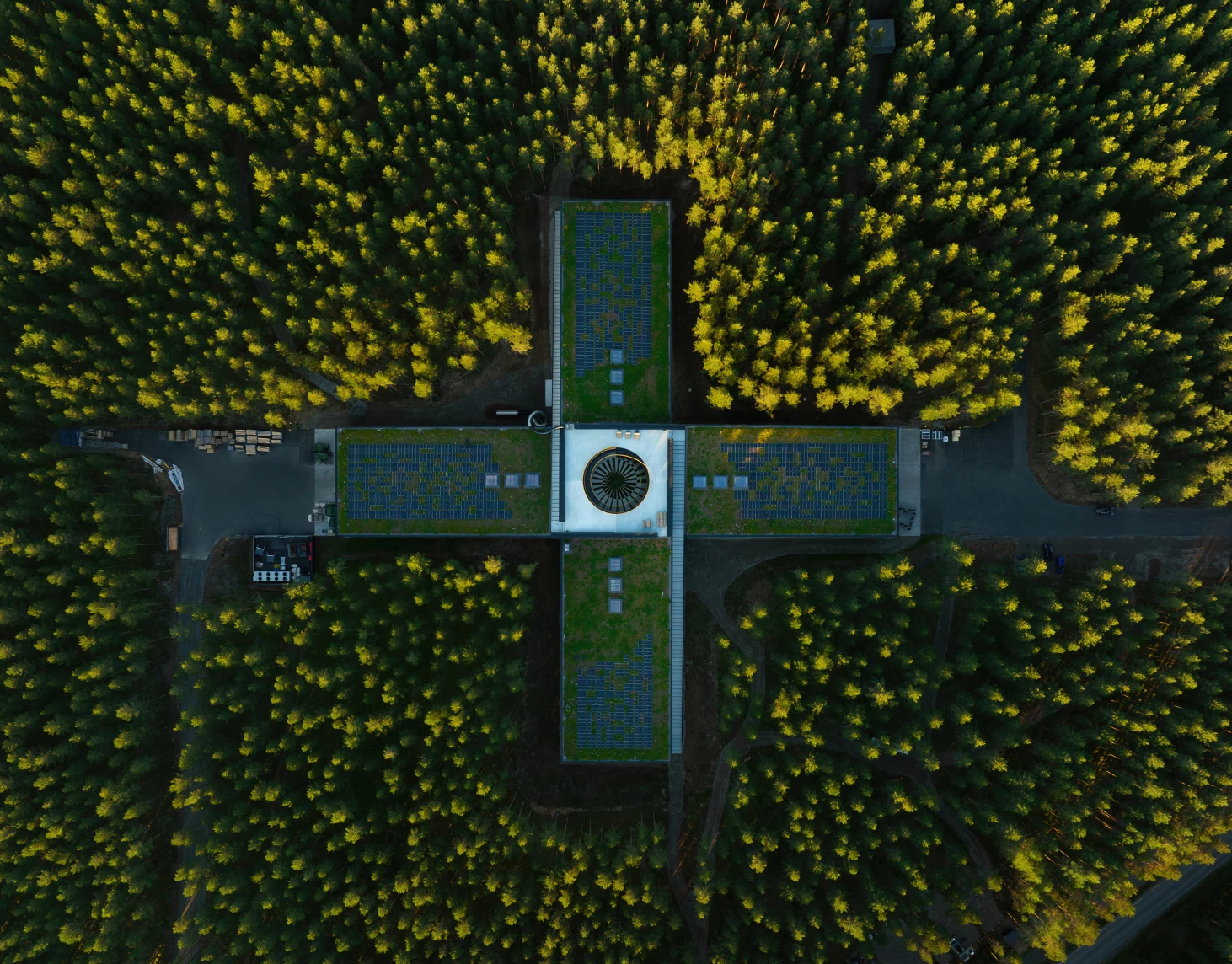
The Royal Institute of British Architects (RIBA) awarded The Plus, a furniture factory in Magnor, Norway, the International Award for Excellence 2026. Designed by BIG – Bjarke Ingels Group for manufacturer Vestre, the 7,000-square-meter facility combines high-performance manufacturing with a public forest landscape. The project completed construction in 2022 and currently operates as a production hub and community destination.
The facility sits within a 300-acre public forest park. This setting allows the building to function as an open exhibition of industrial processes rather than a restricted zone. Visitors access the site via hiking trails and camping areas that integrate directly with the factory’s perimeter. The design team utilized locally sourced mass timber, low-carbon concrete, and recycled steel to achieve a BREEAM Outstanding rating, a first for industrial buildings in the Nordic region.
Technical systems throughout the plant focus on energy resilience and emission reduction. Approximately 900 rooftop photovoltaic panels generate 250,000 kWh of renewable energy annually. The facility also utilizes geothermal energy and rainwater collection systems to support operational requirements. These integrated strategies result in a 50% reduction in greenhouse gas emissions compared to conventional industrial facilities.
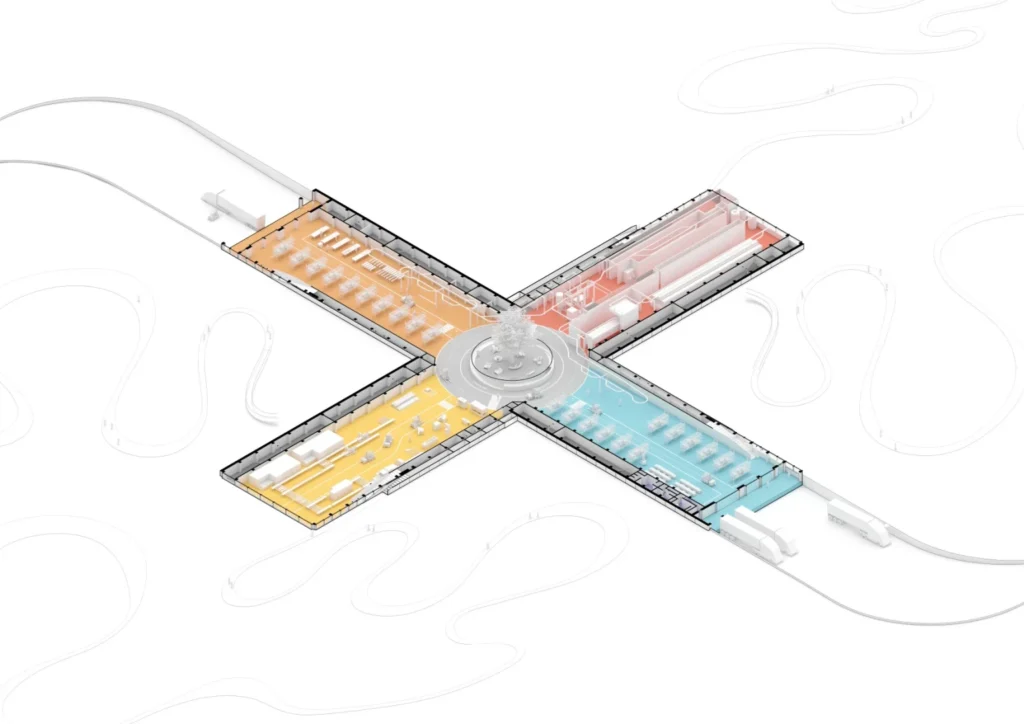
A cross-shaped plan optimizes industrial circulation
The architectural logic centers on a central intersection that connects four distinct production halls: the warehouse, the color factory, the wood factory, and the assembly unit. This “plus” configuration creates a visual map of the manufacturing sequence. Interior spaces employ a color-coded system where the vibrant hues of production machinery extend across the floors to guide workers and visitors through the facility.
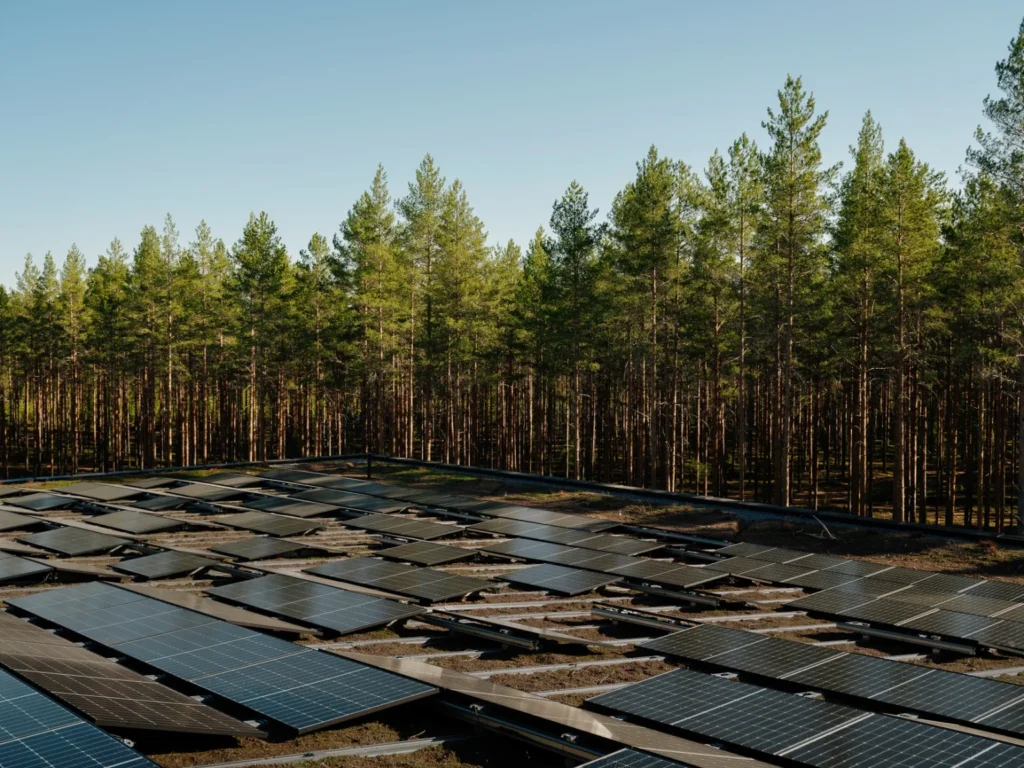
Each production wing features an inclined roof corner that provides sightlines between the interior work zones and the surrounding woodland. These sloping rooflines serve a dual purpose as accessible walking paths for employees and the public. An integrated ramp system ensures that all visitors, including those using wheelchairs or strollers, can navigate the sequence from the forest floor to the green rooftop terrace.
Together with Vestre, we have imagined a factory that puts the entire process of furniture-making on open display—at center stage. Rather than fearing industrial espionage, the factory wants to show and share their knowledge to help accelerate the global transition towards sustainable manufacturing.
Bjarke Ingels, Founder & Creative Director, BIG
Landscape integration connects industry and public realm
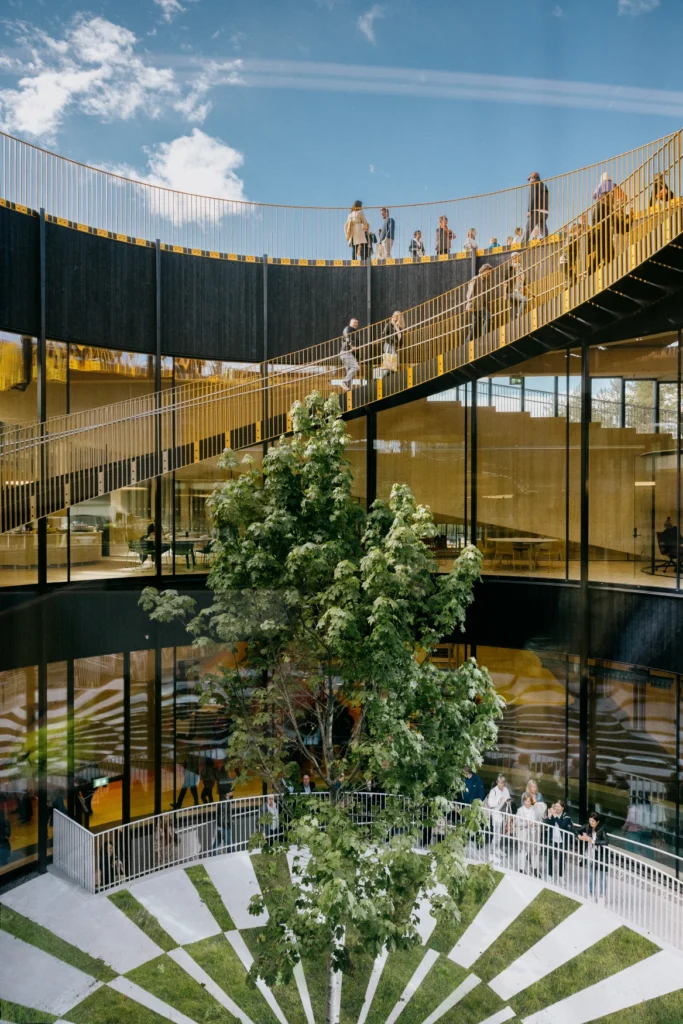
The project extends its footprint into the forest through a series of outdoor furniture installations. These interventions reinforce the facility’s role as a civic landmark. At the heart of the building, the Vestre Energy and Clean Water Centre provides an educational space dedicated to circular design principles and water management. A central courtyard serves as a social anchor, allowing different user groups to observe the production halls simultaneously.
The design reflects a strategy that merges productivity with ecological responsibility. By avoiding the typical isolation of industrial zones, the project creates a shared environment for workers and the community. This approach emphasizes transparency and knowledge exchange as core components of the architecture. The building envelope and circulation routes work together to maintain a continuous connection with nature during the manufacturing process.
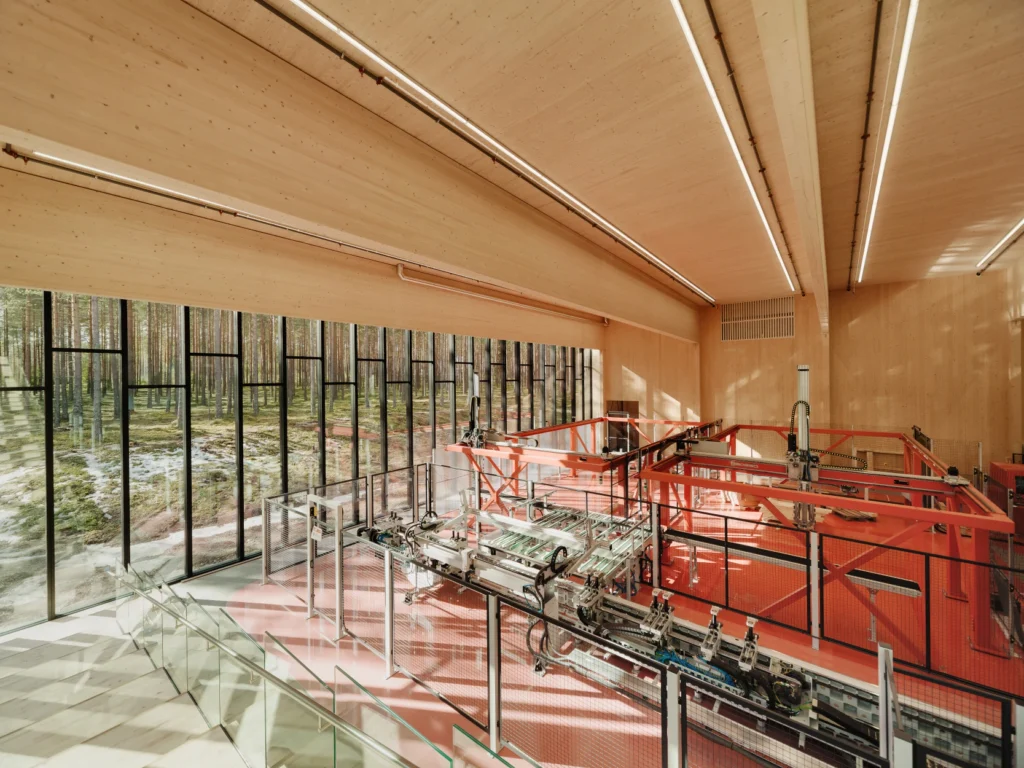
The 18-month construction period demonstrated the efficiency of mass timber and prefabricated systems. The facility now serves as a model for future industrial developments that prioritize sustainability and public engagement. RIBA’s recognition of the project highlights the increasing importance of carbon-neutral manufacturing and high-quality spatial design in the industrial sector.
✦ ArchUp Editorial Insight
The Plus successfully rebrands the industrial typology as a performative landscape, replacing the traditional opaque factory box with a radical radial transparency. By treating manufacturing as a public spectacle, the project uses architecture to dismantle the spatial hierarchy between production and leisure. This strategy transforms carbon-neutral goals into a visual curriculum, embedding corporate sustainability within a recreational forest context.
However, this “hedonistic” fusion risks domesticating the industrial reality into a sanitized parkland aesthetic. While the mass timber structure and color-coded halls project a utopian image of clean labor, they mask the inherent tension between global resource extraction and localized ecological preservation. Turning a high-output factory into a tourist destination may prioritize brand visibility over true environmental autonomy, potentially commodifying the forest as a backdrop for green-certified production.
Project Team: BIG – Bjarke Ingels Group (Architect), Vestre (Client). Location: Gaustadvegen, Magnor, Norway.
Project Notes: Completed in June 2022 after an 18-month construction period. The project received the RIBA International Award for Excellence 2026.