Temporary Inflatable Cavern Reconfigures Paris’s Oldest Bridge

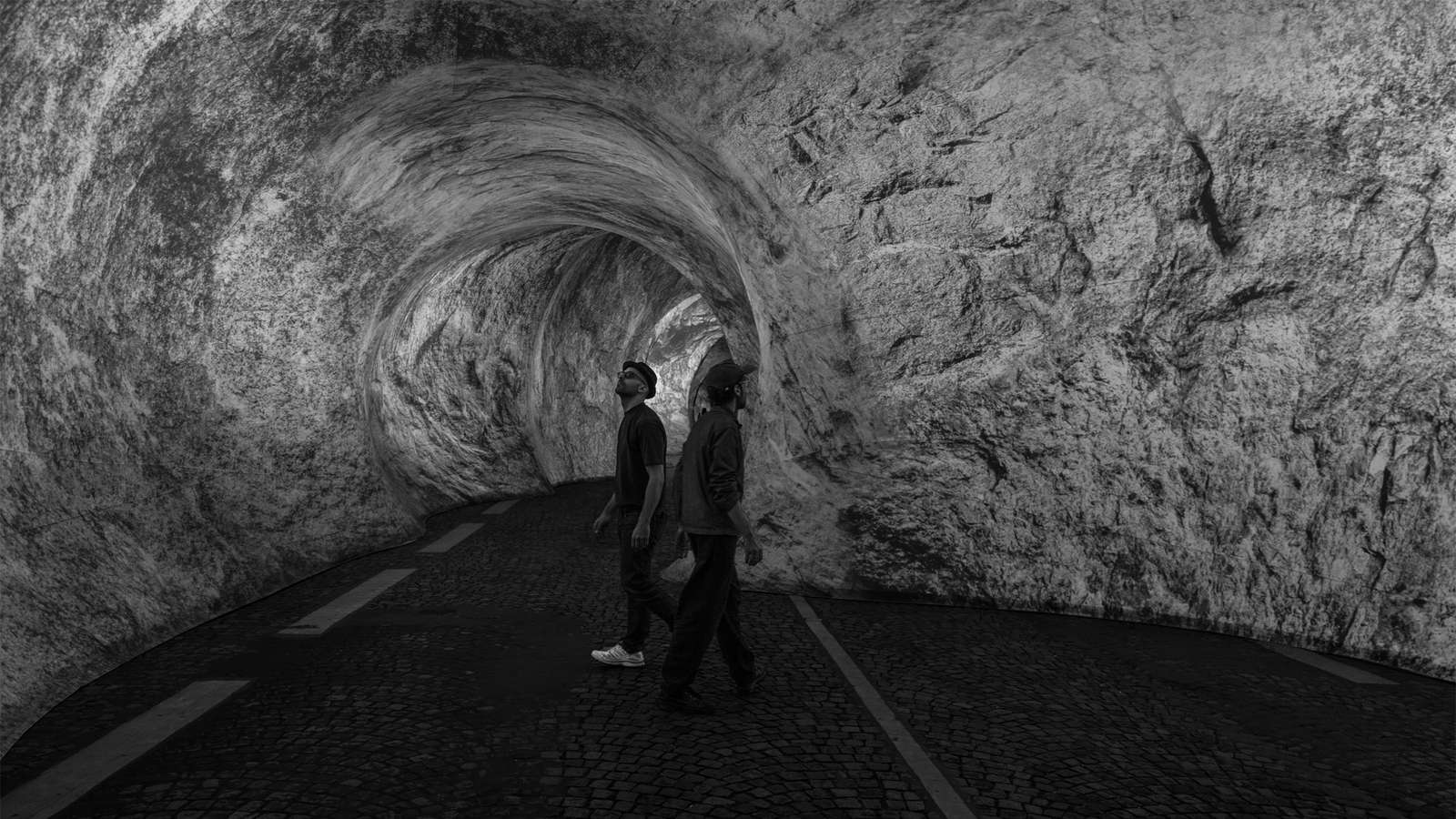
A massive inflatable installation now envelops the Pont Neuf in Paris, transforming the 17th-century stone crossing into a 2,400-square-meter artificial cavern. The project redefines the architecture of the bridge by replacing its open-air passage with a winding, textile-based interior sequence. This intervention explores the intersection of temporary construction and historical urban infrastructure through a sensory, cave-like environment.
The scheme utilizes a printed fabric envelope to mimic the appearance of raw geological formations. A monochrome rocky pattern in shades of white, black, and grey covers both the interior and exterior surfaces, giving the structure a mountainous aesthetic. This visual treatment references the quarries of the Paris Basin, the original source of the stone used to build the bridge and much of the surrounding cities.
Visitors enter a cavernous tunnel that reaches a peak height of 18 meters. The interior path follows a winding trajectory, featuring rounded ceilings and organic, column-like elements that curve toward the floor. The design integrates a bespoke soundscape and an olfactory intervention to heighten the sense of immersion, intentionally disorienting the public as they move through the digestive-like volume.
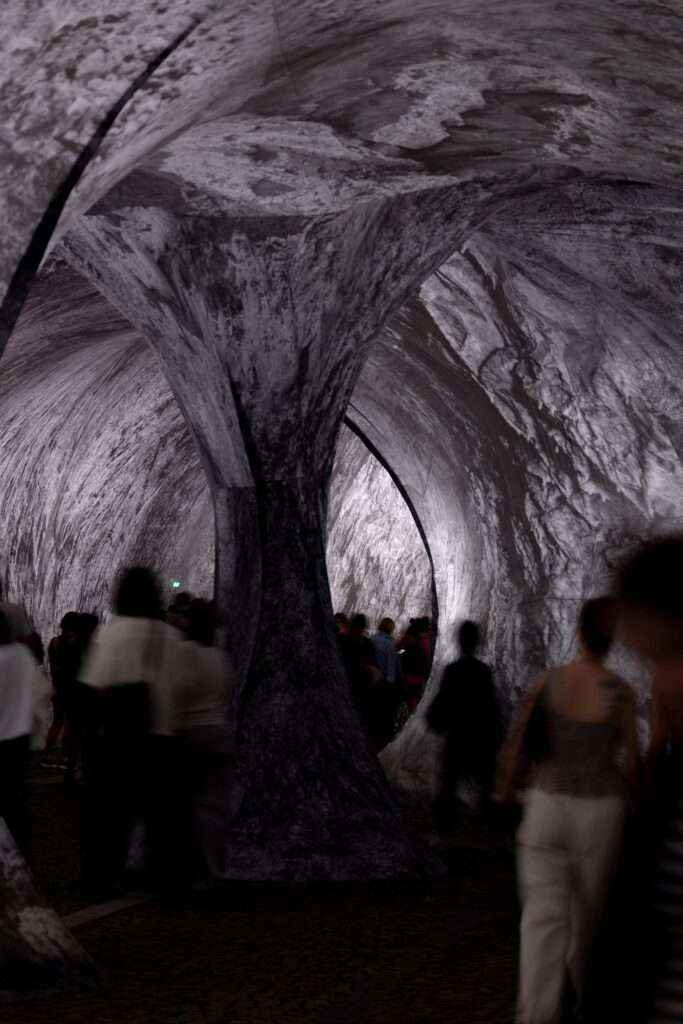
Structural Tension and Material Application
The intervention relies on high-tension straps to secure the 2,400 square meters of fabric to the existing bridge masonry. This anchoring system ensures stability against wind loads, a critical factor following an earlier delay caused by adverse weather conditions. The team designed the envelope to wrap the bridge entirely, creating a self-contained environment that isolates the pedestrian from the river context.
“The interior of La Caverne contrasts sharply with its exterior. It’s a tunnel, almost digestive, dark, and rather raw. The journey is winding, and the soundscape, along with the olfactory intervention, can make it disorienting, even unsettling.”
The project serves as a conceptual dialogue with the history of the site, specifically referencing famous 1985 textile interventions on the same bridge. By transitioning from a simple wrap to a volumetric inflatable, the current design provides an inhabitable void rather than a mere surface treatment. This approach shifts the focus from the exterior form of the bridge to the internal experience of a manufactured landscape.
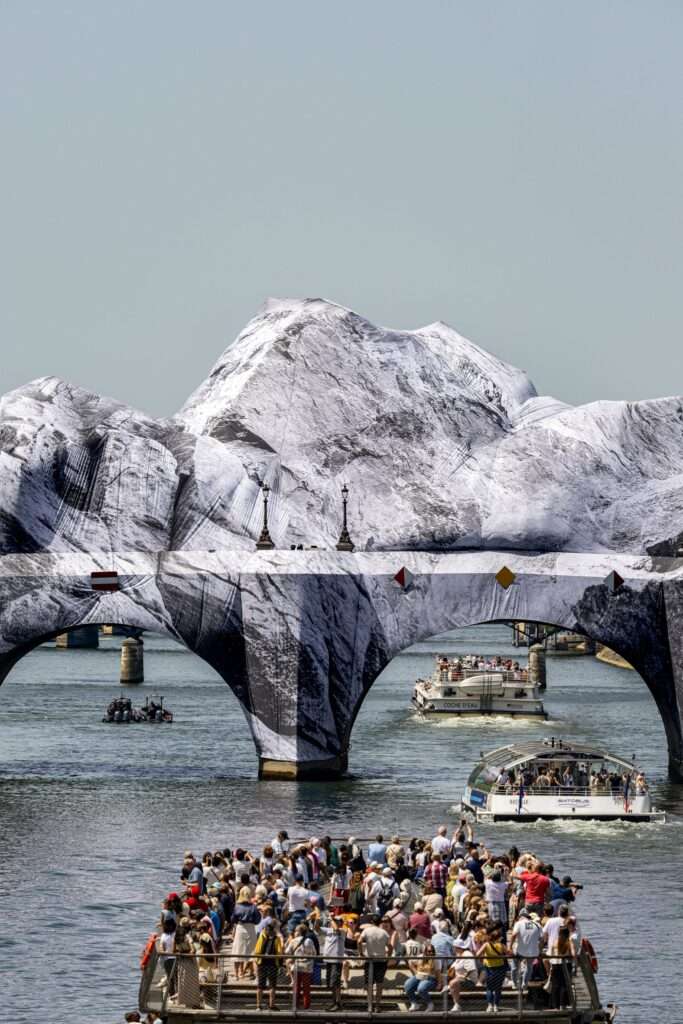
Geological Narrative and Spatial Sequence
The design utilizes the inflatable medium to bridge the gap between photography and three-dimensional space. By printing detailed textures onto the fabric, the team creates an optical illusion that challenges the reader’s perception of weight and materiality. The project remains on public display until late June, offering a temporary reinterpretation of one of the city’s most permanent landmarks.
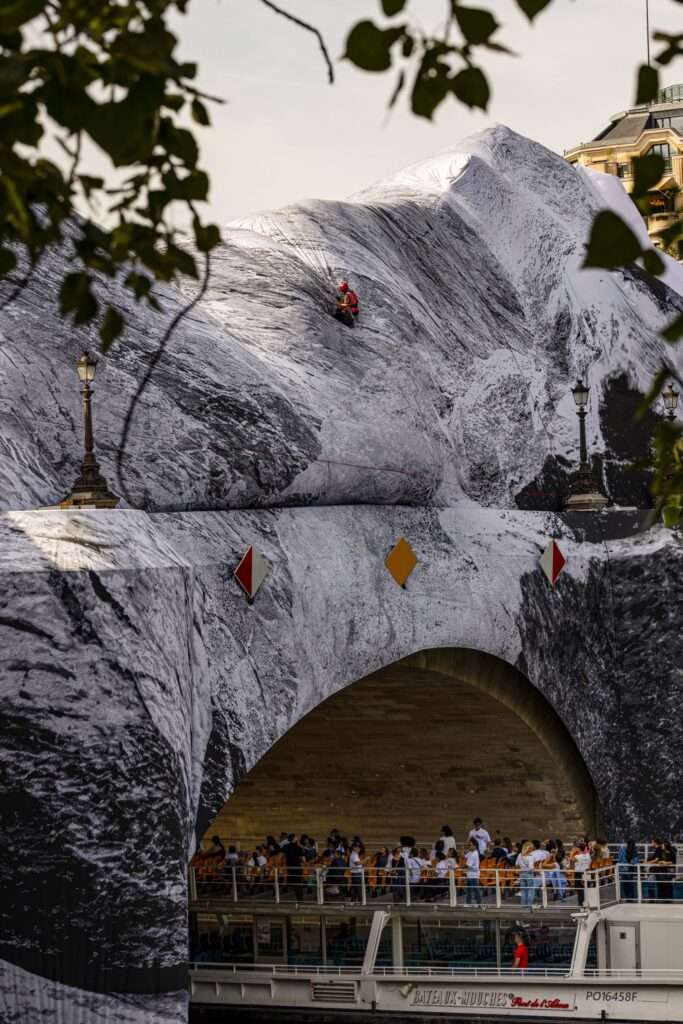
Materiality and the Simulation of Geological Depth
The architectural strategy of the intervention lies in its successful simulation of geological mass through lightweight, air-filled volumes. By utilizing a high-resolution printed envelope, the design subverts the traditional tectonic expectations of stone-heavy Parisian infrastructure. The circulation hierarchy forces a slow, non-linear progression, contrasting with the bridge’s inherent function as a direct transit link. This creates a tension between the efficiency of the urban grid and the evocative, “digestive” logic of the interior tunnel. The structural reliance on air pressure and tension straps highlights the fragility of temporary interventions when confronted with environmental variables like wind. Ultimately, the project functions as a spatial inversion, turning a public thoroughfare into a private, sensory-driven void that prioritizes atmospheric experience over functional crossing.
✦ ArchUp Editorial Insight
La Caverne du Pont Neuf argues that temporary architecture can do something permanent structures rarely attempt: deny the city its own logic. By burying a 17th-century transit corridor under 2,400 square meters of printed fabric, the project inverts the bridge’s function entirely — replacing throughput with disorientation, open sky with manufactured geology, civic crossing with sensory captivity.
Yet the counter-argument writes itself in wind. The installation’s earlier collapse under adverse weather exposed the core vulnerability of air-pressure construction at heritage scale: atmospheric spectacle depends entirely on atmospheric cooperation. When the envelope fails, so does the concept. Framing deliberate disorientation as spatial intelligence risks aestheticizing inconvenience — and mistaking a pedestrian’s confusion for genuine architectural depth.
Project Team: JR, Thomas Bangalter, Sarah Bouasse. Location: Pont Neuf, Paris, France.
Project Notes: Completed and opened to the public in June 2024. The temporary installation remains on show until 28 June. Photography by Éléa Jeanne Schmitter, Emilie Pria, and Tara-Jay Bangalter.