Smith House: Mass, Void & Transparency

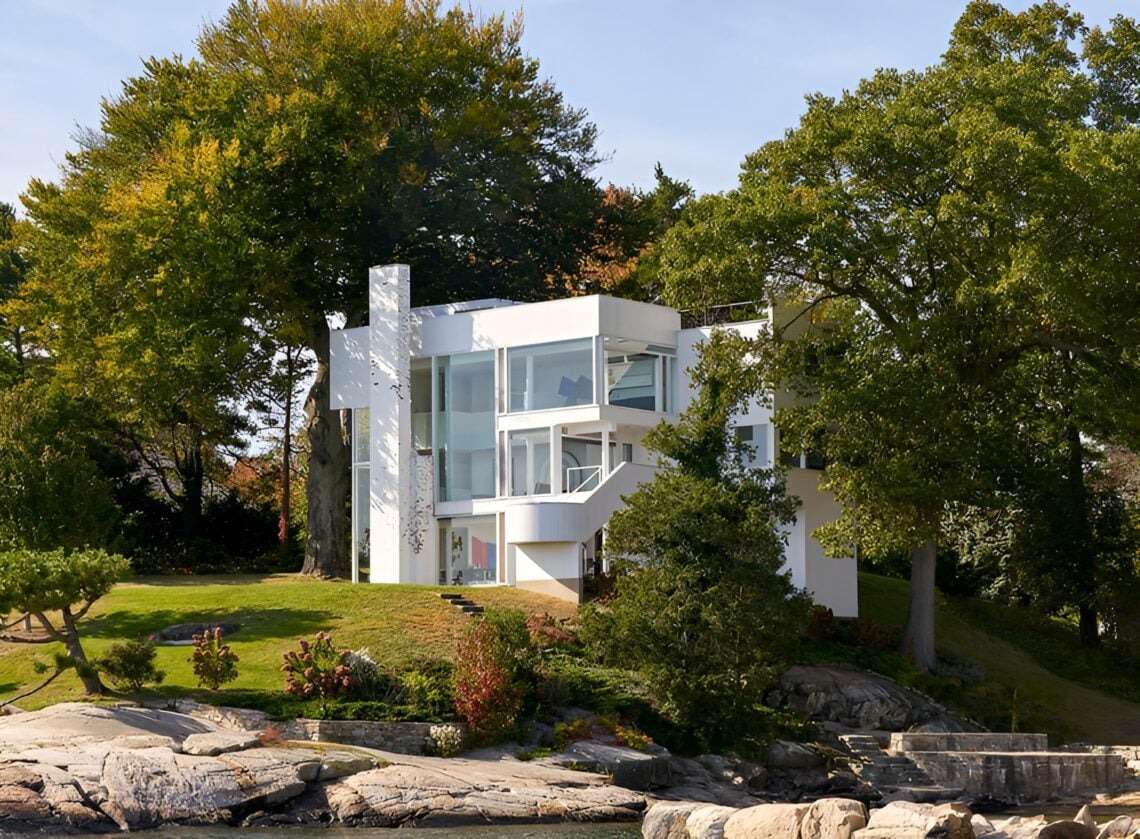
Dialectic of Mass and Void: The Moment of Transition from Solid to Transparent
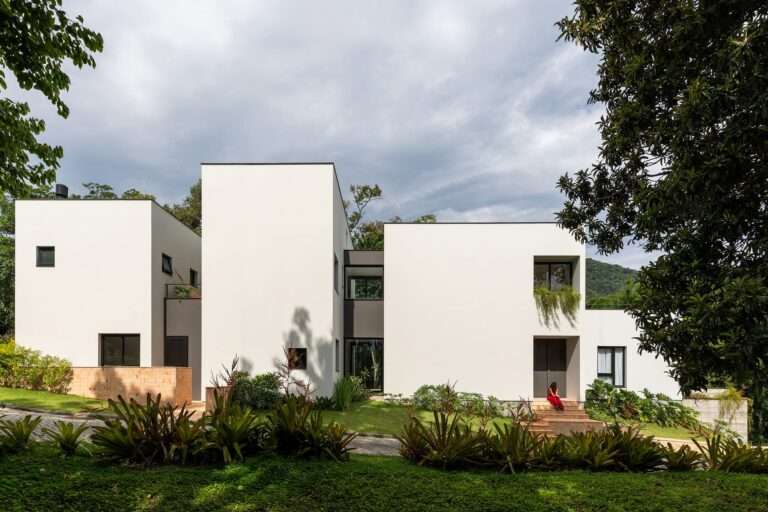
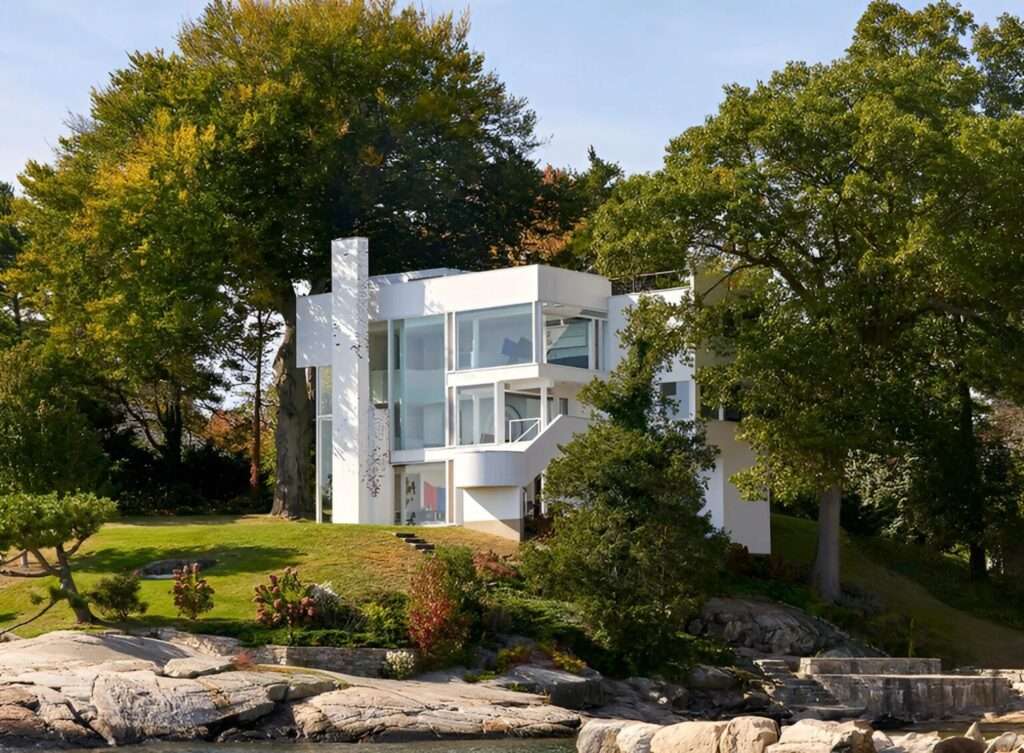
The Buildings Smith House is both emotionally and visually tested from the point of arrival; the front façade asserts a solid presence characterized by enclosure and a strict cellular composition, creating a sense of privacy and separation from the exterior, reinforced by pure white volumetric masses. Upon entering, the circulation path shifts from a warm, relatively compressed horizontal experience within enclosed rooms to a sudden vertical expansion revealed through a soaring glass envelope extending across three floors. This dramatic transition transforms the user’s perception of space, as natural light floods in with intensity, redefining internal boundaries and turning the glass walls into a living frame that directly integrates the movement of the sea and sky into the inhabitable space.
Scenographic Interaction: The Language of Light and the Kinetics of Structural Form
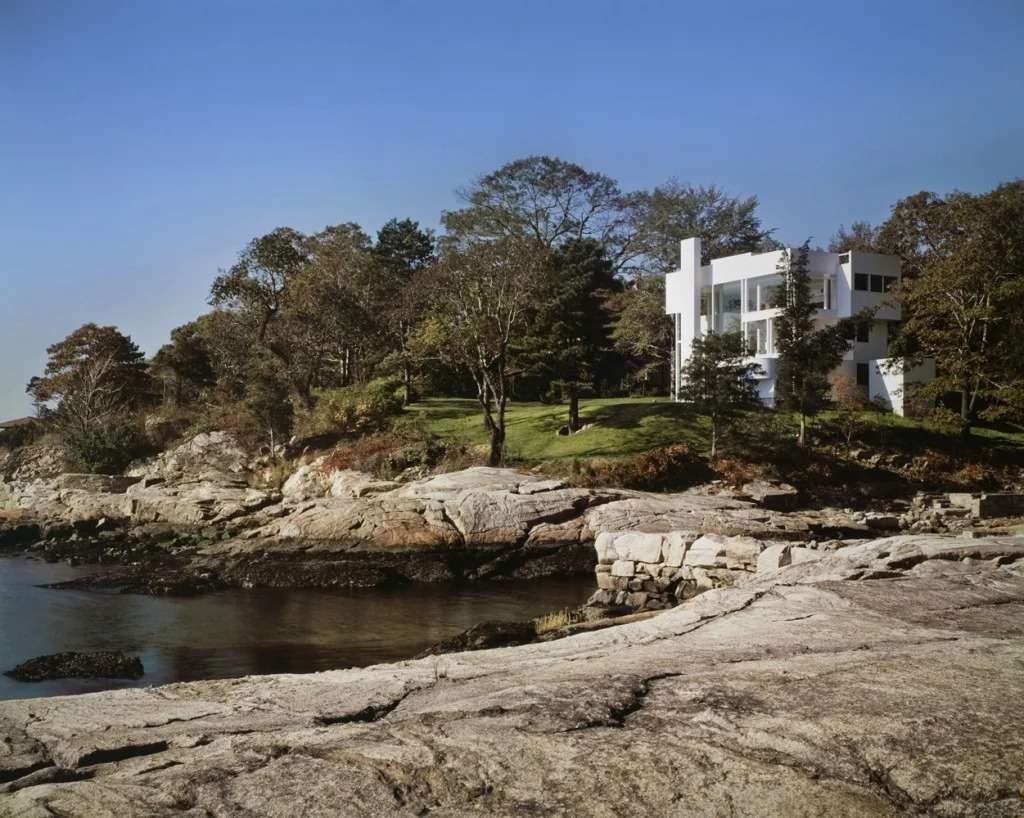
The Design is grounded in a precise scenographic response to the rocky coastal site conditions, where the building adopts a compact vertical mass that intelligently engages with the topographical slope and prominent rock formations instead of following traditional horizontal sprawl. The Architecture language becomes a tool for directing the path of sunlight, where shadows cast by slender steel columns and the wooden frame intersect with pure white surfaces, producing an evolving rhythm of light and shadow that shifts throughout the day. At the heart of this open space, a brick fireplace rises as a heavy and central material element, balancing the lightness and permeability of glass with its solid mass and thermal properties, reinforcing a sense of material stability within a visually continuous space connected to the surrounding nature.
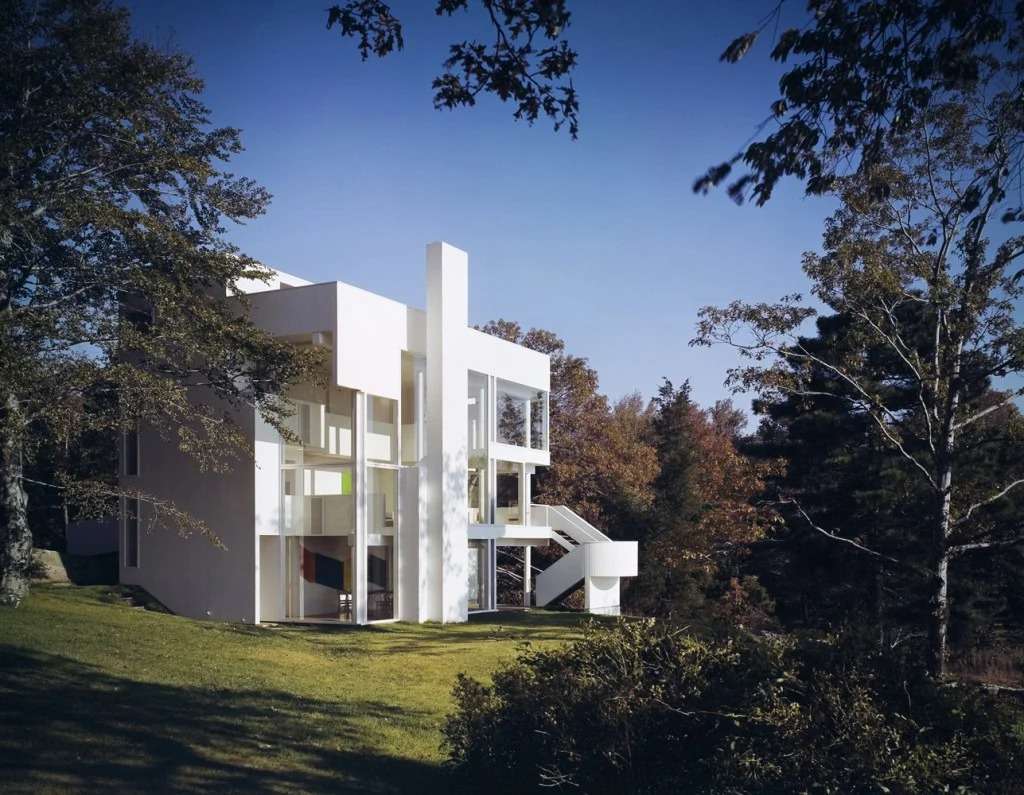
Vertical Composition: Structural Response to the Topographical Line
The architectural presence of the building is defined by a direct scenographic response to the wooded, sloping coastal terrain; the ground level rises toward the entrance, surrounded by dense evergreen trees, before dropping sharply toward the rocky shoreline and sandy bay. The design clearly rejects the idea of an extended horizontal rural dwelling, replacing it with a compact vertical geometric mass that respects the existing natural conditions. This vertical orientation enhances the human experience of movement, as the user transitions visually and physically between different spatial levels, experiencing a dynamic spatial relationship that connects them to the steep slope while directing their gaze continuously toward the waterline.
Material Interaction: Deconstructing Mass and Respecting the Rocky Environment
The design language emerges from a conscious treatment of the site’s rocky characteristics, where the vertical development of the mass becomes a smart solution that minimizes the extensive excavation that a traditional horizontal scheme would require. This structural approach transforms into a living material experience in which the user interacts with a pure white volume elevated above the natural formations; the architectural object stands as a disciplined geometric element integrated with nature rather than dominating it. Clear architectural lines emphasize the contrast between the rough texture of the rocks and the fluid movement of water against the building’s precise geometric surfaces, enriching both the visual and psychological perception of the coastal environment. For more detailed information on Material Datasheets and Construction techniques, you can explore further resources.
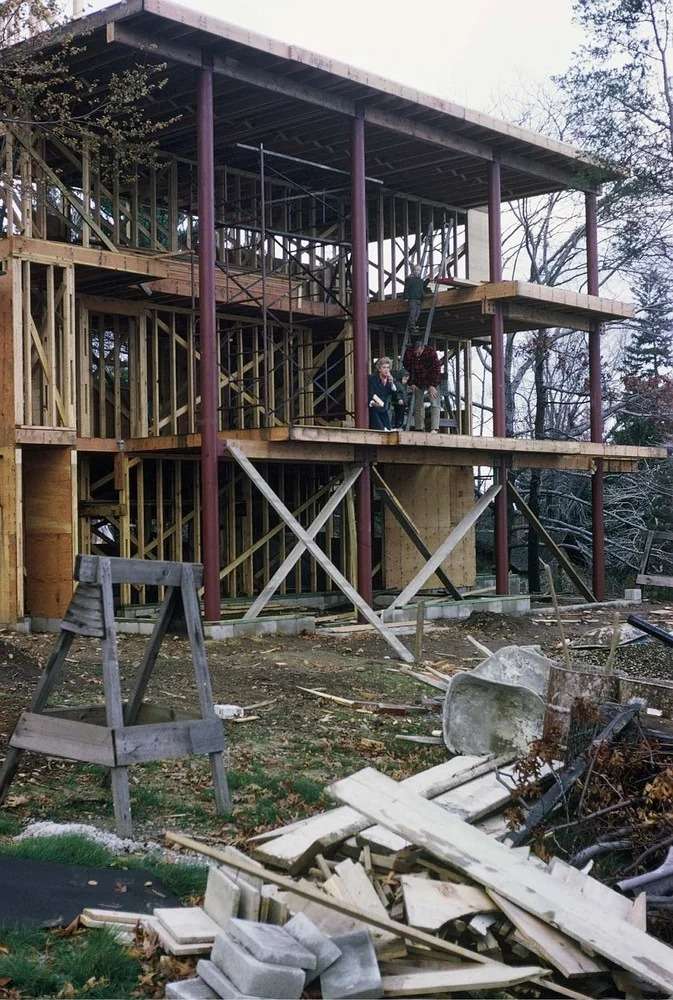
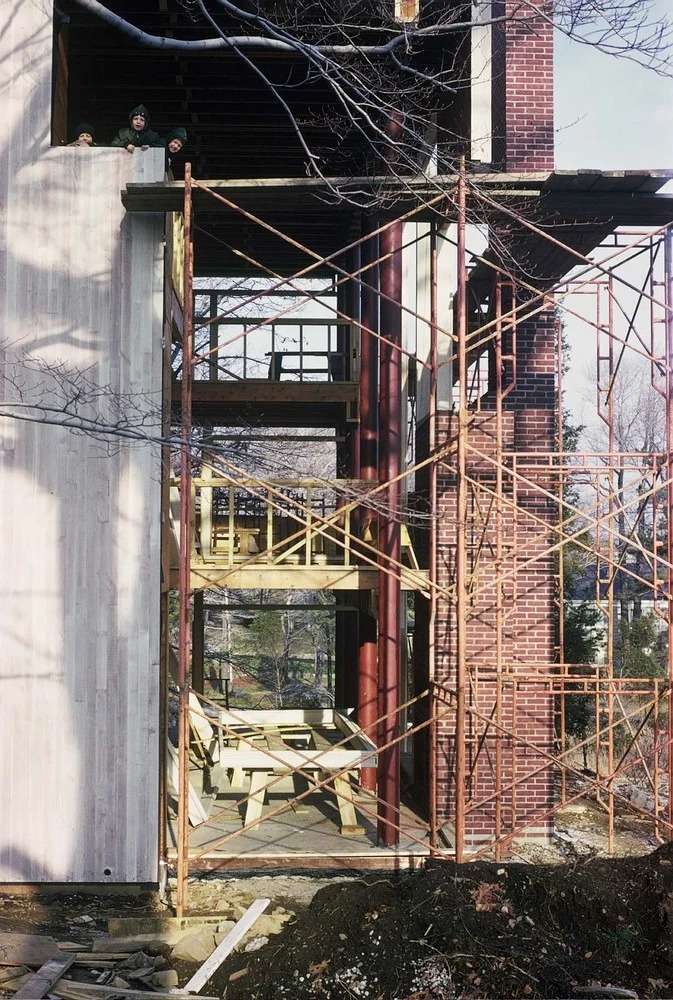
Scenographic Transition: From Cellular Enclosure to Visual Liberation
The design is based on a conscious transformation of traditional residential organization, giving the space a dramatic tension that begins at the moment of entry; the visitor is greeted by a solid white façade defined by enclosure and a strict cellular composition of bedrooms and private spaces facing the road and land. As one moves inward, the circulation shifts from a controlled horizontal containment punctuated by carefully placed window openings to a gradual transition toward more expansive public spaces. This progression from solid to transparent reshapes the human experience, guiding the user from a sense of privacy and security into a sudden spatial openness facing Long Island Sound, where the building envelope transforms into an extended plane that dissolves the boundaries between interior space and the external environment. Stay updated with the latest Architectural News and Events in the field.
Envelope Transparency: Fusion of Masses and the Kinetics of the Coastal Landscape
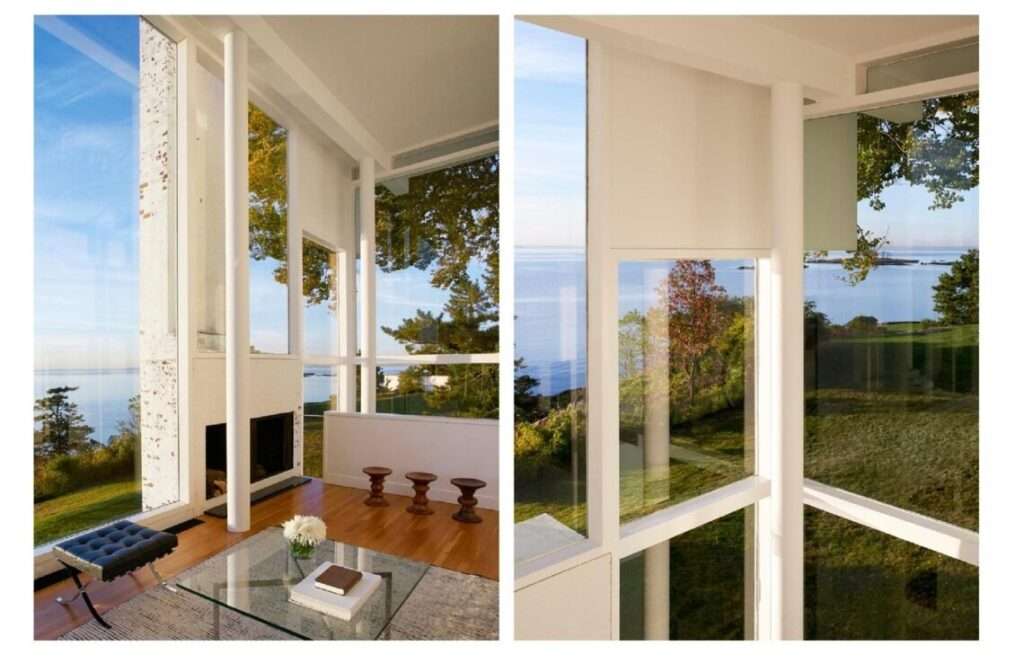
The rear façade transforms through a three-sided glass envelope into a living scenographic screen that interacts directly with nature; large glass panels extend across three vertical levels, framing the movement of water and the shifting sky throughout the day. This high level of visual permeability allows the internal light reflections to merge with the details of the natural landscape across the glass surface, creating a kinetic overlap between architecture and nature. Within this transparent context, the ground and upper levels appear as precisely defined horizontal planes embedded within the white structural divisions of the building, emphasizing the clarity of the geometric composition and highlighting the material contrast between the lightness of the permeable glass and the strength of the structured architectural lines. For further exploration, you can browse our Archive or check out recent Competition Results and Projects that showcase innovative Interior Design solutions.
Directional Movement: Scenography of Entry and Deferred View
The design deliberately slows the experience of visual openness at the moment of entry; a painted brick fireplace is positioned directly opposite the entrance, forming a material barrier that extends outward through the glass envelope, thereby delaying the full visual reveal and directing the user’s movement and attention through the living space first. The circulation path unfolds as a reenactment of the coastal site logic within the building’s interior structure; movement begins from the external access road, passes through the entrance, continues through the private zone, and finally opens into the living spaces oriented toward the water. Internal staircases and carefully calibrated level shifts across the three floors act as dynamic devices that connect spatial strata while preserving open visual relationships between public zones, reinforcing a sense of expansiveness and depth.
Structural Contrast: Material Dialogue and Spatial Attraction
The house structure is based on a sophisticated tectonic distinction that translates spatial function into tangible material expression; contrary to the common assumption of it being a concrete building, the project is primarily constructed using a timber framework that reinforces enclosure in the private zones, while slender steel columns support the more open public areas. The glass wall is precisely suspended between the brick chimney mass and the structural columns, generating a subtle visual pull and material tension that draws the user’s gaze toward the external landscape. This scenographic effect is further enhanced by the recession of the railings from the glass line, preventing visual interruption and intensifying the psychological sense of depth and full openness, allowing the inhabitant to experience the interplay of shadows, air, and light reflected across contrasting surfaces.
The White Screen: Scenography of Light and Seasonal Transformation
The pure white surfaces of the design function as a visual medium that accurately registers surrounding natural phenomena, acting as a geometric screen that reflects changes in light, seasonal cycles, and shifting weather conditions throughout the day and year. This conscious material and chromatic choice prevents the building from becoming detached from its context; instead, it becomes an instrument for receiving the external environment and integrating it into the spatial human experience. Inside the house, the user perceives the movement of coastal tree shadows and the shifting angles of sunlight across the bright white walls. This dialectical relationship is reinforced through a strict geometric organization that combines a compact prismatic mass with transparent glass elements, producing a clear material and visual contrast that positions Architecture as an ordered system confronting the spontaneity of the surrounding nature. For a deeper understanding of material choices, explore our Material Datasheets and Construction guides.
Sustainable Structure: Architectural Permanence and Historical Continuity
The house transcends its role as a mere residential dwelling to become a material document embodying the early principles of modernist Architecture in the United States, which significantly shaped the later design trajectory of Richard Meier. The critical value of the building lies in its ability to preserve its spatial tension and scenographic impact across decades, surpassing temporal and functional changes; the geometric order and spatial sequencing remain a testament to the effectiveness of its architectural resolution and its continuous dialogue with the rocky coastal site, reinforcing its status as one of the key residential works that defined notions of transparency and mass in modern domestic architecture. To see how contemporary practices evolve, browse our Projects and Architectural Jobs section.
✦ ArchUp Editorial Insight
The text positions the Smith House as a foundational statement of modernist architecture, framing its compact vertical massing and stark white surfaces not as purely stylistic choices, but as rigorous spatial solutions responding to a steep rocky coastline. By separating cellular private functions from public spatial volumes, the analysis demonstrates how architectural boundaries can actively choreograph movement and construct the visual experience of the inhabitant. However, this critical reading carries a romanticized perspective that overemphasizes the purity of space while overlooking the capitalist commodification that shaped coastal design in the twentieth century. Elevating white timber and glass into an idealized environmental dialogue obscures a material reality: such absolute transparency depends on costly maintenance and an exclusive real estate privilege, transforming the rugged topography into a domesticated scenic backdrop for private residential luxury. For broader perspectives on urban and social contexts, visit our sections on Cities, Architects Lobby, and stay informed with the latest Top News and Architecture Competitions.