Quinta do Peru: Mass and Landscape Redefined

Landscape Extension and the Mass of Containment
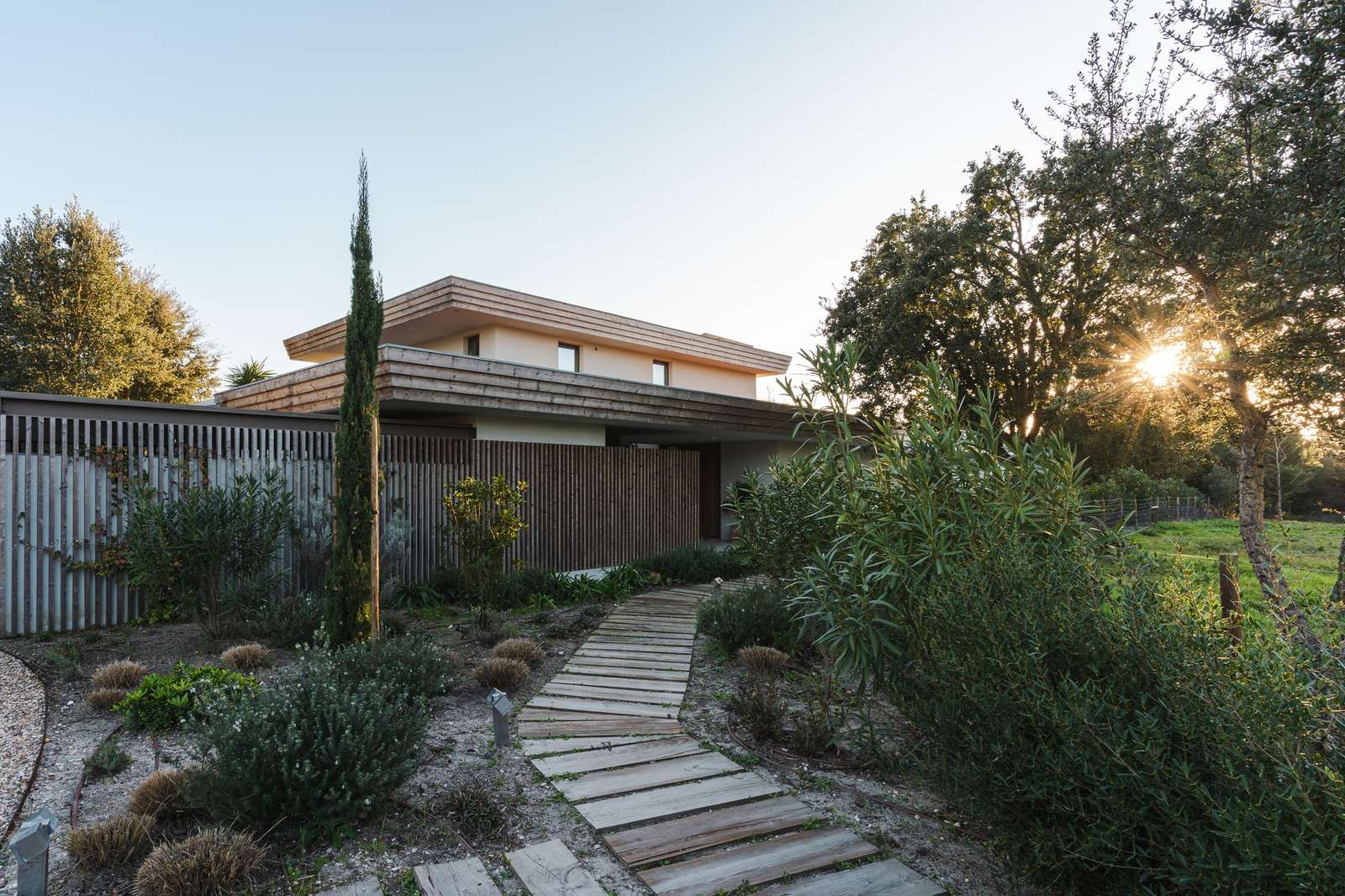
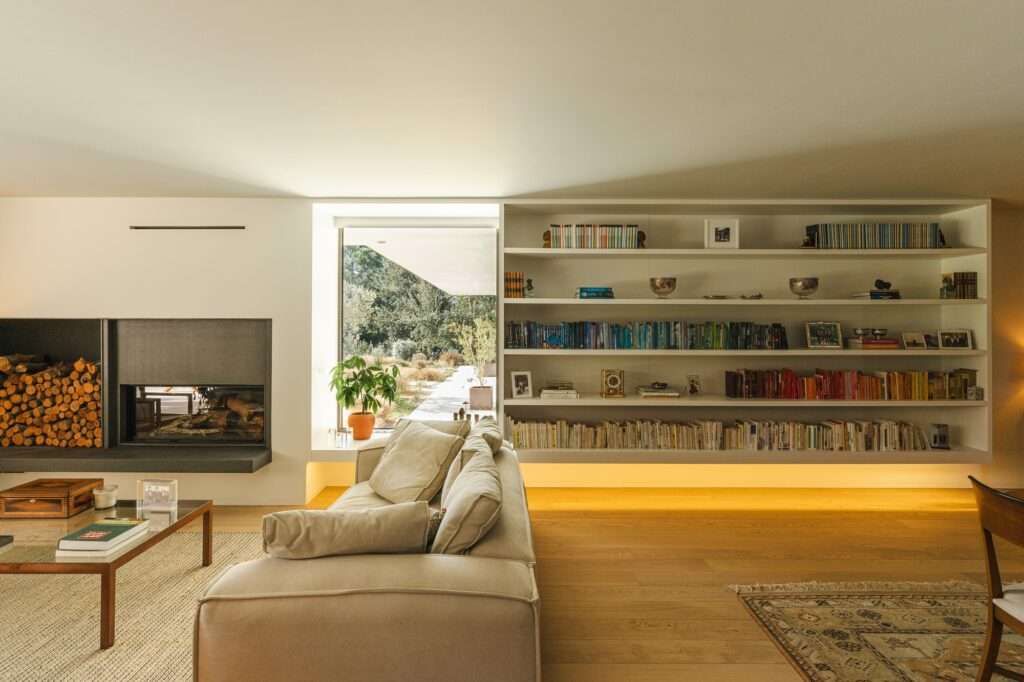
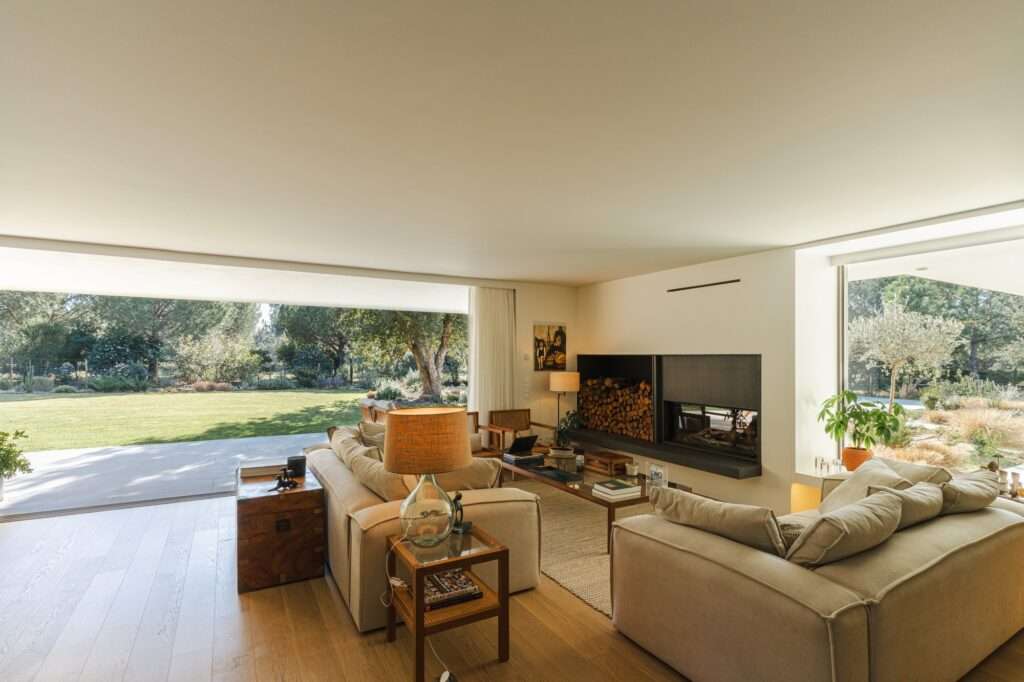
The architectural concept of the project is based on the idea of a habitable horizontal extension, where the building merges with the site’s geography opening toward the Serra da Arrábida mountain range. The massing strategy relies on occupying the northern edge of the relatively flat terrain, a deliberate orientation aimed at fully liberating the southern frontage for the garden and swimming pool. This volumetric distribution creates a reciprocal relationship between the built void and the natural surroundings, where the building relinquishes its solid, monolithic presence in favor of a scenographic composition in which nature interweaves as a constantly present visual backdrop within the interior Architecture and spatial logic of the Projects.
Human Experience and the Scenographic Path
The user’s movement within the space is shaped by a gradual transition from external containment to internal openness. The low, elongated mass establishes a spatial trajectory that links the act of passage to the concept of “architectural dissolution,” as the moments of entry and exit are marked by a continuous visual flow toward the sunroom and the southern courtyard. This orientation is complemented by the movement of the sun and the changing shadows throughout the day, granting the architectural spaces a renewed vitality and transforming the built environment into a device that captures variations of light and air, integrating them into the user’s daily sensory Design experience and broader spatial perception.
Mass Composition and Shadow Engineering
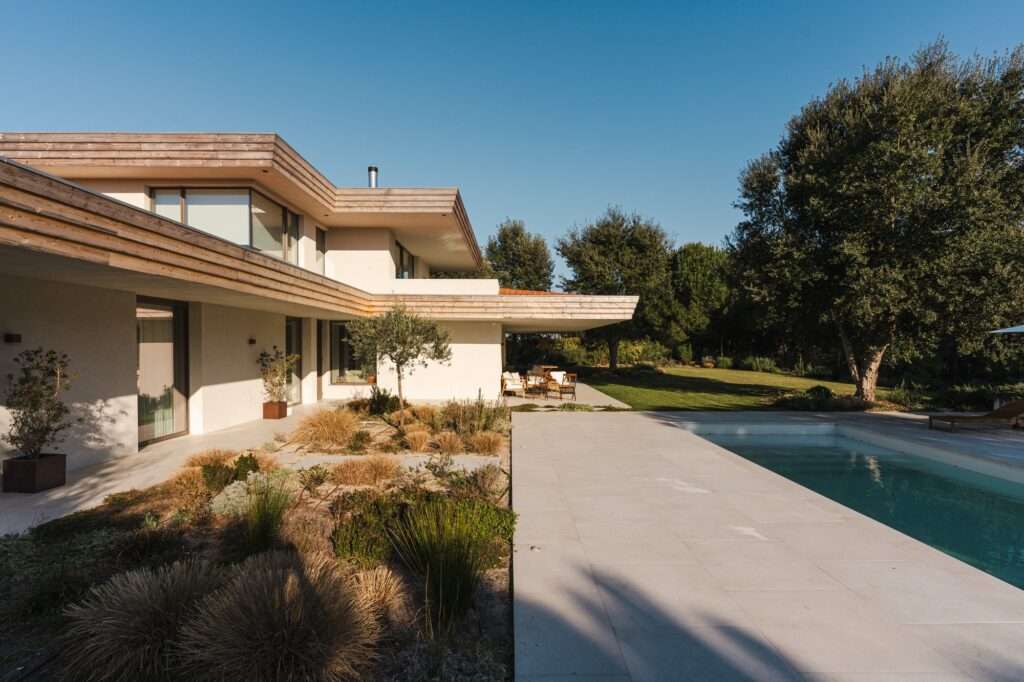
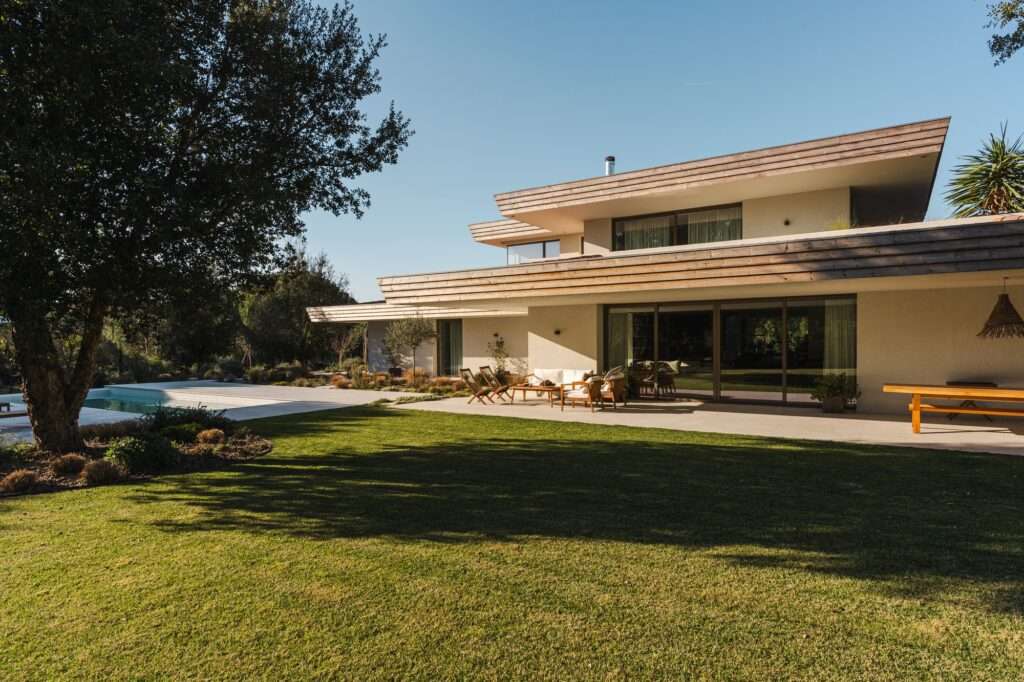
The geometric lines of the sloped roofs govern the configuration of the covered outdoor spaces, where overhangs play a scenographic role in casting varied shadows that give the façades tangible visual depth. The wooden boards finishing the eaves reinforce the horizontal reading of the architectural mass, linking the building to a visual language derived from local traditions and reinterpreted through a contemporary lens of Building Materials. This interplay between mass and shadow enhances the materiality of the surfaces and highlights their dynamic interaction with the natural path of light throughout the day within contemporary Buildings.
Access Route and Visual Filtering
The entry experience is shaped by a carefully designed circulation path leading the user toward a protected entrance area that immediately provides a sense of shelter and stability. This threshold functions as a direct visual frame connecting the interior space with the exterior garden through a large fixed glazed opening. This visual openness is partially controlled and filtered by a planter integrated into the architectural design itself, reflecting a precise understanding of Construction logic and environmental mediation.

Spatial Organization and Visual Connectivity
The social zone is based on an open horizontal plan that achieves functional integration and spatial flexibility between the living room and the kitchen within a continuous space. Large openings act as a visual bridge extending the interior space toward the garden, allowing continuous natural light and dynamic shadow shifts throughout the day. In contrast, the private zone extends along a western axis that orients the bedrooms toward the south, reinforcing spatial continuity with the environmental context and aligning with contemporary Architecture discourse informed by Research.
Vertical Privacy and Material Dialogue
The upper floor is vertically detached to provide a more contained space housing the master suite and a reading room, taking advantage of elevation to achieve a wider and more distant view of the natural landscape. The building’s materiality is expressed through façades clad in a grey Capoto insulation system, engaging in a material dialogue with the natural wooden elements of pergolas and fences. This combination is complemented by ceramic roof tiles, reinforcing the relationship between contemporary Design thinking and traditional material systems documented in Material Datasheets.
✦ ArchUp Editorial Insight
The text characterizes the Quinta do Peru house as a form of deliberate structural dissolution, where horizontal geometry bends to give way to the surrounding environmental topography. By shifting the mass northward and adopting open plans, the architecture seeks to dismantle conventional residential boundaries, presenting the building as a direct material extension of the landscape rather than an isolated shelter rooted in Cities and contextual planning archives.
However, this spatial fluidity carries a romantic paradox; the reliance on manufactured external insulation systems and treated wooden elements reveals a clear dependence on global building materials to simulate an enduring rural authenticity. This structural strategy overstates the ideal of geographic integration, while simultaneously depending on a resource-intensive artificial envelope documented across Archive studies and contemporary Architectural News discourse.