Navee WaveFly 5X: Water-Air Interface Redefined


Spatial Dynamics and the Intersection of Aquatic and Aerial Environments
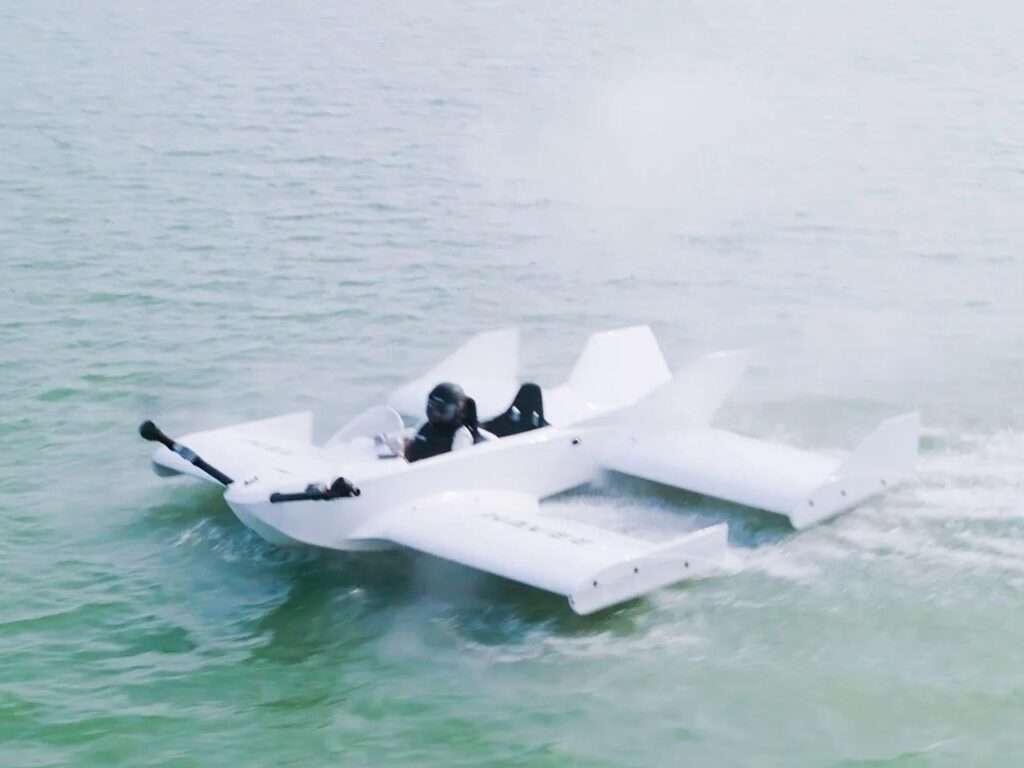
The architectural concept of the Navee WaveFly 5X vehicle is based on the notion of “dynamic thresholds”, where the design redefines the relationship between physical mass and natural surfaces. The vehicle does not treat water as a solid ground, nor air as an open void, but instead creates an intermediate space emerging from the Wing-in-Ground effect. This physical utilization transforms the space directly above the water surface into a defined motion path, where compressed air masses beneath the wings act as an invisible cushion supporting the structure. From a scenographic perspective, the user moves within this narrow range, generating a sensation of continuous horizontal gliding, where traditional boundaries between boating and flying dissolve, and visual perception becomes governed by a moving horizon line that is perfectly parallel to the line of sight and moving at speed.
Human Experience, Psychological and Material Impact of Space
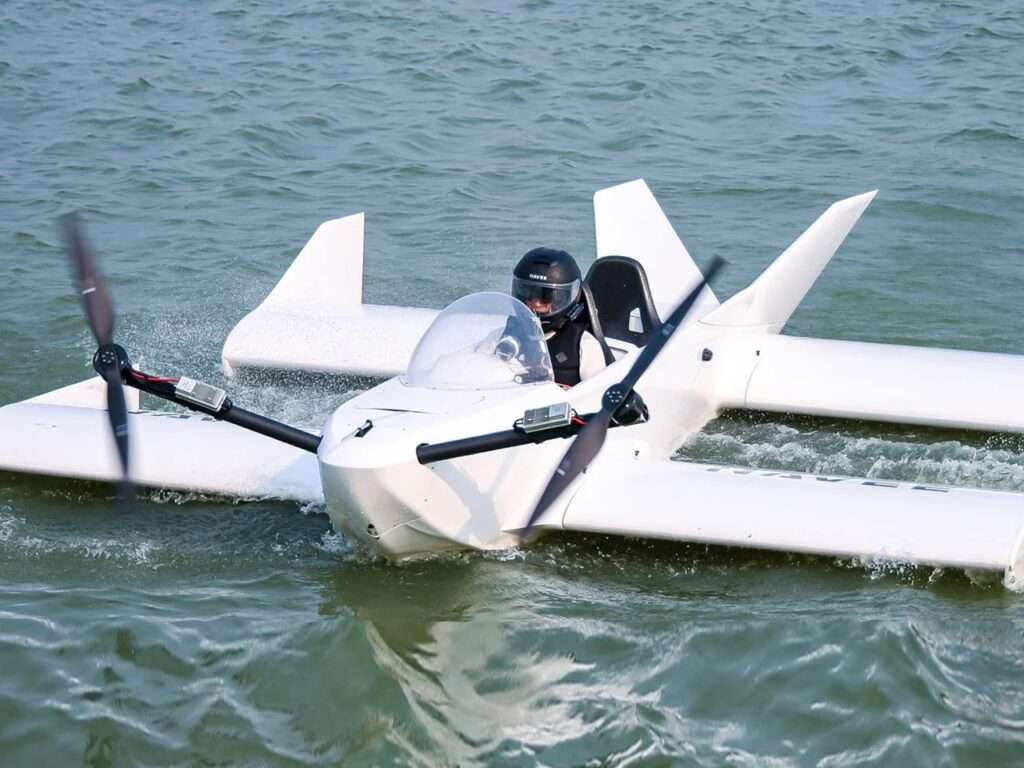
The human experience inside the two-seat cabin is formed through a containment framework that balances isolation and motion. The moment of entry into this space imposes a visual orientation focused on the forward extension; due to horizontal speeds reaching 53 miles per hour, the front windshield transforms into a living screen displaying the interweaving of natural elements. This effect is integrated with the dynamic interaction of materials; the trajectory of sunlight intersects with the polished surfaces of the structure and cabin, producing rapidly changing dynamic shadows reflected from the vibrating water surface into the interior space. This contrast between the stability of the internal structure and the movement and speed of the external medium (water and air) grants the user a psychological experience combining safety and stimulation, where the body experiences flight-like motion without fully detaching from the gravitational pull of the water surface. The interior space is shaped by continuous visual and sensory flow.
Aquatic Topography and the Reconfiguration of the Kinetic Path
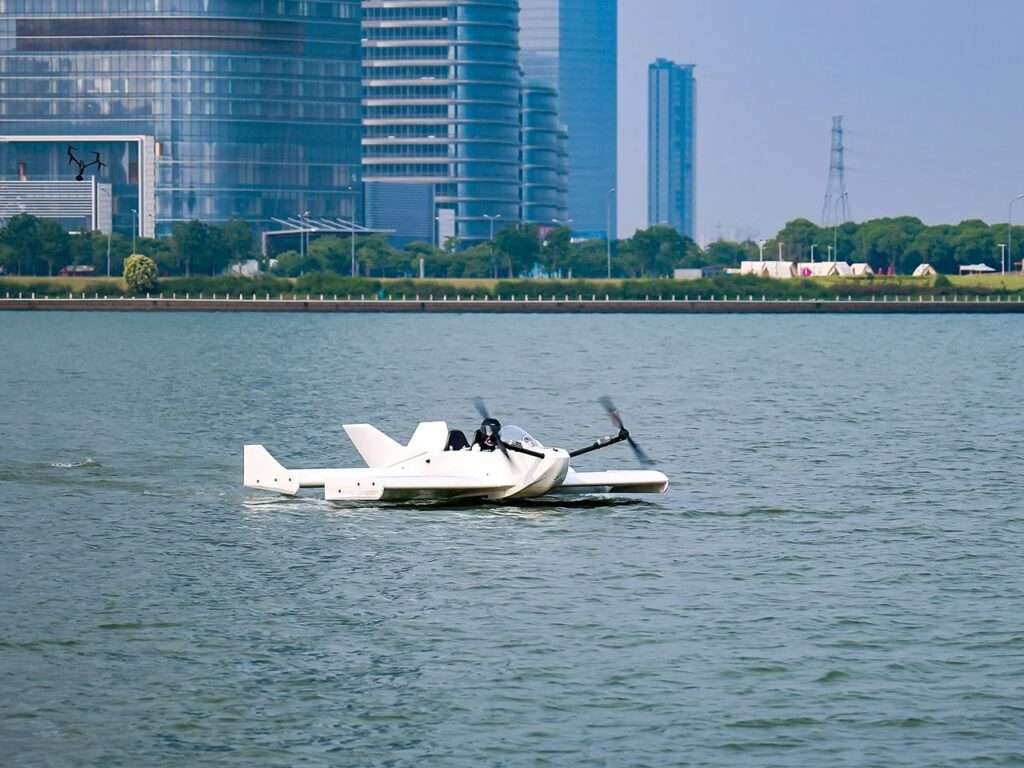
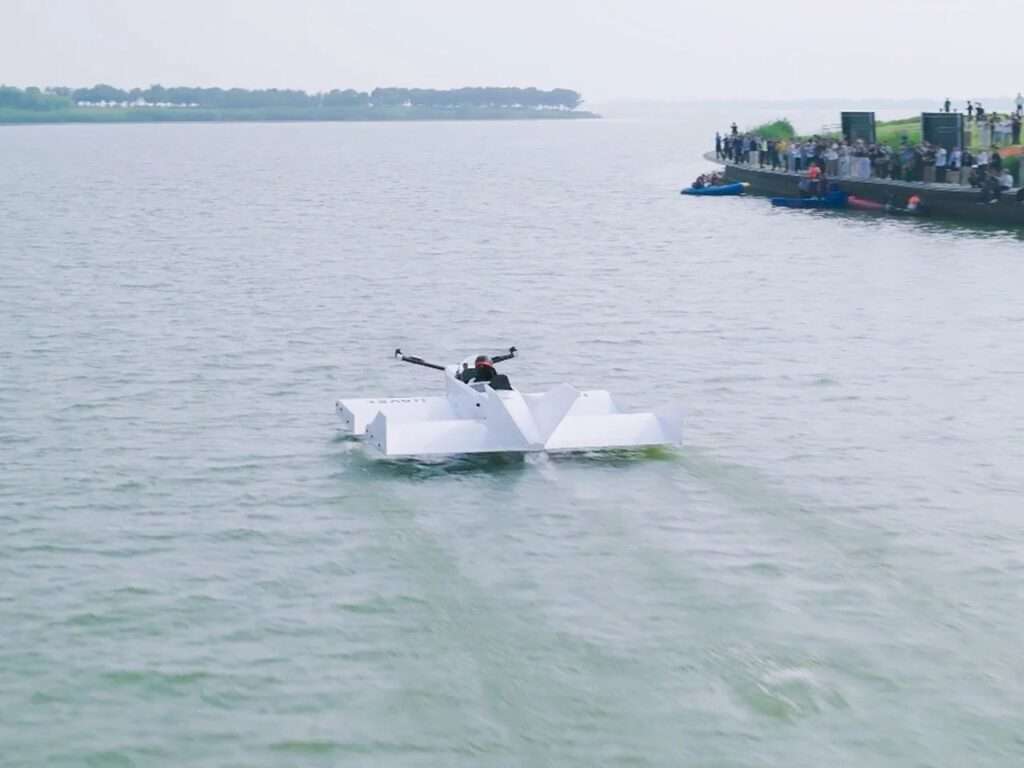
The selection of Lake Taihu in Suzhou goes beyond being a geographical context, becoming a scenographic laboratory illustrating the interaction between mass and open nature. In this extended aquatic space, the vehicle moves architecturally at a critical and precise height ranging between 30 and 80 cm above the surface, which represents the “intermediate zone” where the sense of physical impact typical of speedboats dissolves. This glide produces an extremely smooth motion path, where the compressed air cushion trapped between the wings and the water acts as a dynamic structural element absorbing vibrations. This elimination of vertical motion (rebound) transforms the visual horizon into a stable and continuous line, allowing the user a spatial perception based on pure horizontal flow at speeds reaching 65 miles per hour, fundamentally changing the way humans experience large water surfaces.
Scenographic Design Language and the User’s Psychological Impact
The functional structure of the vehicle, oriented toward the luxury entertainment sector, is reflected in the internal design language and direct human experience. The internal space is designed to provide an immediate psychological response based on absolute ease, where the ability to operate without prior training generates a sense of control and rapid integration with the external space. Materially, the design’s flexibility is highlighted through efficient mass and load distribution of up to 140 kg, integrated with technical solutions designed to provide a range of motion of 50 miles (80 km). This scenographic effect extends even into moments of stillness and waiting; the design of the quick-swap battery system reflects an agile temporal response that mimics a simple daily rhythm, enhancing the spatial experience by making transitions between flight and technical preparation extremely smooth without any extended visual or kinetic interruption.


Material Tectonics and Its Relationship with the Riverine Environment
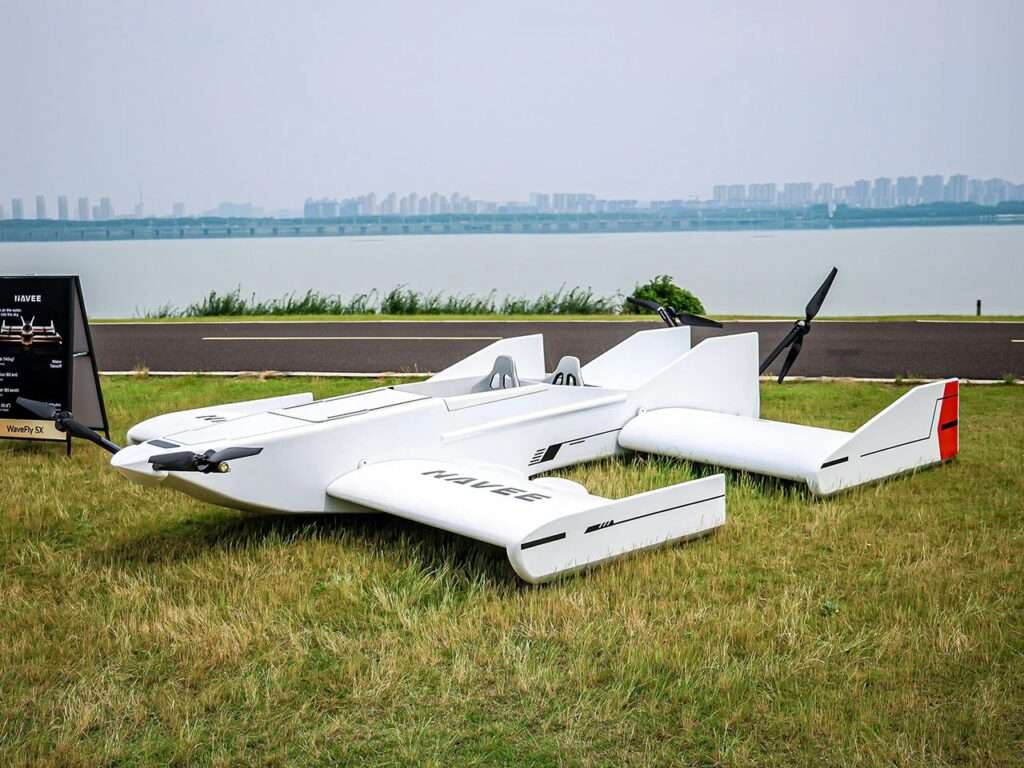
The structural materiality of the WaveFly 5X vehicle imposes a tectonic language based on extreme lightness, where the use of aerospace-grade carbon fiber represents a direct structural response to the challenges of gravity and water friction forces. This material not only provides the structure with physical strength, but also reconfigures the relationship between mass and site; the absence of the need for a conventional runway for takeoff or landing frees the vehicle from rigid infrastructure constraints, making the calm water channel the alternative dynamic space for movement. Scenographically, the mass merges fluidly with the water surface during takeoff and landing moments in a kinetic sequence that mimics the behavior of speedboats, creating a visual and material balance that links the lightness of aerodynamic materials with the cohesion of the liquid environment.
Dedicated Spatial Value and Psychological Market Reflection
The high material value of the vehicle, approximately 199,999 dollars, transforms into a scenographic determinant linked to the concept of the customized elite void, where color customization options and accessories allow the user to shape their own visual environment in accordance with their psychological perception of luxury. Analytically, the market reception of the vehicle goes beyond theoretical projection thanks to the public experimental flight, which has become a performative reference that strengthened trust and reassurance among international distributors. This shift from an experimental idea to a pre-orderable product reflects a growing global interest in this type of innovative kinetic spatiality, paving the way for an expansion of its scenographic presence in global waterways in the near future.

✦ ArchUp Editorial Insight
The WaveFly 5X embodies a radical paradigmatic breakthrough that dissolves the boundaries between marine engineering and low-altitude aviation through ground-effect physics. By exploiting aerodynamic compression over open water, this carbon structure provides a highly individualized kinetic transporter that reconfigures aquatic topography into flexible transit corridors, enhancing elite luxury through swappable batteries and offering a kinetic architecture entirely liberated from the constraints of traditional ground runways.
However, this kinetic exploitation carries a deep romantic illusion concerning spatial autonomy; operating shared waterways as opportunistic and unregulated runways represents a privatization of collective environmental buffers. The promises of liberation from infrastructure overlook the inevitable regulatory clashes with coastal cities and spatial conflicts with existing commercial navigation channels, reducing this dynamic breakthrough into a fragile and elitist planning loophole.