Rancho CP: Courtyard and Mountain Landscape Design

Movement Dynamics and the Composition of the Mountain Landscape
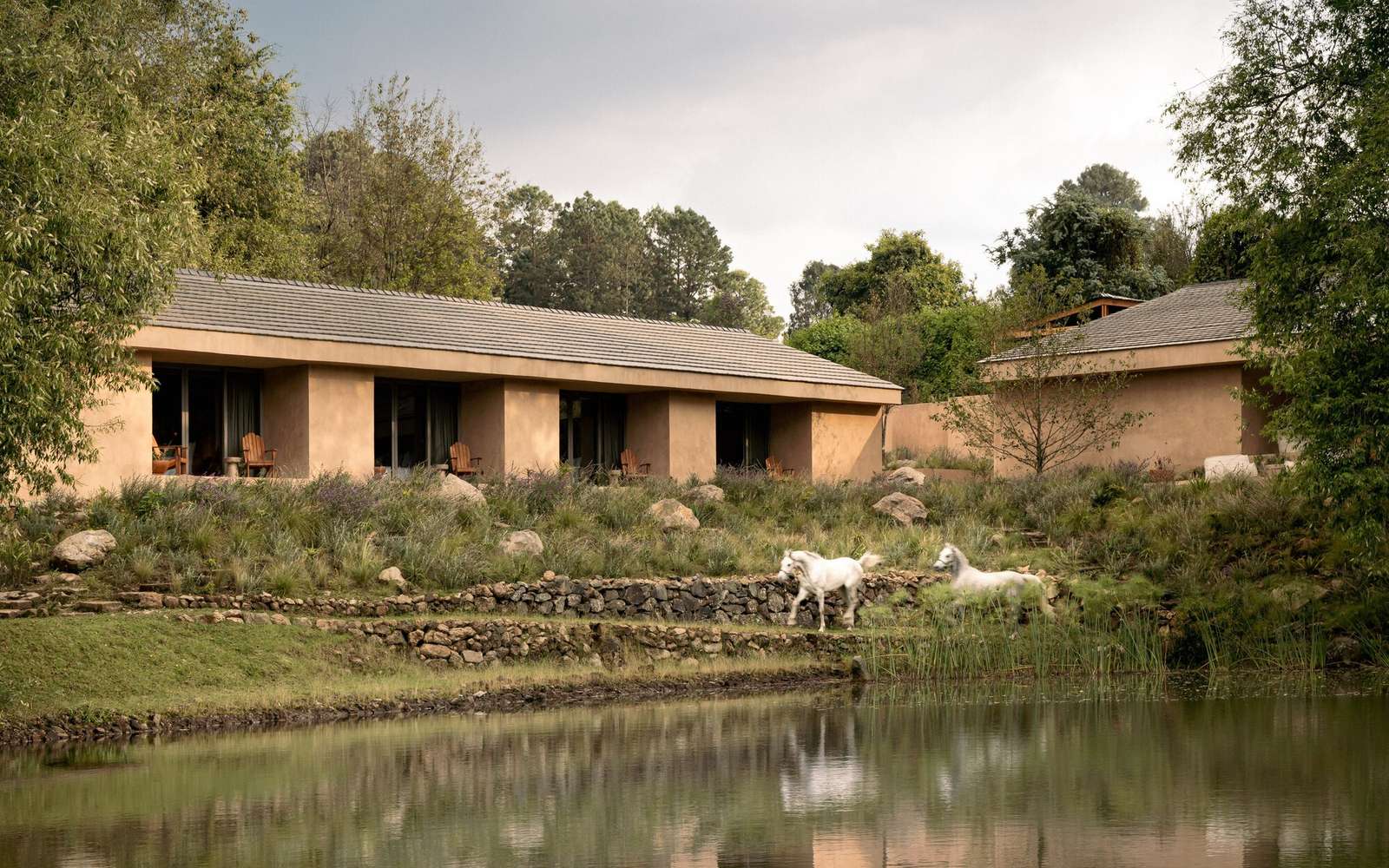
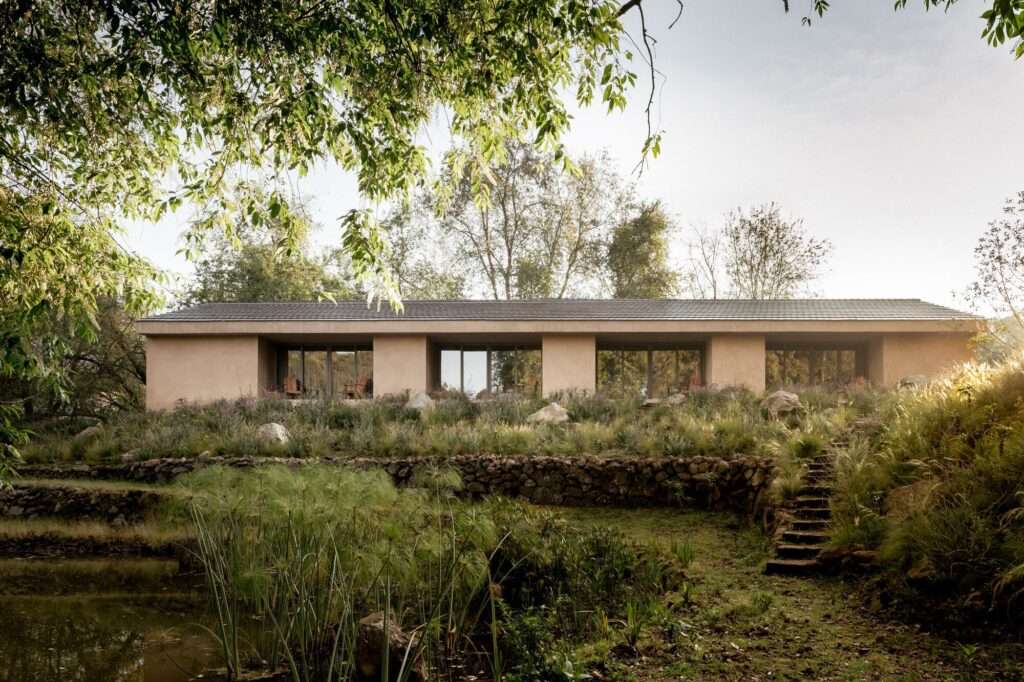
The spatial condition of the Rancho CP project is defined through its dialogical massing massing placement with the surrounding forested topography in a village adjacent to the Valle de Bravo region. The floor plan here does not function merely as a functional distribution system, but rather as a visual instrument for framing the natural landscape and integrating mountain views into the user’s daily experience. This scenographic experience begins from the moment of approach; where the retaining walls of the vehicle entrance form two visual gateways that organize the topography and precisely guide bodily movement and transition toward the main residential volume and stables, creating a kinetic sequence that prepares the shift from open exterior space to the built environment.
The Language of Massing and Spatial Analysis of the Human Experience
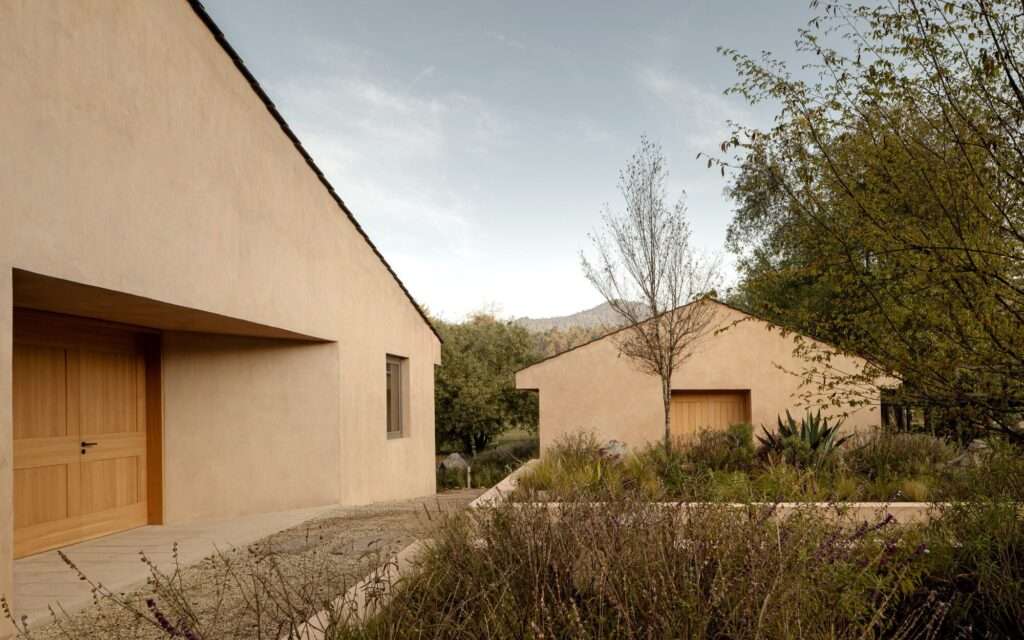
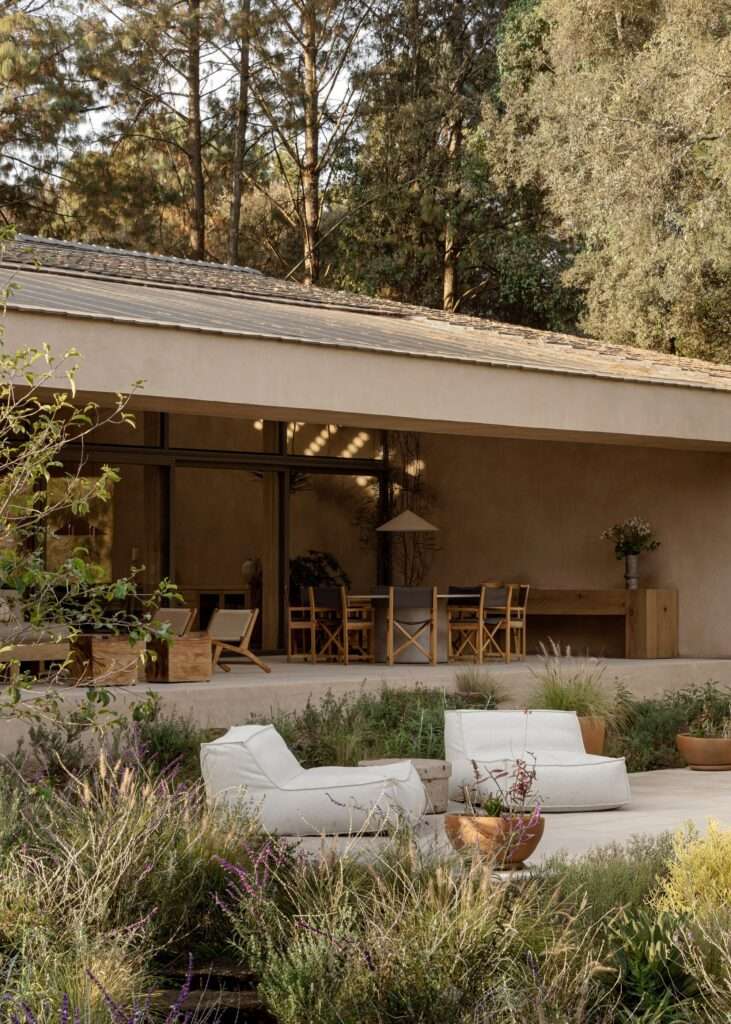
The architectural identity of the project is embodied in clearly defined geometric volumes, crowned by gabled roofs that reinterpret the traditional local structural typology through a contemporary lens. This roof configuration contributes to directing the movement of light and shadow across the façades throughout the day. The design extends beyond its conventional function as an equestrian ranch to structurally integrate with horse riding activities and interaction with horses, making this human–animal relationship a fundamental driver in shaping spaces and daily circulation paths. This spatial interweaving allows the user to experience a direct environmental immersion, enhancing visual and physical connectivity with the surrounding nature, and transforming daily circulation into a continuous sensory experience, even though certain elements of the project are still under construction.
Mass Deconstruction and Spatial Filtering of the Central Courtyard
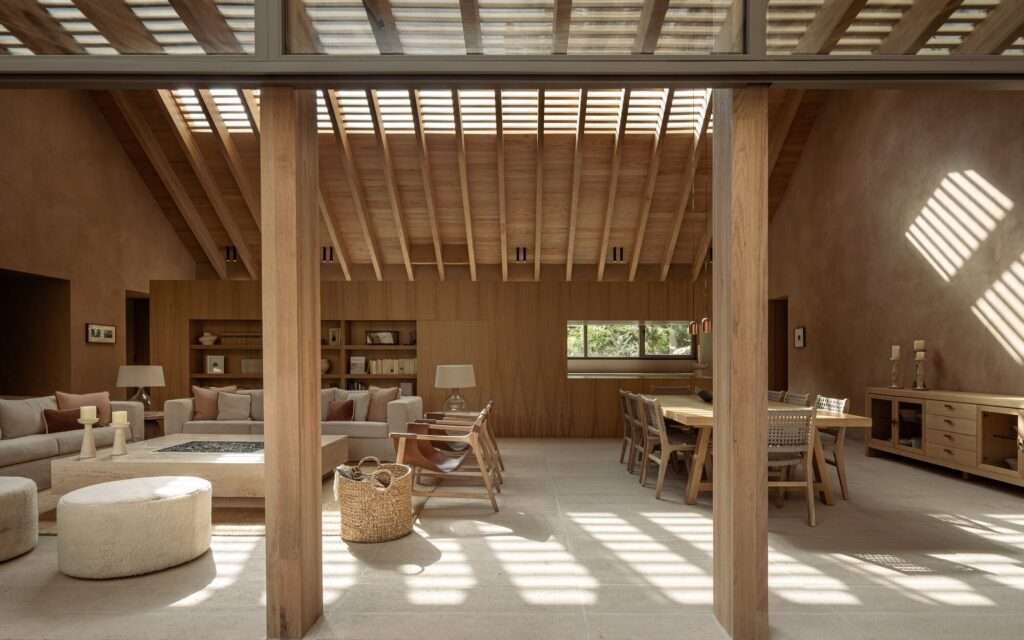
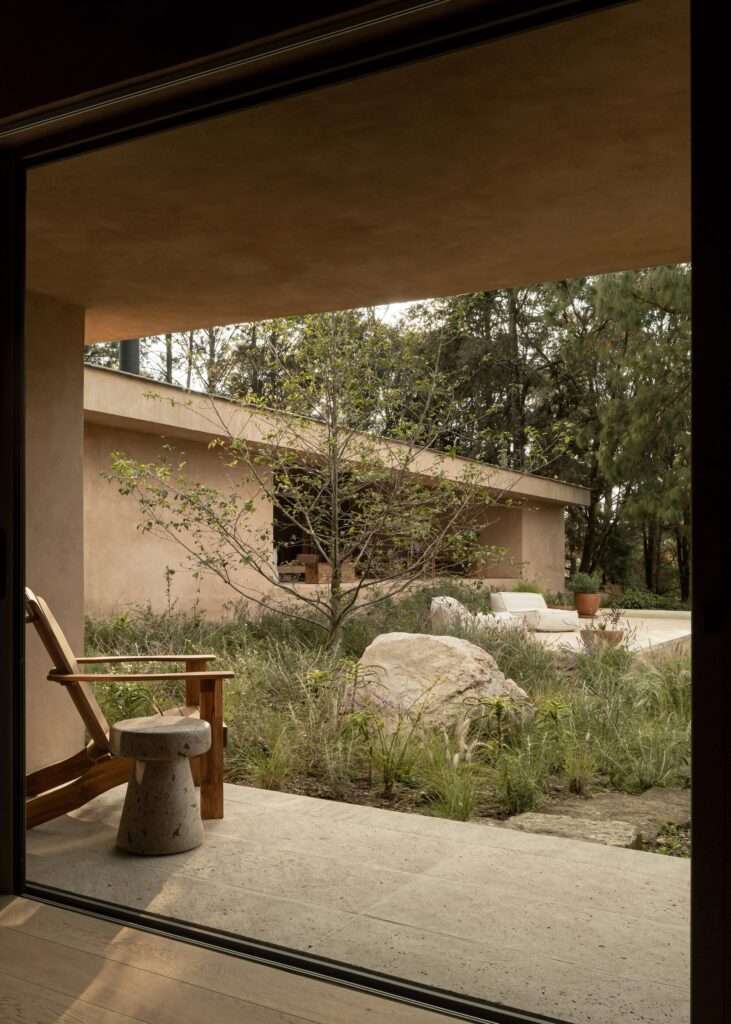
The spatial structure of the house is distributed across two main architectural volumes, where the project’s spatial organization is anchored by a central courtyard that receives and directs circulation. The primary volume accommodates shared social functions such as the living area, dining room, kitchen, family room, office, and terrace, while the second volume is reserved for private functions including bedrooms, bathrooms, a wine cellar, and a steam room. The circulatory connection between these functional clusters is achieved through a corridor and an open courtyard that orchestrates physical transition, while the kitchen stands out within the social zone as a central mass that acts as a filtering and organizing element, defining internal movement paths with fluidity.
Biocinematic Scenography and Monochrome Expression
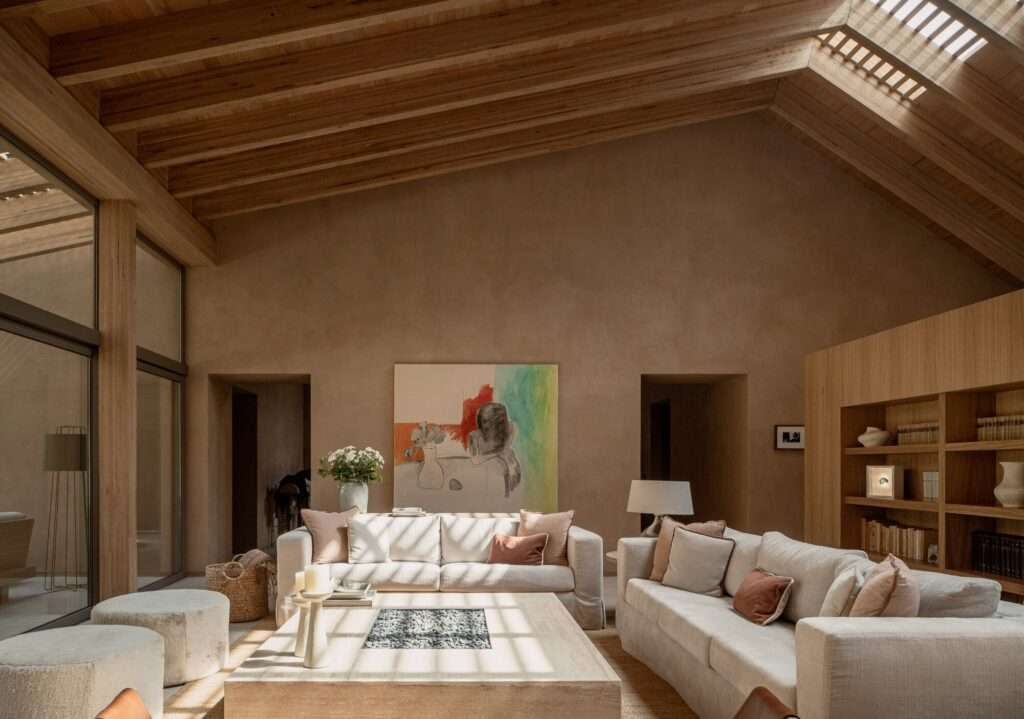
The orientation of the main volume toward the lake and surrounding mountains is reinforced by a large skylight integrated into the roof form, serving as a scenographic device that allows the flow of changing natural light throughout the day and enhances both efficiency and thermal comfort for the user. Structural beams extend outward into the exterior space, forming a pergola-like canopy over the terrace, dissolving the boundary between interior and exterior space and creating a shaded transitional zone. This psychological and material effect is further intensified through a monochrome expression based on a unified material palette of pigmented plaster applied to walls, floors, and architectural screens; granting the building a visual unity that highlights its pure volumetric reading and creates a calm atmosphere that translates the scenographic language of the design.
✦ ArchUp Editorial Insight
The project exemplifies how rural equestrian farm typologies are transformed into ascetic retreats by privileging raw phenomenological experiences over ornamental regionalism. Through the use of monochromatic building materials and explicit volumetric composition, the plan deliberately forces human movement into a direct, unmediated dialogue with topography, using spatial filtering to address privacy and environmental comfort within an originally utilitarian agricultural program.
However, this strict emphasis on sensory purity reveals a romantic blind spot regarding the nature of contemporary rural labor. By isolating leisure areas within an idealized aesthetic envelope, the design structurally separates the more chaotic operational realities of horse maintenance, implicitly assuming the presence of invisible labor that sustains this monochrome calm, favoring an elite visual consumption over professional infrastructural acknowledgment.