School Library: Mass, Space & Movement Reframed

Organizational Concept and Mass Deconstruction
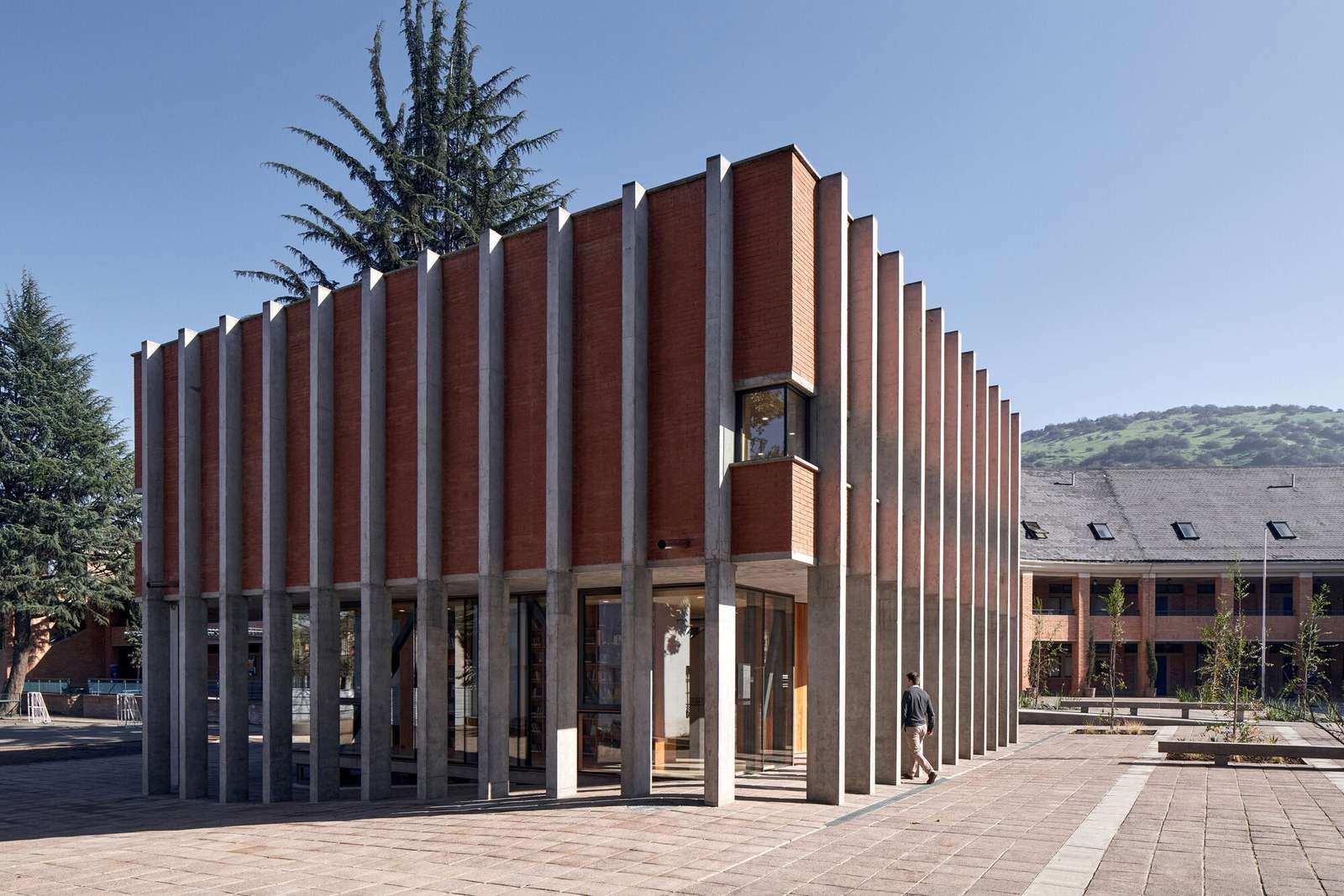
The building functions as a central organizing element within the school campus, physically detached from the surrounding masses to act as an independent visual and spatial focal point. This deliberate separation grants the library the role of a “beating heart” that reconfigures spatial relationships between the existing infrastructure and the newly added buildings. Through this positioning, the role of the volume is not limited to accommodating an educational function; it extends to becoming a connective device that directs user movement and defines clear visual pathways linking courtyards and new gardens, transforming the outdoor space from mere transitional zones into an integrated, vibrant environment.
Scenographic Experience and Human Extension
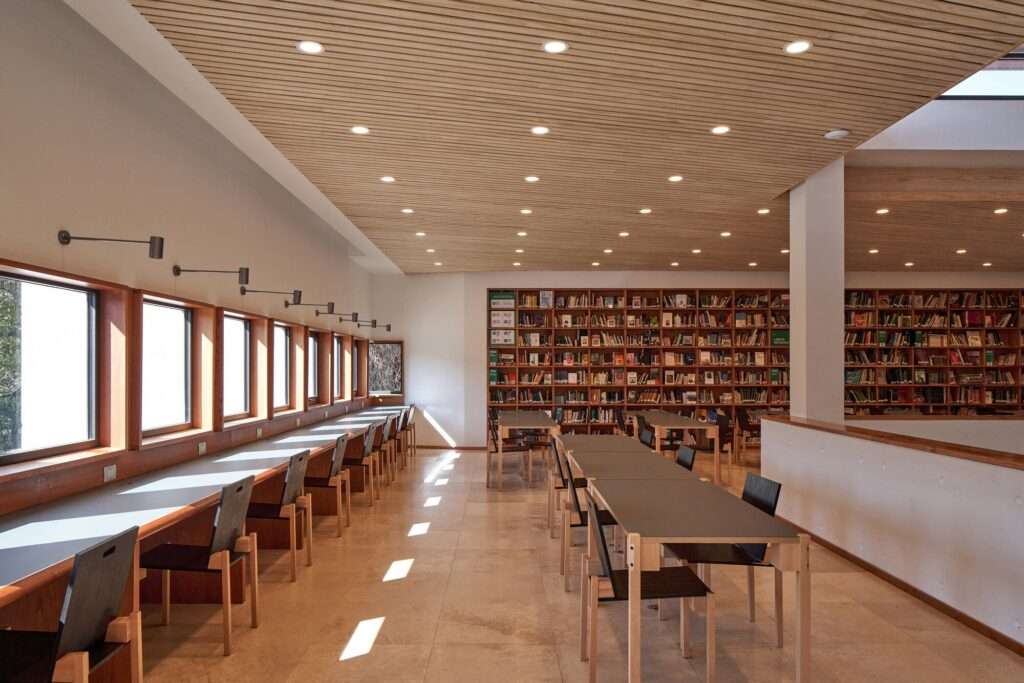
The human experience within the project is shaped through a kinetic path that begins at the moment of approach and movement toward the center, where the design language imposes a calm rhythm aligned with the nature of a cultural space. Architectural masses intersect with solar movement to create dynamic shadows that shift throughout the day, giving surfaces and materials a tangible depth that psychologically influences user behavior and encourages contemplation and focus. The orientation of spaces and the movement of natural air enhance thermal and visual comfort, transforming reading and study into a sensory and material experience directly connected to the school’s natural and external environment.
Mass Contrast and Visual Dialogue
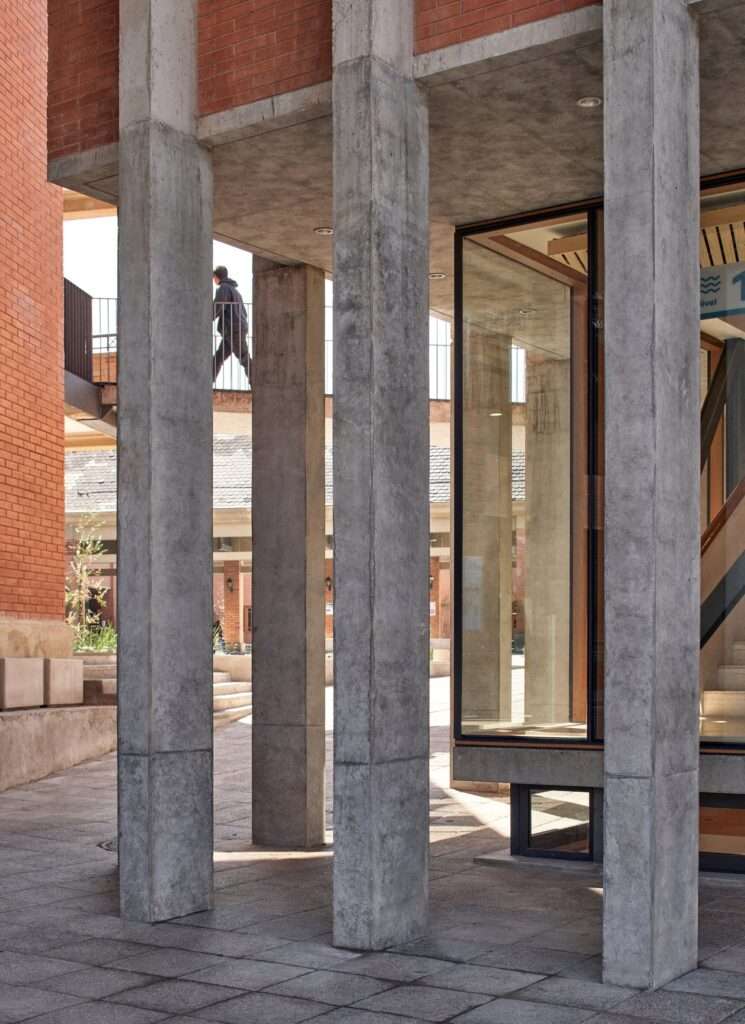
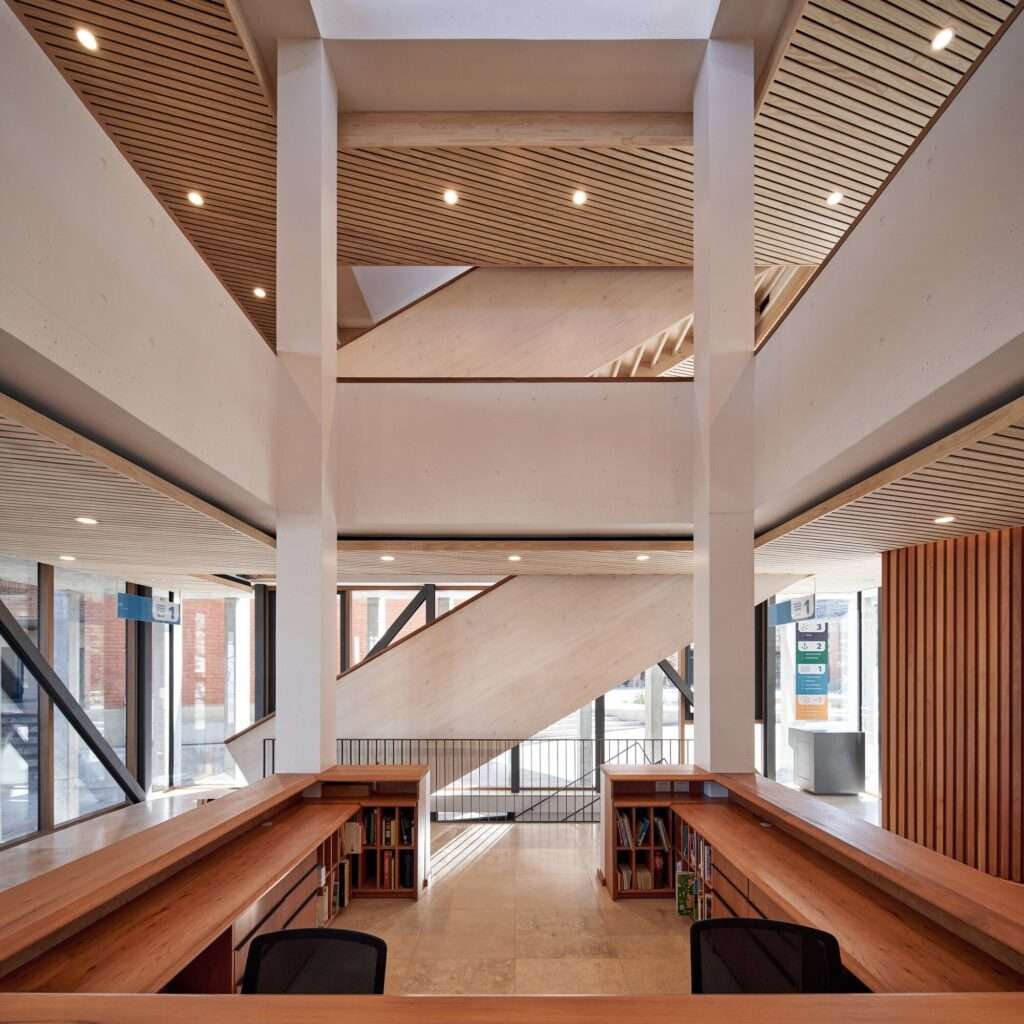
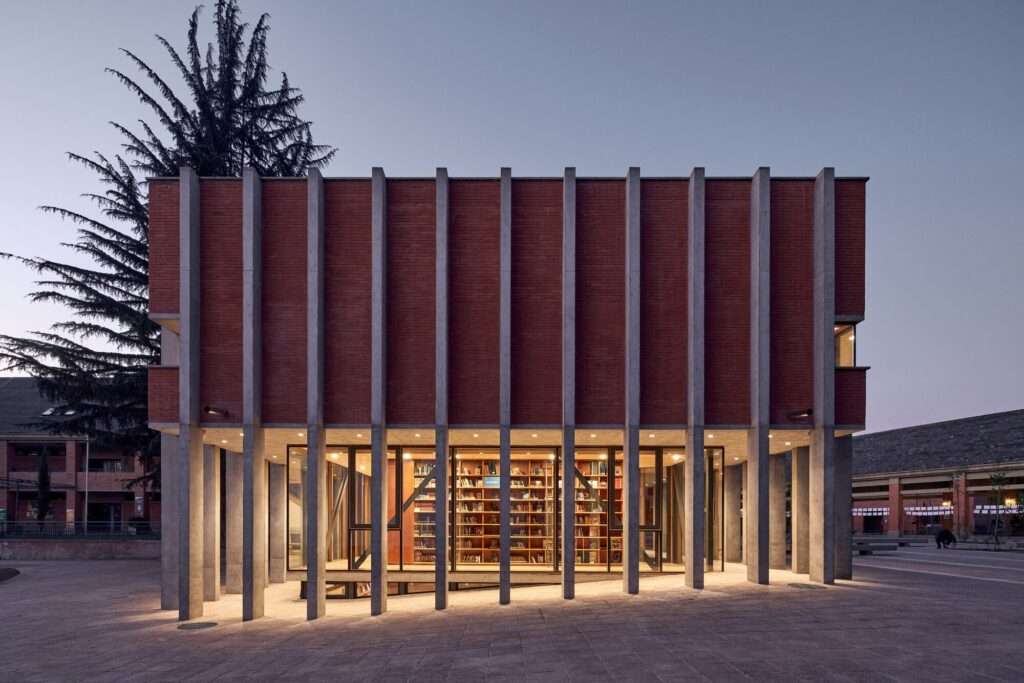
The building’s spatial composition is based on a duality of contrasting masses across two vertically opposing levels. The ground floor is formed as a transparent and open membrane, presenting itself as a visual display façade that reveals the repository of knowledge and invites direct interaction during daily movement within the school campus. In contrast, the upper floor rises as a silent, closed, and opaque volume, appearing suspended in space to provide a visual depth that balances the transparency below. This structural opposition is internally expressed through a double-height void above the reception area, acting as a visual conduit that connects both levels and allows natural light to penetrate and reach the center of the horizontal plan.
Kinetic Dynamics and Sensory Experience
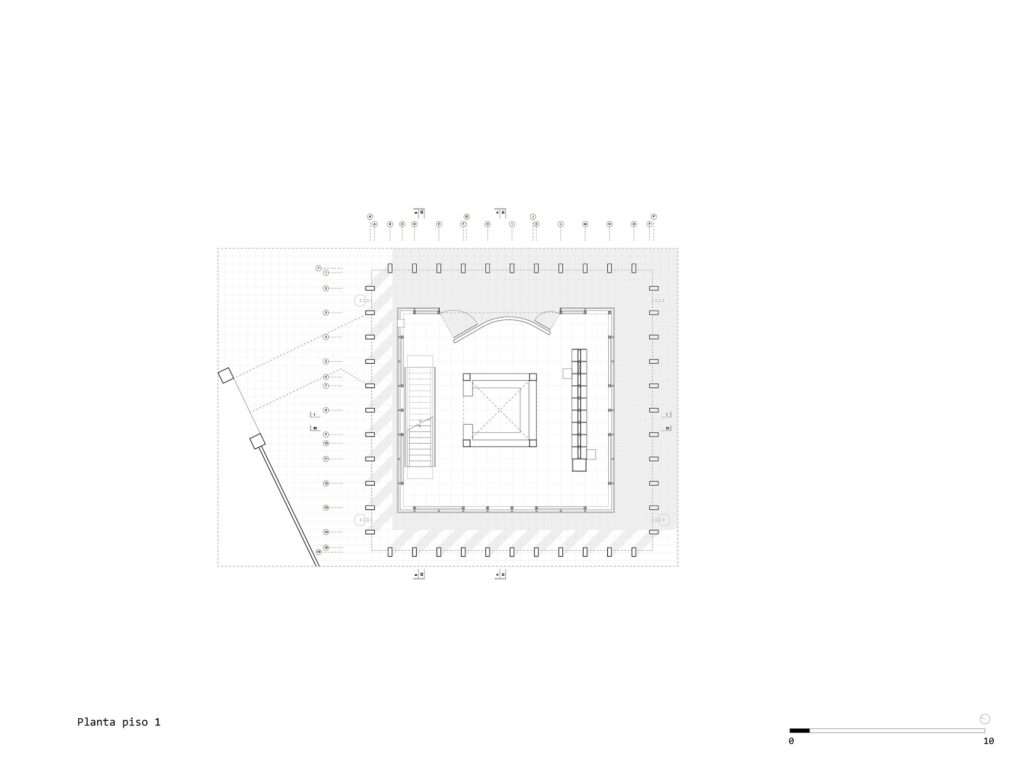
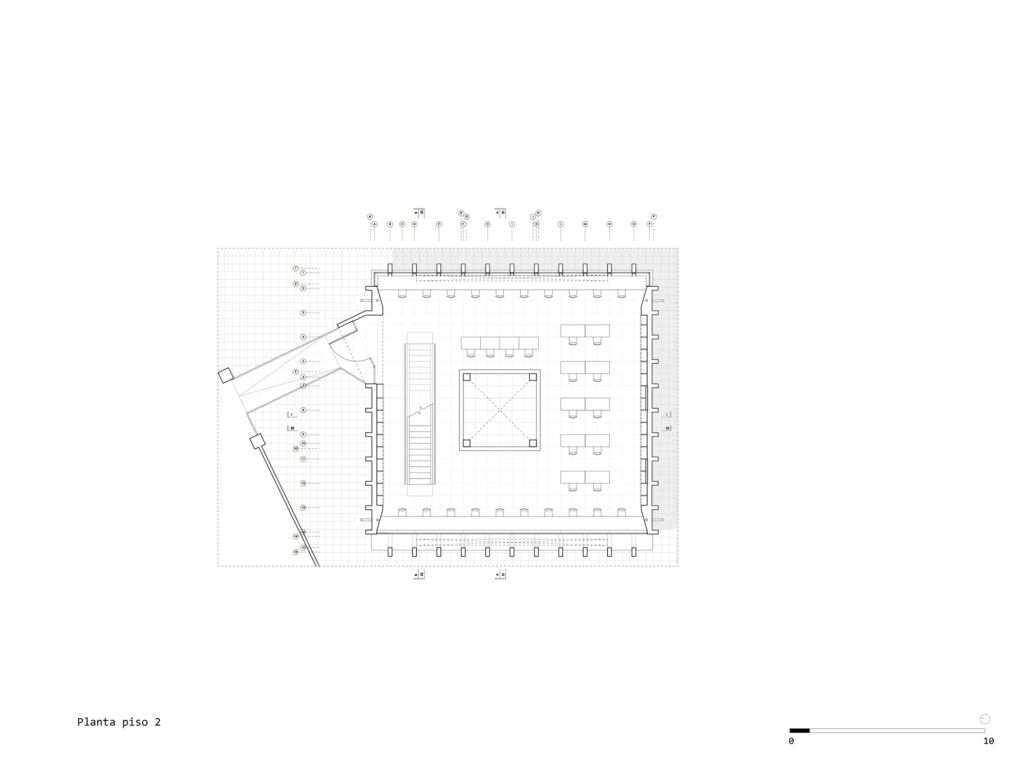
The interior scenography is realized through a system of laminated wooden staircases, which are not limited to vertical circulation but instead create a sensory trajectory that connects the building’s levels upward. During vertical movement, the user experiences a gradual transformation in light intensity and materiality, until reaching the rooftop where the human experience opens onto an external viewing terrace. This final horizontal extension places the visitor in front of wide panoramic views, re-establishing a vital connection with the school courtyard on one side, and the extended natural context toward the surrounding hills and the Andes Mountains on the other.
Structural Rhythm and Environmental Strategies
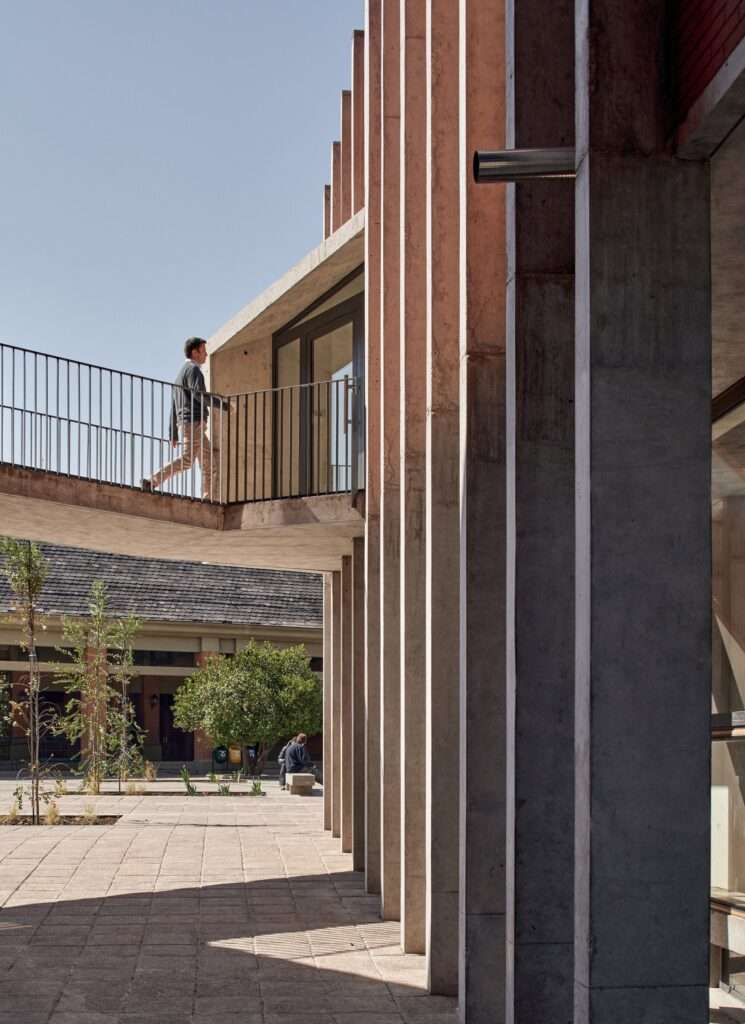
The building’s structural system is pushed toward the perimeter, fulfilling a dual function: freeing the entire interior floor plates to allow spatial flexibility across levels, while also enabling columns to act as shading devices for the façades. These columns, through their regular spacing and rhythm, establish a repetitive visual order that transforms the outer envelope into a permeable screen, allowing access to the pavilion and enabling movement from all directions. In another vertical strategy, the design leverages the natural slope of the site to introduce a lower level that receives natural light, enhancing spatial and functional diversity without compromising lighting quality.
Circulation Connectivity and Nocturnal Scenography
The circulation system is completed through a single structural bridge that connects the second floor of the new wing to the existing building’s circulation network, ensuring functional continuity and a smooth transition between old and new. With the absence of daylight, the building’s visual condition shifts, transforming the library through its internal illumination into a radiant lantern at the heart of the school. This nocturnal scenographic transformation redefines the building’s psychological impact within its surroundings, turning it from a daytime mass engaged with shadows into a central source of light that guides perception and establishes the focal point of the campus.
✦ ArchUp Editorial Insight
The proposal diagnoses an aging school campus, introducing a central two-story wing as a primary programmatic anchor. By pushing structural load-bearing elements to the perimeter to free horizontal plans and exploiting site topography to introduce lower-level daylighting, the design attempts to recalibrate pedestrian flow. The architecture leverages volumetric contrast, a transparent base opposed by a solid upper mass, to construct a dynamic landmark functioning as a nocturnal beacon.
However, this formal composition overlooks the operational friction of an isolated structure within an active academic fabric. Reliance on a single elevated bridge to connect the new program with the historic structure risks disrupting internal circulation flows. Moreover, the structural ambition required to suspend the solid upper volume imposes complex financial and engineering demands, potentially prioritizing iconic symbolism over flexible, decentralized educational spatial strategies.