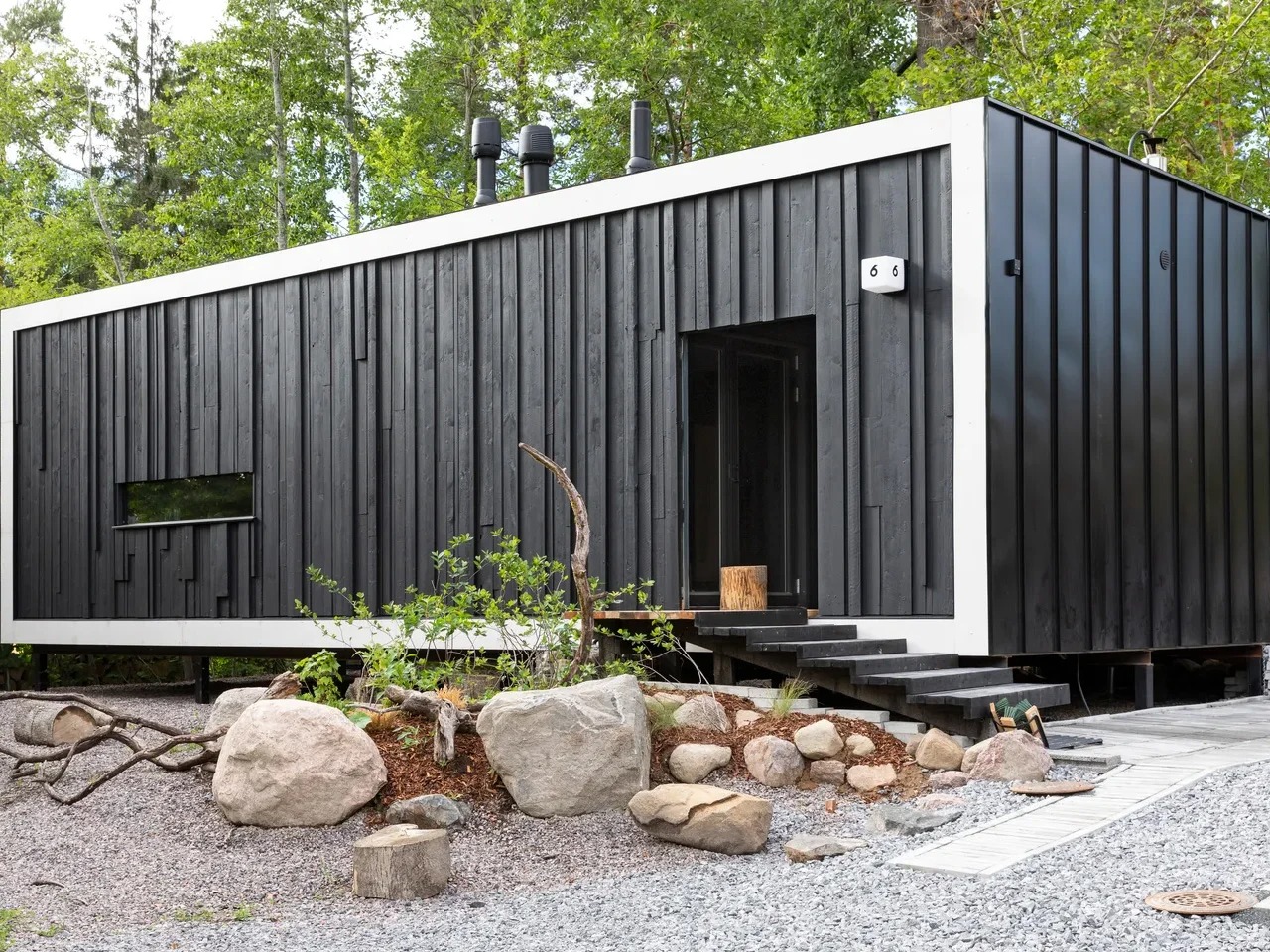
Tiny House Shadow: Rethinking Sustainable Housing

From Theory to Practice in Sustainable Housing
Architects typically study sustainable housing as a theoretical concept, but architecture professor Matti Kuittinen at Aalto University brings this idea into direct application. Instead of limiting himself to academic design, he built his own “Tiny House Shadow” in Lohja, Finland, and moved in with his family, turning the concept into a real lived experience.
Recycled Materials and Rethinking Construction
The house measures only 365 square feet and was built using approximately 56% recycled or reused materials. These included old fishing nets used for flooring, recycled steel for the structure, car tires for the roof, as well as second-hand windows and doors, and insulation made from recycled glass. The new materials were selected based on environmental considerations, such as low-emission steel, reflecting a broader shift toward reducing environmental impact at every stage of construction.
Lower-Resource Environmental Performance
Comparisons with conventional houses show that this model consumes 85% fewer resources, uses 43% less land area, and reduces per-capita carbon emissions by 53%. These figures are not presented as promotional achievements, but as indicators of the possibility of rethinking construction methods within the limits of available resources.
Toward Rethinking Architecture
This experiment presents a practical model for a broader idea: the construction sector needs to adapt to a limited “carbon budget,” which fundamentally requires redefining the relationship between design and resource consumption.
Origin of the Name and Conceptual Significance
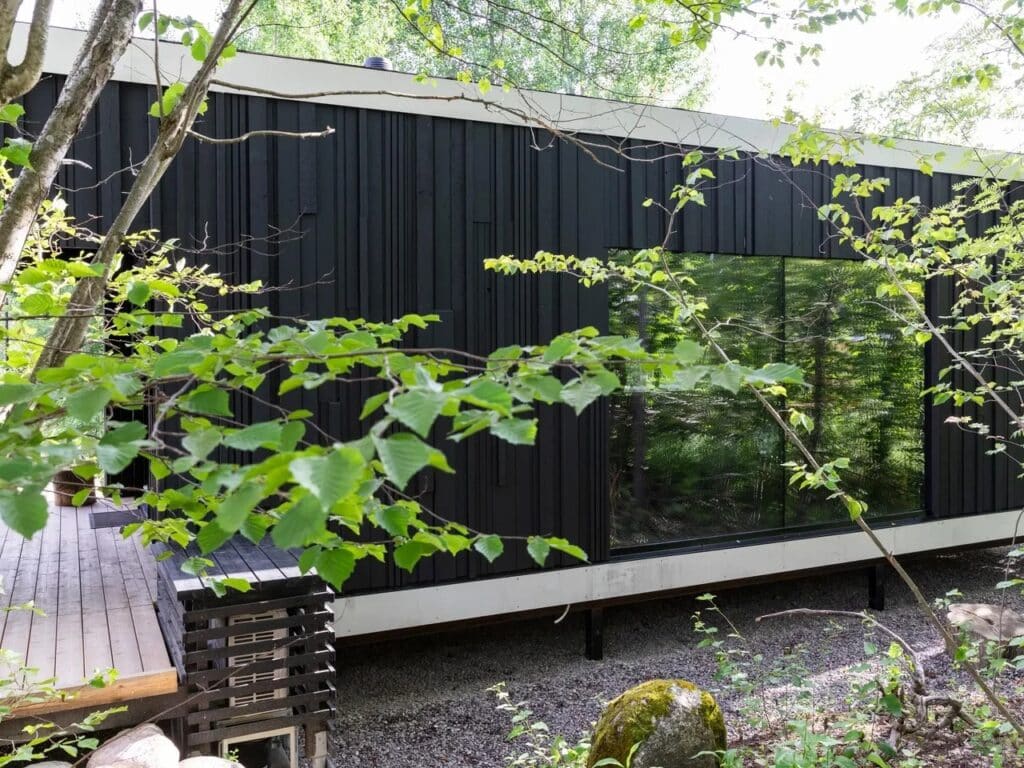
The name of the house is derived from the 1930s essay by Japanese writer Jun’ichirō Tanizaki titled “In Praise of Shadows,” in which he explores the beauty inherent in shadow, silence, and visual restraint. Within this context, the concept of “Shadow” acquires a clear symbolic dimension. The house is not understood merely as a building, but as a material metaphor for a linear economic system that has left behind significant waste. It is constructed almost entirely from the remnants of this system, with a matte black façade that gives it a restrained, austere character, while it quietly integrates into the Finnish landscape. From the outside, the work appears closer to an avant-garde architecture experiment, while the same approach continues throughout the interior spaces.
Simplicity as Functional Logic
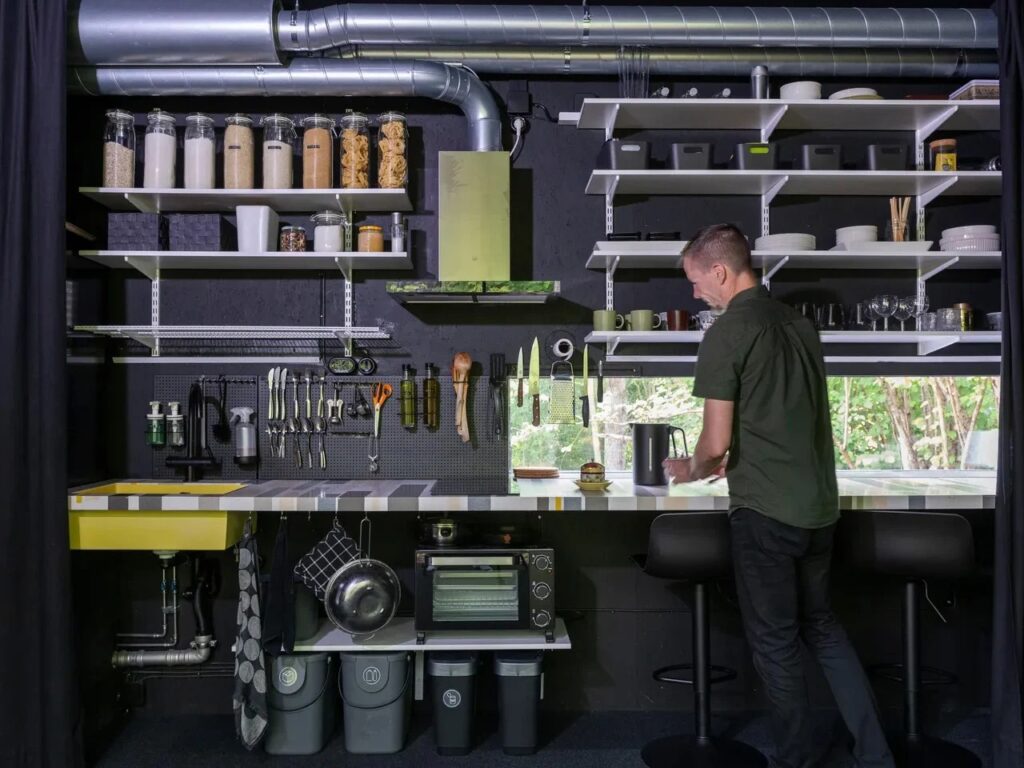
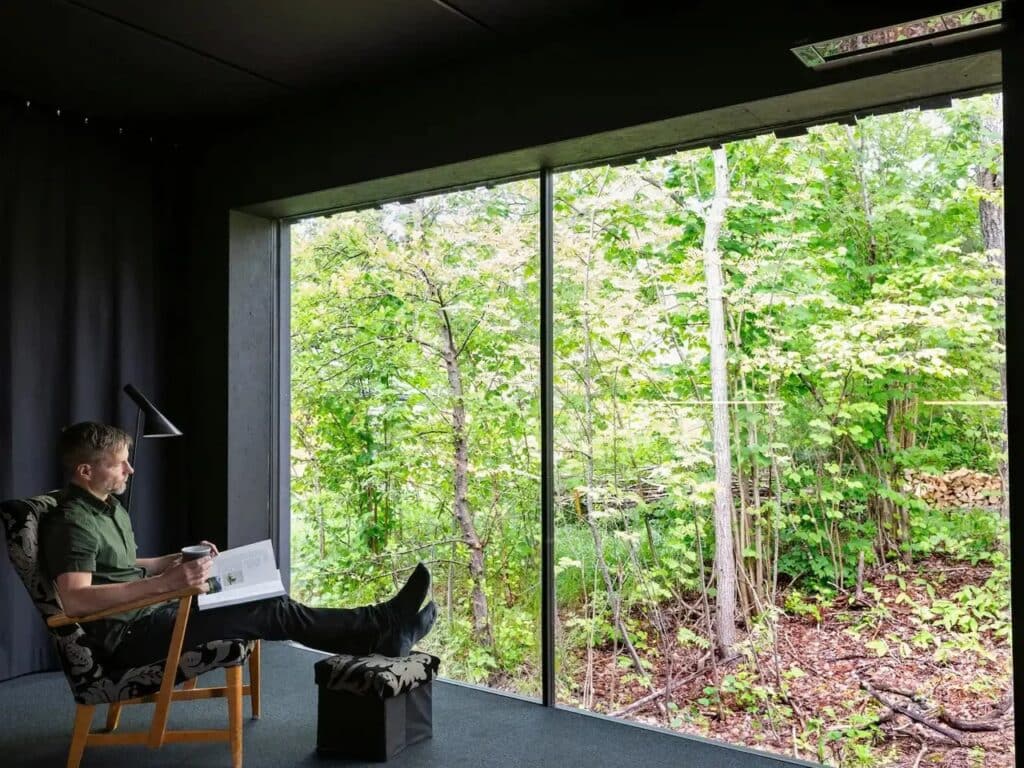
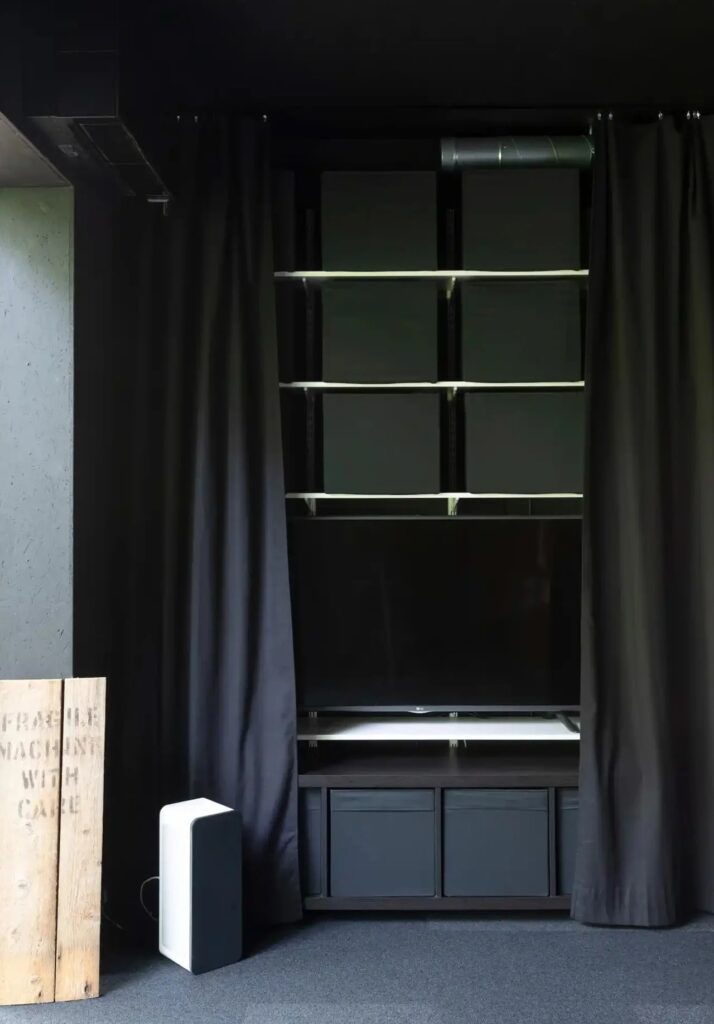
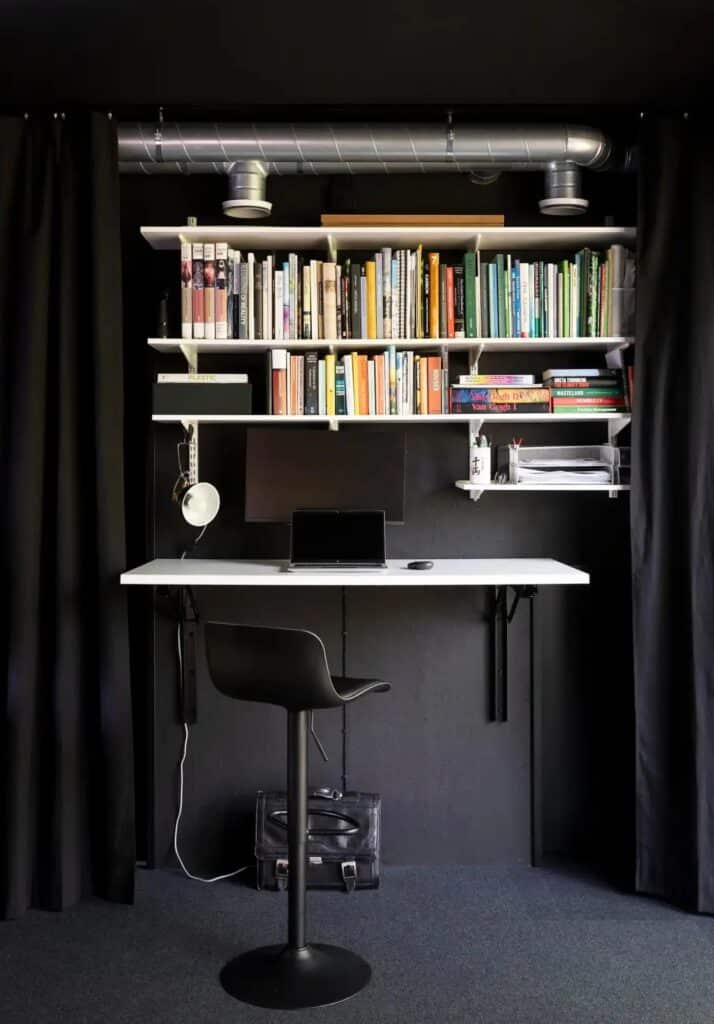
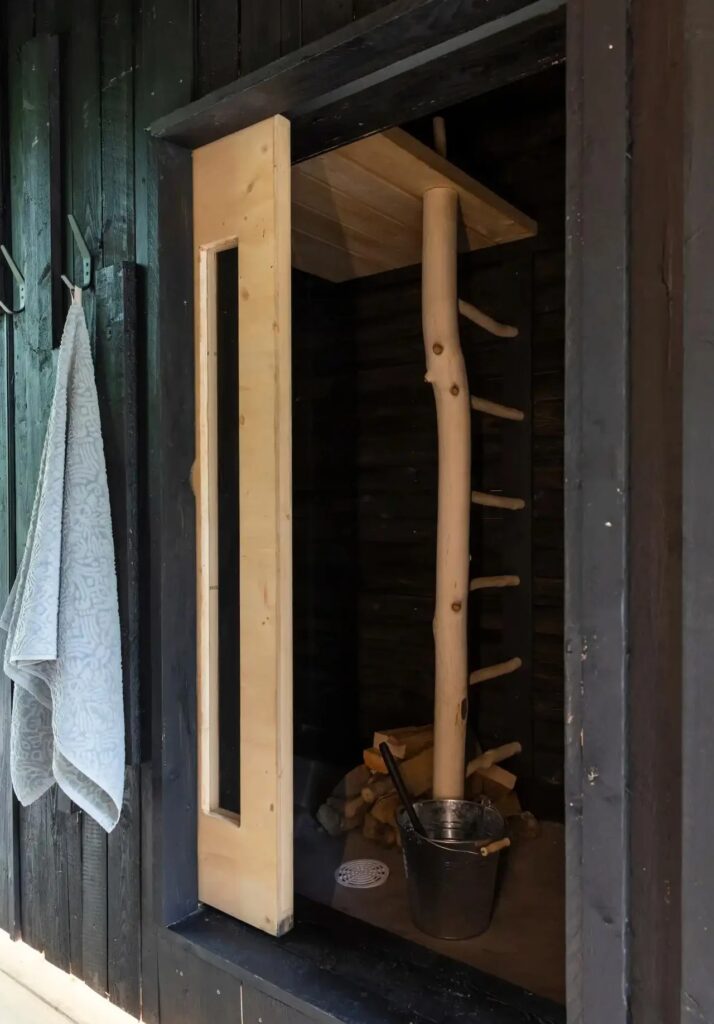
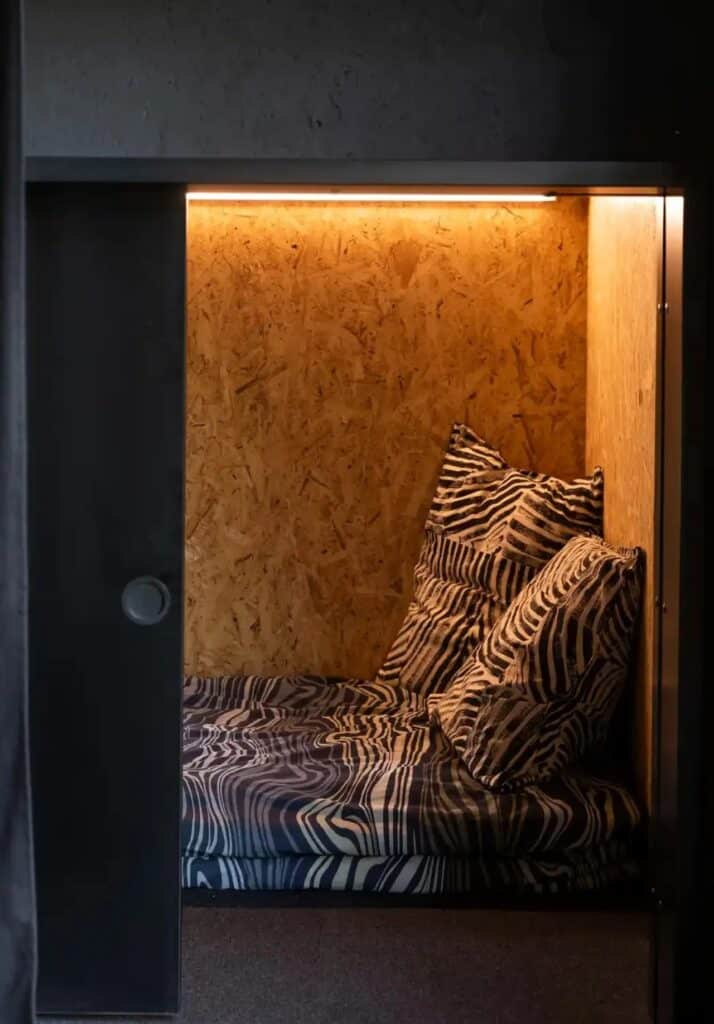
Inside, simplicity is not presented as an aesthetic choice alone, but as a logic that organizes daily life. The main living space shifts between work, dining, and sleeping functions using heavy black curtains instead of fixed walls, creating flexibility in how the space is used. The sleeping units are inspired by Japanese capsule hotels, arranged vertically to reduce floor area consumption. The kitchen relies on open shelving rather than closed cabinets, while the house also includes a full bathroom, as well as a small wood-fired sauna. This approach to space organization aligns with principles found in innovative interior design.
Efficiency of Use and Execution Time
In this model, every square foot is treated as an effective space with a defined function. Construction took approximately four months, while the entire projects lifecycle, from initial design to move-in, took around one year.
From an Architectural Prototype to a Platform for Debate
The “Shadow” projects was later exhibited in specialized construction fairs as an applied model for testing sustainable design concepts, and was also featured in the Designs for a Cooler Planet exhibition at Aalto University. In this way, the project shifted from being an individual living experiment to becoming a subject of discussion within academic and architectural contexts, serving as a notable example in the archive of sustainable initiatives.
Reframing the Concept of Environmental Impact in Construction
Architecture professor Matti Kuittinen argues that the significance of the project does not lie in it being an isolated house, but in the broader question it raises about the scalability of low-emission and recycled building materials within the construction sector. From this perspective, the project is not a singular architectural case, but an opportunity to rethink the very logic of construction, particularly in relation to resource use and environmental impact reduction. Within a footprint of no more than 365 square feet, the project becomes a condensed model that raises questions far larger than its physical scale.
✦ ArchUp Editorial Insight
The Tiny House Shadow project operates as a downstream outcome of carbon accounting frameworks and life-cycle assessment methodologies at Aalto University, where residential space is transformed into a unit for measuring emissions indicators and resource efficiency. The project does not originate from an aesthetic intent, but from institutional pressures linked to ESG models and environmental impact reduction policies that redefine housing as a measurable obligation. Friction emerges through Finnish building regulations, constraints in sourcing reused materials, and labor costs that necessitate accelerated execution. This results in a 365-square-foot spatial configuration that relies on a high proportion of recycled material datasheets, flexible internal partitions using curtains instead of walls, and compact sleeping arrangements responding to density constraints. The dwelling becomes an operational settlement between resource scarcity and regulatory compliance requirements, where housing is re-produced as a management mechanism rather than a design object.