Reimagining a Taichung Apartment: Exploring Light, Space, and Movement

Reimagining Urban Housing in Taichung
In the dense fabric of Taichung city, most apartments follow a repetitive design based on boxy rooms and narrow circulation. However, the reconfiguration of one home demonstrated how a familiar space can be transformed into a brighter and more comfortable living environment.
Traditional Challenges of Urban Apartments
Before renovation, the apartment exemplified the common issues of Taiwanese urban housing, with living and dining areas located deep in the center, surrounded by rooms that blocked natural light and ventilation. As a result, there was only a single opening on the southern side that provided sunlight, leading to uneven lighting distribution and a sense of confinement. While the apartment was somewhat functional, it lacked the openness and warmth desired in contemporary living.
Transition to a More Fluid Space
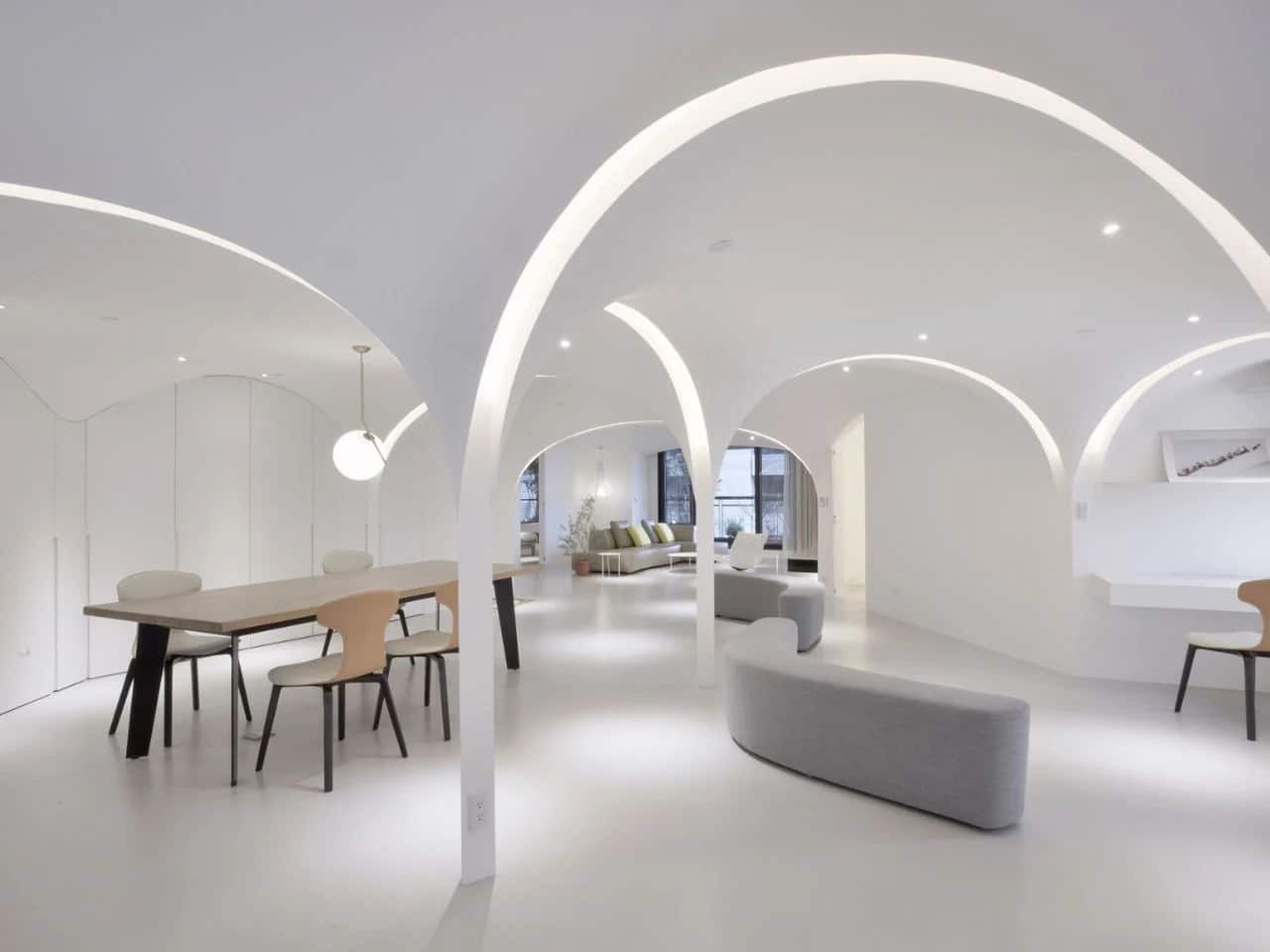
The designers took this apartment as an opportunity to rethink how light and space are used. By introducing more fluidity through curved forms and relying on natural white light, the apartment gradually transformed into a sanctuary focused on sensory comfort and a tranquil atmosphere. The change was not dramatic in overall form, but it was fundamental to the daily experience of the residents, making movement within the apartment smoother and fostering better connectivity between spaces.
Lessons Learned
This case demonstrates that rethinking interior design goes beyond aesthetics, it also involves enhancing quality of life through the management of light, ventilation, and circulation flow. It also shows that even small adjustments in spatial layout can make a significant difference in the sense of comfort and openness within densely populated urban housing.
Rethinking Interior Space
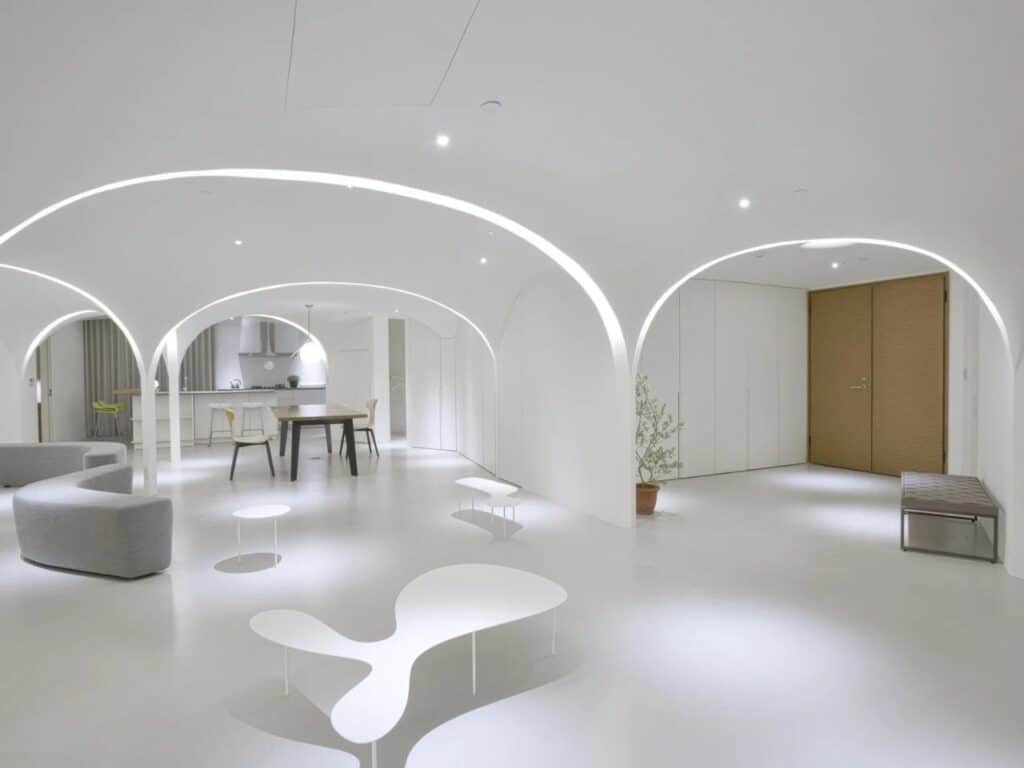
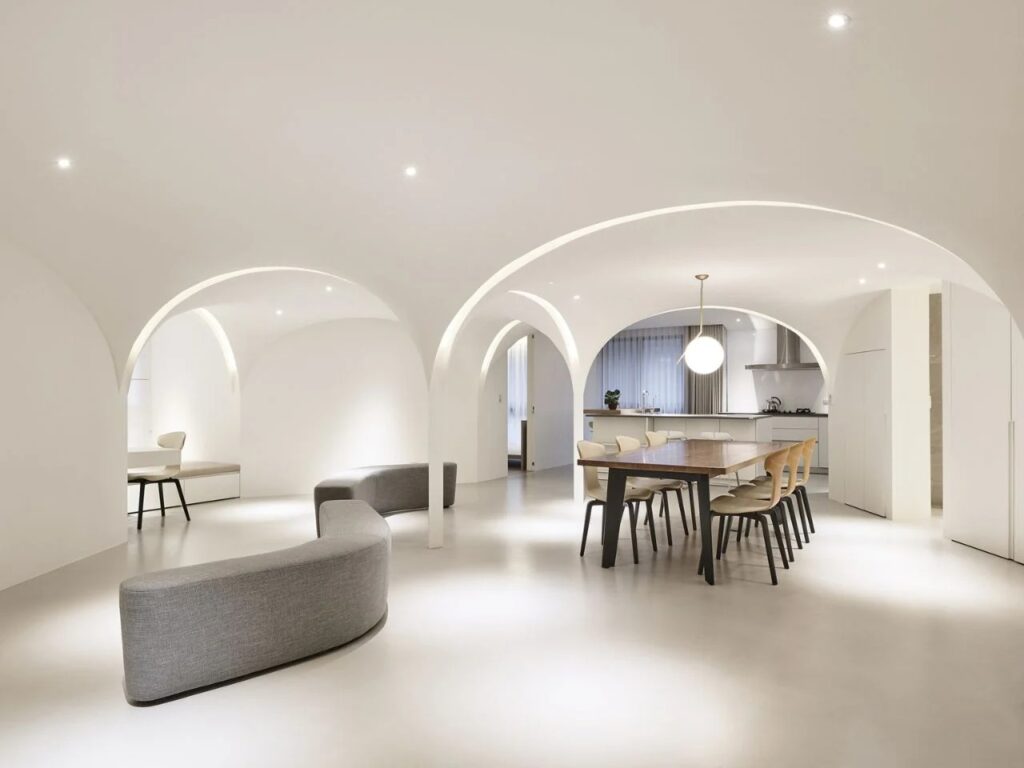
The architects first began by deconstructing the logic that kept the apartment divided into isolated sections. Instead of adhering to the traditional rectangular grid, they introduced a new pentagonal spatial system, reshaping the experience of moving through the home in an indirect and flexible way.
Replacing Sharp Corners with Fluid Movement
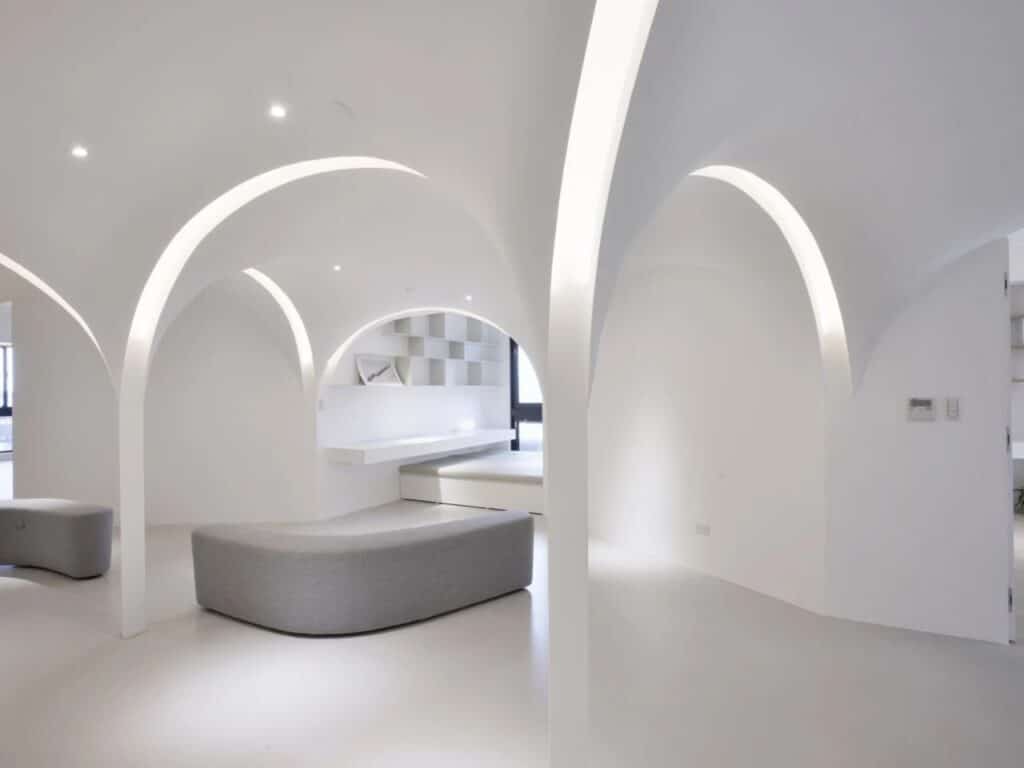
By replacing sharp corners with slanted walls, extended sightlines were created instead of broken ones, and natural circulation paths emerged instead of imposed routes. These changes not only affected the form but also enhanced the perception of light and shadow: sunlight now flows smoothly across the angled surfaces, while shadows gradually shift, imparting a sense of warmth and tranquility to the interior spaces.
Improving Light Distribution and Ventilation
The new spatial framework allowed for a more effective reorganization of shared areas. By opening the northern, western, and southern sides, the apartment no longer relied on a single window for illumination. Sunlight is now evenly distributed, while air moves naturally, forming a cross-ventilation pattern that gives the home a sense of lightness and comfort. Even the darkest parts of the unit were transformed into bright and well-ventilated areas, where natural light, rather than walls, became the core defining element of the space.
Impact of Modifications on Living Experience
These transformations illustrate how smart design can enhance daily life quality in densely populated urban apartments. Small architectural adjustments can make a significant difference in the feeling of openness and comfort, while promoting fluidity between spaces and achieving a better balance of light and air.
Sound as a Tool for Spatial Definition
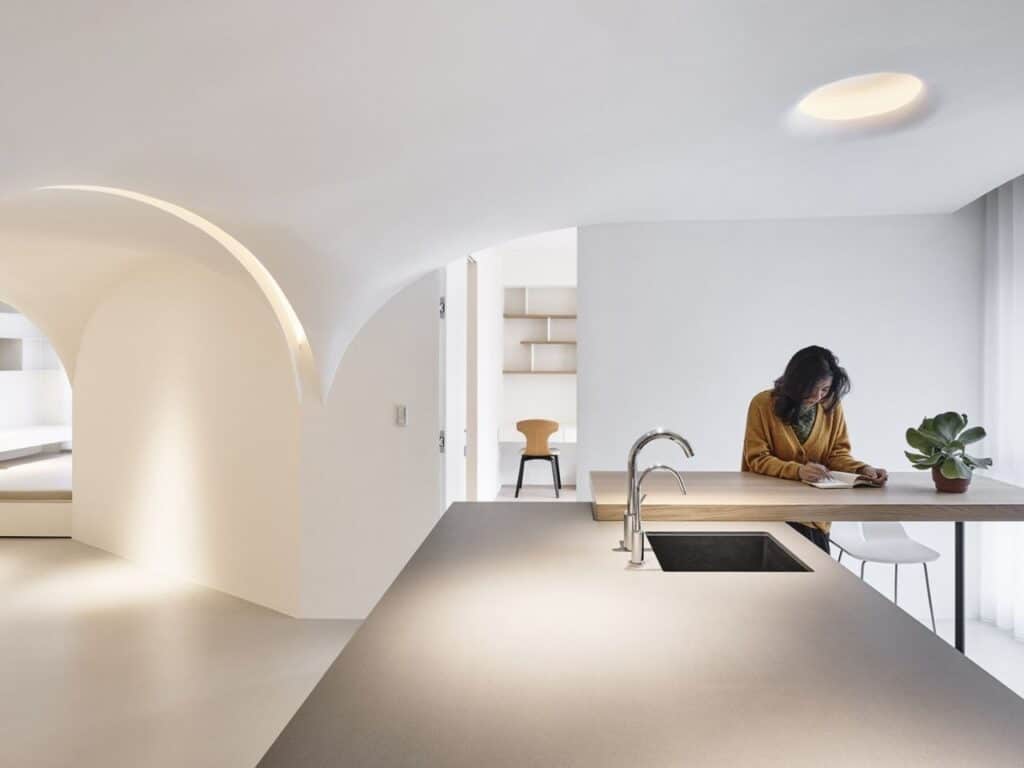
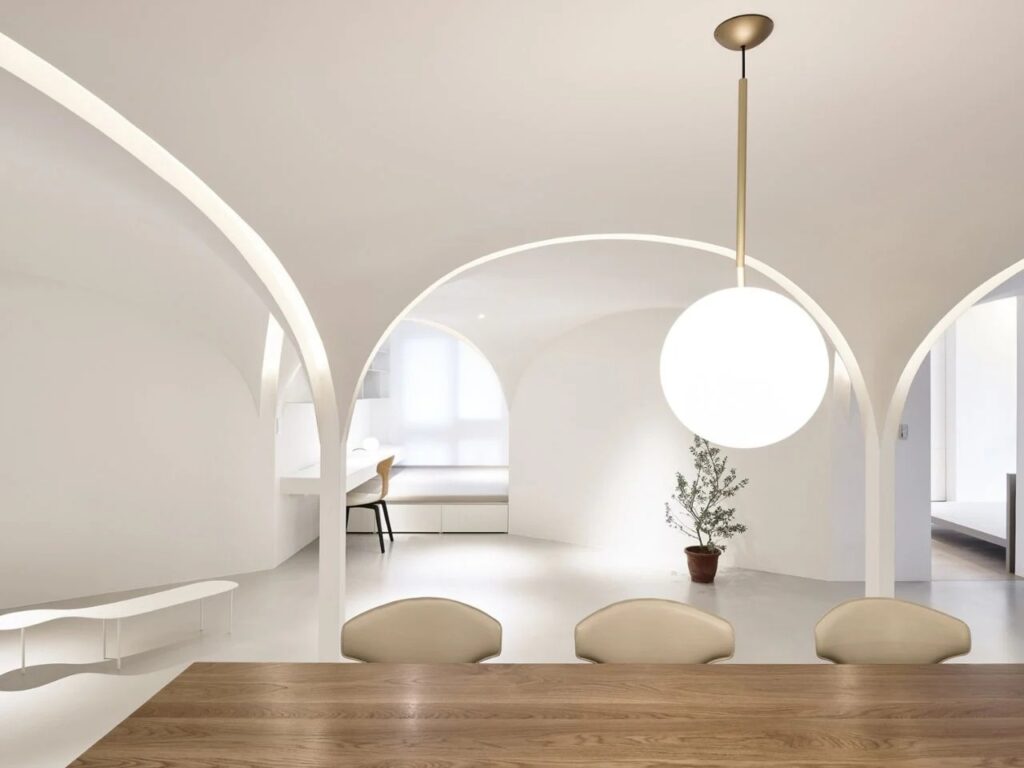
The architects took an innovative step by using sound as a means to differentiate spaces within the apartment. Instead of dividing the open area into smaller segments, each pentagonal zone was designed with a dome-shaped ceiling. These domes subtly modify acoustics: a gentle concentration of sound in one area suggests a gathering space, while a more diffused quality in another indicates circulation or transition. This sensory layering maintains openness while creating distinct functional zones, enhanced by the hidden lighting along the curves of each dome.
Fluidity Between Light and Air
The arches guide sunlight inward, while the curves soften the rigidity of traditional structural edges. Air movement becomes part of the “spatial dance,” adding a sense of comfort and fluidity to circulation within the apartment. Every design element feels deliberate, free from noise or clutter, transforming the apartment from a collection of separate rooms into an integrated and interconnected environment.
The Power of Reimagining Fundamentals
This project demonstrates how thoughtful architectural transformations, with high sensitivity to light, air, and sound, can turn an ordinary apartment into a serene and unexpected retreat. Good design does not always announce itself; sometimes its impact lies in making daily life quieter, clearer, and more attuned to subtle details, reflecting the true power of architecture in enhancing the living experience.
✦ ArchUp Editorial Insight
It can be said that the project presents several specific strengths, such as improved natural light distribution, increased fluidity in movement between spaces, and innovative use of sound to define interior functions. These elements demonstrate a tangible concern for the daily user experience and illustrate how even simple architectural changes can influence the sense of comfort and openness in urban spaces.
However, there remain several points that warrant consideration. First, maintaining open areas and complex curves may not be practical for all types of housing, especially in very narrow apartments or those that rely on rigid structural partitions. Second, the effect of using sound and domes on the daily environment may be limited or imperceptible for all residents, particularly in spaces affected by external noise or high population density. Third, the architectural transformations, despite their theoretical appeal, require more resources for implementation and maintenance compared to traditional design, which may reduce their practical applicability in other residential projects.
From a broader perspective, this project can serve as an example of exploring the potential of light, space, and movement in urban interior design, while recognizing that the results are not universally generalizable and that each design must be adapted to the spatial, economic, and social constraints of its surrounding environment.
Prepared by the ArchUp Editorial Team
Don’t miss the chance to explore more from Architecture in fields like Buildings and Interior Design on the ArchUp website.