Smile Project: Redefining Mobile Living Within Compact Spaces


Limited Space and Redefining Comfort
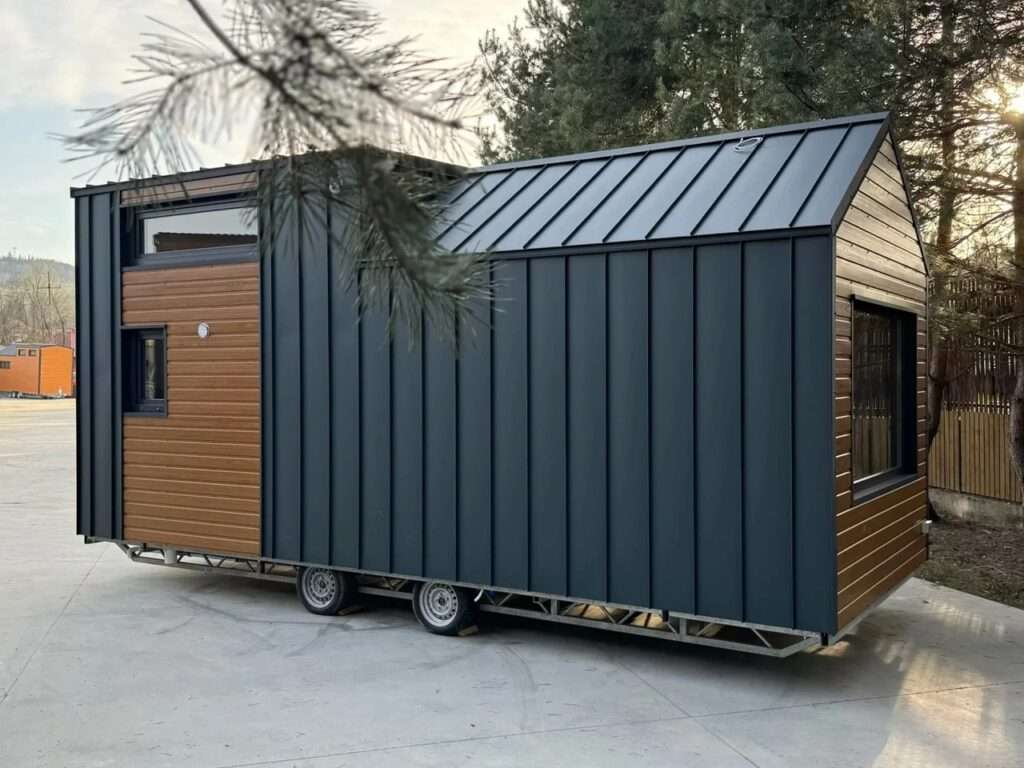
Small homes in the Scandinavian context reflect a trend that prioritizes Design efficiency over reliance on large spatial footprints. The “Smile” model by Vagabond Haven is a clear example of this approach, as it relies on an internal organization aimed at creating a sense of spaciousness within an area not exceeding 25 square meters.
Compact Structure and Mobility
The house measures 7.2 meters in length and 3 meters in width, and is built on a steel frame equipped with wheels that allow it to be transported by trucks. As a result, the model is not tied to a fixed location, but rather offers a semi-mobile Architecture typology that can be relocated and repositioned according to need.
Small Houses as a Flexible Solution
The project falls within the category of relatively large small houses, reflecting a growing shift toward more flexible housing solutions that are less dependent on traditional permanent Construction. In this type of project, mobility becomes a fundamental part of the architectural idea itself, rather than a mere functional addition.
A Sense of Spaciousness Within Small Areas
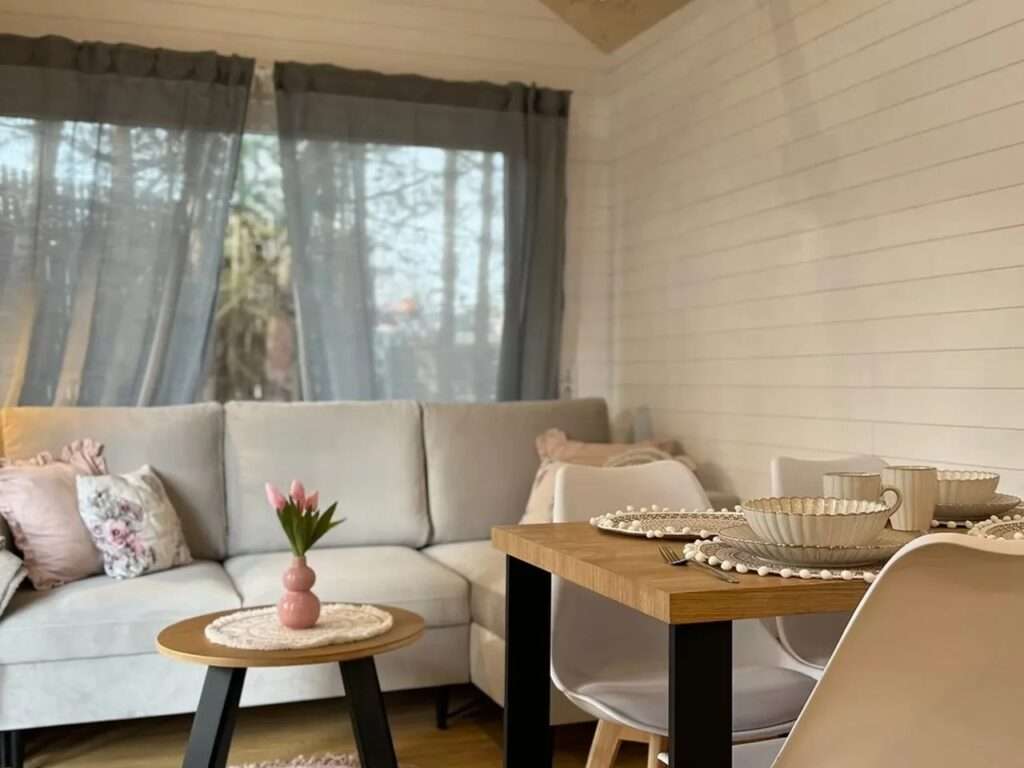
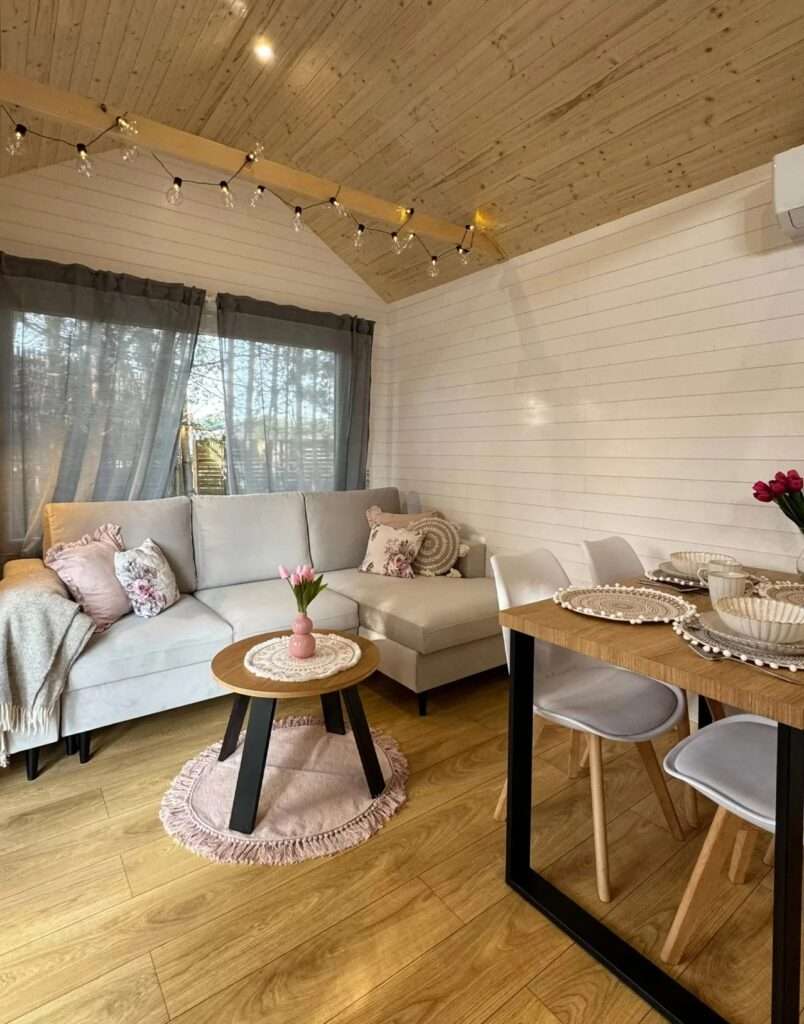
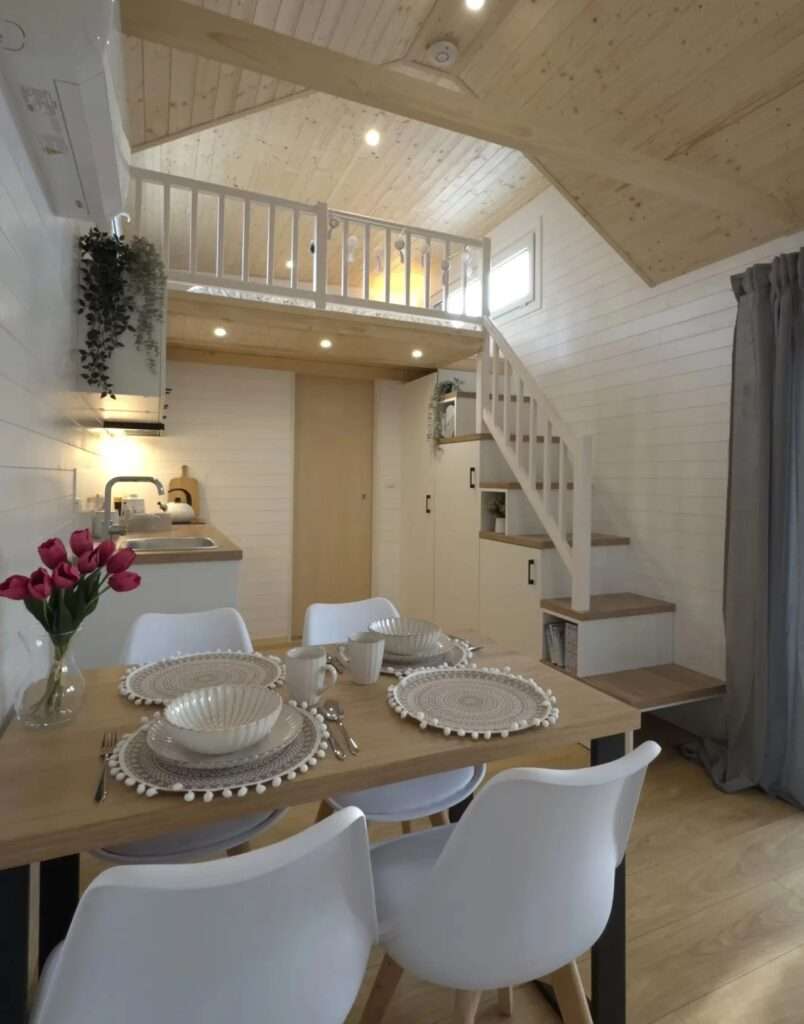
The Interior Design relies on high ceilings and large windows to enhance the feeling of openness within a limited space. The entry of natural light into the living area helps create a more open environment, while the distribution of interior elements reduces any sense of congestion or confinement.
Clear Functional Organization
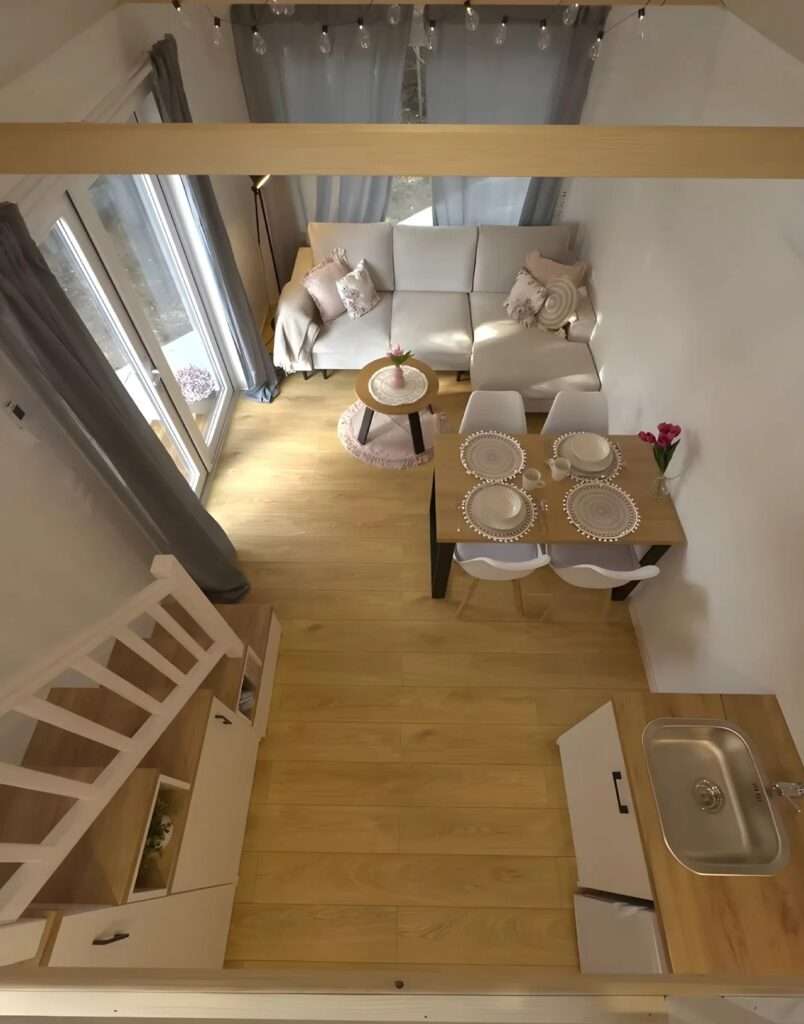
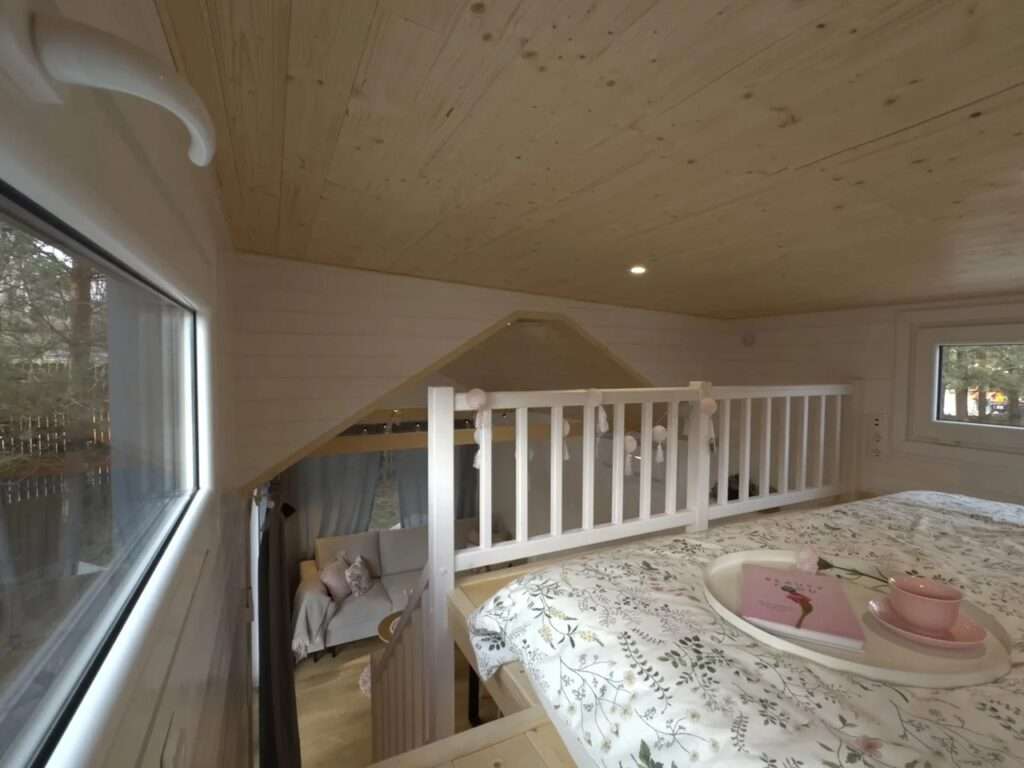
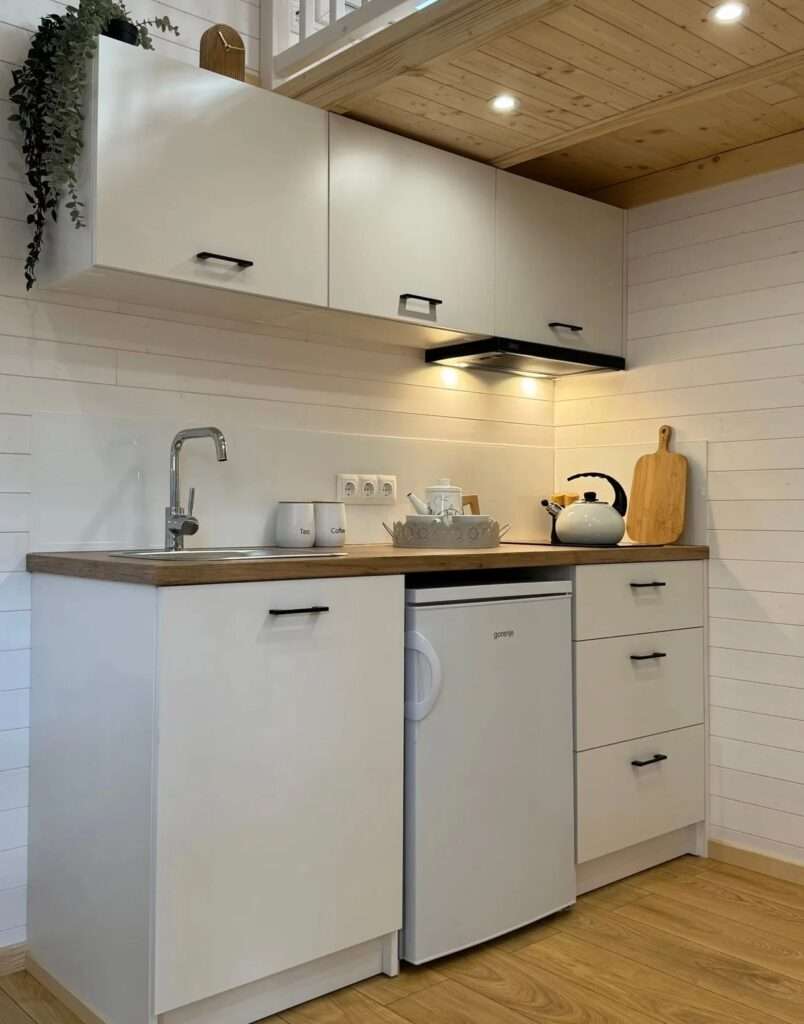
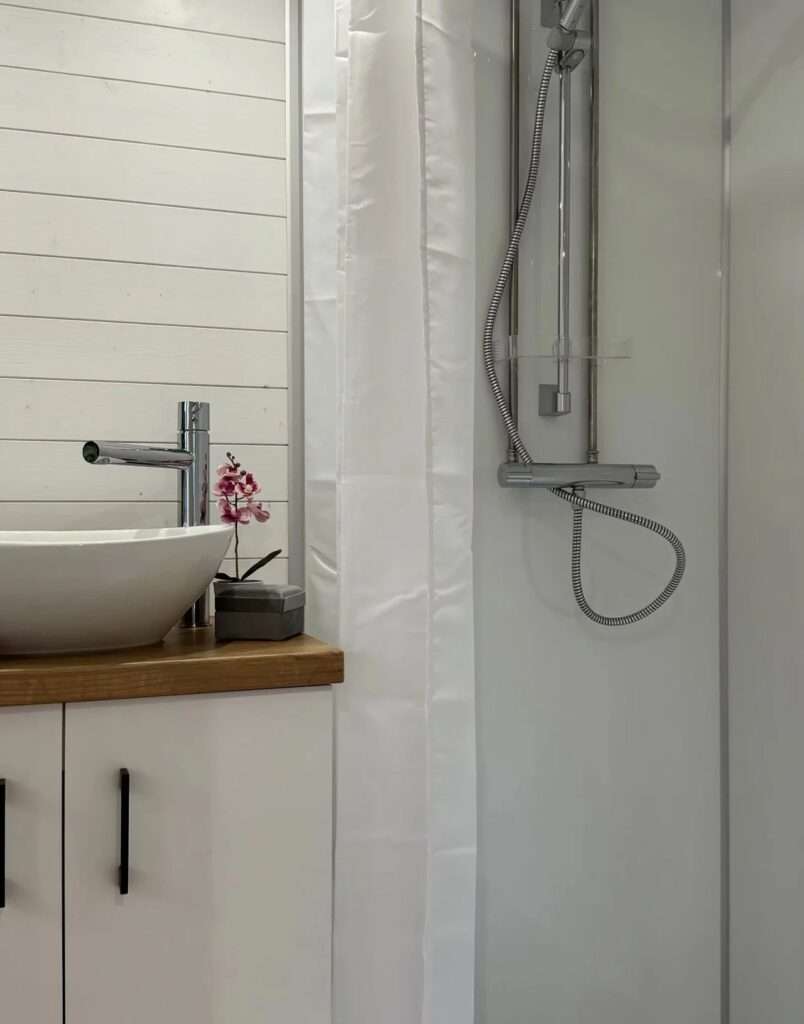
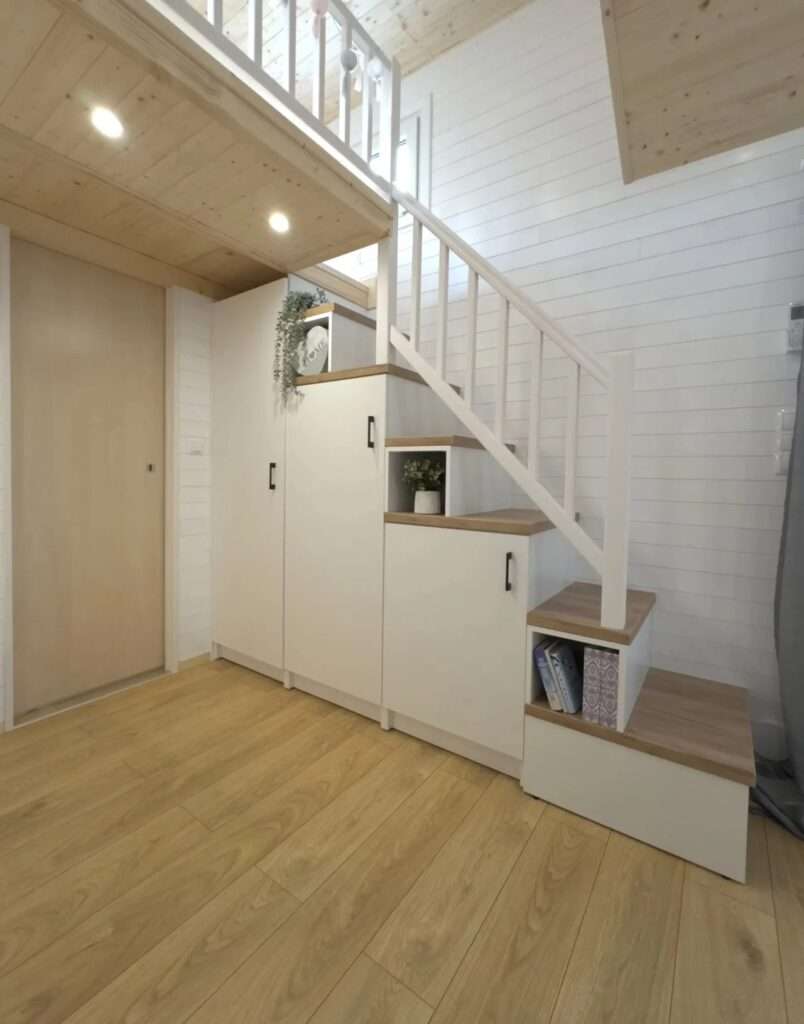
The internal layout includes an integrated living area, a fully equipped kitchen, a relatively spacious bathroom, and a loft sleeping area. This arrangement reflects an approach based on precise utilization of space, where each element has a clear function and defined position without affecting movement flow or visual comfort.
Scandinavian Character and Interior Materials
Scandinavian references are evident in the choice of Building Materials and calm color palettes used throughout the project. The spaces lean toward simplicity and visual warmth rather than dense decorative elements, giving the interior environment a sense of stability and comfort despite the home’s mobile nature.
Technical Structure and Operational Independence
The project relies on a set of systems that support off-grid living, including solar power, rainwater harvesting, a water tank with a pump, and an energy-efficient water heater that operates on electricity or gas. It also includes a ventilation system covering the main spaces, along with a heat recovery unit that helps maintain indoor air quality throughout the year. In this way, operational independence becomes an embedded part of the architectural concept rather than a mere technical addition.
Customization and User Experience
The “Smile” model by Vagabond Haven is offered as a ready-built home with the possibility of adjusting materials, colors, and finishes according to user needs. The company also provides a 3D virtual tour to explore the interior spaces before purchase, reflecting the integration of digital tools as part of the Projects evaluation and understanding experience.
Redefining the Concept of Housing
This type of housing reflects an approach that reduces spatial footprint in favor of increased flexibility and efficiency of use. As a result, the model may not align with expectations associated with traditional large-scale homes, but it offers an alternative vision of living based on mobility, thoughtful organization, and reduced dependence on fixed infrastructure.
✦ ArchUp Editorial Insight
Small dwellings in the Scandinavian context operate as an organizational response to rising land costs and shifting ownership patterns toward movable units, where spatial production is reconfigured around transportable modules instead of fixed plots. The “Smile” model by Vagabond Haven emerges as the result of a logistical system based on standardized steel framing, wheel-based transport constraints, and the integration of autonomous operational systems including solar energy, water collection, and thermal regulation. The regulatory flexibility of semi-mobile housing enables reduced dependence on conventional infrastructure, while the compression of functions within 25 square meters reflects a vertical redistribution of usage rather than horizontal expansion. The result is a spatial solution in which the dwelling unit becomes a transportable asset, shaped more by financial logic and structural mobility than by purely architectural composition. For more innovative concepts, you can explore the Archive and stay updated with the latest Architectural News.