The Lost Shtetl Museum: Architecture of Memory


Historical Context and Museum Concept
The concept of the “The Lost Shtetl” Museum is rooted in the village of Šeduva, which was destroyed and whose culture suddenly disappeared in August 1941. 664 Jews from its residents were executed in nearby forests, and with the loss of lives, the city’s long history also vanished. Therefore, the museum emerged as an attempt to commemorate the lost lives and culture, encompassing both the Jewish and European dimensions. This approach reflects broader themes in Architecture as a means of preserving collective memory.
Overall Architectural Composition
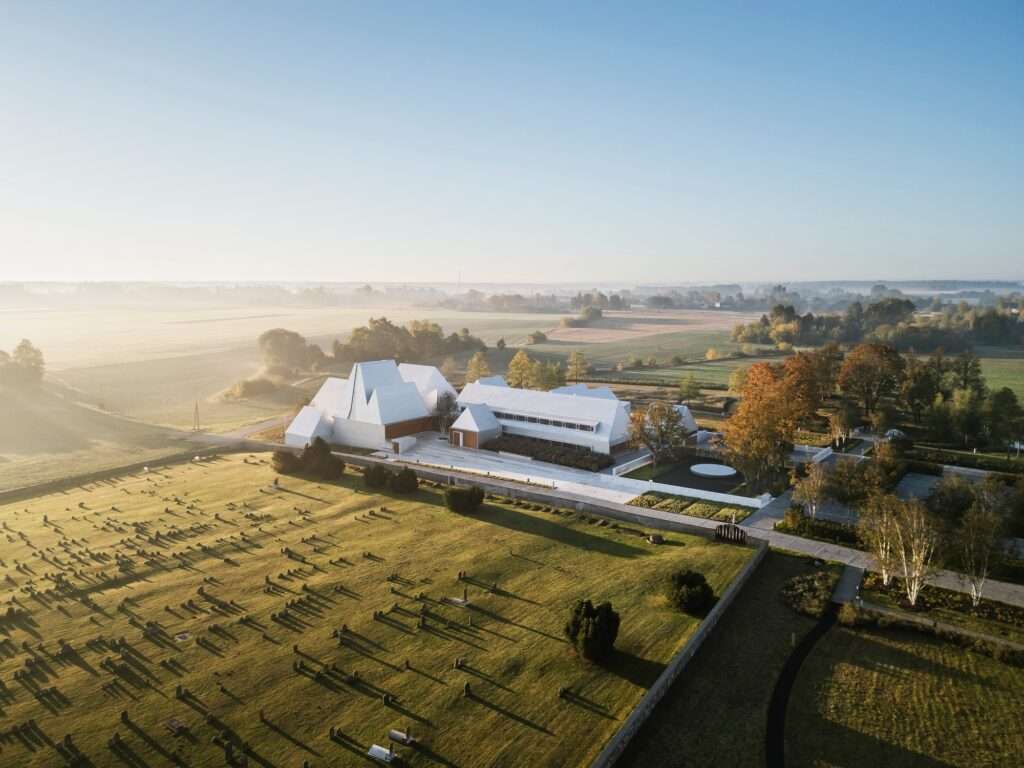
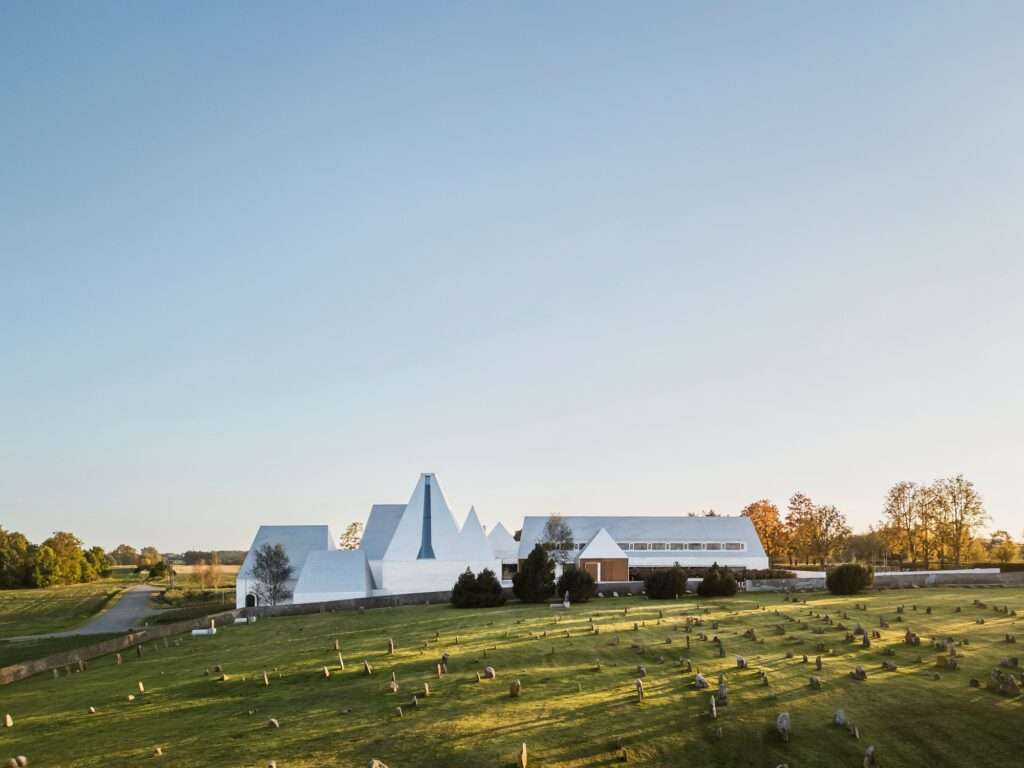
The design is based on a group of simple, abstract “houses” with pitched roofs. When assembled, they form a single composition resembling a village or “shtetl” in a dreamlike representation. This configuration does not focus on the building as an isolated mass, but rather on the relationship between Buildings within a unified scene.
Spatial Organization and Light Within the Exhibitions
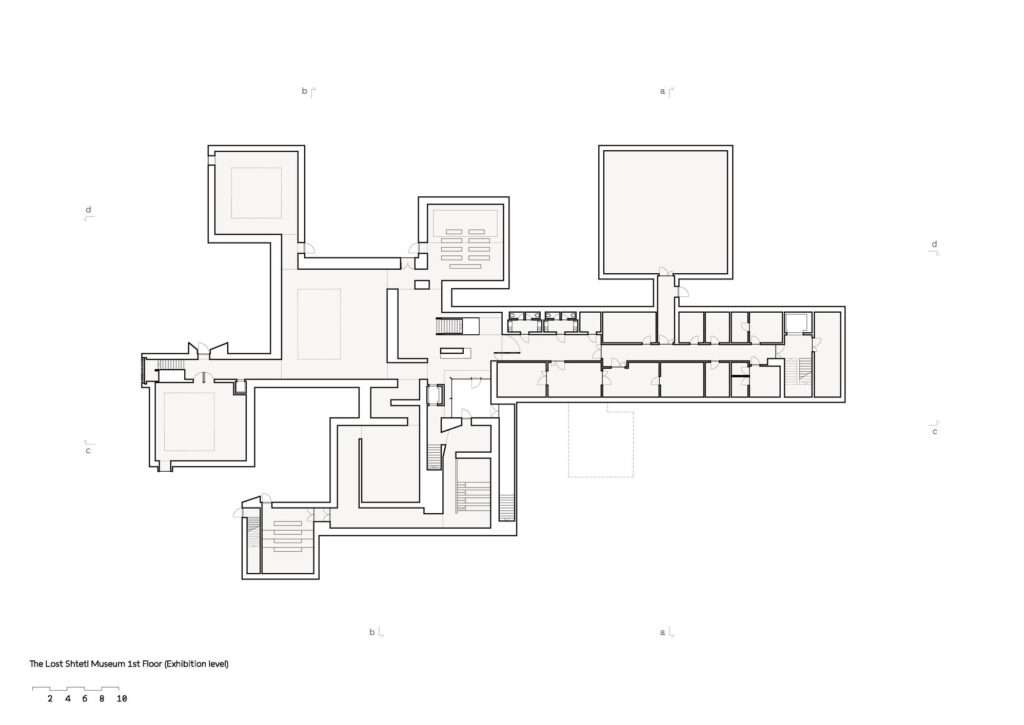
The functional concept of the exhibitions is directly linked to the roof design, where the upper part of the space reflects the shape of the outer shell. Skylights allow controlled natural light to enter, creating a balance between a sense of openness in the upper volume and the density of display in the lower part, which is organized in a clear, layered exhibition system. This integration of light and form is a key aspect of contemporary Design in museum projects.
| Category | Details |
|---|---|
| Architects | Lahdelma & Mahlamäki Architects |
| Area | 4900 m² |
| Year | 2025 |
| Photographs | Kuvatoimisto Kuvio, Aiste Rakauskaite, Andrew Lee, The Lost Shtetl Museum |
| Manufacturers | Parmet |
| Lead Architects | Rainer Mahlamäki |
| Landscape Design | Enea Landscape Architecture |
| Construction | Enea Landscape Architecture |
| Category | Museum |
| Project Architect | Ilkka Syrjäkari |
| Executive Architect | Studija 2A |
| Exhibition Design | Ralph Appelbaum Associates |
| Maintenance | Enea Landscape Architecture |
| City | Šeduva |
| Country | Lithuania |
Visual Orientation and the Building’s Relationship with Its Surroundings
The ground floor galleries follow the same design approach, but add carefully framed views of the surrounding natural landscape. The same principle is applied to the staff facilities on the first floor, which overlook the historical cemetery. These spaces are organized with a long-term usability strategy, allowing exhibitions to be updated and repurposed over extended periods of time. Such strategies are often discussed in Research on adaptive reuse.
Materials, Texture, and the Façade’s Interaction with Light
The museum façades are made of marine-grade aluminum, a material known for its durability, recyclability, and long lifespan. The aluminum panels are arranged in a pattern resembling wooden shingles, forming a shell-like surface. This surface interacts with natural light, reflecting it differently according to daily and seasonal changes. Detailed specifications can be found in Material Datasheets for similar applications.
Sensory Perception of the Façade Surface
When approaching the building, the panel surface appears as a fine texture of compressed points. The perception of this surface shifts visually; it appears smooth from some angles, while its texture and details become more apparent from others, enhancing the multiplicity of visual readings of the façade. This sensory experience is part of broader explorations in Interior Design and exterior aesthetics.

Visual Gradients and Connection to the Landscape
The surface of the materials appears in varying tones depending on light and environmental conditions; it may look white at times, or silvery gray, muted, or more luminous. This visual variability integrates the material with the sky and surrounding landscape. It also indirectly references decaying rural buildings in the Lithuanian countryside, where surfaces interact with time and environment. Such interactions are often documented in the Archive of rural architectural studies.
Roof Form Composition and the Generation of Organized Irregularity
The orientation of the roof peaks and the variation in their slopes create a visually irregular composition, yet one based on deliberate order. This results in an overall sculptural character of the building, relying on contrasts between volumes and angles rather than traditional symmetry, enhancing the sense of movement within the architectural composition. This approach has been highlighted in recent Top News on innovative museum designs.
Structural Materials and Technical Organization
In addition to marine aluminum and wood, quartzite stone appears in warm tones in both interior and exterior spaces. The building’s structural system was executed on site using cast-in-place concrete, responding to regulatory and legislative requirements for public construction. The integration of technical equipment and security systems required careful treatment to conceal operational elements within architectural voids, ensuring the clarity of interior spaces. Understanding Building Materials is crucial for such technical execution.


The Memorial Park and the Concept of the “Last Journey”
The surroundings of the museum form a memorial park designed by Enea Landscape Architecture, guided by the concept of the “last journey.” The design reconstructs a sequence of natural scenes that the Jews of Šeduva might have encountered on their way to the nearby forests, where the executions took place. This park is a significant feature among many Projects focused on landscape and memory.
Sequence of Natural Scenes Within the Site
The park is composed of a series of successive natural elements, including a birch tree avenue, flowering meadows, wetlands, and an orchard. This sequence is not presented as a static landscape, but as a visual and spatial path reflecting transitions between different natural environments within a single experiential journey. The design of such paths relates to the planning of Cities and public spaces on a smaller scale.
Structural Elements and International Collaboration
The park also includes small larch wood shelters, whose surfaces gradually weather over time to acquire a gray patina. The project was executed through extensive international collaboration between designers, contractors, and the client, involving teams from several countries, making the design and construction process multi-layered in terms of expertise and disciplines. Insights from such collaborations are often shared at Events and architectural conferences.

✦ ArchUp Editorial Insight
The Lost Shtetl Museum operates as a memorial structure emerging from a post-conflict heritage governance system, where policies of collective memory and European funding requirements are translated into a regulated spatial program aimed at stabilizing the narrative of the genocide of the Jews of Šeduva. The project is driven by institutional constraints related to long-term heritage management, safety standards, and operational sustainability, imposing an organizational logic that defines the architectural envelope through marine-grade aluminum and controlled openings for risk mitigation and lifecycle efficiency. The resulting architectural form becomes a spatial settlement of the “last journey,” in which historical violence is reconfigured into controlled circulation paths and orchestrated environmental sequences. Within this framework, architecture does not appear as an act of authorship, but as an administrative condensation of memory policies, where narrative and natural space are subjected to institutional compliance and the management of meaning through spatial organization. For more on the structural execution, see Construction techniques in heritage contexts.