
IPO of Company Behind World’s Largest Stadium Sets Record in Morocco

The initial public offering (IPO) of Société Générale des Travaux du Maroc (SGTM) has set a record on the Casablanca Stock Exchange, attracting more than 171,000 subscribers, marking one of the most significant listings in Morocco’s capital market history.
Second-Largest IPO by Value
Morocco’s largest construction company sold 20% of its shares, raising approximately MAD 5.04 billion (around USD 545 million), making it the second-largest IPO by value in the country after Maroc Telecom’s listing in 2004.
Strong Oversubscription and Global Interest
Exchange data showed the offering was 34 times oversubscribed, with demand exceeding MAD 171 billion (USD 18.6 billion). Investors from 94 nationalities participated, led by interest from the UK, UAE, United States, and France.
Strong First-Day Performance
A total of 12 million shares were sold at MAD 420 per share, valuing the company at approximately MAD 25.2 billion on its first trading day. The stock closed its debut session up the daily limit of 10% at MAD 462, with retail investors accounting for 55% of the allocated shares.
Growth and Expansion Strategy
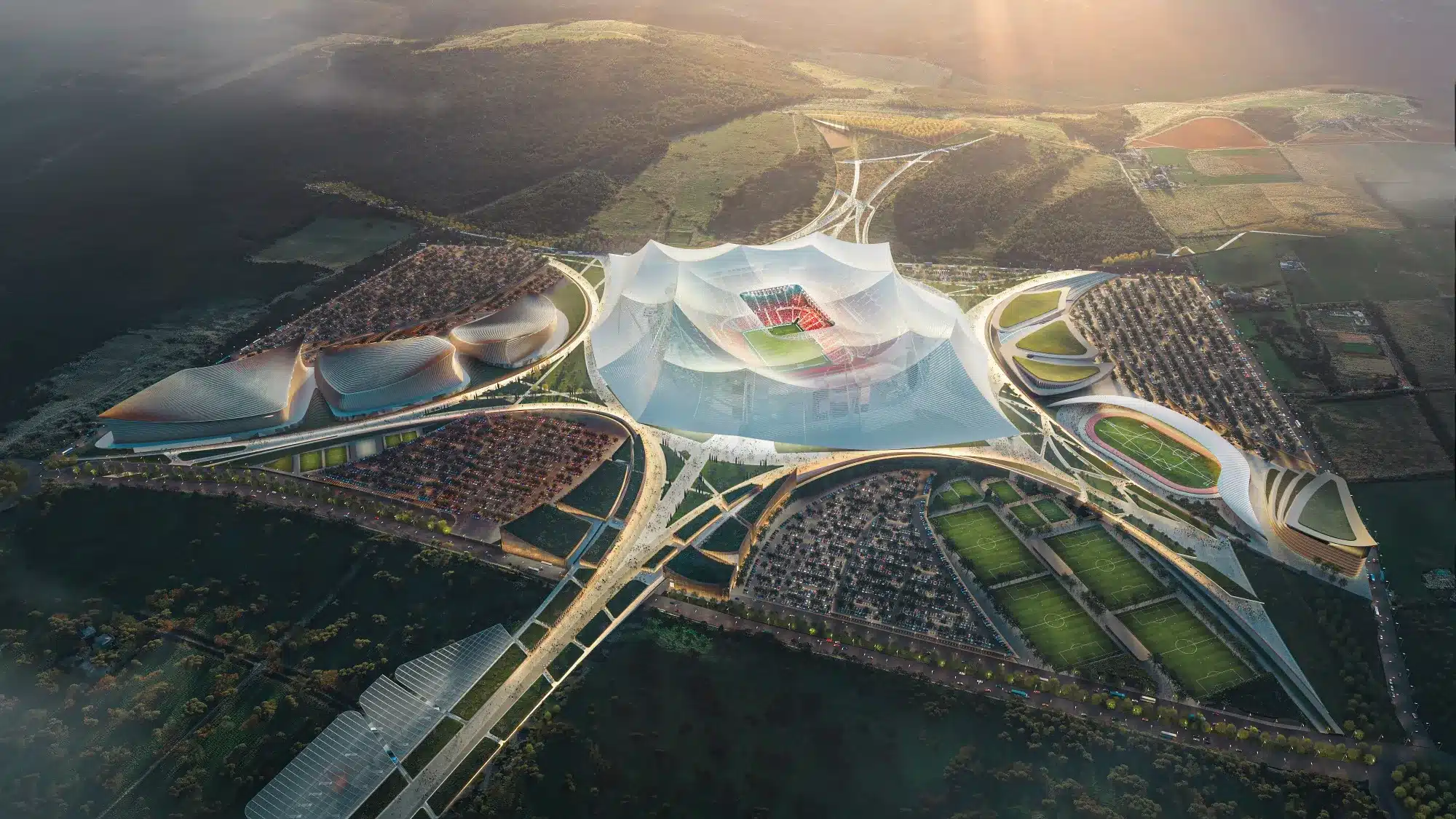
Deputy CEO Hamza Kabbaj said the listing supports SGTM’s strategy to sustain growth in domestic infrastructure projects while expanding internationally. The company is currently involved in major developments, including the construction of a 115,000-seat stadium ahead of the 2030 FIFA World Cup.

Momentum in Morocco’s Equity Market
SGTM’s IPO is the third listing in 2025, following Vicenne and Cash Plus, making the year one of the most active for IPOs in recent times. The benchmark index of the Casablanca Stock Exchange has gained around 25% year-to-date, reflecting sustained market momentum.
✦ ArchUp Editorial Insight
SGTM’s landmark IPO positions Morocco’s construction sector within a broader Contemporary infrastructure-driven development model, where capital markets increasingly shape the production of the built environment. As the country’s largest contractor, SGTM embodies a practice rooted in large-scale civil works, stadiums, and logistics-heavy urban expansion, reflecting a material expression defined more by engineering capacity than formal experimentation. However, the scale of oversubscription and global investor appetite invites critical reflection on how financial momentum translates into contextual relevance on the ground. Infrastructure-led growth can reinforce national ambition, yet it also raises questions about urban fabric integration, social return, and long-term functional resilience beyond headline megaprojects. The reliance on flagship developments, such as World Cup stadiums, risks prioritizing episodic visibility over everyday urban needs. Ultimately, SGTM’s listing signals an architectural ambition where future value will depend on aligning financial scale with durable, inclusive, and context-sensitive urban outcomes.


