Singapore Moves All New Building Projects to CORENET X Submissions

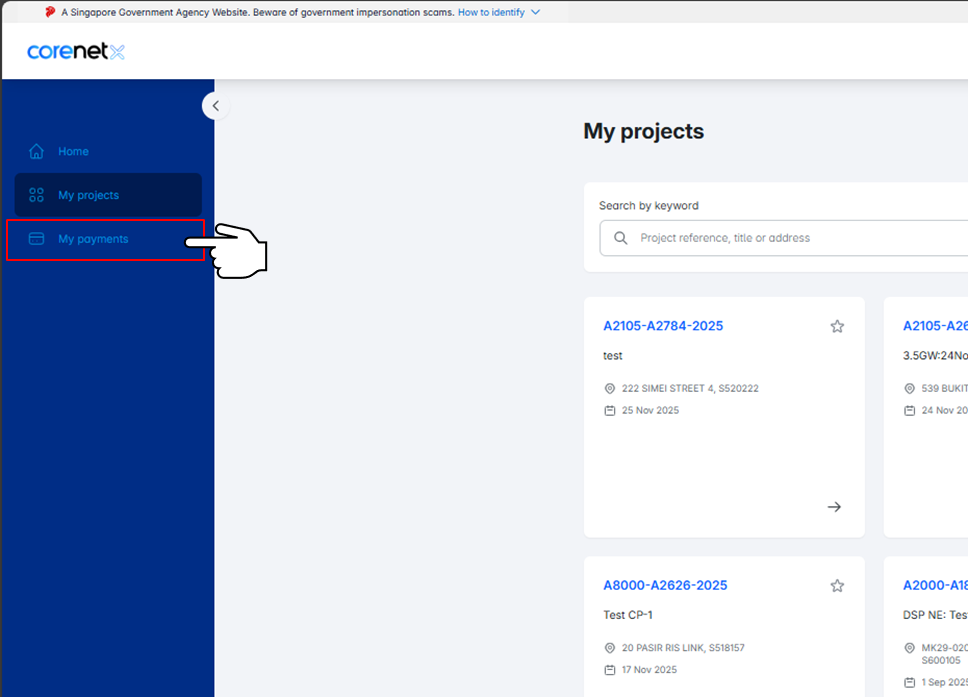
Singapore has moved the regulatory submission process for new building projects into CORENET X, extending the mandatory digital workflow from 1 October 2026. The change applies to projects that have not yet begun their planning-permission or development-control applications, regardless of project size.
The platform reorganises approvals around three main gateways: design, construction and completion, with an optional piling gateway for teams seeking to begin piling earlier. It brings submissions involving seven public agencies into a coordinated process instead of treating each regulatory exchange as a separate track.
The size threshold still matters to the technical format. New erections and major additions or alterations that create at least 5,000 square metres of new gross floor area require BIM submission in the local IFC+SG format. Smaller projects may use 2D documents or lightweight BIM and can qualify for the Direct Submission Process, which sends eligible work directly to the construction gateway.
This distinction is important: mandatory use of CORENET X does not mean that every house, bus stop or small pavilion must be modelled to the same depth as a large development. The regulatory route is universal, while the modelling burden is scaled to project type and size.
For architects and engineers, the practical shift is likely to occur before a formal submission. Data structure, model coordination and responsibility across disciplines need to be resolved early enough for a multi-agency digital review. In this sense, the change is not simply a new upload portal; it places regulatory coordination closer to the design workflow.
Existing projects are not moved into the system immediately. The published implementation plan schedules mandatory onboarding for ongoing projects from 1 October 2027, while approvals and permits already issued under the earlier process remain valid.
The new rule creates a useful test for digital regulation at national scale. Its performance will depend not only on portal speed, but on whether common data requirements reduce repeated instructions without pushing disproportionate modelling work onto smaller practices.