SOMA Tiny House Redefines Family Spatial Design

The Tiny House Movement and Family Needs
The tiny house movement presents an ongoing challenge regarding how to meet the needs of families within limited spaces. In this context, the SOMA model appears as a case study addressing this issue by rethinking the distribution of spatial units within mobile housing units, with a focus on function rather than the marketing or entertainment framing of the concept. This approach aligns with broader discussions in Architecture that prioritize spatial efficiency.
Standard Dimensions and Their Impact on Interior Experience
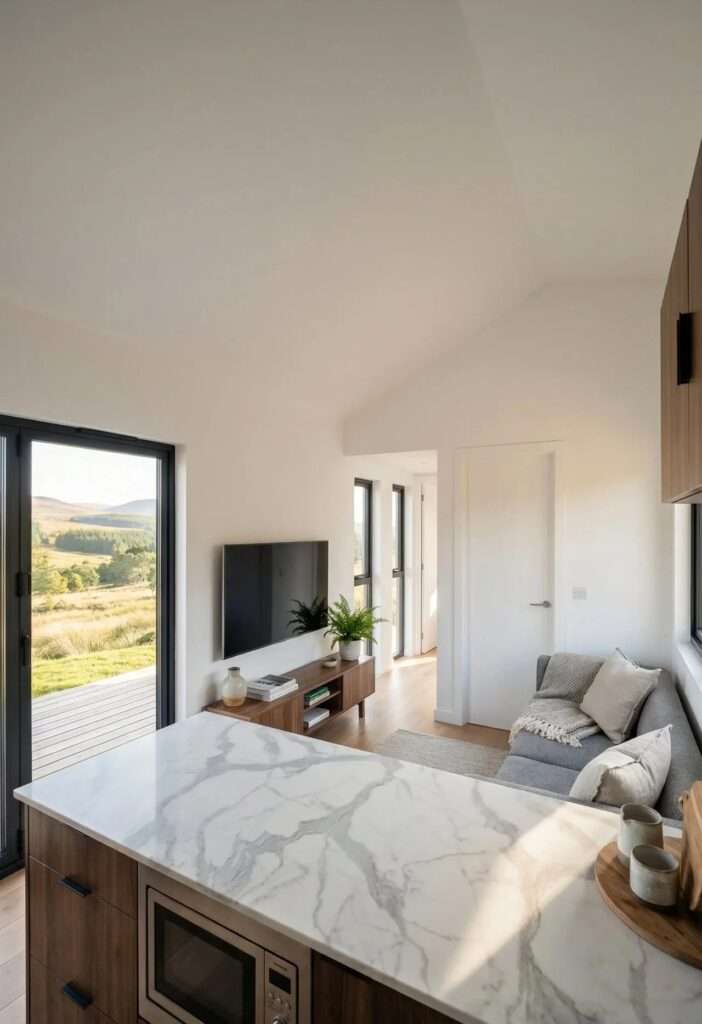
The SOMA model is based on approximate dimensions of 10m × 3.4m × 4.5m, with an internal area reaching 52 square meters. It is notable that increasing the width to 3.4 meters compared to traditional tiny houses directly affects the user’s perception of space. As a result, the Interior Design experience becomes closer to that of residential apartments rather than a narrow mobile unit.
Internal Spatial Organization and Movement
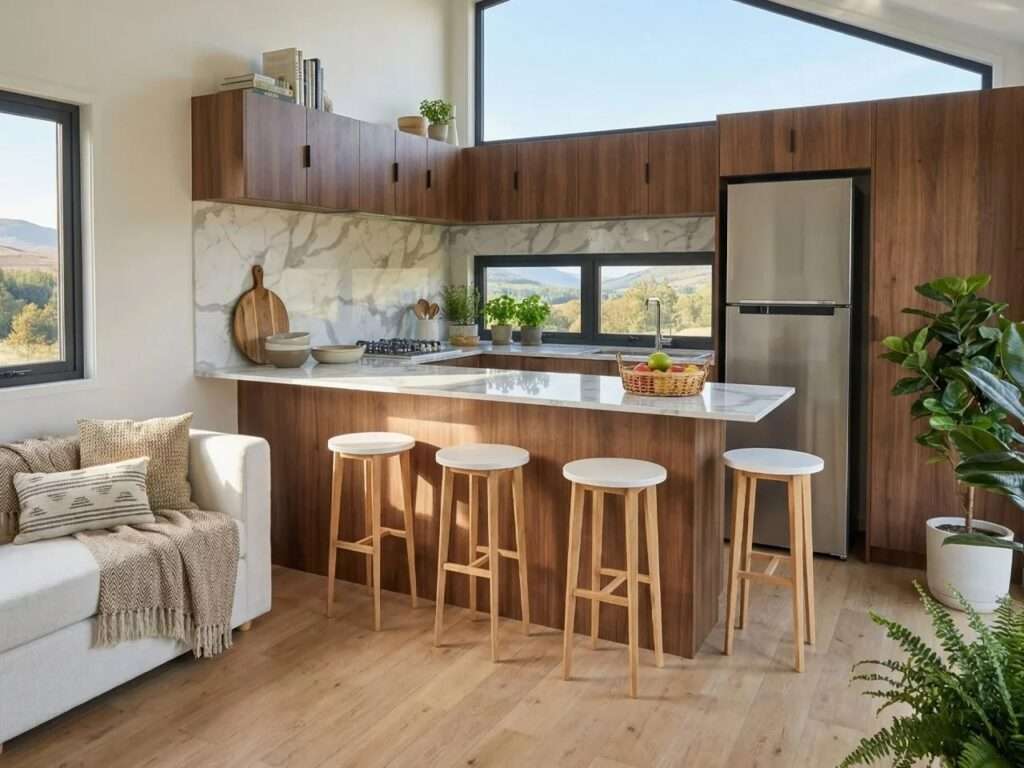
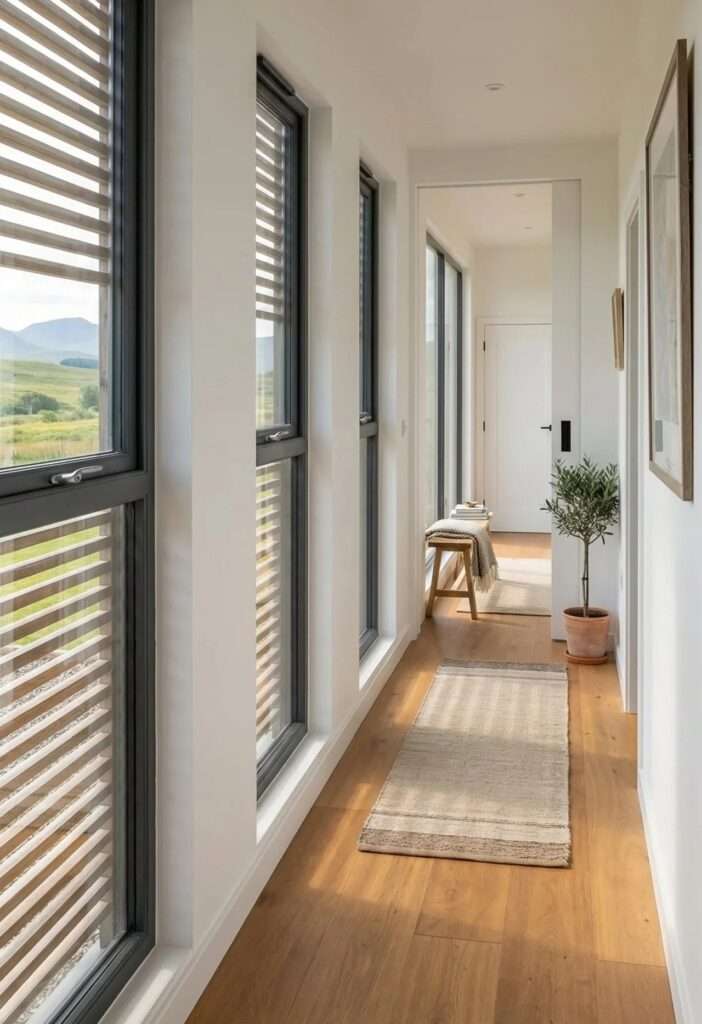
The internal layout is centered around an open living and kitchen area that forms the core of the house. Additionally, this arrangement reduces reliance on narrow corridors, allowing smoother movement between seating and cooking zones. Consequently, daily interaction is supported within a single connected space rather than rigid spatial divisions. This layout reflects key principles found in many innovative Projects.
Spatial Organization and Bedroom Distribution
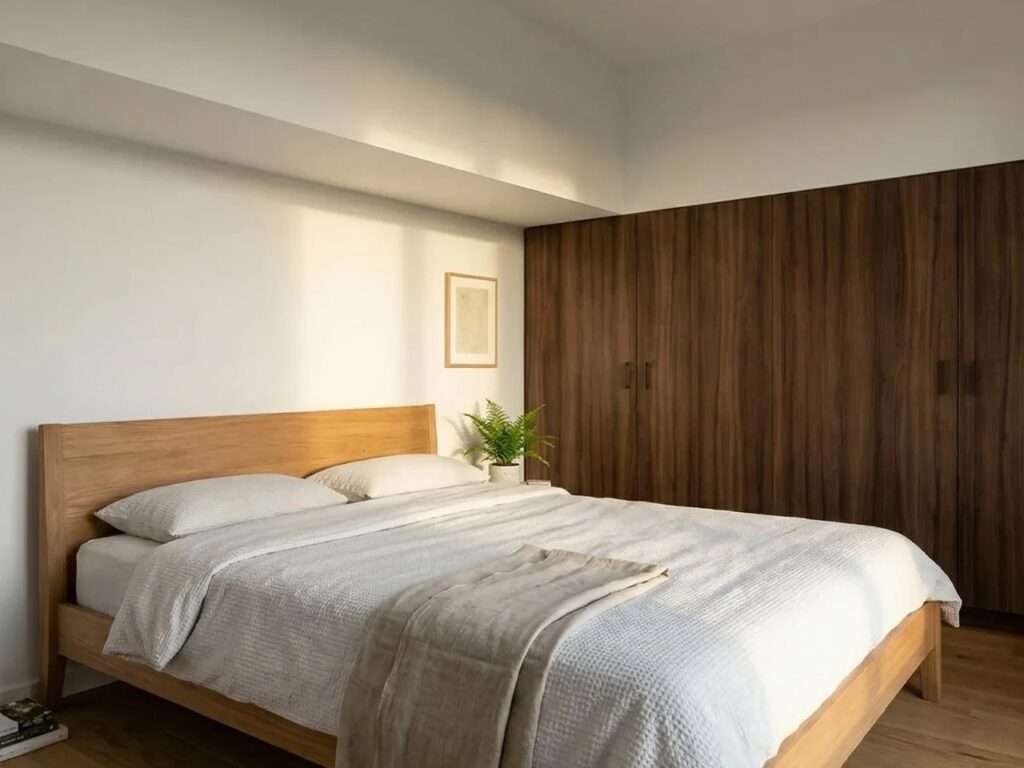
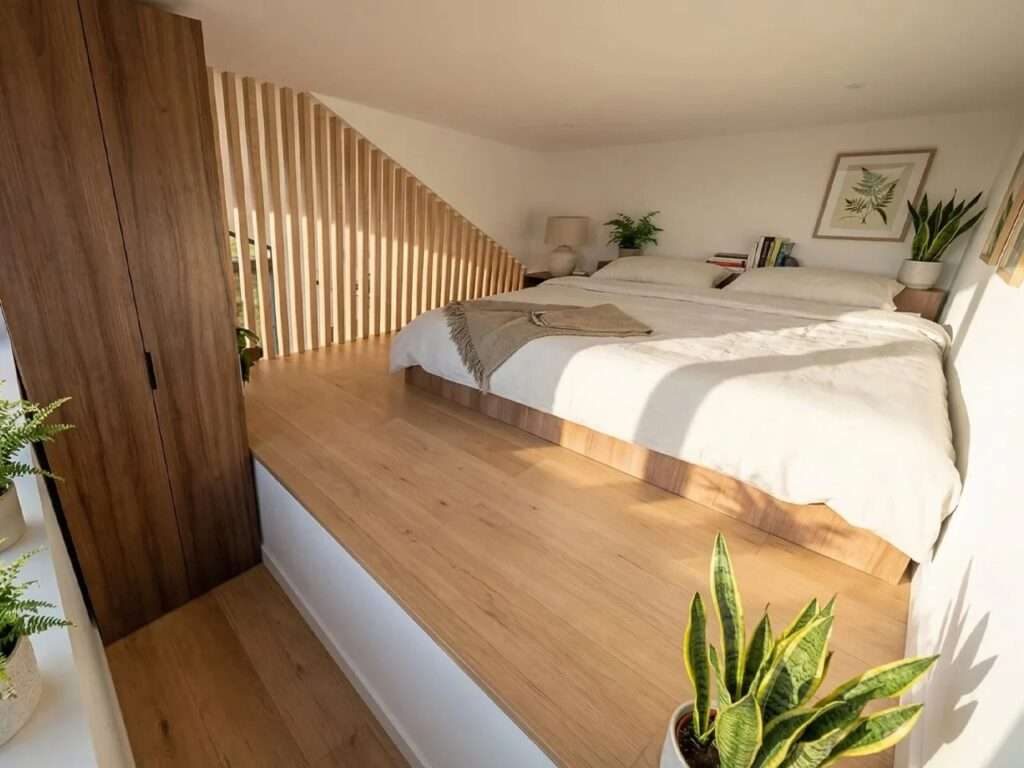
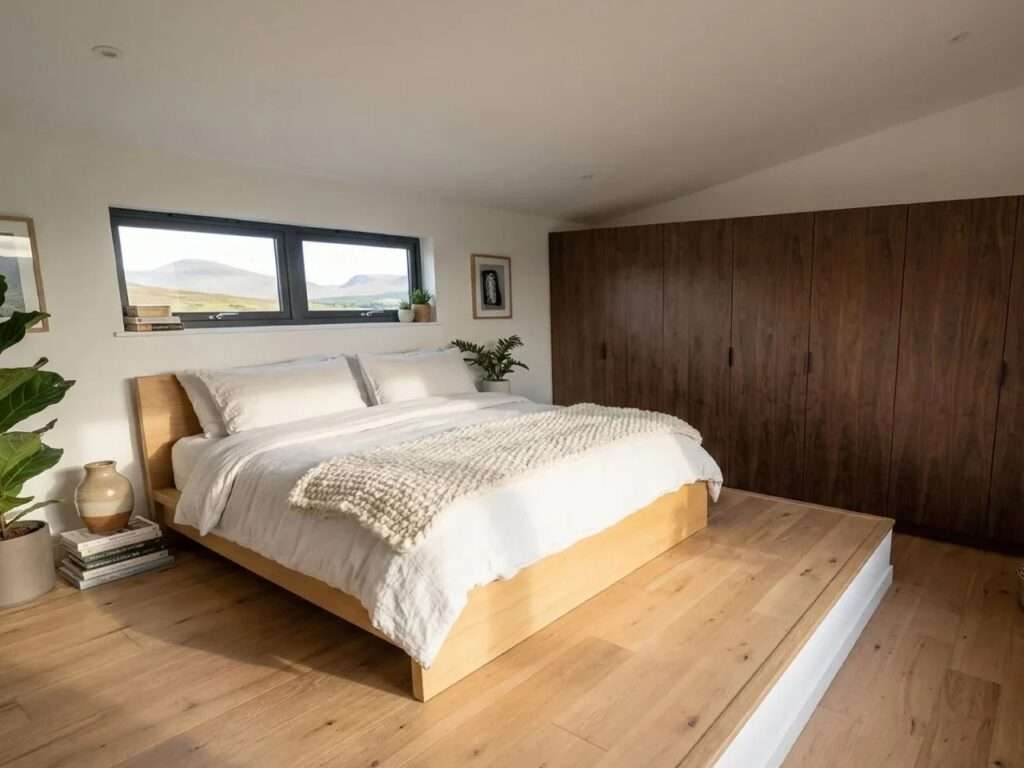
The SOMA model relies on a three-bedroom configuration as a fundamental element of its internal planning. One bedroom is located on the ground floor, while the other two are distributed across an upper mezzanine level. This arrangement enables a relative functional separation between adult and children’s uses within a single unit, without the need for an additional building or independent extension. Such compact strategies are increasingly relevant in dense Cities.
Interior Finishes and Vertical Organization
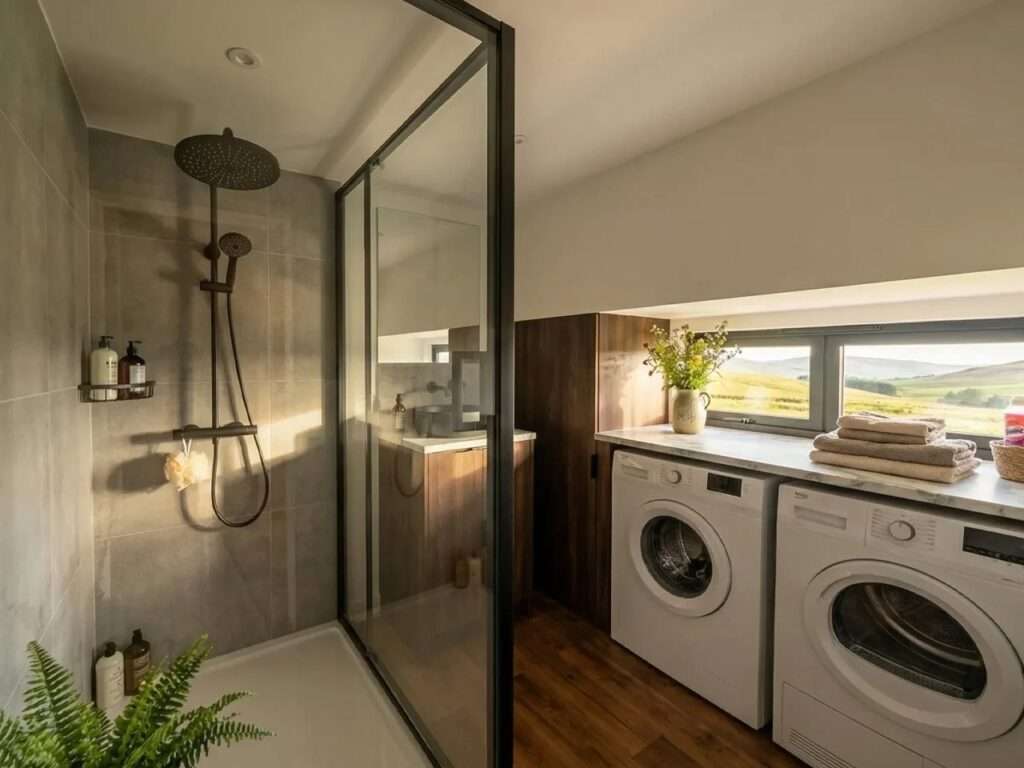
The bathroom is fully finished with tiling, reflecting a direct functional treatment of wet areas. Some units also include optional upgrade packages that add features such as skylights and stone kitchen countertops, enhancing the quality of interior finishes. In addition, the use of mezzanine levels contributes to an enhanced sense of height and layered spatial perception within the limited area. These choices often rely on specific Building Materials for durability and aesthetics.
Architectural Envelope and Interior–Exterior Relationship
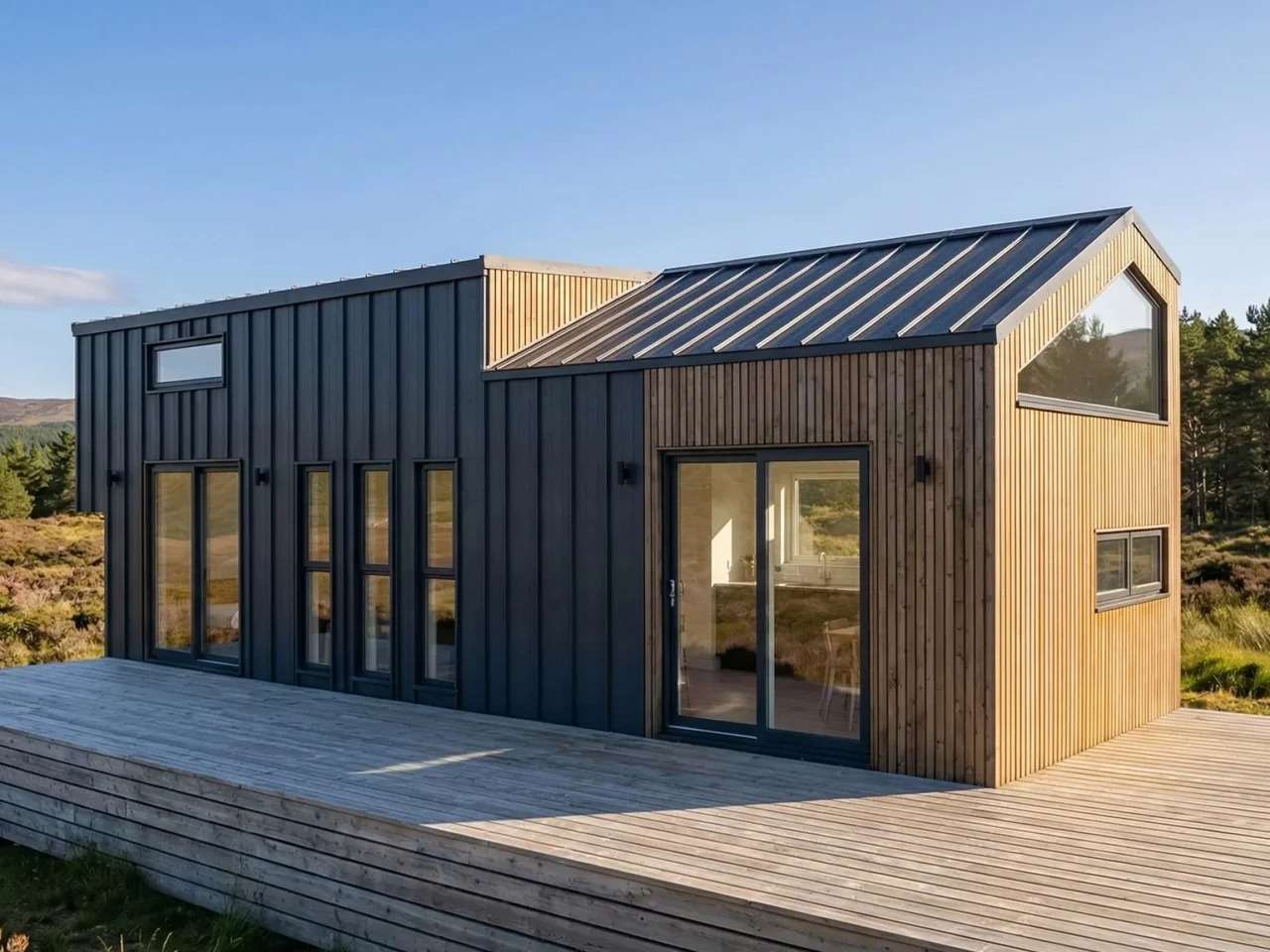
Externally, the model relies on a dual-material façade combining metal panels with wood or composite cladding, along with a split roof form and large sliding glass doors. This enables a direct visual connection between interior and exterior spaces, especially when the unit is placed on an expanded wooden deck that increases usable outdoor area. Economically, this type of unit falls within a mid-range price category compared to conventional housing, particularly when factoring in limited land availability and the costs of fixed Construction.
✦ ArchUp Editorial Insight
The SOMA tiny house model emerges as a spatial solution shaped by intersecting pressures between the housing affordability crisis, rising urban land values, and restricted access to mortgage financing. This transforms housing into a compressed economic unit rather than a purely design-driven decision. The primary driver here is the reduction of household cost under regulatory conditions that permit mobile living within strict dimensional frameworks defined by transport requirements, load limits, and safety and insurance standards. These constraints enforce vertical stacking of bedrooms and the integration of daily functions into a single living space, where internal circulation is reduced to a minimum. For further reading on similar structural challenges, see Buildings that navigate limited footprints. The result is not an architectural expression but a regulatory compromise between mobility and the minimum requirements of habitation, producing a standardized housing model that is replicable within a market that reproduces housing precarity as a technical solution. Ongoing Research continues to examine these trade-offs. Updates and discussions on such topics can be found in Architectural News and the broader Archive of case studies.