The Architecture of Influence: How Infrastructure and Urban Spaces are Weaponized in Cognitive Warfare


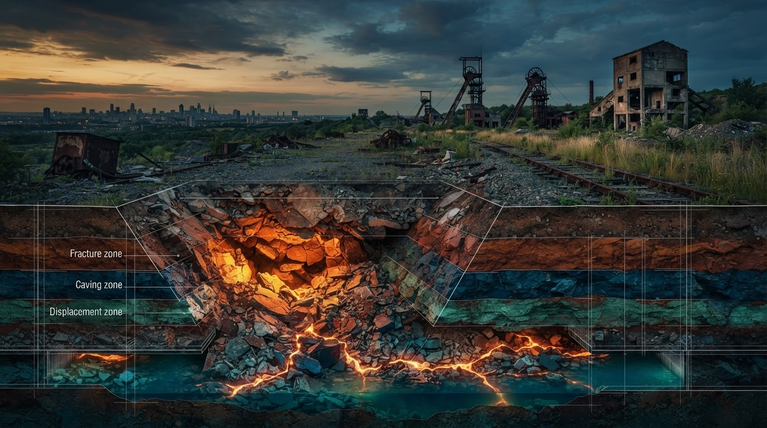
Modern conflicts increasingly rely on “cognitive and subversive” warfare rather than physical destruction, with urban infrastructure and spatial memory becoming key battlegrounds. Mega-projects, demographic manipulation, and architectural symbols are used to dismantle cultural identities and reshape national belonging without military force.
Urban planners and architects are identified as critical actors in this context, as zoning, heritage preservation, and public space design function as defenses against social engineering. The piece argues that spatial memory erasure is an active weapon, reframing the architect’s role as a guardian of civic and cultural resilience.
ArchUp Desk —
Modern conflicts are increasingly moving away from the kinetic destruction of cities, shifting instead toward “cognitive and subversive” warfare aimed at dismantling social fabrics and re-engineering national identities. Recent research in mass engineering and behavioral psychology indicates that urban planning, civic infrastructure, and spatial memory have emerged as primary battlegrounds. Today, the control and manipulation of the built environment can effectively subdue entire communities without a single shot being fired.
Cultural Erasure Through Infrastructure Projects One of the most critical intersections of urban planning and conflict is the use of mega-infrastructure as a tool for “spatial and cultural erasure.” Rather than physically targeting populations, their way of life is dismantled through strategic urban interventions. Studies highlight systematic practices such as submerging sacred and heritage sites under large-scale dam projects, or destroying the mobility infrastructure of nomadic communities (as observed with the Inuit populations). These “engineering” interventions sever the inhabitants’ connection to their land and erase their spatial memory, effectively neutralizing their cultural identity under the guise of “national development.”
The Militarization of Civic Space In the context of cognitive warfare, civic spaces are no longer merely areas for public gathering; they are targets for the “militarization of inner space.” The openness provided by democratic infrastructure and cognitive institutions—such as universities, cultural centers, and public squares—is often exploited to widen social divides. The contemporary challenge for urban design lies in creating public realms that resist polarization and foster social cohesion, counteracting subversive strategies that aim to undermine institutional trust from within the urban fabric.
Territorial Embodiment and the Engineering of Landmarks On a macro level, architecture plays a pivotal role in constructing national psychology through a process known as “territorial embodiment.” Architectural monuments, border demarcations, and the physical shape of maps are utilized as “sacred icons” to anchor a sense of belonging. Research demonstrates that spatial identity is not an organic byproduct, but a meticulously engineered psycho-political construct. Sovereign buildings and spatial symbols are leveraged to link abstract concepts—such as the nation or homeland—to tangible, physical entities that can be directed or reprogrammed over time.

Spatial Control as an Alternative to Military Invasion The concept of “subversive conquest” has emerged as a strategy allowing for the control of sovereign territories without military force. In urban terms, this translates to the infiltration of real estate sectors, the intentional alteration of neighborhood demographics, and the acquisition of vital infrastructure arteries. This “soft” expansion within the urban grid gradually rewrites the allegiances of a city, suggesting that the defense of national sovereignty now begins with land-use regulations and urban governance.
For the architectural and planning community, these findings serve as a critical warning: there is no innocent urban planning. The preservation of architectural heritage, the enforcement of zoning laws, and the design of public spaces are not merely aesthetic or functional exercises; they are the first line of defense for national security and social cohesion. Recognizing “spatial memory erasure” as an active weapon redefines the role of the urban planner. Today’s architect is not just a designer of forms, but the guardian of a city’s “spatial immunity” against hidden social engineering.
✦ ArchUp Editorial Insight
The article’s central claim — that urban infrastructure has been weaponized as a substitute for military force — is not new, but what makes it analytically significant in 2026 is the institutional legitimization of this observation: it is no longer a critique leveled at specific states by external observers, but a framework increasingly absorbed into the governance vocabulary of urban planners, heritage bodies, and security agencies themselves, which raises a structural question the piece does not fully pursue. When the architect is repositioned as a guardian of spatial immunity, the profession simultaneously acquires a security function that historically belongs to the state, and that reframing carries consequences: zoning decisions become securitized, heritage preservation acquires geopolitical valence, and the design of public space is evaluated through threat-assessment logic rather than civic need. The pattern observed in The Geography of Stigma — where buildings absorb and transmit collective trauma long after the triggering event — extends here to the urban scale, where entire neighborhoods become contested memory-carriers whose spatial reorganization is legible not merely as development policy but as a claim about whose history the city is authorized to hold, and whose it is permitted to erase without military declaration or formal act of war.
Credits
Editorial Angle: ArchUp Global News Desk
Source Material: Synthesized from academic research (2010–2023) on cognitive warfare, cultural genocide, and subversive conquest (including studies by Wall 2010, Honig & Yahel 2017, Kingston 2015, and Miller 2023).