LANZA Atelier Completes Undulating Brick Pavilion for Serpentine

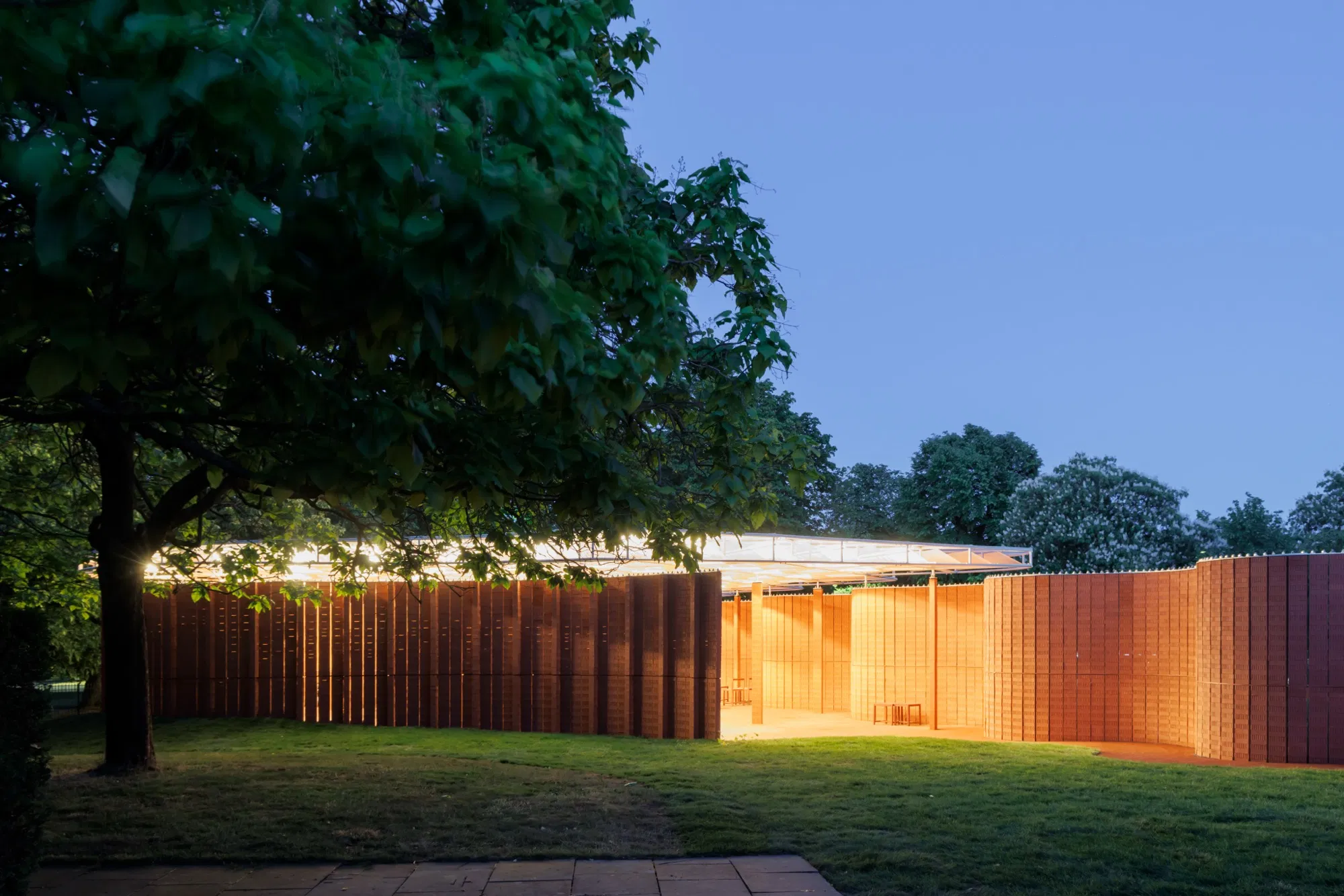
Mexico City-based studio LANZA atelier completed the 2026 Serpentine Pavilion in London’s Kensington Gardens ahead of its scheduled opening on June 6. The design utilizes traditional masonry techniques to create a semi-permeable structure that engages with the surrounding parkland and the adjacent Serpentine South Gallery.
The studio, led by Isabel Abascal and Alessandro Arienzo, draws technical inspiration from the “crinkle-crankle” or serpentine wall. This historical construction method uses alternating curves to provide structural stability. This geometric logic allows the architecture to remain self-supporting while requiring fewer bricks than a standard straight wall.
The project references both ancient Egyptian precedents and the undulating fruit walls found in East Anglia. By adopting this winding form, the pavilion echoes the shape of the nearby Serpentine Lake. The designers view these structures as climate-tempering elements that provide shelter and foster collective growth within a public setting.
Structural Logic and Material Continuity
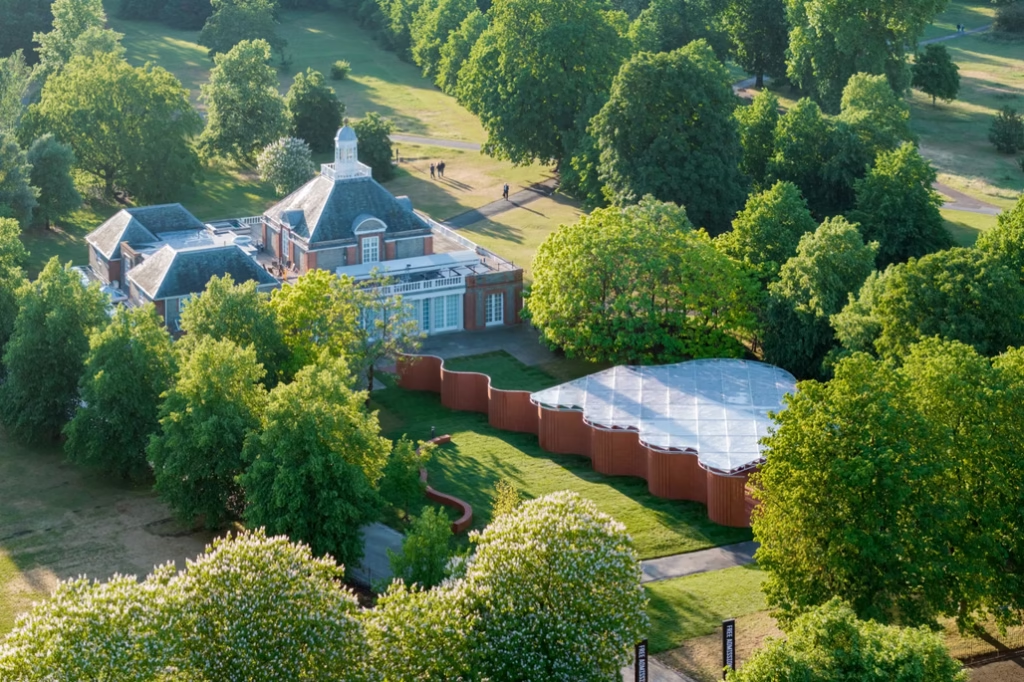
The scheme comprises two primary walls that respond to different site conditions. One wall follows a curved trajectory across the landscape, while the second aligns with the existing tree canopy. Brick serves as the primary building material, establishing a visual link to the adjacent gallery’s historic facade.
A translucent roof covers the interior, resting upon a series of repeating brick columns. This overhead system creates a semi-open environment that blurs the transition between the park and the sheltered interior. The arrangement of the columns allows the wall to shift between opaque surfaces and permeable openings, maintaining visual porosity throughout the visitor sequence.

“Inspired by the figure of the serpent as a generative and protective force, we draw a parallel with England’s winding fruit walls, which are structures that temper climate, create shelter, and enable growth.”
Integrated Furniture and Interior Sequence

LANZA atelier extended the design logic to a bespoke collection of furniture specifically for the pavilion. Fabricators produced the chairs and stools locally using sapele hardwood. These elements demonstrate the studio’s interest in the intersection of furniture and large-scale architectural volumes.
The interior reorganization prioritizes movement and social interaction. By using simple clay bricks and vernacular craft, the design team creates a space that remains responsive to the public. The gentle geometry guides visitors through the site, emphasizing the elemental capacity of the building to serve as a civic threshold.

✦ ArchUp Editorial Insight
The 2026 Serpentine Pavilion demonstrates how traditional masonry techniques can solve contemporary spatial challenges within a sensitive landscape. By utilizing the crinkle-crankle wall geometry, LANZA atelier achieves structural stability and material efficiency without relying on complex reinforcement systems. This approach emphasizes the performance of the brick itself as both a load-bearing element and a thermal regulator. The project successfully bridges the gap between the historic masonry of the Serpentine South Gallery and the organic forms of Kensington Gardens. Spatially, the varying permeability of the walls manages the visitor flow, transforming a temporary pavilion into a sophisticated study of threshold and enclosure.
Project Team: LANZA atelier (Isabel Abascal and Alessandro Arienzo). Location: Kensington Gardens, London, United Kingdom.
Project Notes: The project reached completion in June 2026. Consultants used sapele hardwood for furniture and clay brick for the primary structure.