Minas Gerais House Redefining Architecture and Nature

Relationship to the Site and Openness to the Natural Landscape
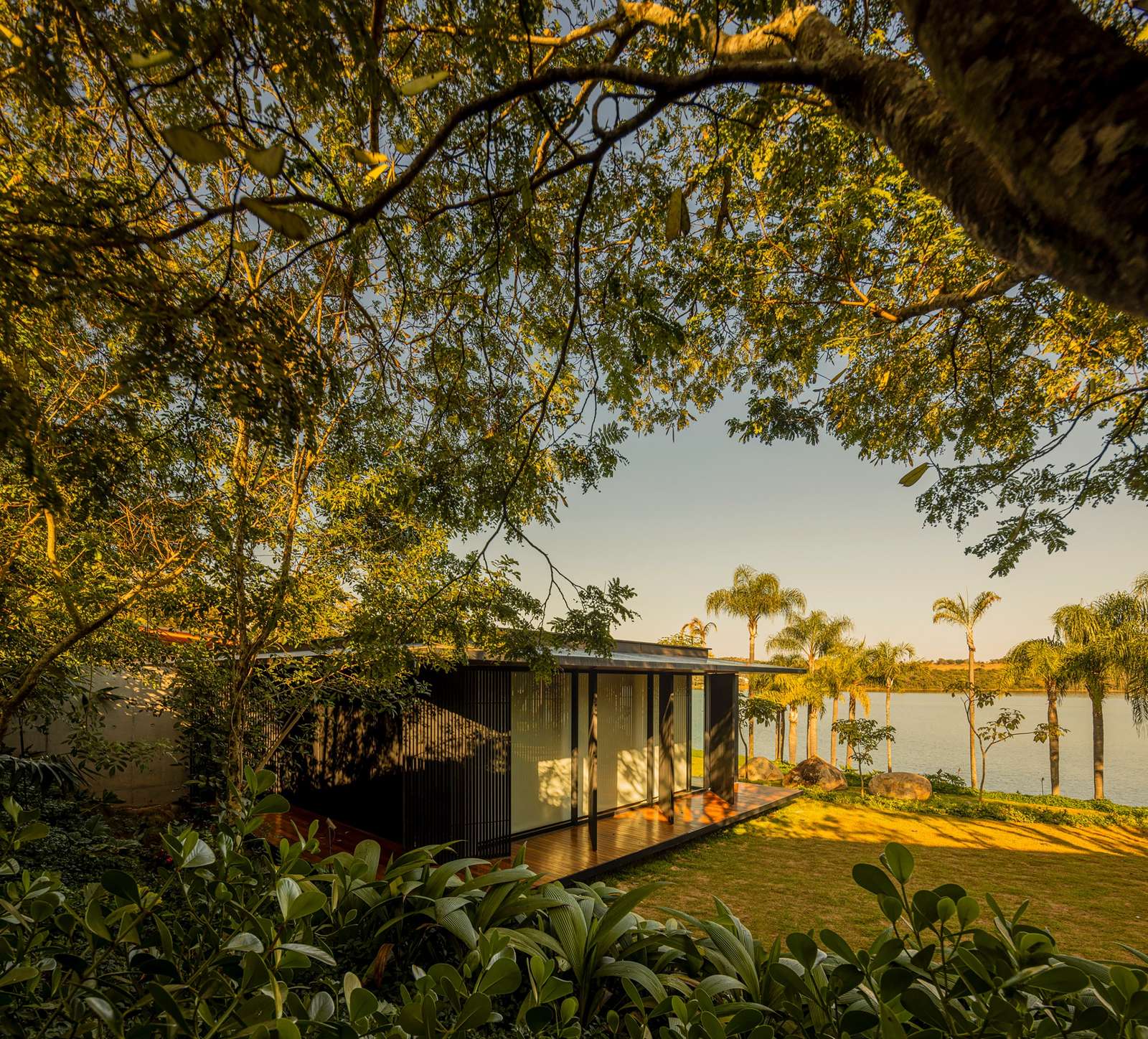
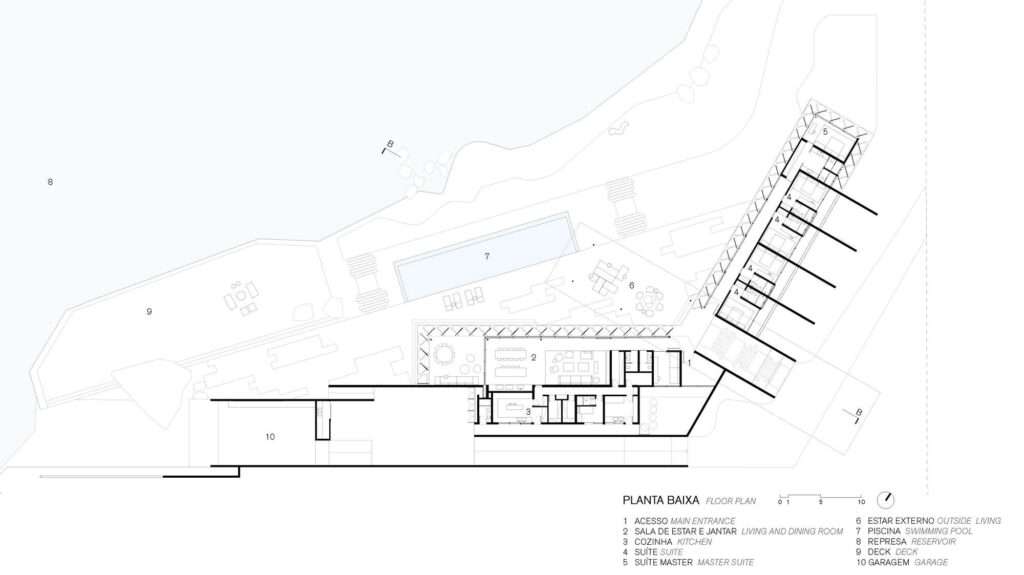
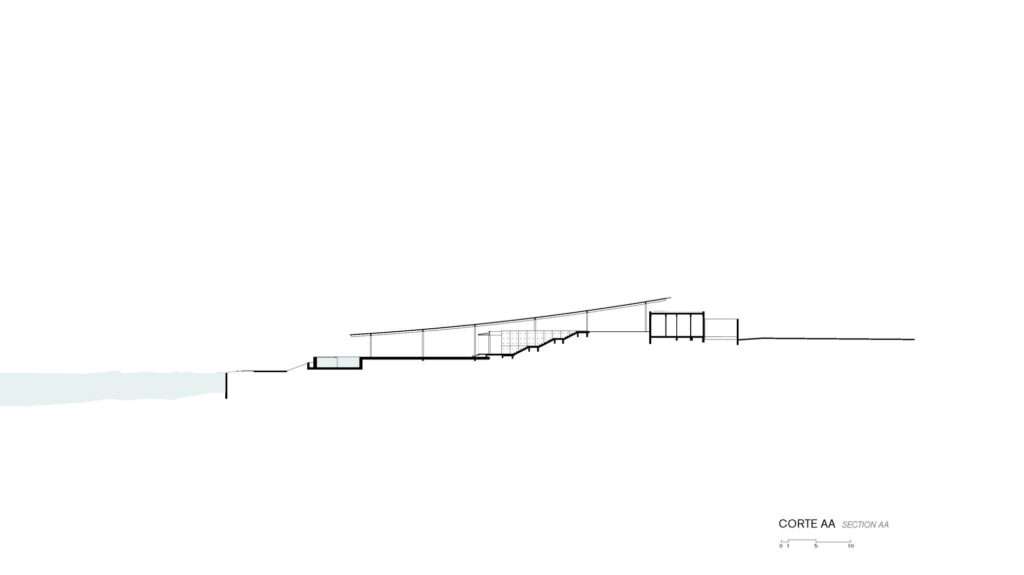
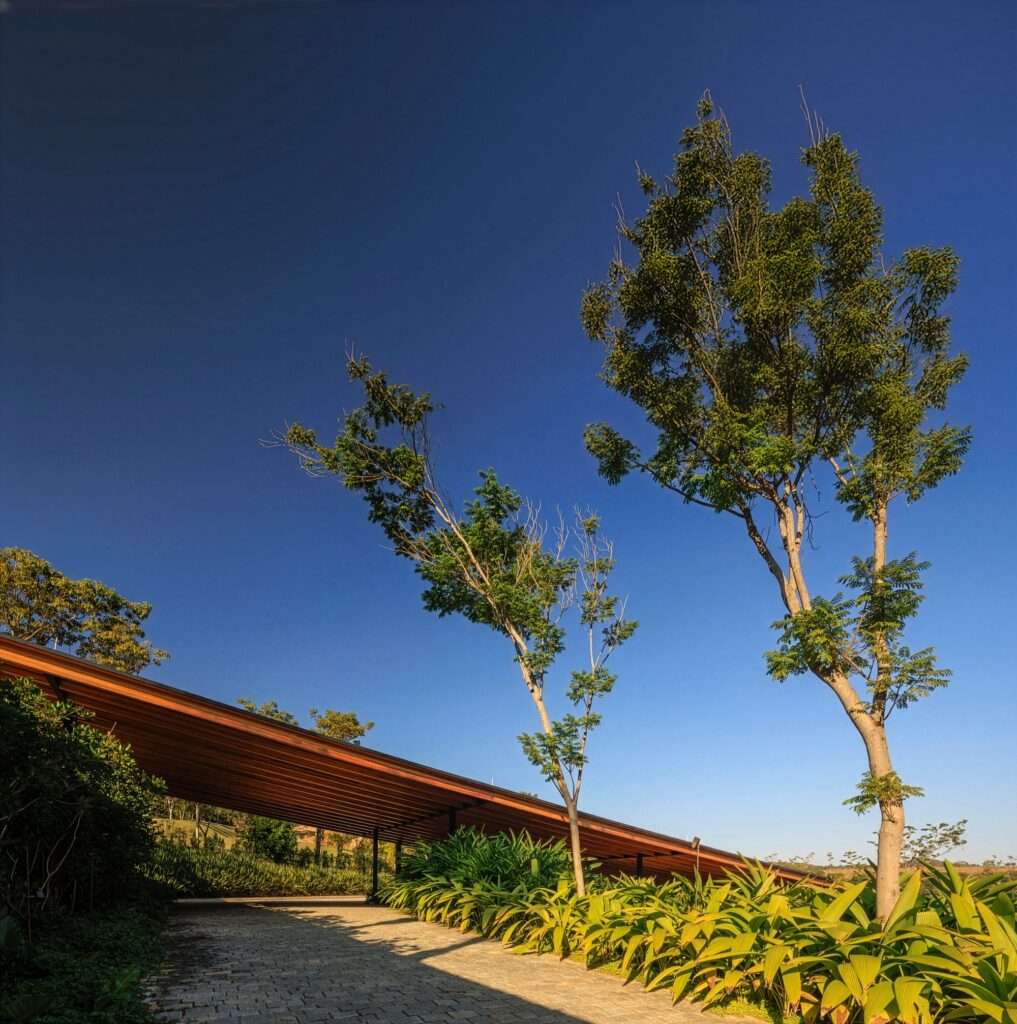
The house is located on the edge of a reservoir in the state of Minas Gerais, and its overall composition is based on the idea of full openness to the surrounding nature. The Architecture gently follows the site’s topography, creating a visual blend between the building and the natural landscape formed by water, sky, and vegetation. From the moment of arrival, the extended wooden roof guides the entrance movement inward toward the reservoir, clearly framing the horizon line.
Circulation Organization and Functional Distribution
The internal layout is based on a central circulation axis that distributes spaces in a balanced lateral arrangement. On the left side are the social areas, while the right side is dedicated to private suites. This division provides functional clarity in the distribution of uses, while maintaining visual and spatial continuity between the different parts of the house. This approach is evident in many Projects that prioritize user experience and spatial flow.
| Field | Details |
|---|---|
| Architects | Bernardes Arquitetura |
| Area | 1030 m² |
| Year | 2024 |
| Photographs | Fernando Guerra | FG+SG |
| Lead Architects | Thiago Bernardes, Marcia Santoro, Camila Tariki |
| Category | Residential Architecture, Houses |
| Coordination | Giovanna Queiroz, Daniel Farfelmaze |
| Project Team | Juliana Yoshida, Luísa Mader, Natália Valente, Anna Carolina Lancsarics, Giovanna Custódio, Paula Rimi, Natalia Yoshimoto |
| Landscape Architects | Cenário |
| Engineering & Consulting (Lighting) | Lightworks |
| Engineering & Consulting (Structural) | ITA Engenharia |
| General Construction | Hauz |
| City | Itaúna |
| Country | Brazil |
Façade Treatment and Environmental Control
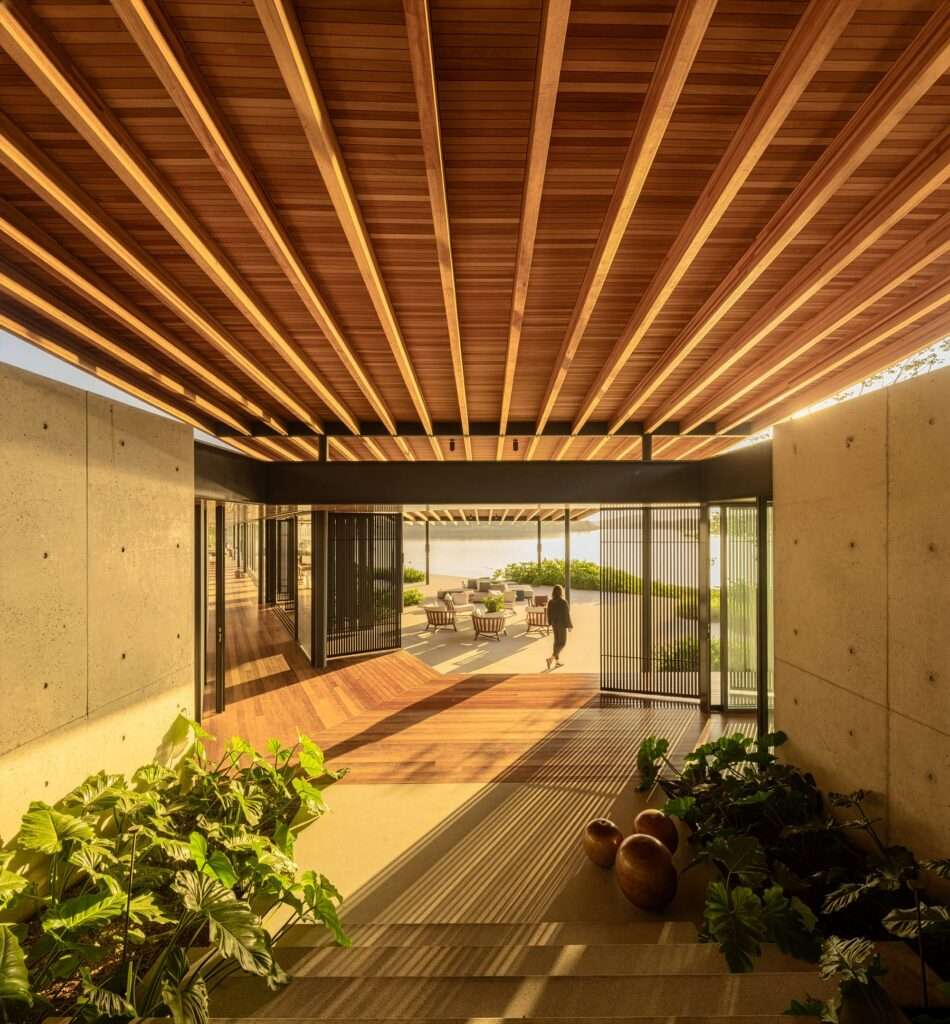
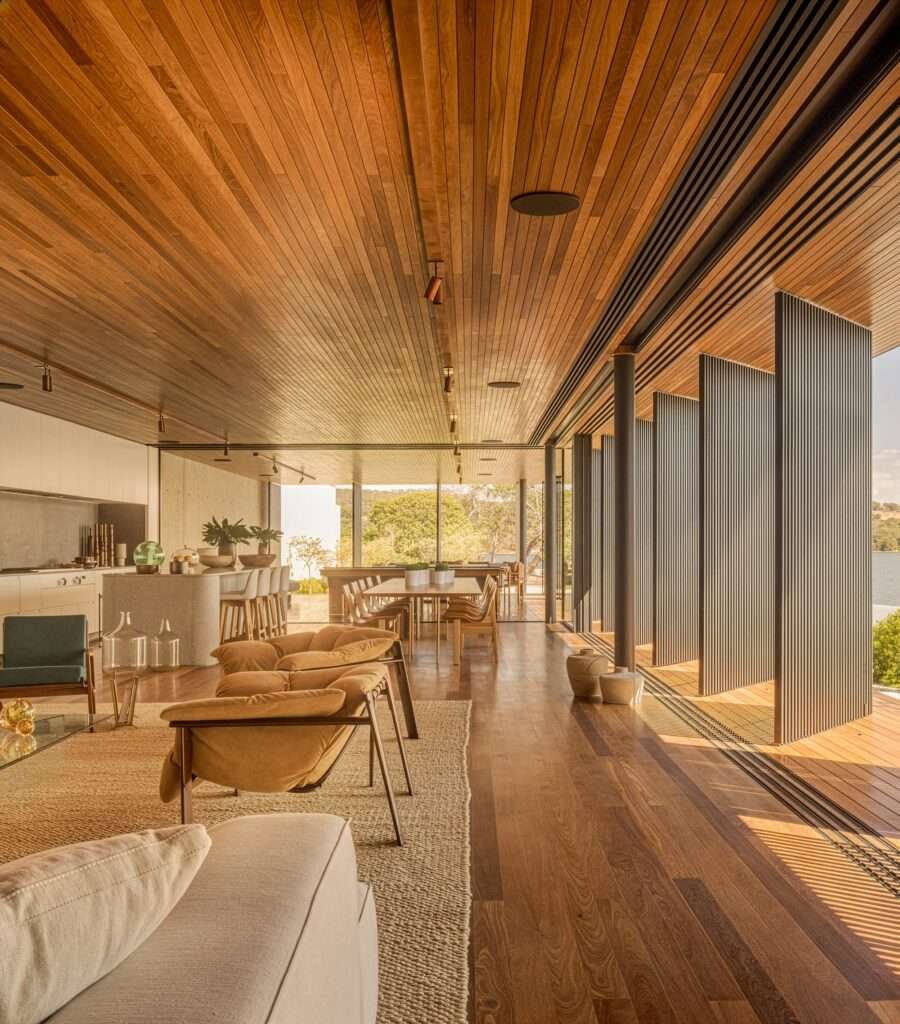
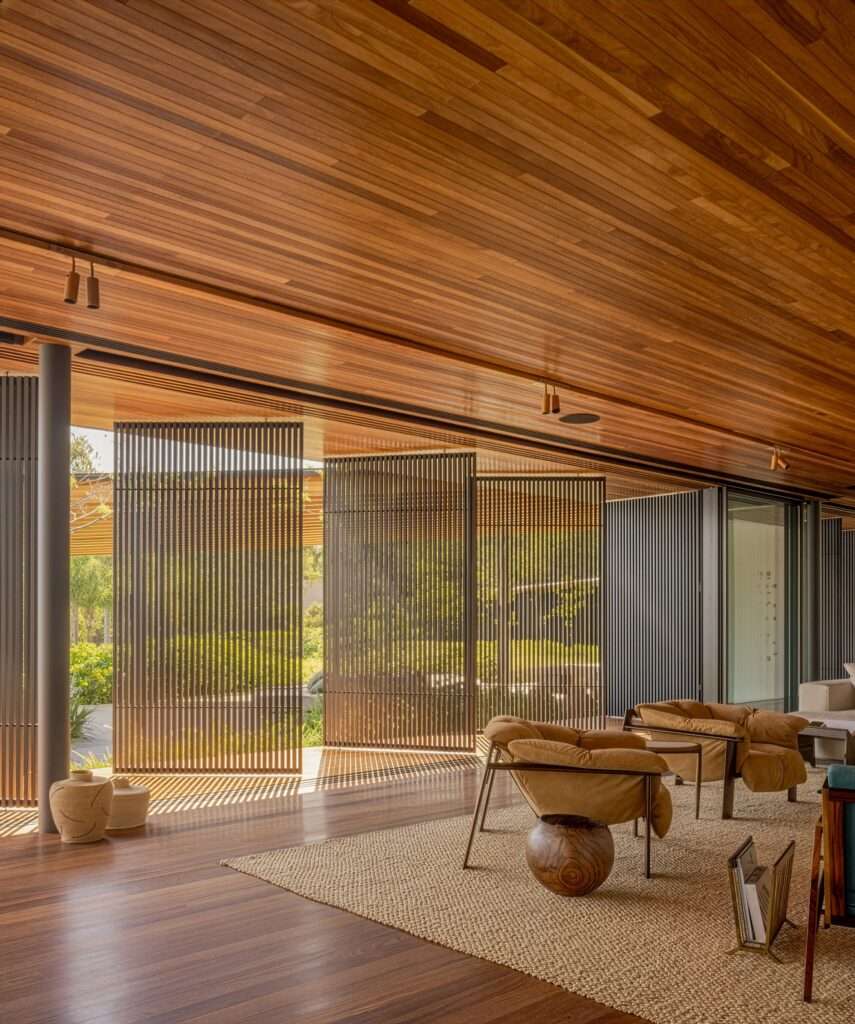
Rotating wooden panels form the main façade element, acting as adjustable sun-shading devices. The angles of these panels can be modified according to need, allowing control over light levels and privacy while maintaining views toward the reservoir. In this way, the façade becomes an interactive system that responds to environmental conditions without disconnecting the building from its natural surroundings. Such innovative Design solutions are key to modern environmental control.
Structural System and Mass Composition
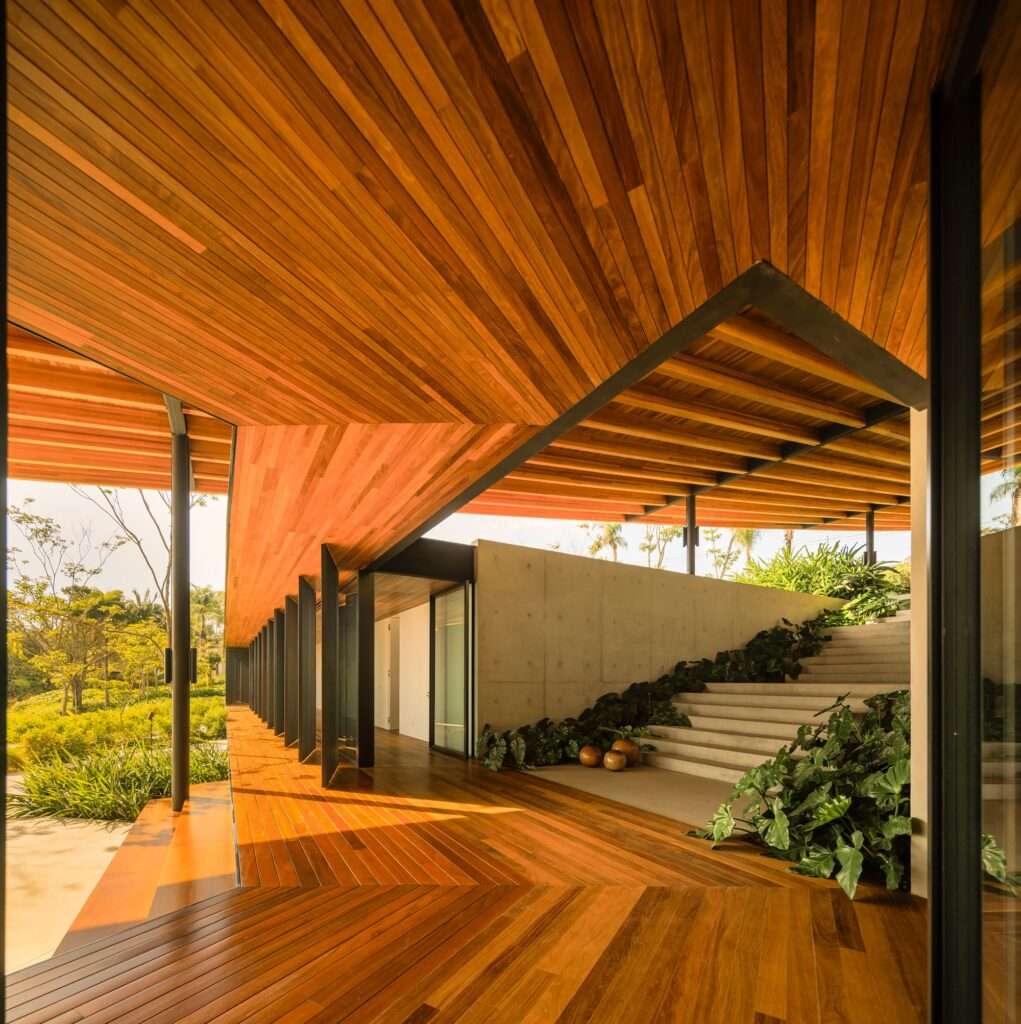
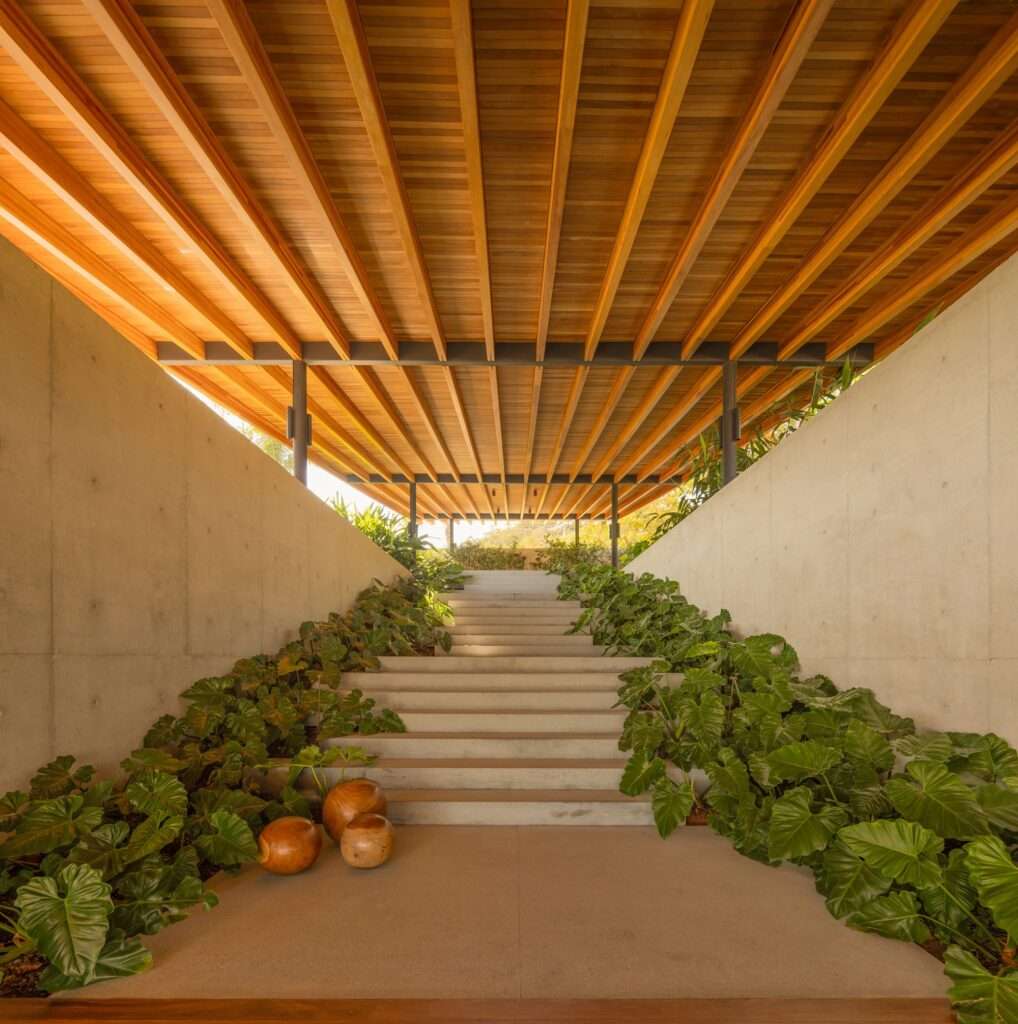
The architectural volume rests directly on the ground, supported by a mixed structure of concrete, steel, and wood. This structural system allows for large spans and flexible spatial arrangements, balancing a sense of openness with visual lightness. The choice of Building Materials plays a crucial role in achieving this balance, as seen in the material selection for this residence.
Use of Wood and Spatial Continuity
Wood is used as a dual-function material, serving both as part of the structural system and as the final interior surface finish. This overlap creates a clear continuity between the architectural structure and the interior spaces, reducing the sharp separation between Construction elements and finishes. Detailed information about wood and other materials can be found in the Material Datasheets section.
Relationship with the Natural Landscape
The color treatment is based on a clear visual neutrality, with materials chosen in calm tonal ranges. As a result, the green of the surrounding landscape becomes a dominant element within the interior scene. The external view remains present in all spaces, becoming an essential part of the spatial experience without competing with the architectural elements. This harmony between interior and exterior is a hallmark of well-planned Interior Design.
✦ ArchUp Editorial Insight
This residence is located on the edge of a reservoir in Minas Gerais as a material response to the logic of land use along waterfront areas and low-density zoning regulations. The mixed structural system of concrete, steel, and wood enables long spans that reduce structural repetition and allow spatial redistribution in accordance with the efficiency of the residential program. Various Research studies have explored the benefits of such mixed systems in residential architecture. The rotating wooden panels function as an environmental regulating layer, controlling light, heat, and visual exposure, transforming climatic challenges into adjustable performance within the architectural envelope. The axial organization of spaces reflects a standard separation between social and private occupancy patterns following a conventional planning logic. The use of wood as both a structural and finishing element operates as a strategy to reduce material complexity and improve construction efficiency, making the final form the result of a negotiation between market constraints, construction efficiency, and view management rather than an independent design decision. For those interested in similar architectural approaches, the Archive contains a wealth of relevant examples and case studies.