Home » News » Staten Island Bathroom Wins 2026 AIANY Public Infrastructure Award

Staten Island Bathroom Wins 2026 AIANY Public Infrastructure Award

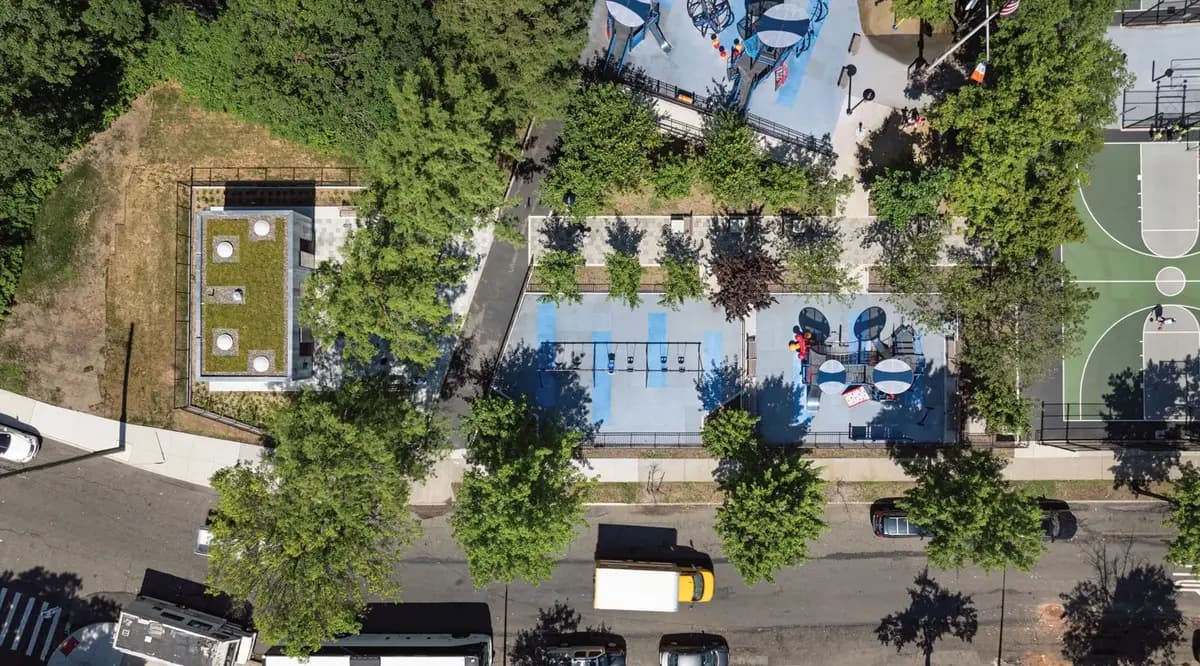
Aerial view of the award-winning Staten Island public restroom at Lopez Playground, featuring a green roof and modular design integrated into the urban park landscape with adjacent playground and basketball court.
An overhead perspective reveals the civic integration of the 2026 AIANY Award-winning public restroom at Lopez Playground, Staten Island — its green roof and compact footprint harmonize with surrounding recreational spaces including a children’s playground and basketball court. (Image © NYC Parks Department / aerial photography by Skyline Aerials)

The Staten Island bathroom has won a 2026 American Institute of Architects New York (AIANY) award for outstanding architectural design. The jury recognized it alongside cultural landmarks, highlighting a shift toward functional civic infrastructure.
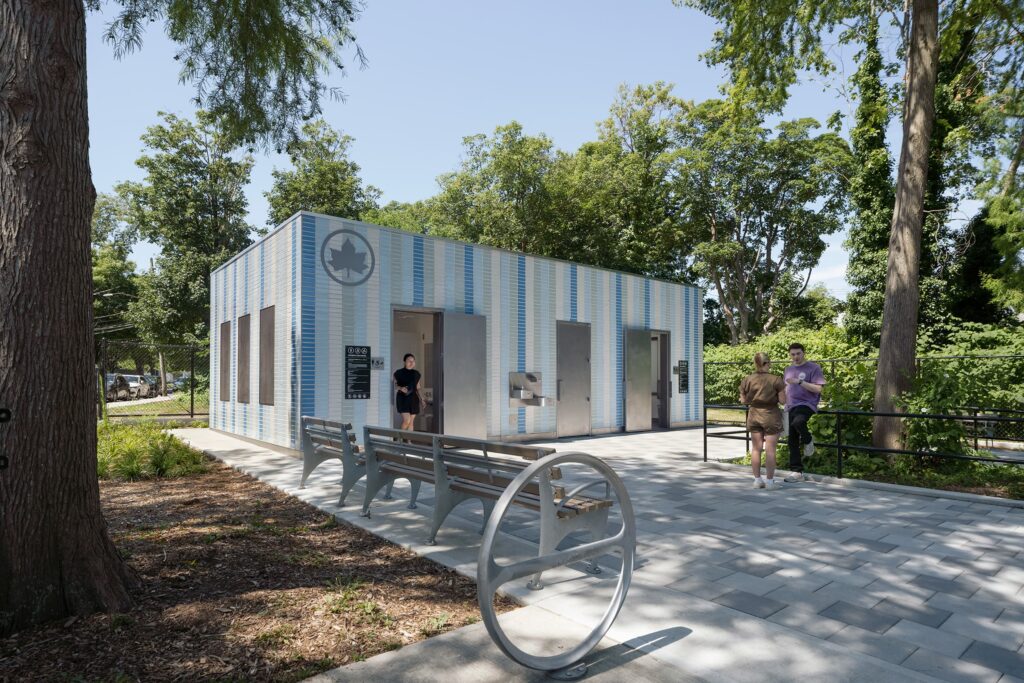
Exterior view of the AIANY Award-winning Staten Island public restroom at Lopez Playground, featuring blue-and-white striped tile cladding, accessible entrances, and integrated benches under mature trees.
The award winning public restroom at Lopez Playground, Staten Island, combines civic utility with architectural clarity its blue and white vertical tile facade references local vernacular while ensuring durability and low maintenance. Designed for accessibility and user comfort, the structure features shaded waiting areas and clear signage. (Image © Iwan Baan / Courtesy of NYC Department of Design and Construction)

A Prototype for Urban Gaps

It stands at Lopez Playground on Staten Island’s North Shore, directly across from a Home Depot parking lot. The structure resembles a scaled down shipping container. Its modular system allows rapid citywide installation. Custom brick cladding ties it to the local streetscape using durable building materials.

Many neighborhoods lack clean, accessible public restrooms. This prototype responds with efficiency and contextual awareness. It emerged from a municipal design competition focused on low-cost, replicable solutions for everyday needs.
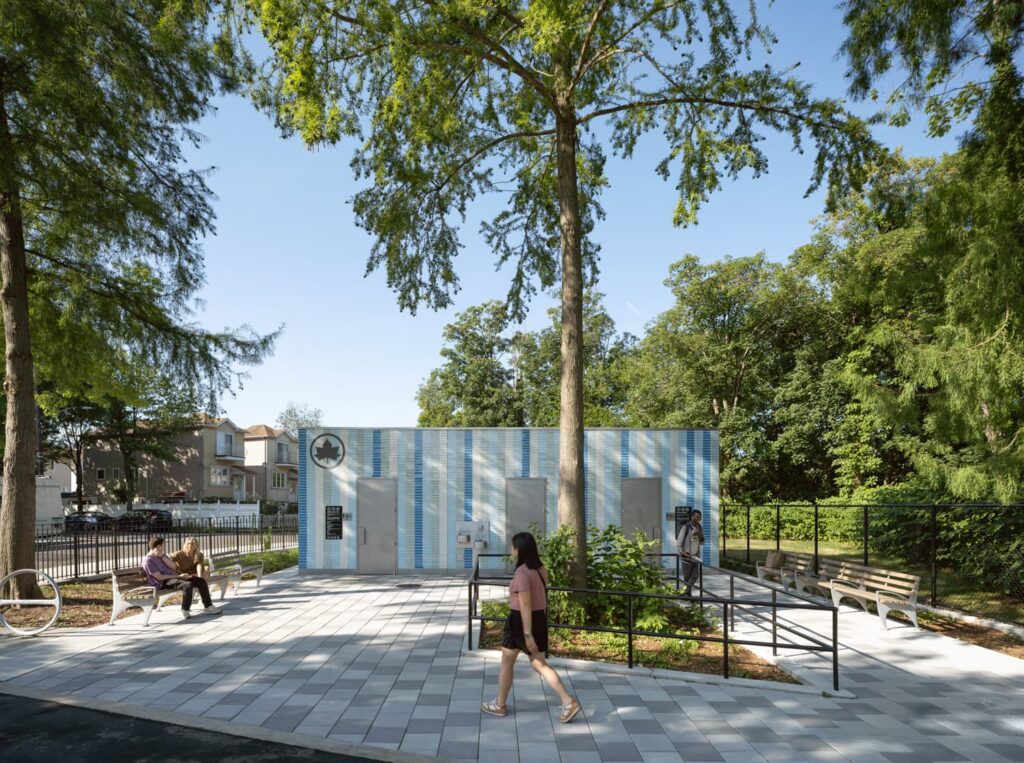
Wide-angle view of the Staten Island public restroom at Lopez Playground, showcasing its blue-striped tile facade, accessible ramp, and surrounding park seating under leafy trees on a sunny day.
The 2026 AIANY Award winning public restroom at Lopez Playground integrates seamlessly into its urban park setting its rhythmic tile cladding and shaded waiting areas reflect a commitment to civic dignity and everyday usability. The accessible ramp and surrounding benches invite passive social interaction while reinforcing inclusive design principles. (Image © Iwan Baan / Courtesy of NYC Department of Design and Construction)

Function Over Form

The Staten Island bathroom prioritizes user experience. Privacy, ventilation, and easy maintenance shape its layout. These features reflect core principles of interior design applied to utilitarian spaces. Prefabrication enabled faster assembly and reduced on-site disruption a key advantage in dense cities.
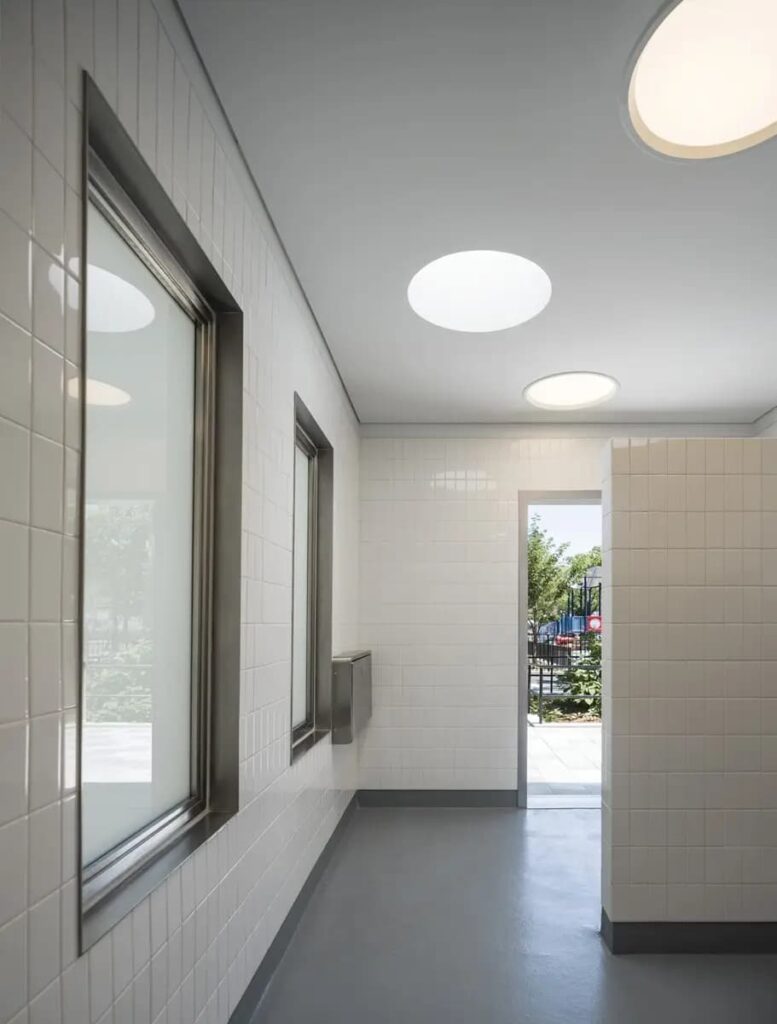
 Interior view of the Staten Island public restroom at Lopez Playground, featuring white tiled walls, recessed circular lighting, and frosted glass windows for natural light and privacy.
The interior of the AIANY Award winning public restroom at Lopez Playground prioritizes hygiene, durability, and user comfort with seamless white tile surfaces, diffused ceiling lighting, and strategically placed frosted windows that balance ventilation and privacy. (Image © Iwan Baan / Courtesy of NYC Department of Design and Construction)

Redefining Architectural Merit

AIANY’s inclusion of this project signals broader criteria for architectural merit. Social utility now weighs as heavily as form or innovation. The award places it beside Lincoln Center’s David Geffen Hall, proving scale does not dictate impact.

Unlike conceptual proposals, this facility operates daily. It serves real users without fanfare. Its success may inform future deployments across boroughs. The model aligns with modern construction practices that value speed, cost control, and durability.

Civic Sustainability Through Design

The Staten Island bathroom also advances civic sustainability. Dignified public amenities encourage care and reduce vandalism. Thoughtful design can extend service life and lower long-term costs critical for underfunded agencies.

Modest budgets need not mean poor outcomes. This project shows how discipline, clarity, and context can elevate basic infrastructure. Architecture here serves quietly but effectively.

The Staten Island bathroom proves that public trust begins with the smallest details.

Architectural Snapshot : True civic architecture serves quietly, durably, and without fanfare.
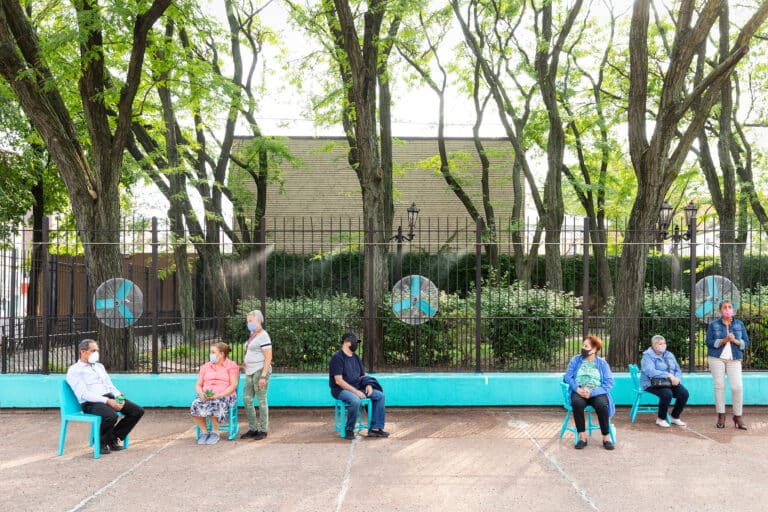
 Community members seated on bright blue chairs in front of a black iron fence at Lopez Playground,   , with misting fans providing relief on a warm day.
Residents gather under the shade of mature trees at Lopez Playground, Staten Island, enjoying passive cooling from misting fans installed along the turquoise seating wall a civic amenity designed for comfort and social cohesion. (Image © NYC Parks Department / Photography by Julia Gartland)

✦ ArchUp Editorial Insight

The facility emerges from persistent gaps in everyday urban services combined with maintenance first governance. Repeated pedestrian use in marginal public spaces signals demand without triggering large scale civic investment. Budget frameworks emphasize low capital exposure, fast delivery, and reduced staffing, steering procurement toward standardized, low risk solutions.

Regulatory and insurance structures reinforce this trajectory. Risk management around vandalism, hygiene, and liability eliminates most alternatives, leaving only systems that are easily controlled, replaced, and replicated. Cultural concerns related to privacy, security, and misuse further compress spatial ambition.

Prefabrication and modular delivery align seamlessly with these pressures. Once integrated into municipal workflows, they dictate repetition, scale, and lifecycle expectations.

The architecture appears last: the logical outcome of institutional caution, cost containment, and the normalization of minimal yet defensible civic infrastructure.

Further Reading From ArchUp

  • NEOM It’s real

    The Crown Prince’s Office announced the Leyja project within NEOM in mid-October, and provided some ideas about the unusual architecture….

  • Hamburg State Opera, HafenCity Architectural Overview

    The Hamburg State Opera in HafenCity is set to become a landmark of contemporary civic architecture, integrating performance spaces with…

  • Carbon Confessions Exhibition Makes U.S. Debut at University of Virginia

    The traveling exhibition Carbon Confessions has opened at the University of Virginia School of Architecture. This marks its first presentation in…

  • 3 Eco-Friendly Projects by Sustainability Giants in 2023

    For today’s designers, sustainable methods are extremely important. Ask the Sustainability Giants of 2023. The top 100 environmentally aware companies…

Leave a Reply

Your email address will not be published. Required fields are marked *