Studio Saxe Presents “Ocean Eye”: An Architectural Masterpiece Where the Boundaries Between Inside and Outside Dissolve in Costa Rica

On the lush slopes of Costa Rica, where a dense tropical forest meets the Pacific Ocean, Studio Saxe’s “Ocean Eye” house emerges not just as a building, but as a philosophical statement on the coexistence of humans and nature. This ambitious project represents the pinnacle of biophilic and sustainable design, where the building is not merely placed on the site but is carefully woven into the fabric of the surrounding landscape, creating a world-class, immersive, and sustainable living experience.
Design Philosophy: An Eye on Nature
The design seeks to mimic the natural process itself. Rather than having the building dominate the site, “Ocean Eye” is designed to be a natural extension of the terrain. Its name is not merely a metaphor; it describes the sensory experience of the inhabitant. Every space, from the main living area to the smallest balcony, is designed to frame a specific, intentional view, like a camera lens focusing on the beauty of the natural world around it. This focus on controlled “vistas” transforms the residence into a luxurious observatory for both wildlife and the ocean.
Dynamic Architectural Layout: Interlocking Terraces
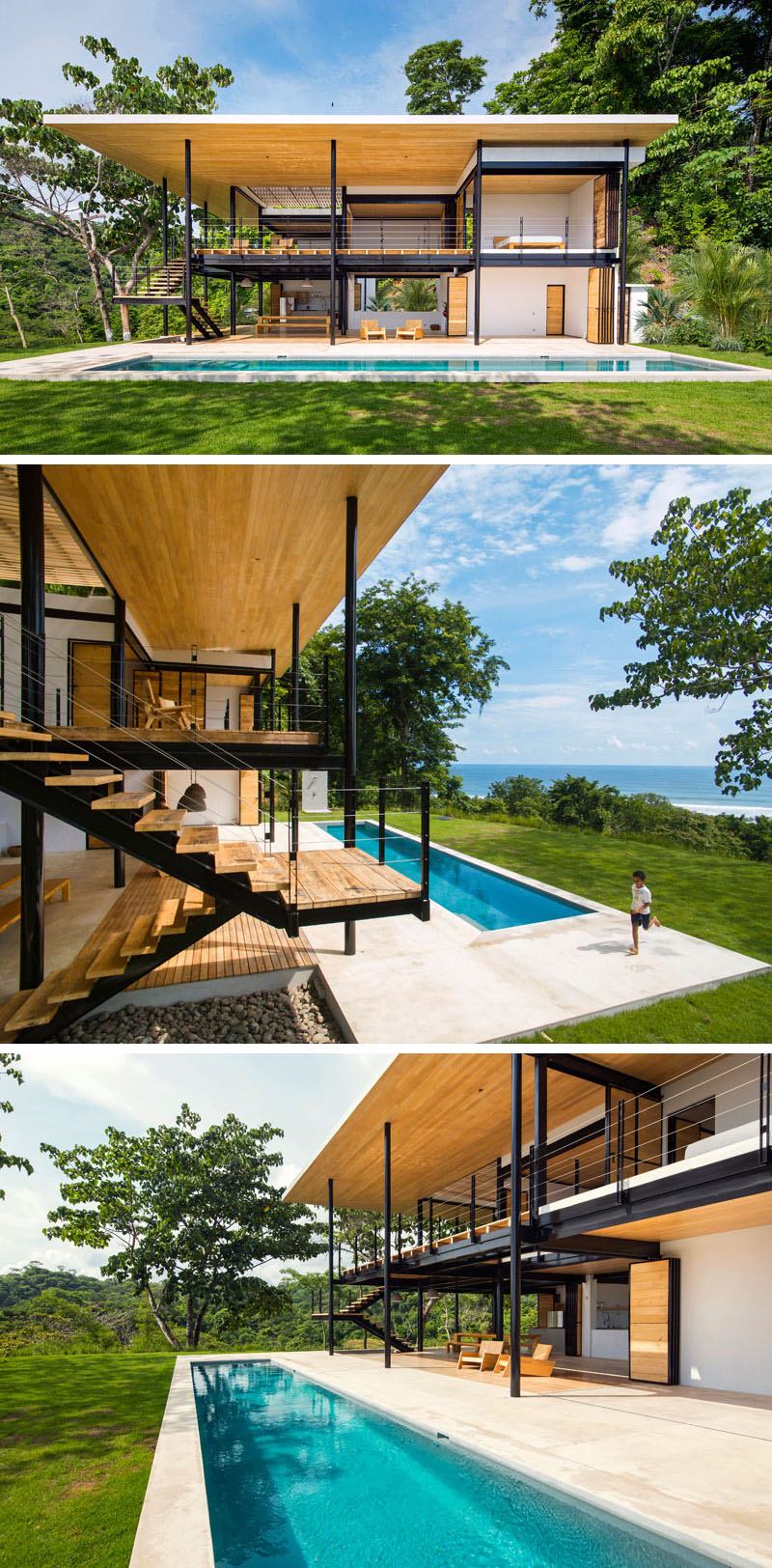
The heart of the “Ocean Eye” experience lies in its dynamic architectural layout based on a series of interlocking terraces that gracefully “step” down the slope. These terraces are not just added outdoor spaces; they form the skeleton of the house itself, seamlessly transitioning between enclosed interior spaces and open outdoor areas.
- Spatial Gradation: These multiple layers create a profound sense of movement and connection. The resident moves from an intimate, enclosed space at the rear of the house, protected by a strong concrete mass, to fully open spaces facing the sea, where physical boundaries virtually dissolve.
- Natural Framing: Each level frames a different vista. The lower floor might overlook dense foliage and the world of wildlife in the canopy, while the upper floor offers unparalleled panoramic views of the ocean horizon, creating a continuous dialogue between the two dominant natural elements of the site.
Smart Design Elements: Flexibility and Sustainability
Beauty was not the only goal; architectural intelligence was integrated into every detail to ensure comfort and resilience.
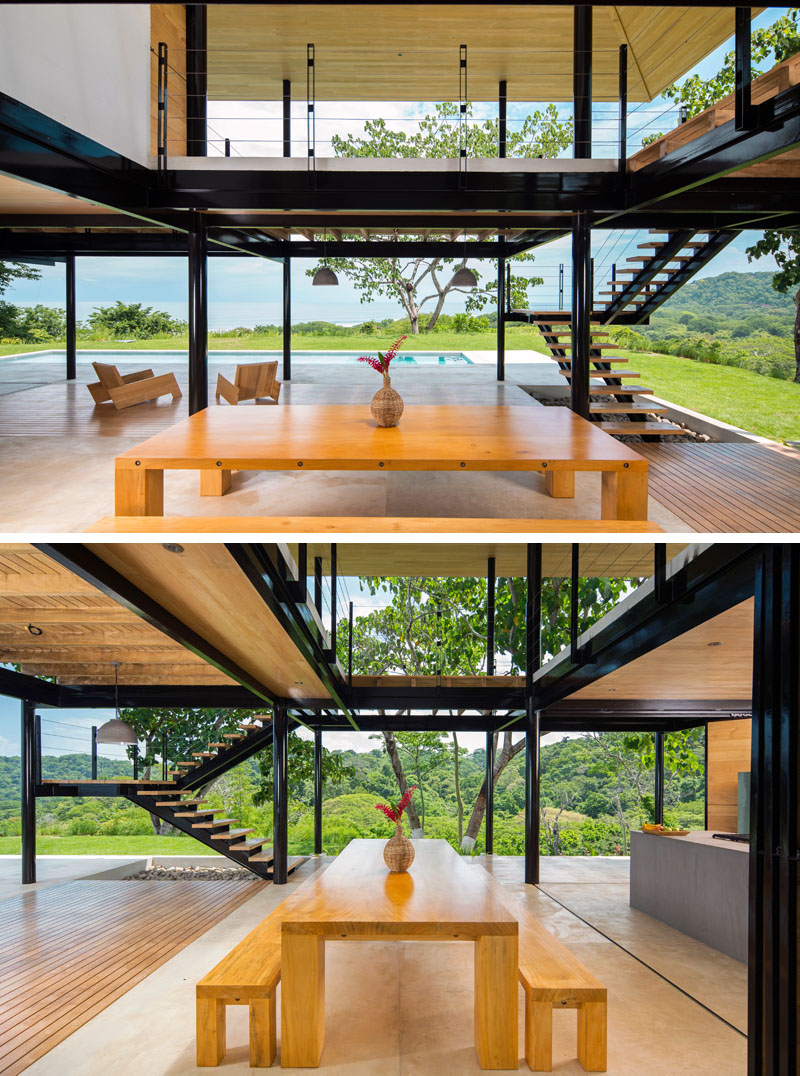
- Movable Wooden Walls: These elements revolutionize the concept of a static wall. They act as a dynamic skin for the building. When open, they allow tropical winds to pass freely, providing natural ventilation and emphasizing openness. When closed, they provide privacy and protection from the elements, transforming the space into a safe and warm sanctuary.
- Floating Canopy Roof: This expansive roof floats above all the terraces, acting as a protective helmet. It blocks the strong tropical sun while allowing indirect natural light and provides shelter from heavy rains, enabling the use of outdoor spaces year-round, regardless of weather conditions.
- Natural Ventilation: The designers carefully studied prevailing wind patterns. Strategic gaps between floors create a “stack effect,” where hot air is drawn up and out, allowing cool, fresh air from the forest to flow through the spaces, eliminating the need for mechanical air conditioning most of the time.
Sustainability: From Philosophy to Practical Application
The project’s commitment to sustainability goes beyond keywords; it is embedded in its material and construction.
- Local Materials: Certified Melina wood, a fast-growing species sourced locally, was used extensively. This not only reduces the carbon footprint of transportation but also supports the local economy and adds natural warmth and beauty to the interior spaces.
- Local Craftsmanship and On-Site Fabrication: Due to the remote location, a logistical challenge was turned into an opportunity. The majority of furniture and fittings—including sinks, cabinets, doors, and light fixtures—were manufactured directly on-site by local craftsmen. This not only reduced waste and pollution from transportation but also enriched the project with a touch of unique craftsmanship and traditional knowledge.
- Structural Resilience: The house was anchored to a steep slope using a smart hybrid of materials. The rear concrete mass is used for strength and protection from landslides and falling branches, while the lighter steel structure at the front reduces the impact on the ground while maintaining structural stability during earthquakes and heavy rains, which is essential in a tropical climate.
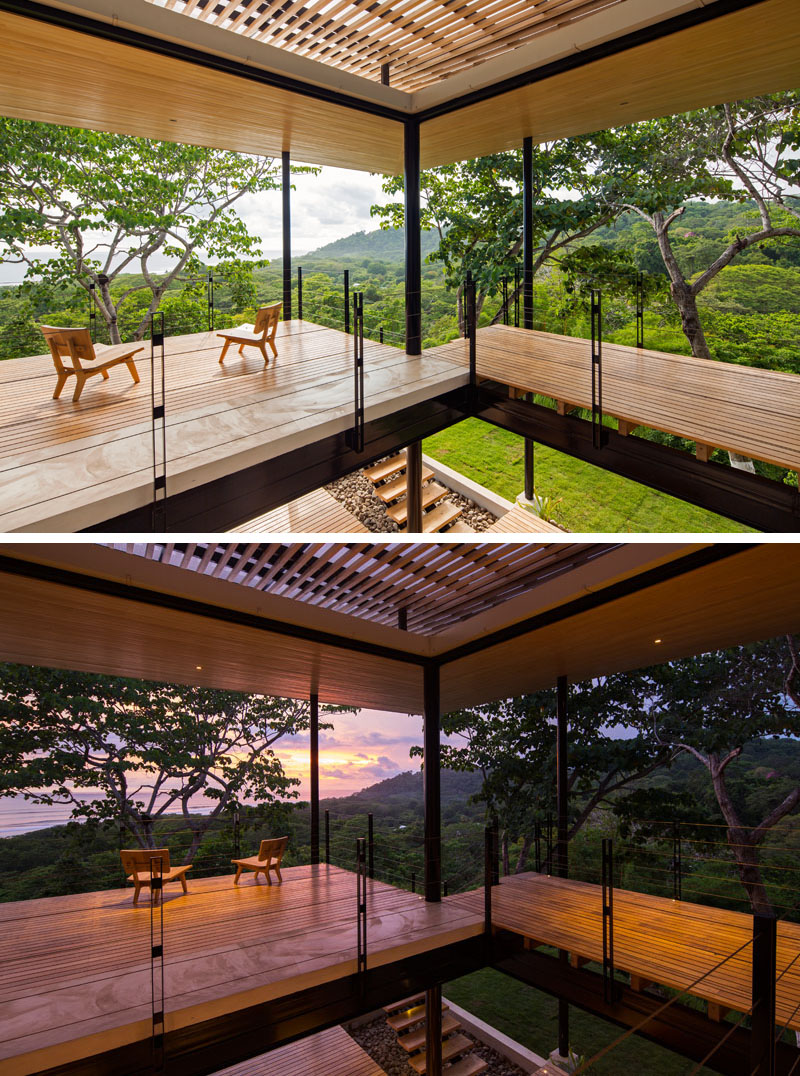
Living Experience: A Life in Harmony with Nature
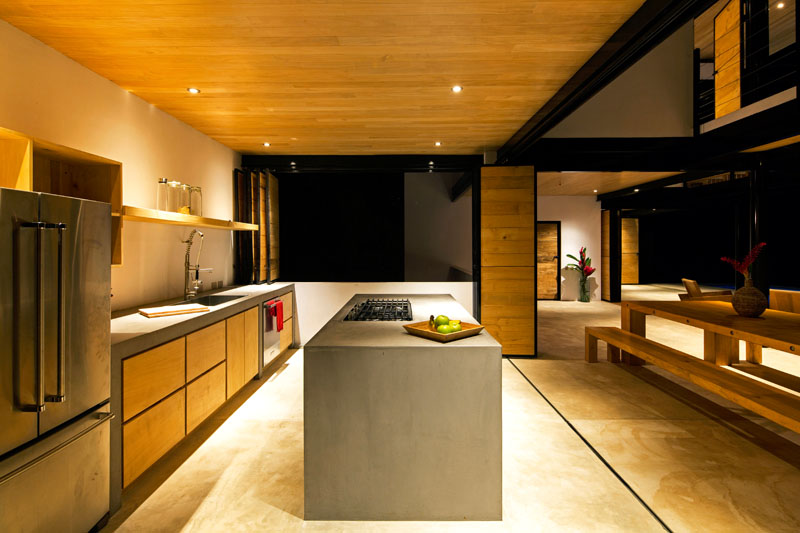
The architectural features translate into an unparalleled living experience. The main bedrooms on the upper floors offer stunning views of the treetops and the ocean, with the option to close the wooden panels for privacy or on stormy nights. The bathrooms, partially designed to be open-air, allow for bathing under the stars while maintaining complete privacy. The kitchen, made of concrete and wood, feels like an organic part of the hill.
By weaving these elements together—dynamic terraces, local craftsmanship, and renewable systems—Studio Saxe has not just created a house; they have offered a model for the future, where luxurious architecture does not conflict with the environment but celebrates and protects it in perfect harmony.
(✦ ArchUp Editorial Insight)
Ocean Eye by Studio Saxe presents a compelling vision of biophilic architecture, masterfully weaving a residence into the Costa Rican jungle to erase the boundary between interior and exterior. Its stepped terraces and movable wooden walls create a dynamic, responsive living experience that is both luxurious and deeply connected to its environment. A point for further exploration, however, would be the long-term maintenance demands of such intricate, site-built wooden mechanisms in a humid, saline climate, which could pose a challenge for sustainability over decades. Nonetheless, the project triumphs as a profound case study in hyper-local construction, demonstrating how leveraging local craftsmanship and materials can effectively overcome remote logistical challenges to achieve a truly authentic and low-impact design.
Brought to you by the ArchUp Editorial Team
Inspiration starts here. Dive deeper into Architecture, Interior Design, Research, Cities, Design, and cutting-edge Projectson ArchUp.