Tersane-i Amire: Independent Structures in the Ottoman Shipyard

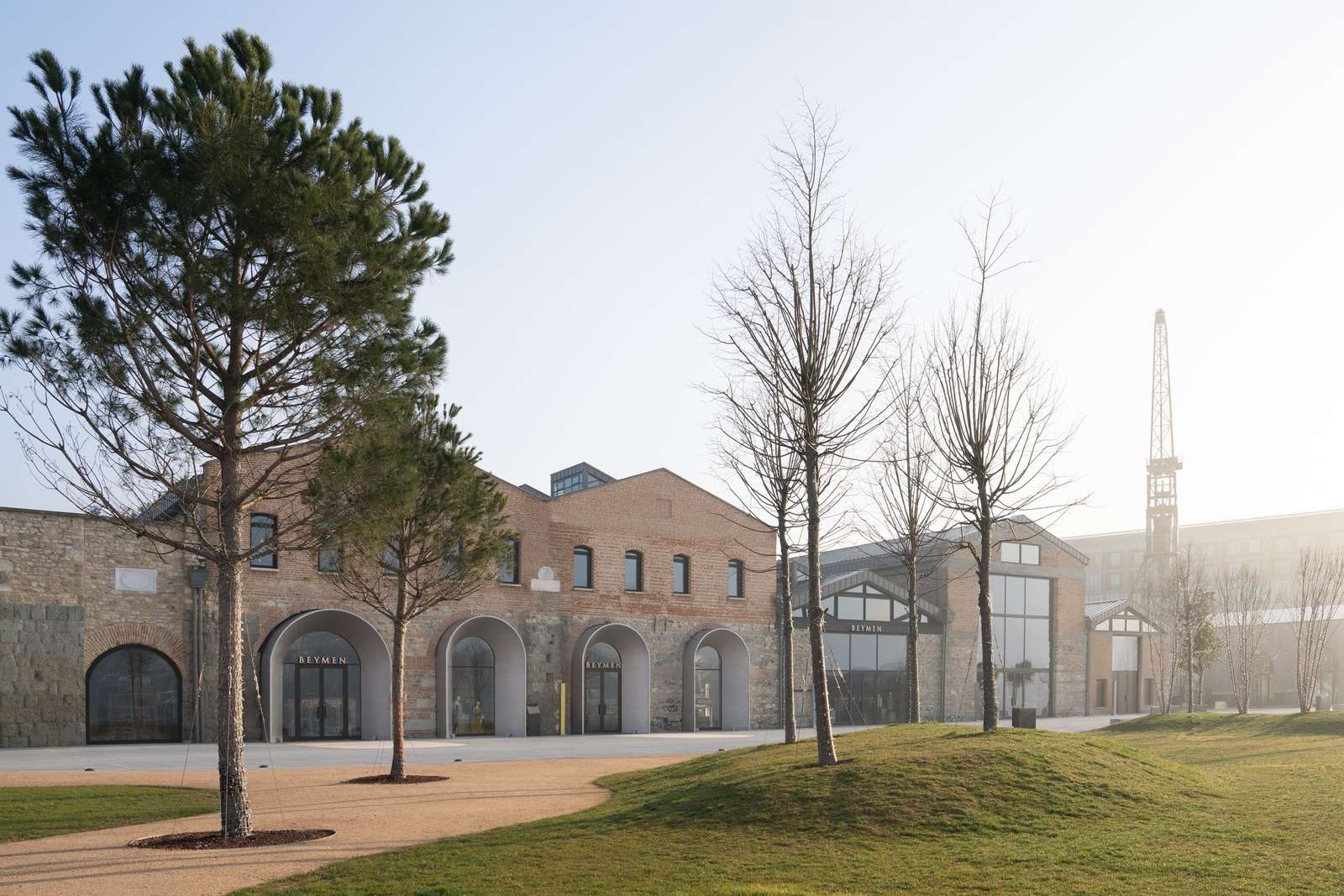
Spatial Configuration and Dialogue of Independent Structures
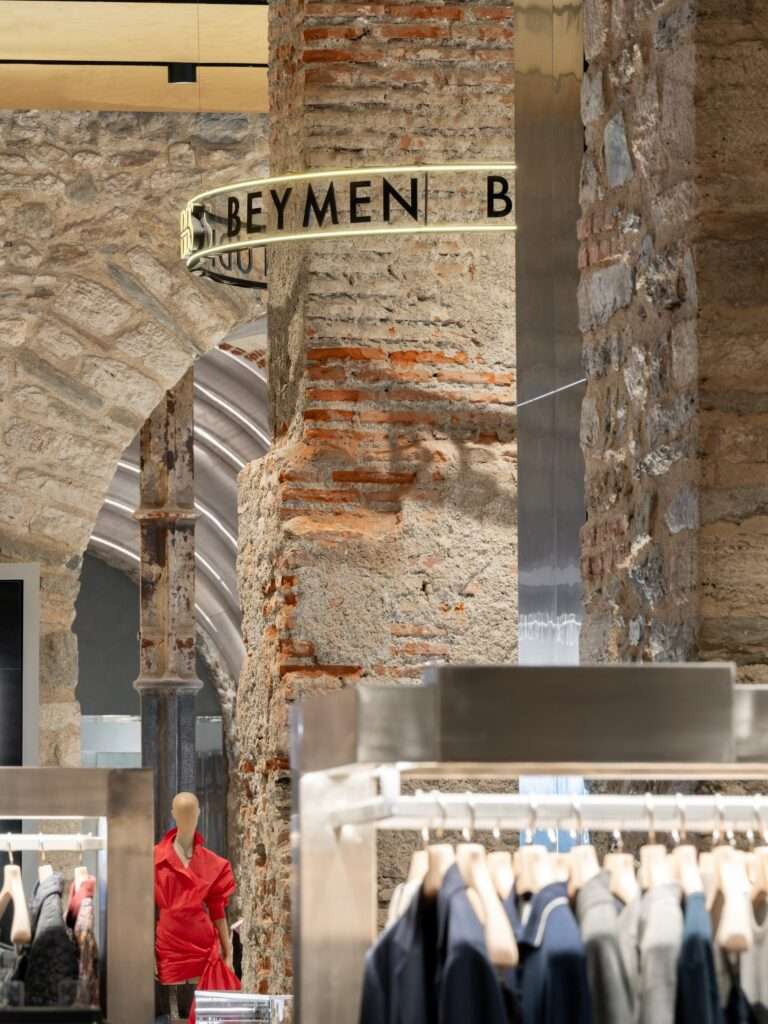
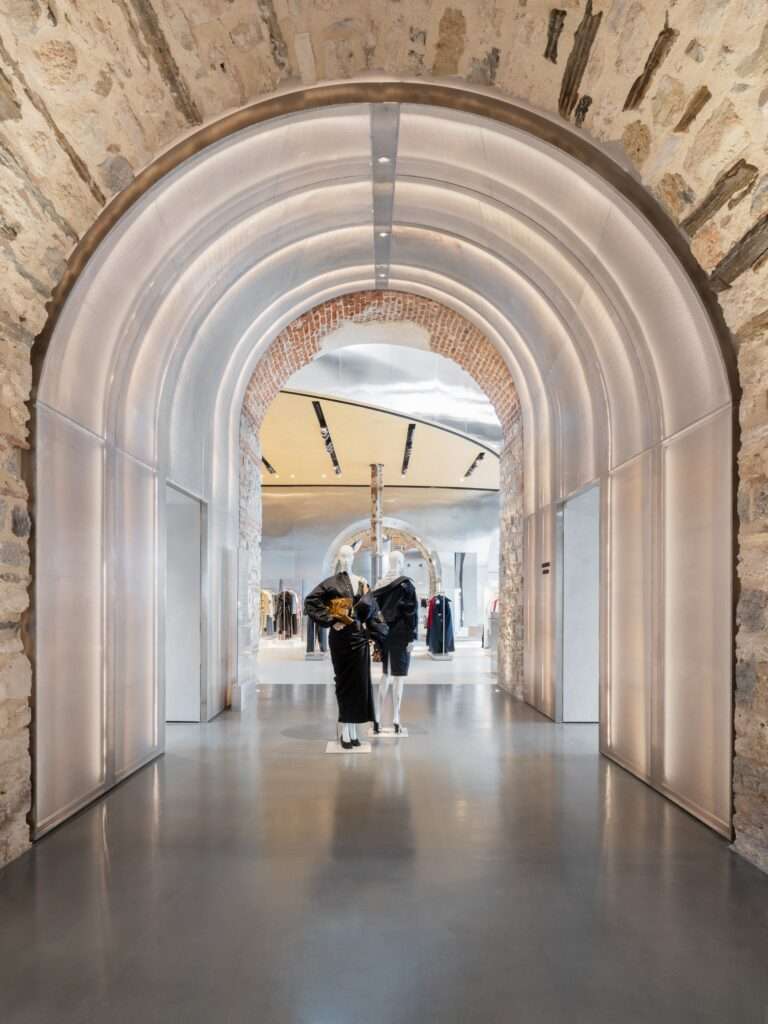
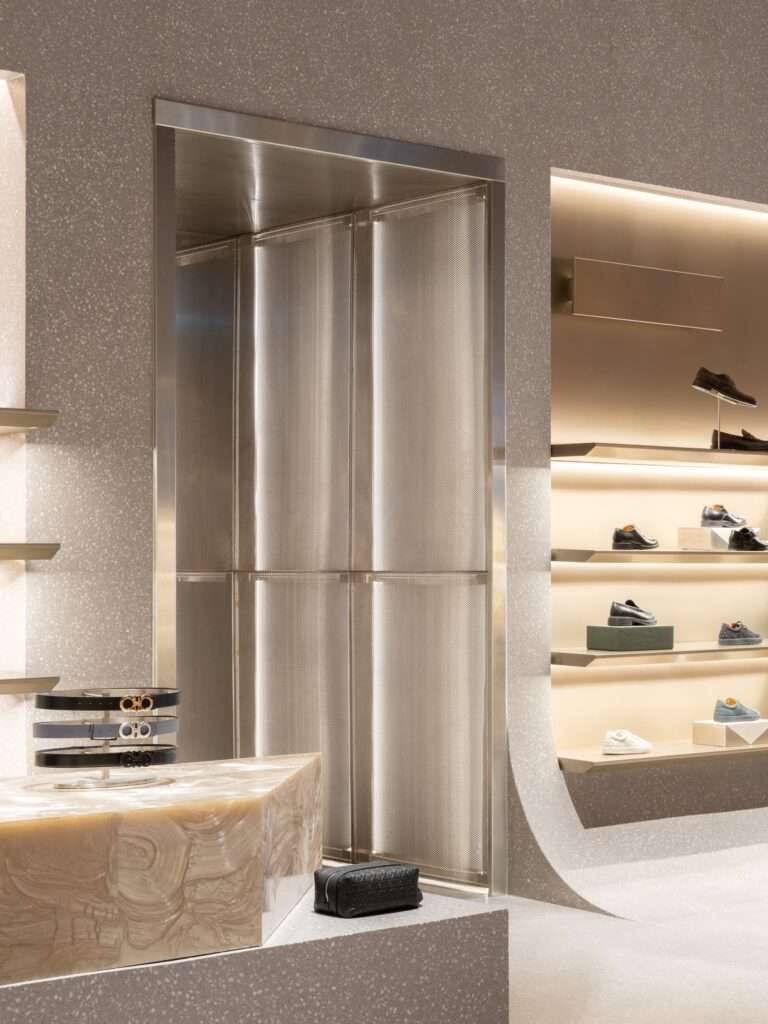
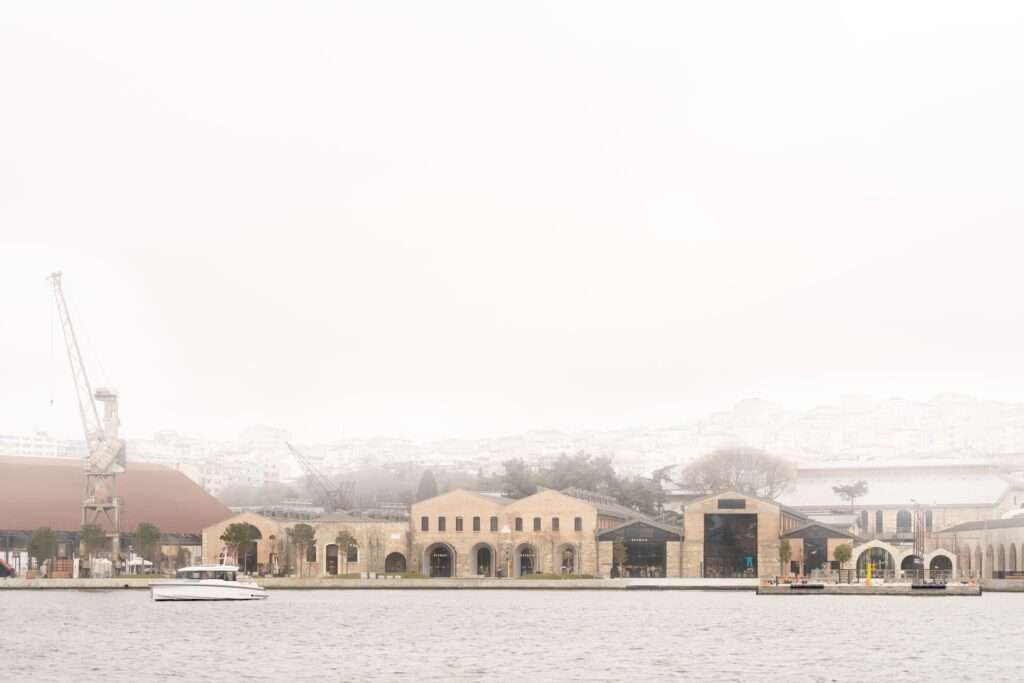
The architectural proposition of the project is based on creating a deconstructive dialogue between the memory of historical construction and contemporary interventions, where the independent structures inside the halls of the old shipyard represent an emerging visual layer that does not erase the past but rather contains it. These exhibition spaces appear through contrasting geometries and materials that function as free spatial masses, reorganizing the circulation flow within the vast halls. This allows the user to perceive proportion and scale between the original Ottoman structural system and the newly added modern volumes. Through this material contrast, the original structure remains fully visible, transforming the space from a static exhibition area into a dynamic environment that highlights the functional transformation of the site over time.
Scenographic Experience and Kinetic Passage
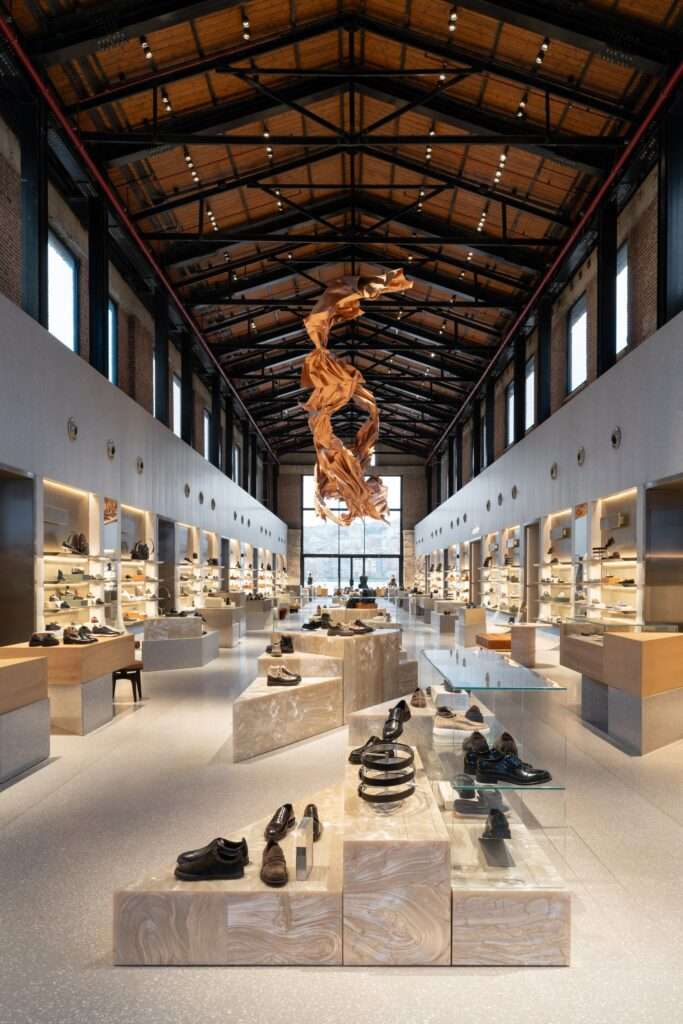
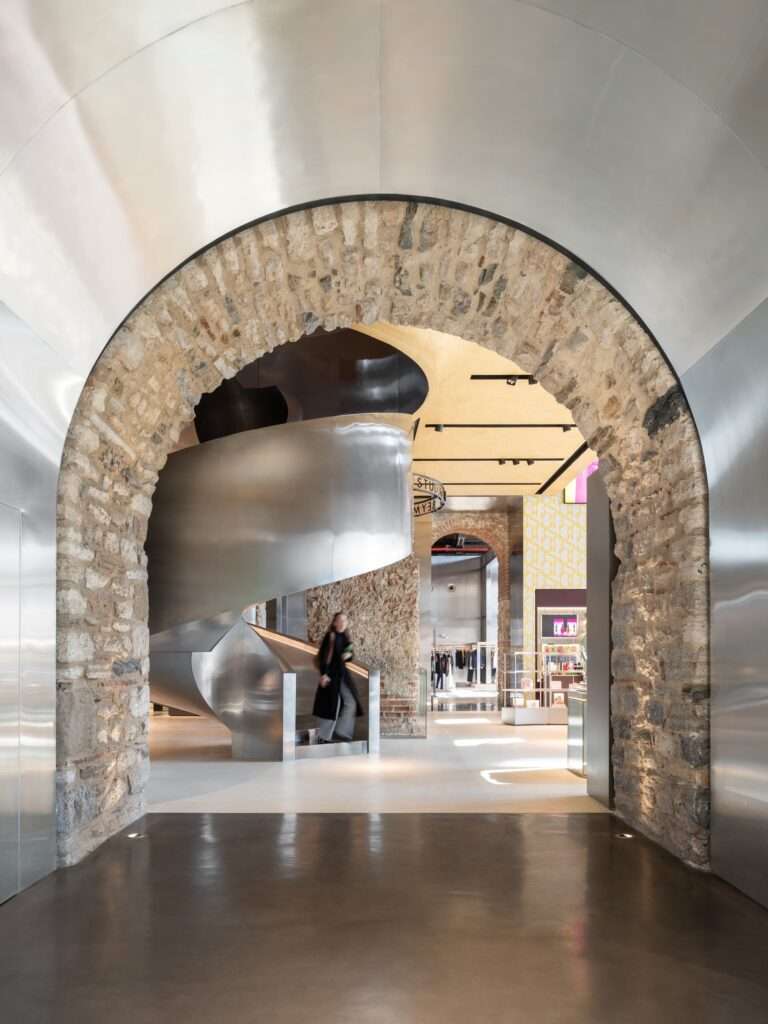
The movement of the visitor within the store becomes a living scenographic experience based on the psychology of discovery and transition between successive exhibition zones. As one moves from one space to another, viewpoints shift, and the volumes interact with the trajectories of natural light filtering through the openings of the historic arsenal, producing changing shadows that continuously reshape surfaces and materials throughout the day. This dynamic intersection between matter, airflow, and light gives the user a tangible sense of connection between the waterfront and the interior environment, where the experience is not limited to viewing products but extends to engaging with contemporary installations as visual stimuli that deepen the human experience within the architectural space.
Deconstructing Horizontal Structure and Urban Connectivity
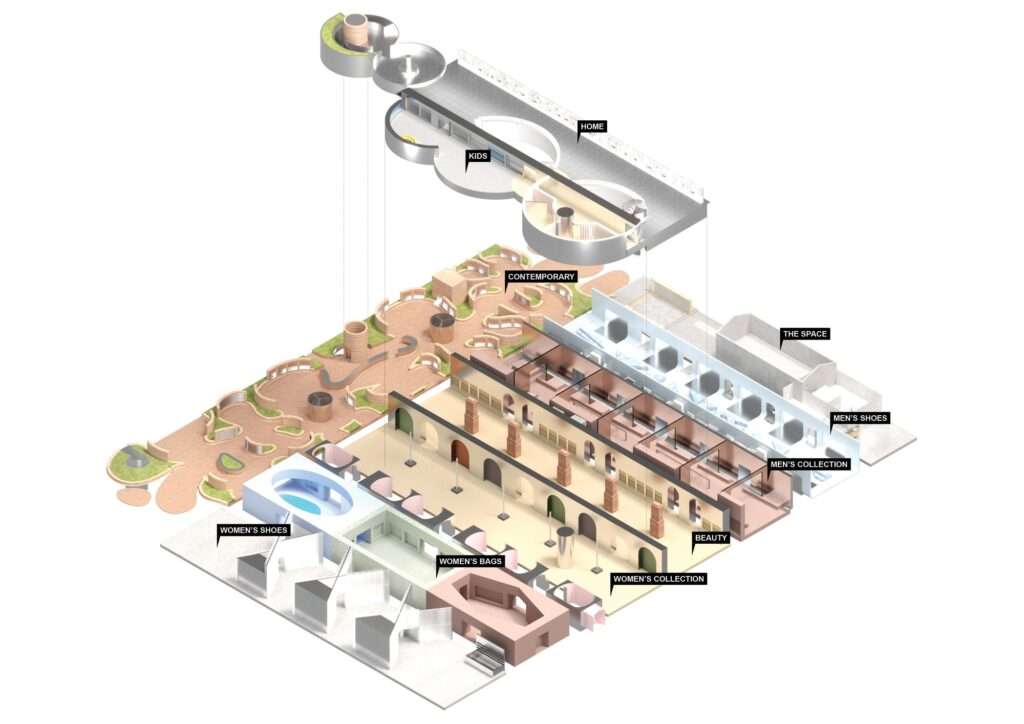
The spatial organization of the project is based on a strategy of continuous horizontal flow, where the galleries are traversed longitudinally and transversally, eliminating the traditional hierarchical structure produced by distributing departments across multiple floors. This horizontal orientation dissolves visual and spatial barriers, granting the user freedom of movement and passage without physical constraints, thereby creating a more democratic and open spatial experience. In conjunction with the new public promenade along the Golden Horn, the architectural intervention succeeds in reconfiguring the relationship between the city and its waterfront; it acts as a kinetic hinge that breaks the former isolation of the waterfront and makes it publicly accessible after decades of enclosure, reinforcing the concept of architectural space as a natural extension of the living urban fabric.
✦ ArchUp Editorial Insight
The adaptive restructuring project of Beymen Tersane demonstrates how contemporary retail can surgically inhabit historical maritime infrastructure. By deploying a non-hierarchical horizontal sequence of independent pavilions within the monumental Ottoman shipyard basins, the project intelligently replaces traditional multi-level retail stratification with a flexible and continuous spatial trajectory, transforming closed commercial patterns into accessible urban conduits that reconnect city with their long-disconnected waterfront resources.
However, this democratic spatial distribution carries a romanticized fallacy regarding the true nature of corporate interventions in heritage sites. The mere preservation of the outer shell as a visual backdrop obscures how the logic of luxury retail segmentation exploits historical architecture as a tool for constructing brand identity. This addition risks transforming industrial civic memory into a curated and elitist commodity, prioritizing a refined consumptive simulation over genuine public programmatic integration.