Tesla Roadster: Can the City Accommodate the Car’s Ambitions?

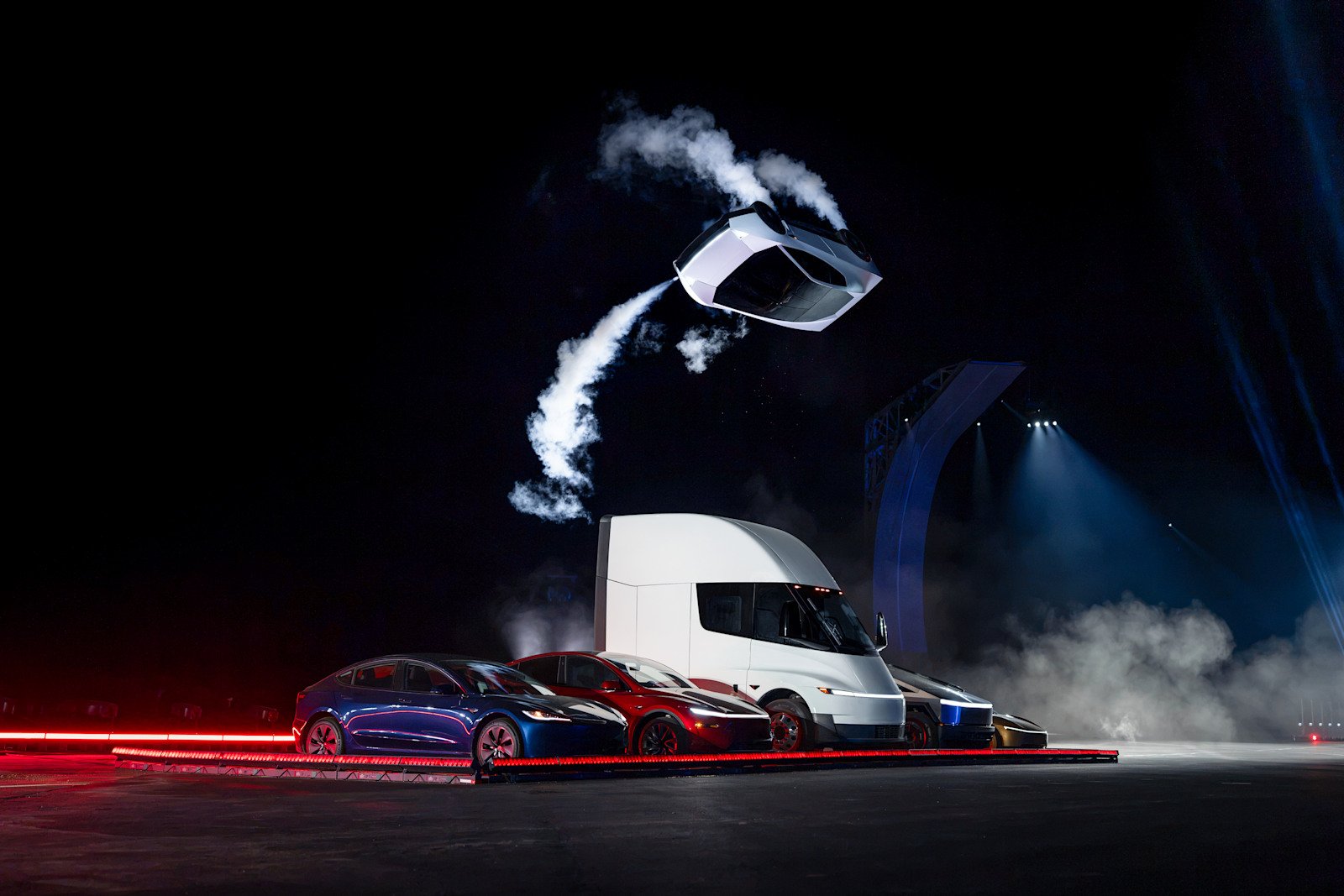
Tesla unveiled a redesigned Roadster in Texas on October 15, demonstrating airborne manoeuvres using thrusters. The company said production would begin in 2028, according to Reuters. The demonstration raises an urban question beyond the vehicle’s performance: what would a city need to accommodate such capabilities?
A demonstration is not a transport network
A controlled demonstration establishes neither everyday usefulness nor permission to operate in public space. Tesla’s Roadster page itself notes that the Rocket trim is not available in every region. For architects and planners, the distinction matters: a vehicle’s advertised capability cannot be treated as an approved urban operating model.
The relevant questions begin outside the car. Where could an airborne manoeuvre take place? What separation would be required from pedestrians, buildings and other vehicles? How would noise, operating failures and emergency access be managed? These are questions for assessment, not evidence that the Roadster already has an approved role in aerial urban transport.
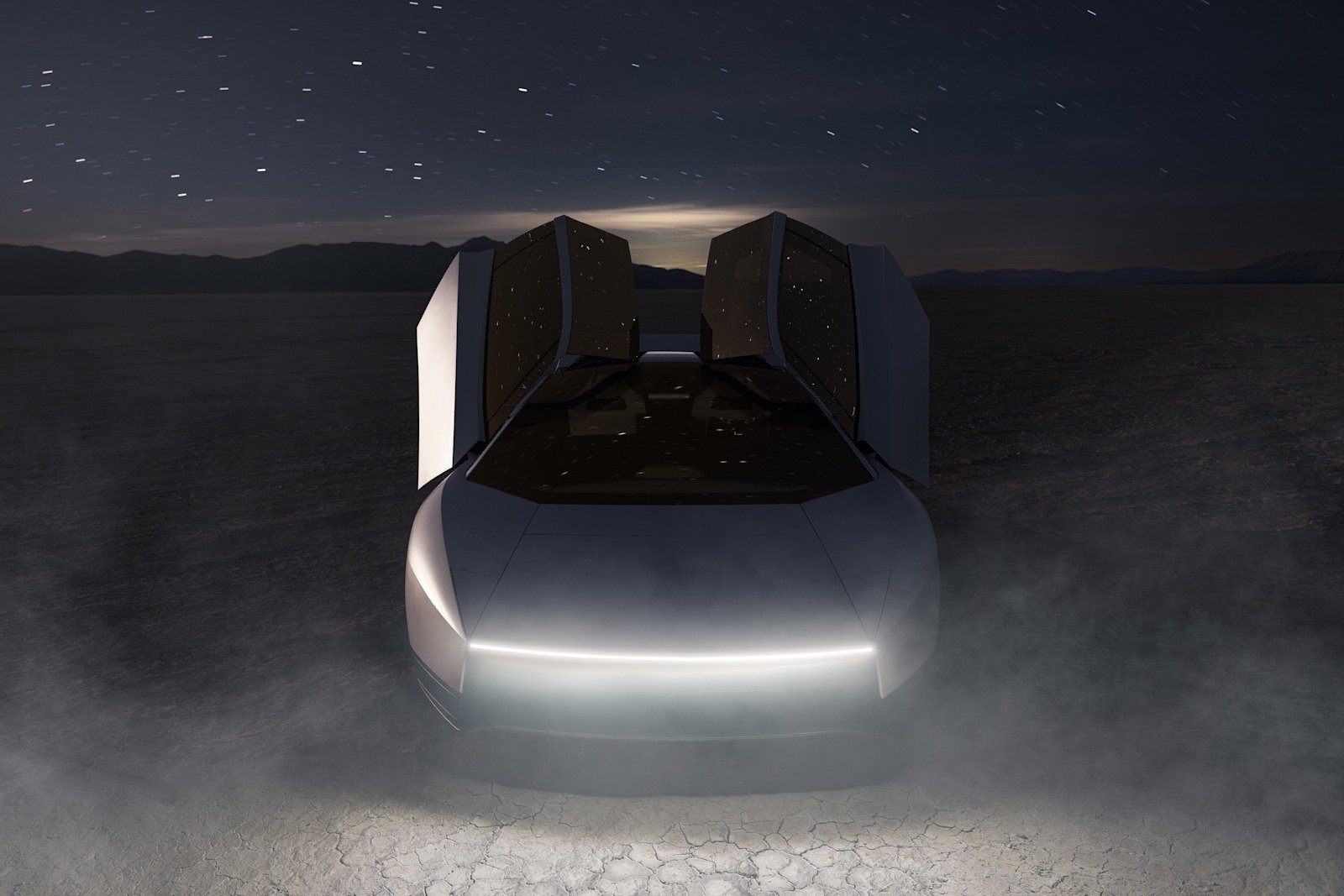
Changing the vehicle does not automatically change the street
The relationship between the automobile and the modern city is visible in roads, parking structures, driveways and the distance between destinations. An electric motor changes the vehicle’s propulsion; it does not, by itself, remove the space occupied by a parked car or shorten the journey between a home and a workplace.
That is why the sustainability question should not stop at the powertrain. A meaningful urban assessment would ask how many people are moved, how much land and energy the journey requires, and what infrastructure must be provided. Faster acceleration is a vehicle metric. It is not a measure of access to work, services or public space.
What happens beside a pavement?
Elon Musk — Tesla Roadster demonstration
The airborne demonstration also raises a more immediate street-level question. A visible plume is not, by itself, evidence of combustion exhaust, toxic smoke or road dust; its composition and effects require measurements. But any proposal to use powerful thrusters close to people and buildings would need to establish how the discharge affects nearby pedestrians, visibility and loose material on the ground. A manoeuvre performed within a controlled demonstration area does not establish suitability for a narrow street lined with entrances, windows and occupied pavements. The urban test is therefore not simply whether the vehicle lands successfully, but what operating clearance it needs and what happens outside its own footprint. These are questions for testing, not findings that this demonstration caused harm.
The internet imagines a flight above the traffic
The Roadster demonstration has prompted excitement, scepticism and jokes online. Musk also shared the demonstration on X. The spectacle deserves recognition as an ambitious engineering demonstration; its significance for everyday urban travel is a separate question.
Consider two satirical scenarios: a driver escaping a traffic jam only to spill a coffee as the car pitches into the air, or a first airborne commute ending against an overhead highway sign. These are imagined situations, not reported Roadster accidents or verified vehicle behaviour. Humorous or AI-generated depictions must not be confused with footage of an actual test.
The joke exposes a serious spatial mismatch. A street is more than a strip of asphalt: signs, bridges, trees and neighbouring buildings occupy the space above and beside it. Leaving a traffic lane would not make these constraints disappear. Even a brief airborne manoeuvre would raise questions about clearance, landing space, passenger restraint and the safety of people nearby. A striking demonstration can expand what engineers imagine; making room for that capability in an existing city would require a different kind of achievement.
What would count as an urban benefit?
The test is not whether a car can briefly leave the ground, but whether a proposed use improves a journey without imposing disproportionate demands on others. Evidence would need to address operating space, safety, accessibility and environmental effects. Until those questions are answered, the Roadster demonstration remains a product event with implications worth examining, rather than proof that cities should reorganise themselves around airborne private cars.
✦ ArchUp Editorial Insight
Urban transport assigns scarce space among people whose needs cannot all be met by increasing the capabilities of individual vehicles. A new manoeuvre may expand what an owner can do while also expanding the area that must remain clear around that vehicle. This is the structural question behind the spectacle, not a conclusion about the Roadster’s measured footprint. If future operation requires dedicated clearance, access controls or new infrastructure, who provides those resources and who loses access to the space they occupy? The decision to develop a vehicle and the decision to accommodate it in a city belong to different institutions, with different responsibilities. Product performance therefore cannot substitute for public evaluation. Nor should novelty be dismissed simply because its eventual use is uncertain. The useful distinction is between a demonstrated technical capability and a demonstrated collective benefit. Architecture and planning enter at that boundary: assessing the ground, interfaces and shared spaces a proposed mobility system needs before its private advantages are accepted as a reason to reshape public life.
Sources: Tesla, Roadster product page, accessed October 16, 2026; Reuters, “Tesla’s new Roadster turns in air with SpaceX thrusters, won’t land until 2028,” October 15, 2026. The urban implications discussed above are ArchUp’s analysis, not announced Tesla infrastructure plans.
Featured image: The new Tesla Roadster during an airborne manoeuvre at its unveiling. Courtesy of Tesla, Inc.