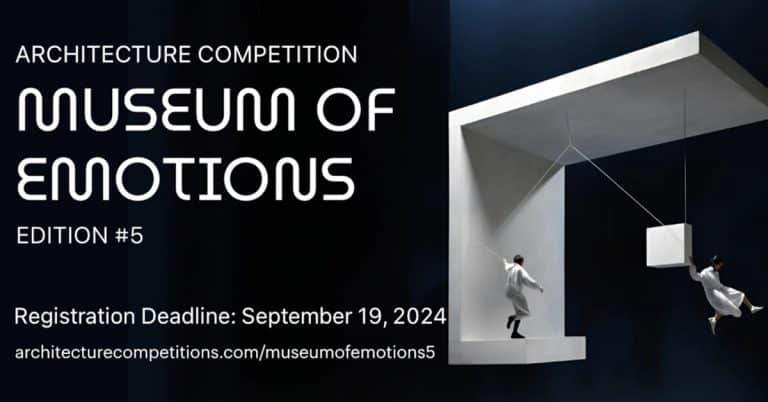
The Architect’s Stair #3


Competition Brief
Purpose
With The Architect’s Stair #3 the designers and architects are invited to investigate the essence of staircase as a pure architectural feature. Participants are offered a chance to rethink the stair beyond its basic extracting role; instead, they are to consider it as a vehicle for expressing space, conveying symbols, facilitating movement and even exploring the ideas. The organizer wants to evoke very imaginative reconsideration of the stair’s geometry, symbolism and spatiality.
Intent
The competition is intended to bring forth daring, conceptual stair proposals that are free from the traditional limitations of the program, material, scale, or context. Abstract, speculative, inhabitable, minimal, or monumental are only some of the varied types of entries that are welcome; the jury will primarily judge them for the clarity of the concept and the creativity of the thought rather than the adherence to regulations or practicability.
Jury
No details about the jury are provided for the 2026 edition of The Architect’s Stair.
Prizes
| Award | Prize (Euro) |
|---|---|
| First Prize | 3,500 € |
| Second Prize | 1,500 € |
| Third Prize | 1,000 € |
| Student Award | 1,000 € |
| Honorable Mentions (6) + Certificates | — |
Fees
| Registration Period | Entry Fee (Euro) |
|---|---|
| Early Bird (first period) | 70 € (full award package) |
| Regular / Advance Registration | 80-120 € depending on package |
| Last Minute Registration | 90-140 € depending on package |
Timeline
| Stage | Date |
|---|---|
| Final Registration Deadline | 5 March 2026 |
| Submission Deadline | 6 April 2026 (23:59 London Time) |
| Winners Announcement | 9 June 2026 |
✦ ArchUp Competition Review
The Architect’s Stair #3 is a competition held by architecturecompetitions.com, a well-known platform for conceptual and speculative design challenges, but it does not reveal any detail about the jury of the year 2026. The lack of jury disclosing reduces the confusion about the people who assess the entries and how the decision-making is influenced by the various professional backgrounds. The competition itself is of a conceptual nature and, therefore, non-professional and non-implementation-oriented, which means that the stair is represented as an abstract architectural medium rather than a functional built element. The prize structure, which goes from first place 3,500 € to several smaller awards, seems reasonable considering the open brief, but at the same time, the entry fees of 70-140 € depending on registration phase may seem high especially because of the purely speculative nature of the work and no chances of execution. Thus, the competition is mainly a Design-Portfolio exercise for the participants which allows them to explore their concepts and get recognition but does not lead to concrete professional upgrading or real project implementation.
Critical Analysis
Conceptual Freedom and Its Consequences
By providing an open framework without limits on materials, sizes, or contexts, the competition is set to allow the most creative ideas to surface. Thus, it is possible to have futuristic works that go beyond the limits of tradition. Meanwhile, unrestrained by limitations; the result may be a lot of airy-fairy proposals that few can judge through the same criteria. There is a possibility that the assessments of the proposals may end up being a matter of personal opinion regarding the strength of the idea rather than the actual viability of the architecture if there are no clear guidelines for the aspects of practicality, structural logic, or user experience.
Lack of Jury Transparency
One of the major downsides is the lack of publicly announced jury members. The participants will always be in the dark when it comes to the evaluation priorities or the decision-makers’ impartiality. This lack of transparency leads to less accountability and makes it difficult to interpret the results critically or to have trust in the fairness of the selection process.
Fee Structure: Entry vs Reward Balance
Concerns about the price being too high compared with the prize are raised by the tiered fee structure (70 € to 140 €). On one hand, the top prize and other monetary awards are huge, but on the other hand, the fees may scare away the applicants from low-income areas or those working on their own small budgets. It is very hard to tell the cost-benefit balance, mainly because of the speculative and conceptual nature of the submissions, success is largely determined by personal taste rather than objective criteria.
Risk of Overemphasis on Graphics Over Concept
The competition having the conceptual open brief could lead to the submissions of the contestants with better graphic presentation or rendering skills getting favored in selection over those with the weaker but conceptually rich proposals. The competition may unintentionally promote visual showmanship as an alternative to architectural substance or critical reflection by not having any constraints or minimum functional standards.
Potential for Conceptual Innovation vs Practical Relevance
The competition encourages the most creative and experimental approaches to architecture. This may lead to new ways of thinking and imagining architects’ abilities, but at the same time, it would be less useful if the designs lack grounding in reality. Participants who aspire to applied architectural practice may perceive the results as being of less use or as being less related to their field, particularly when the context, structural feasibility, or user-oriented criteria are completely absent.
Conclusion
The Architect’s Stair #3 is a conceptual playground where architects can express themselves through the stair as a basic element of design. The main strong point of this concept is the freedom it gives to the designer and the chance of radical reinterpretation. On the other hand, jury transparency absence, unclear evaluation criteria, and high cost barrier are all serious issues that question the fairness, accessibility, and long-term value of the competition for participants. Designers thinking about entering must consider the possible creative freedom alongside these uncertainties and decide whether the speculative benefit is worth the financial and practical cost.
Explore the Latest Architecture Exhibitions & Conferences
ArchUp offers daily updates on top global architectural exhibitions, design conferences, and professional art and design forums.
Follow key architecture competitions, check official results, and stay informed through the latest architectural news worldwide.
ArchUp is your encyclopedic hub for discovering events and design-driven opportunities across the globe.
Registration Deadline
Brought to you by the ArchUp Editorial Team
Inspiration starts here. Dive deeper into Architecture, Interior Design, Research, Cities, Design, and cutting-edge Projects on ArchUp