The Architectural Dialogue: How Furniture Interacts with Space and Light in a Mexico City Home

An Architectural Stage for a Three-Dimensional Dialogue
In southern Mexico City, within a concrete home featuring double-height spaces designed by OW Arquitectos, furniture transcends its primary function of providing comfort to become an active mediator in a visual and tactile dialogue. Two pieces by designer Omar Wade—the “Banca Tres” bench and the “Silla Cuatro” chair—lead this architectural exploration of the fundamental relationship between space, materiality, and light. The architectural design of the home, with its large skylights and windows that flood the interior with natural light, creates an ideal stage for this continuous interaction, where the furniture becomes an active participant rather than mere decoration.
Analysis of the Pieces: Design Philosophy and Physical Construction
1. Banca Tres Bench: The Fusion of Craftsmanship and the Dynamics of Life
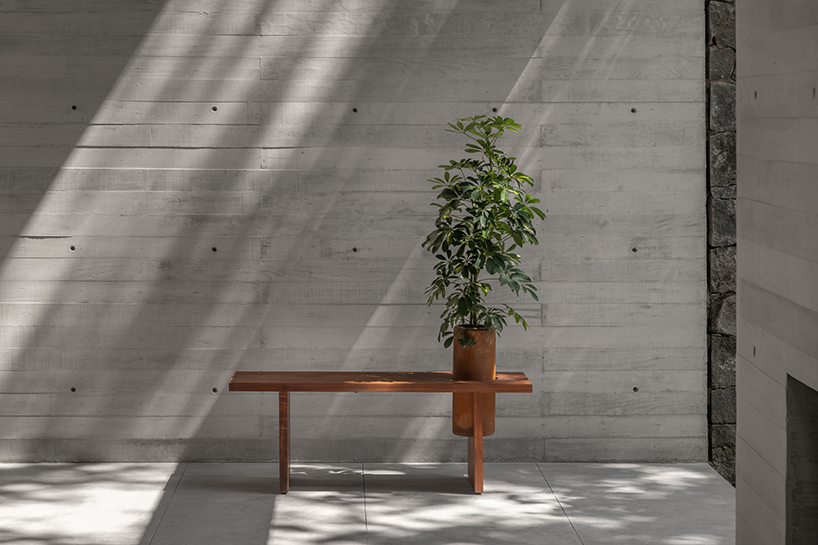
This bench represents a design vision that treats furniture as a living object that evolves over time. Crafted from local “Tzalam” wood measuring (120 × 40 × 44 cm), the design incorporates a circular opening (18 cm in diameter, 25 cm deep), specifically designed to hold a clay planter (17 × 55 cm). This addition transforms the piece from a static object into a dynamic one; the plant growing within it adds a temporal and organic dimension, linking the solidity of wood with the vitality of nature inside the architectural space.
2. Silla Cuatro Chair: The Geometry of a Transparent Cube
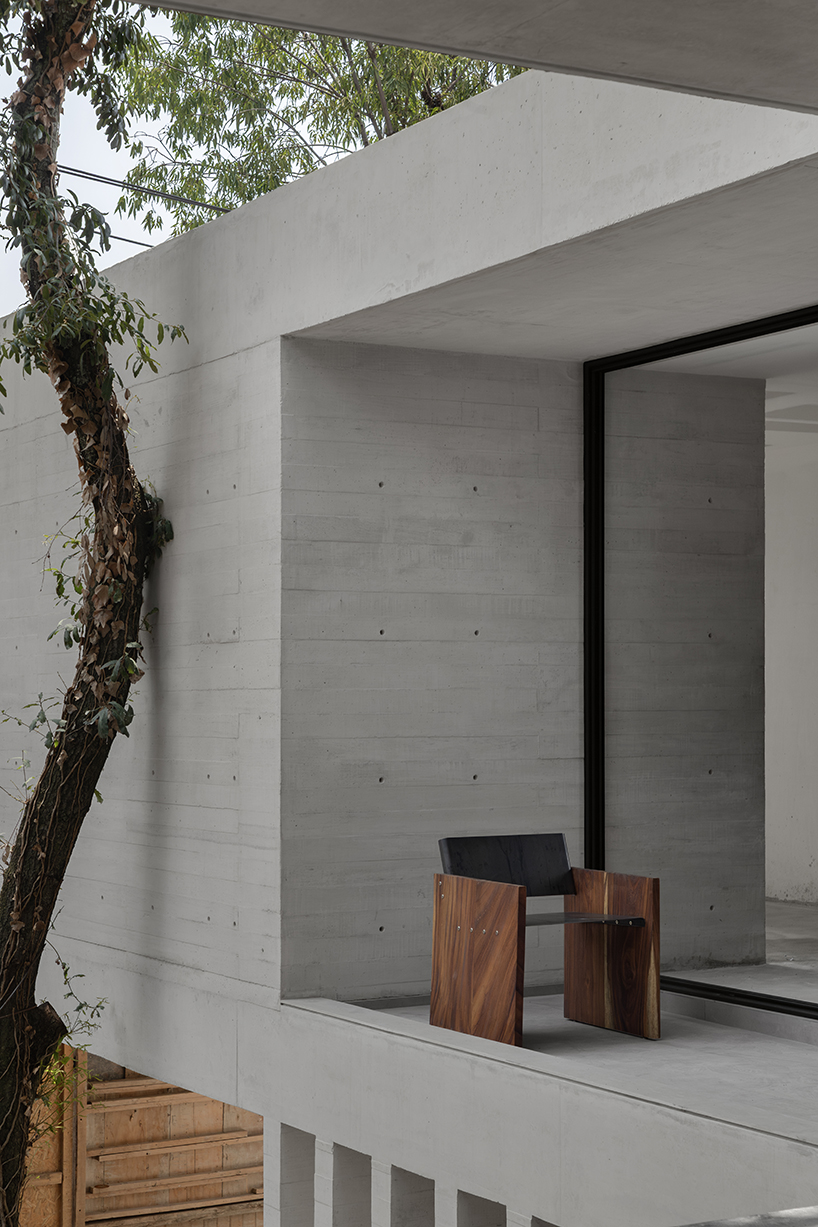
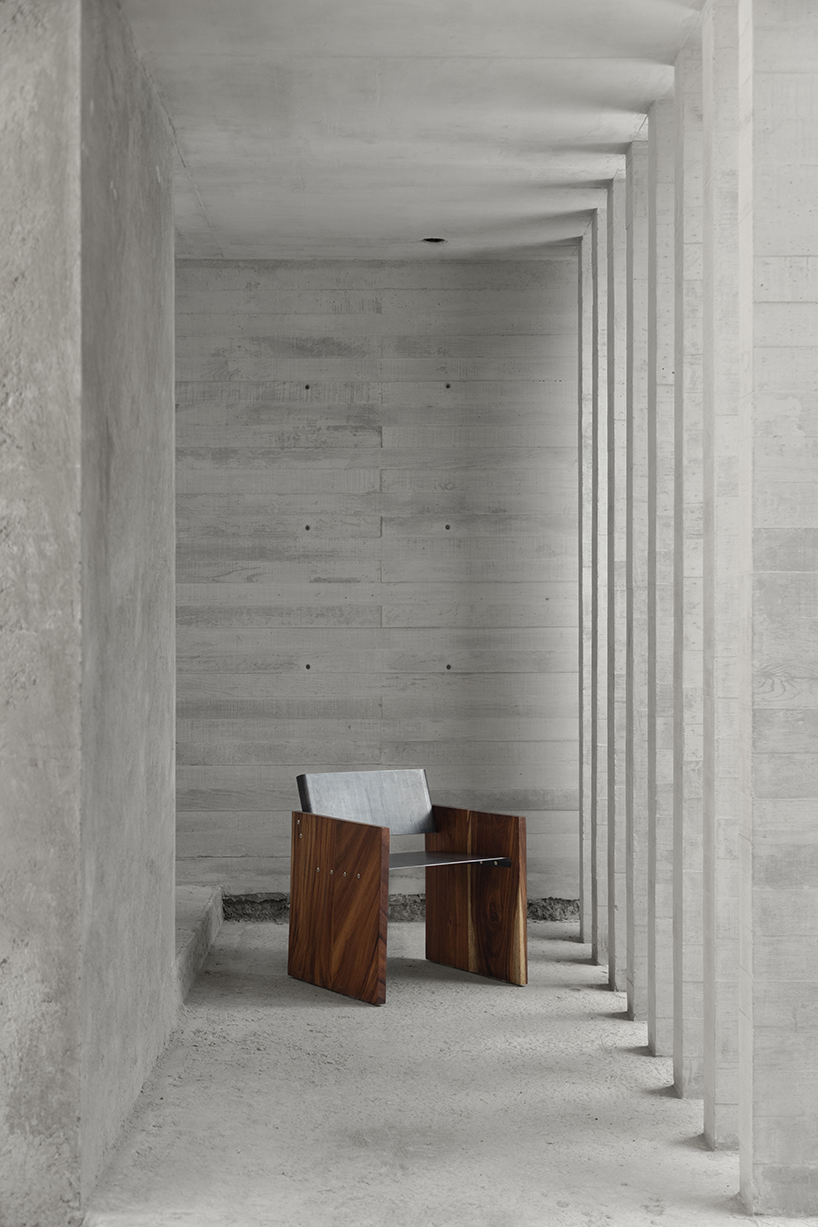
The influence of the Oaxacan coast is evident in this chair, made from locally sourced “Barrota” wood. The designer envisions the piece as a precise cube (60x60x60 cm), yet lightens its mass by using 3-mm-thick steel sheets to form the seat and backrest. These sheets with narrow edges are fastened to wooden legs using stainless steel screws, resulting in a structural composition that balances sturdiness with visual lightness, allowing light to pass through and reducing the sense of heaviness.
Interaction with the Architectural Environment: Light, Material, and Void
The Double-Height Space: A Theater of Shadows and Light
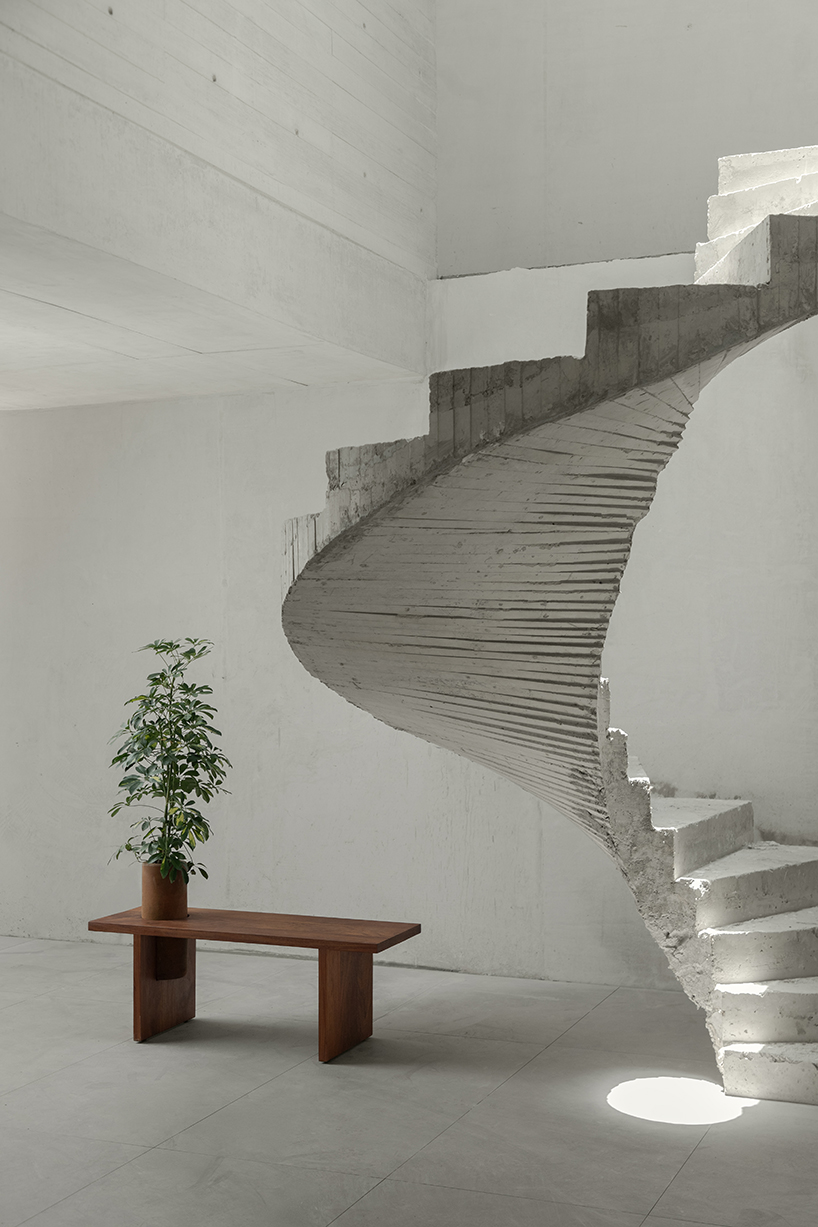
Under the main dome of the double-height space, where light flows from above to illuminate the staircase core, these two pieces stand out. The contrast between the warmth of the raw wood surface and the cool, industrial texture of the exposed concrete creates a rich sensory contrast. Throughout the day, the wood surface records the changing light, from the intensity of noon to the softness of dusk, enhancing the feeling of the passage of time within the static void. This interaction turns the pieces into instruments for measuring architectural time.
The Relationship with the Human Body: Mediating Between Scales
The two pieces act as a vital medium connecting the scale of the human body to the massive scale of the architecture. The “Banca Tres” occupies the space as a grounding element, while the “Silla Cuatro” divides the space vertically without enclosing it. Through their interaction with light and material, they invite the user to experience the place not only through sitting but also through visual and tactile observation, deepening the emotional connection to the space.
Conclusion: Furniture as a Partner in the Architectural Experience
This project confirms that the role of furniture in architecture goes beyond mere functionality. Through conscious design of material, form, and relationship with light, pieces like those designed by Omar Wade can enrich the architectural experience, transforming a dwelling from a closed shell into a dynamic and living environment. The furniture becomes a partner in a perpetual dialogue, narrating the story of the relationship between the inhabitant and the space they occupy.
✦ Archup Editorial Insight
The article examines the transformation of furniture’s role from a functional element to an active mediator in shaping the architectural experience, through a case study of the “Banca Tres” and “Silla Cuatro” pieces within the OW Arquitectos house. It is noted that the success of this proposed dialogue between the pieces and the space is highly dependent on ideal conditions of natural light and spatial volume, which may limit its application or impact in smaller spaces or those with less light exposure. The analysis lacks a discussion on the long-term performance of the materials used, such as “Tzalam” and “Barrota” wood, when facing factors like humidity and wear, which is particularly relevant given the integration of a living plant element requiring constant watering. Furthermore, the focus on visual-sensory aspects overlooks an evaluation of the basic ergonomics of the pieces during prolonged use. On a positive note, the design offers an intelligent approach to mitigating the massiveness of the concrete structure through intermediary elements that soften the harshness of the material and create visual focal points that redefine the human relationship with the surrounding void.
Brought to you by the ArchUp Editorial Team
Inspiration starts here. Dive deeper into Architecture, Interior Design, Research, Cities, Design, and cutting-edge Projectson ArchUp.