

The Contemporary Barn House in England: A Fusion of Tradition and Sustainability

In the heart of the English countryside’s rolling hills, the Downland Barns project by McLean Quinlan Architects emerges not merely as a family home but as an architectural statement redefining the relationship between dwelling and nature. This project represents an exceptional meeting of authenticity and modernity, where traditional craftsmanship joins advanced building techniques to fulfill the owners’ dream of creating a fully sustainable and welcoming space, designed for gathering, working, and living in perfect harmony with the land.
Architectural Identity: A Dialogue Between Past and Present
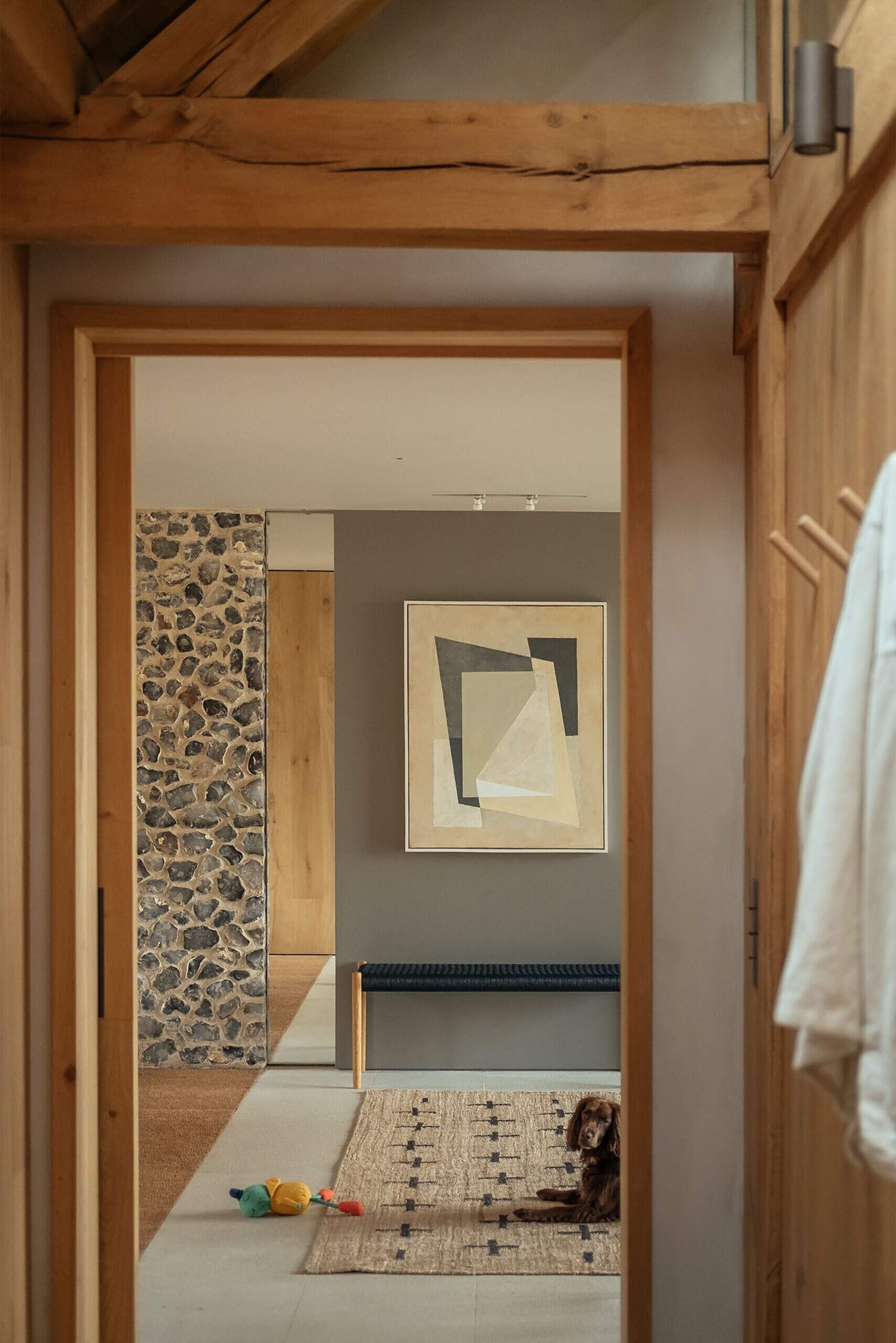
The core design of the project stems from a conscious effort to draw inspiration from the spirit of the region’s traditional barns without literal imitation. This is evident in the project’s composition of three interconnected blocks or structures, surrounded by a perimeter wall of local flint stone, characteristic of the local vernacular architecture. This configuration not only creates a sense of familiarity and intimacy but also subtly references historical agricultural compounds. The visual dominance of natural materials like blackened timber, clay tiles, and “root fire” surfaces not only pays homage to local aesthetics but also forms a unique visual and tactile identity for the place, where true modernity lies in the construction process itself, not just the final form.
Sustainable Building Techniques: Eco-Conscious Engineering
The project stands out as a model of responsible construction through its use of off-site prefabrication. The primary structure was manufactured using timber frames and highly insulated panels from sustainably managed forests, minimizing waste and disruption to the natural site. These structures were filled with innovative wood chip insulation, significantly enhancing energy efficiency. After assembly, the walls were finished with a layer of natural clay plaster, which not only gives the walls a soft, warm touch but also helps regulate humidity and improve indoor air quality, while reducing the environmental impact to a minimum. In commitment to the local context, the flint stone was sourced from local sites in the Southeast and laid by skilled craftspeople, connecting the building to the traditions of the place in both a material and artisanal way.
The Arrival Sequence: A Threshold Between Worlds
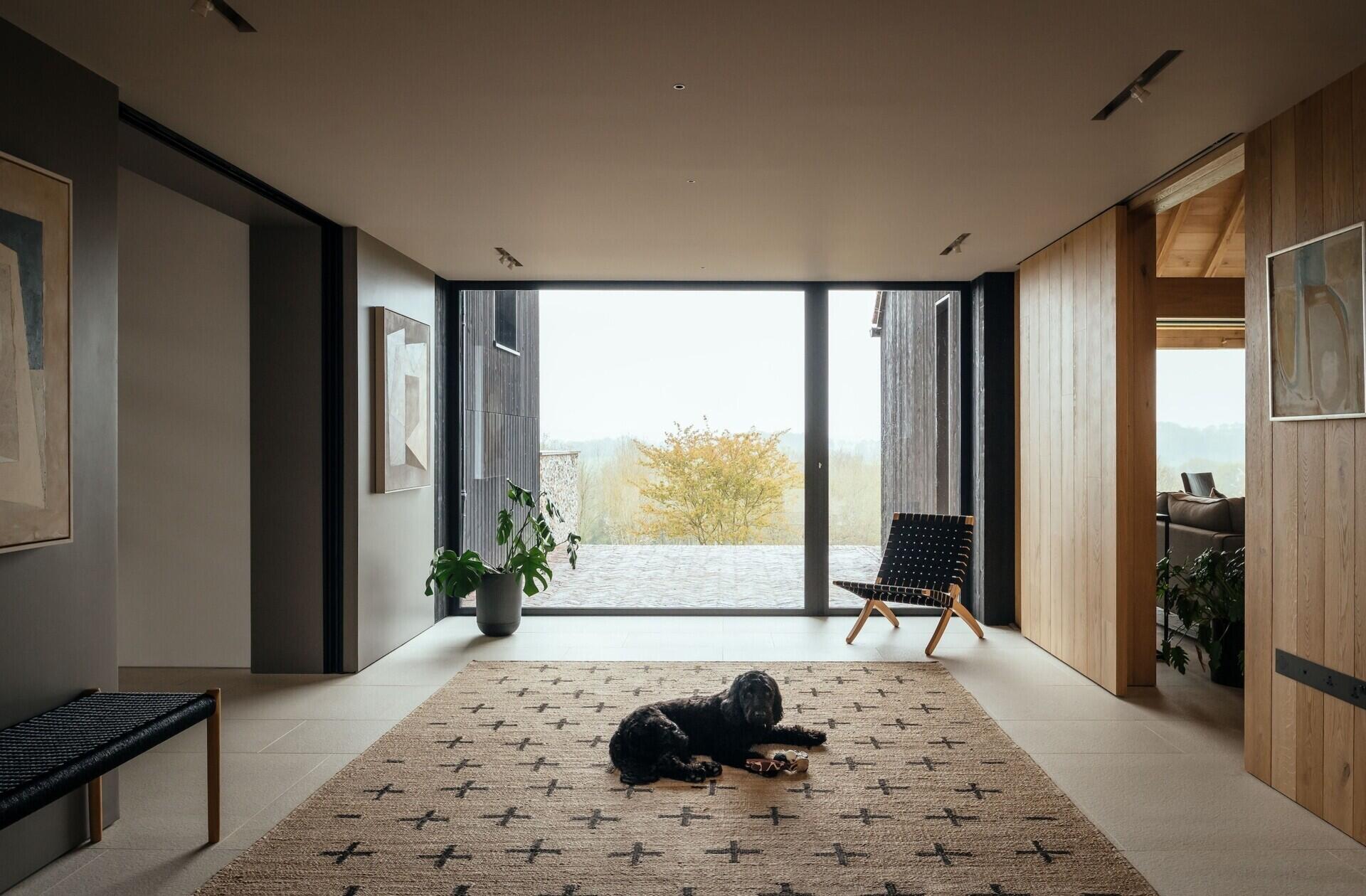
The experience of the place begins upon approaching the property, where the visitor is greeted by the flint wall that sets the project’s tone from the first moment—a tone suggesting protection and roots. This wall acts as a symbolic and physical threshold, separating the vast external space from the light-filled interior. The entrance then gently unfolds, revealing the first tactile palette inside: a blend of smooth clay plaster and warm oak timber. This entrance acts not just as a passage but as a frame offering controlled glimpses of the external landscape, creating a sense of anticipation before reaching the heart of the home.
The Heart of the Project: The Multi-Functional Central Barn
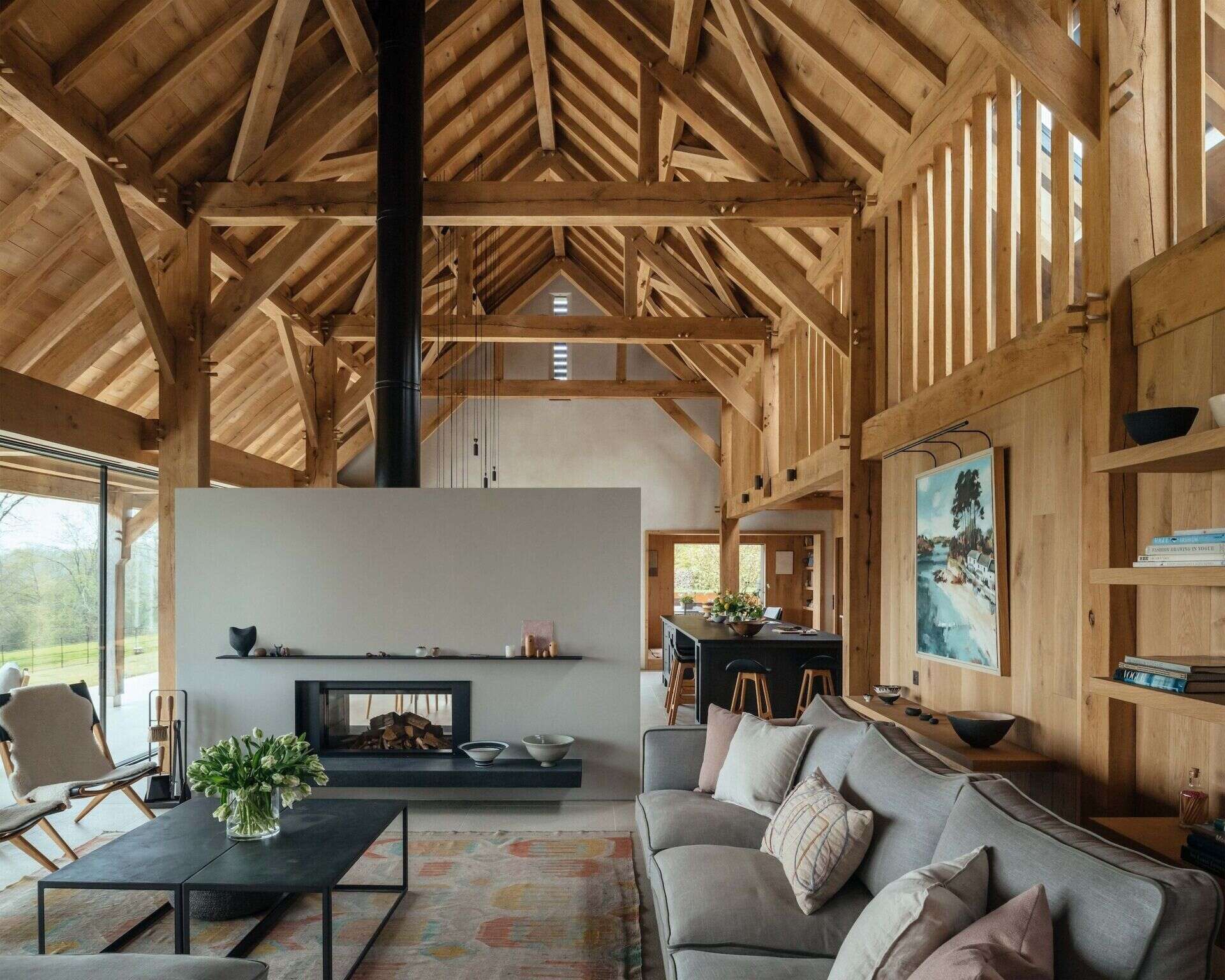
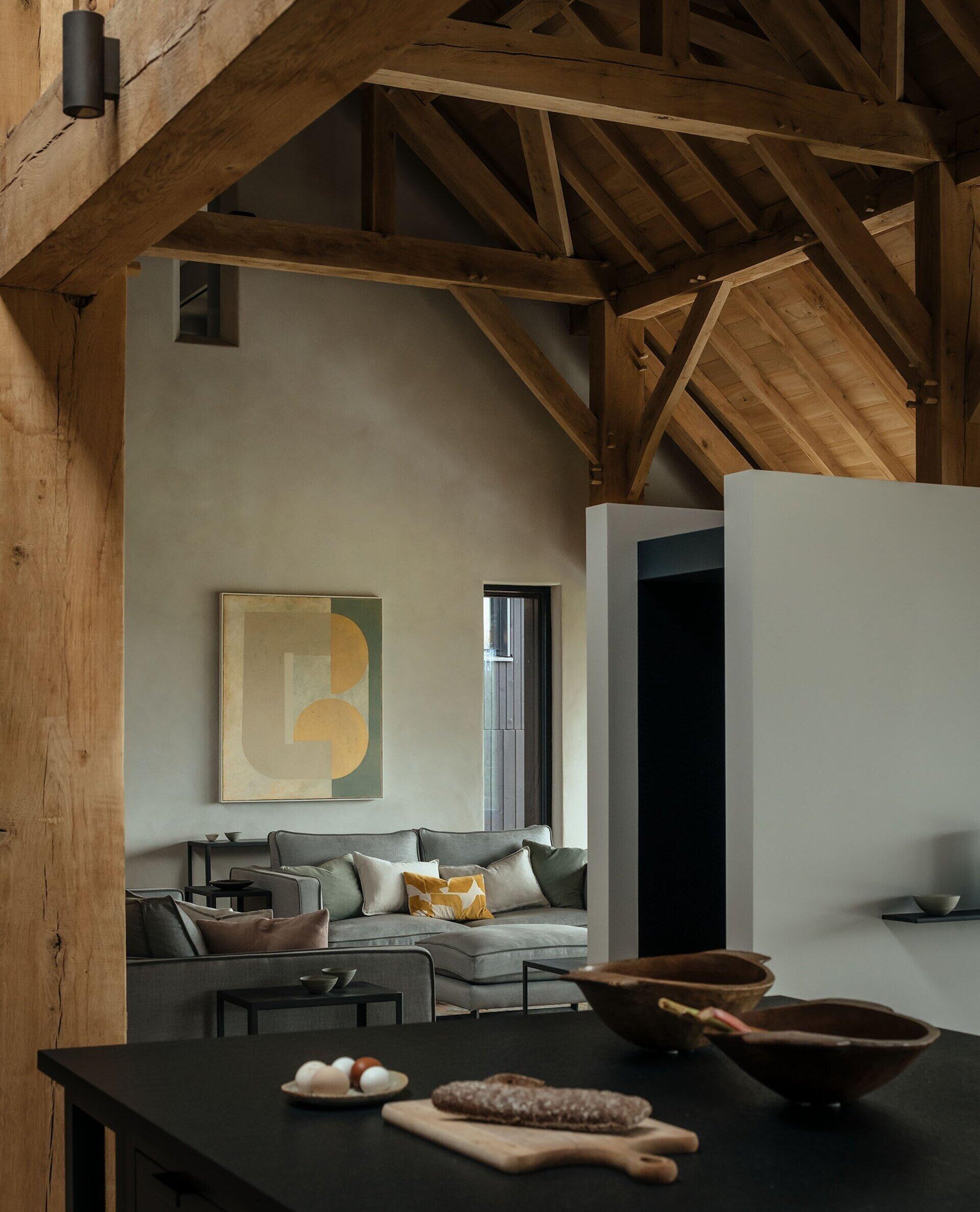
The main living room, or “central barn,” sits at the core of the architectural composition, emphasizing its role as a space for gathering and social vitality. The room is anchored by a central fireplace that forms a focal point of visual and sensory attraction, bringing physical and emotional warmth to the space. Designed with a high ceiling and generous proportions to accommodate large gatherings of up to 50 people, the use of exposed timber beams and organic materials like clay plaster prevents the space from feeling empty or cold, maintaining a sense of intimacy. The visual openness achieved through full-height glazed doors blurs the boundaries between inside and outside, creating a continuous flow onto the terrace and surrounding hills. The changing light acts as a natural lighting designer, making the space adaptable to different times of day and occasions, from quiet evenings by the fire to lively celebrations.
The Kitchen and Dining Area: Where Functions Overlap
The kitchen is strategically located adjacent to the central barn, bathed in constant northern light from roof lights, which eliminates harsh shadows and provides even, ideal illumination for cooking and detailed tasks. The materials here were selected to balance daily durability with refined aesthetics, made to withstand family life and serve as a stage for entertainment. The dining area is centered around a long wooden table, positioned to create an uninterrupted visual and functional connection with both the kitchen and the living room. This open planning facilitates the organic overlap of cooking, eating, and social interaction. The large glass panels ensure that even when gathered around the table, guests remain constantly connected to the picturesque landscape outside, reinforcing the idea of integration with the surroundings.
The Secondary Wing: Privacy and Autonomy
Acknowledging the need for balance between social life and privacy, the project includes a separate secondary structure. This wing contains a small bedroom and a compact kitchen, making it an ideal solution for hosting guests on extended stays or providing a space for work or solitude. The design of this area reflects the warmth and aesthetics of the main spaces but with a quieter, more private character, giving its occupants a sense of independence and comfort.
Timber: A Fabric Linking Past and Present
Wood serves as the narrative thread that binds the parts of the project together. The green oak frame that forms the structure of the central barn revives the memory of the original barn that stood on the site. This connection is reinforced in the pottery studio, equipped with reclaimed timber beams that fill the air with the scent of wood and honey, creating a sensory link to the history of the place. In every corner, timber expresses not only the structural framework but also shapes the atmospheric and emotional envelope of the dwelling.
Conclusion: More Than Just a Home
The Downland Barns project transcends being a luxurious residence to become an inspiring model for conscious, sustainable architecture. It proves that when a thoughtful marriage occurs between local building traditions and modern technological innovations, architectural spaces can be created that not only respect their environment but also enrich the human experience of inhabiting them. It is a celebration of simplicity, beauty, and environmental responsibility all at once.
✦ ArchUp Editorial Vision
The article discusses the Downland Barns residential project, which attempts to reconcile a form inspired by traditional barns with modern sustainable building techniques. Through a design analysis, it is noted that the central planning of the main space around the fireplace, despite its spaciousness, may create challenges in optimizing the use of corners and areas distant from the central focal point, potentially affecting the efficiency of activity distribution within the single volume. Furthermore, the heavy reliance on full-height glazing, despite its luminous benefits, raises questions regarding thermal insulation in harsh weather conditions and long-term energy consumption efficiency. On a positive note, the project is distinguished by its coherent use of local materials such as flint stone and clay plaster, which not only enhances the visual identity but also tangibly reduces the carbon footprint of the construction process.
Brought to you by the ArchUp Editorial Team
Inspiration starts here. Dive deeper into Architecture, Interior Design, Research, Cities, Design, and cutting-edge Projectson ArchUp.


