

The Day House: Transforming Victorian Architecture into Modernity in Melbourne

Introduction: An Architectural Transformation Journey
The Day House in the Melbourne suburb of Malvern represents an exceptional model for revitalizing architectural heritage through a contemporary intervention that respects the past while embracing the future. Completed by IF Architecture, this project stands as a unique case study in balancing the functional demands of modern living with the preservation of a Victorian building’s historical identity.
Historical Context and Architectural Transformation
This building originated in the Victorian era, designed by architect Nicholas Day over a century ago. As time passed, multiple layers of modifications and additions accumulated onto the original structure, causing the home to lose its functional and visual coherence. The house became an architectural puzzle, lacking flow and connection between its different spaces, rendering it inadequate for the needs of a modern family and contemporary life.
Design Methodology: A Dialogue Between Eras
The architectural intervention strategy was based on the principle of “clear distinction” between old and new, deliberately separating the restored historical volume from the contemporary addition. The designers did not seek to mimic the Victorian style or force an integration between the new and old; instead, they chose to create an explicit visual dialogue between two distinct architectural languages.
The Heritage Façade: Reviving Architectural Memory
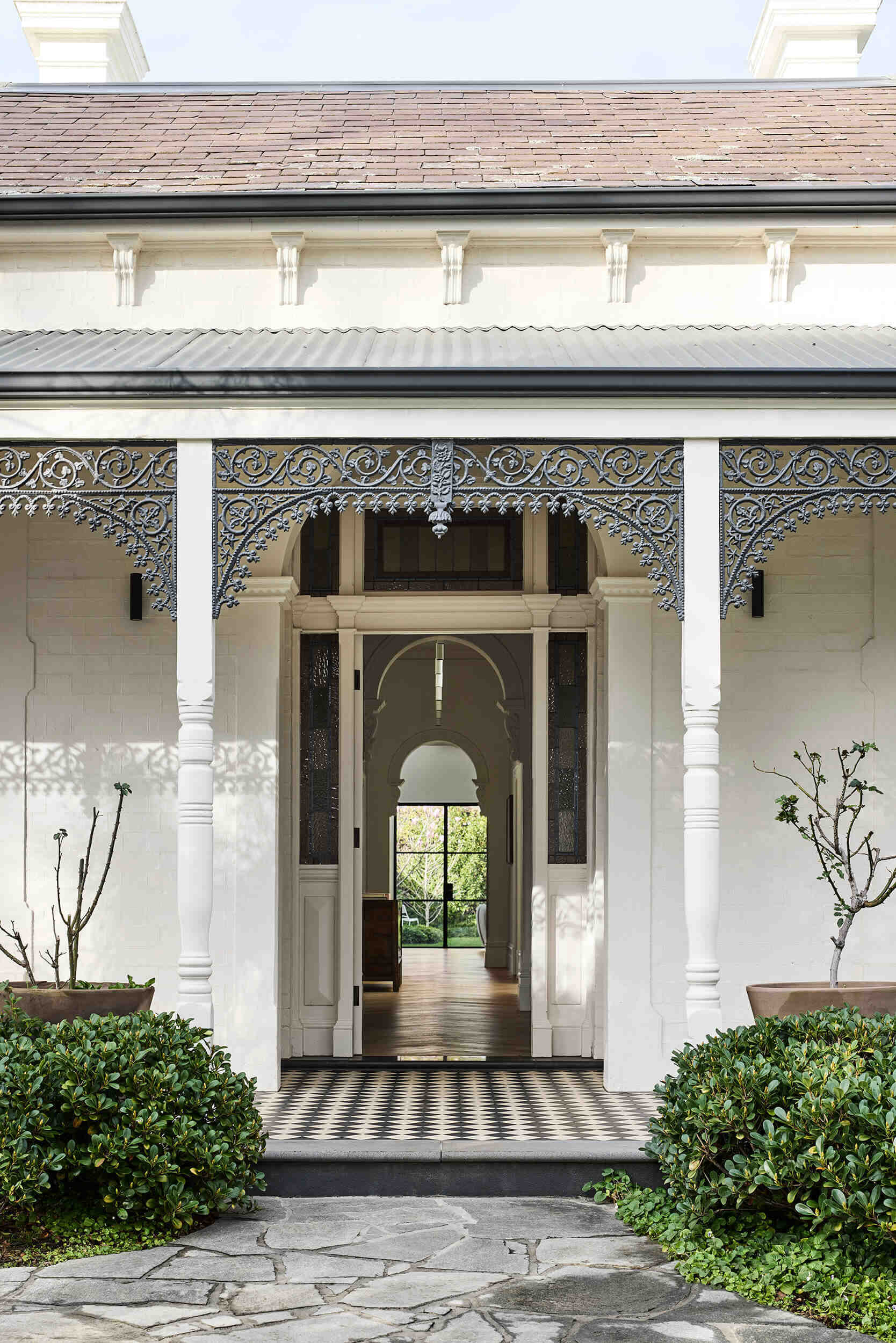
The front façade and original veranda of the house were meticulously restored, preserving all characteristic Victorian decorative elements. The work involved rehabilitating intricate woodwork, traditional-style windows, and pitched roofs with classic tiling. This restored section serves as a living testimony to Victorian architecture and the lifestyle of the era in which the house was built.
The Contemporary Addition: A New Language in an Old Dialogue
The new rear addition represents a distinctly modern architectural statement, employing a clear material language based on:
· Dark timber providing warmth and visual depth
· Transparent glass surfaces creating visual transparency
· Simplified roof lines expressing modernity and functionality
The Spatial Experience: From Darkness to Light
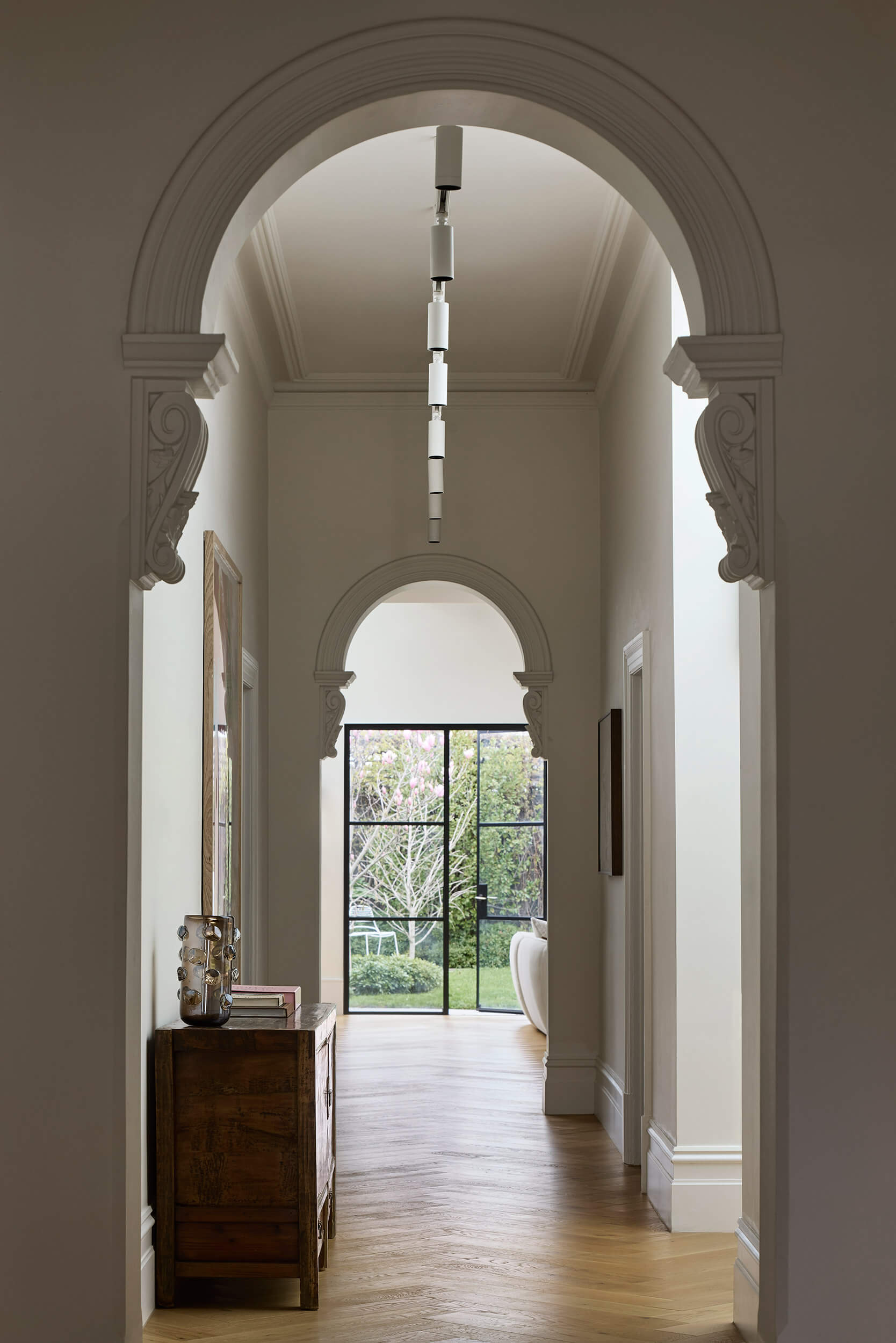
The transition from the old to the new section constitutes a gradual sensory journey, moving the occupant from relatively enclosed spaces to open, light-flooded areas. The herringbone timber floors act as a unifying thread connecting the different parts, maintaining sensory continuity despite the stylistic differences.
Interior Spaces: Between Function and Aesthetics
The internal layout was radically reorganized, transforming fragmented areas into connected spaces serving contemporary family life:
The Open-Plan Living Area
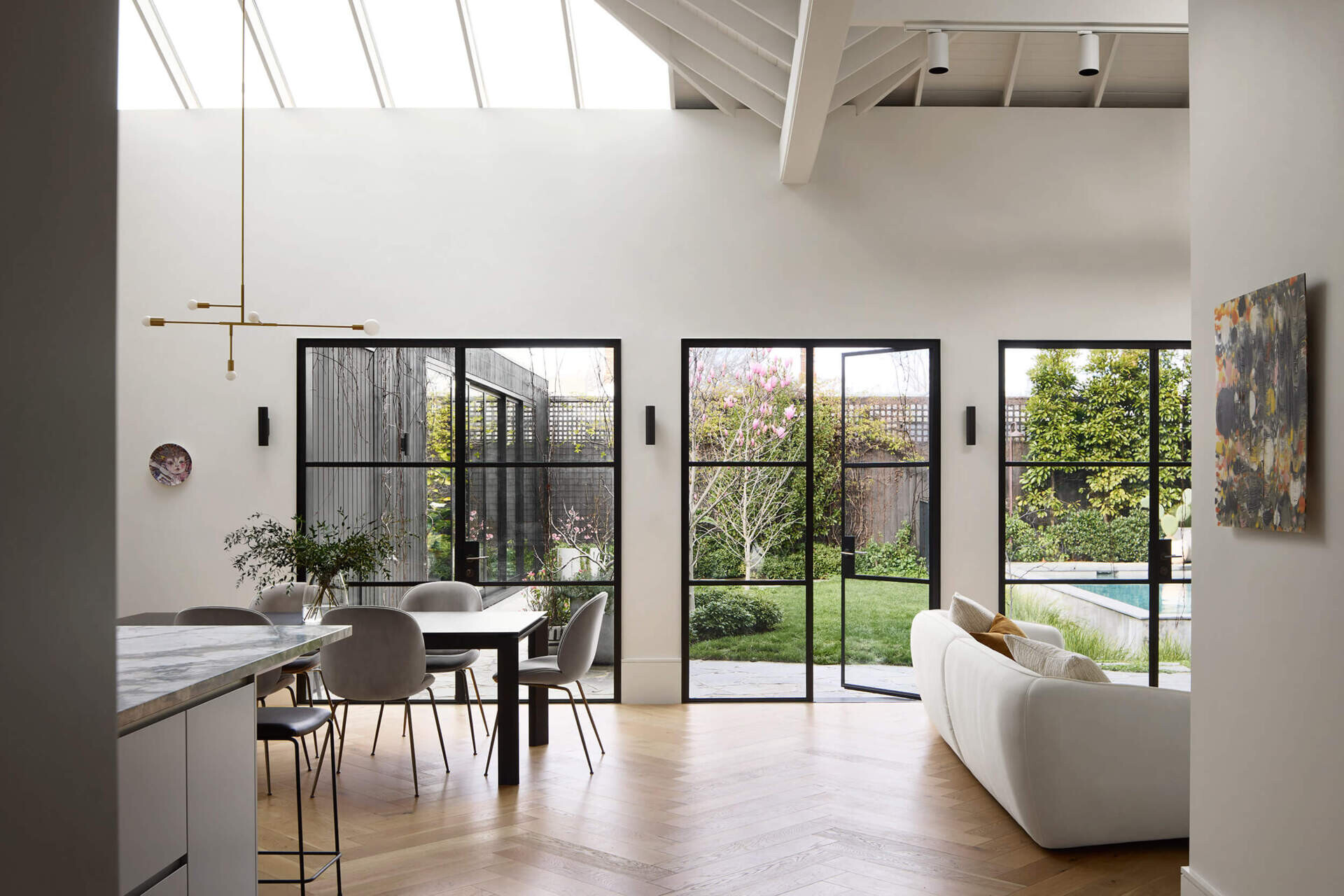
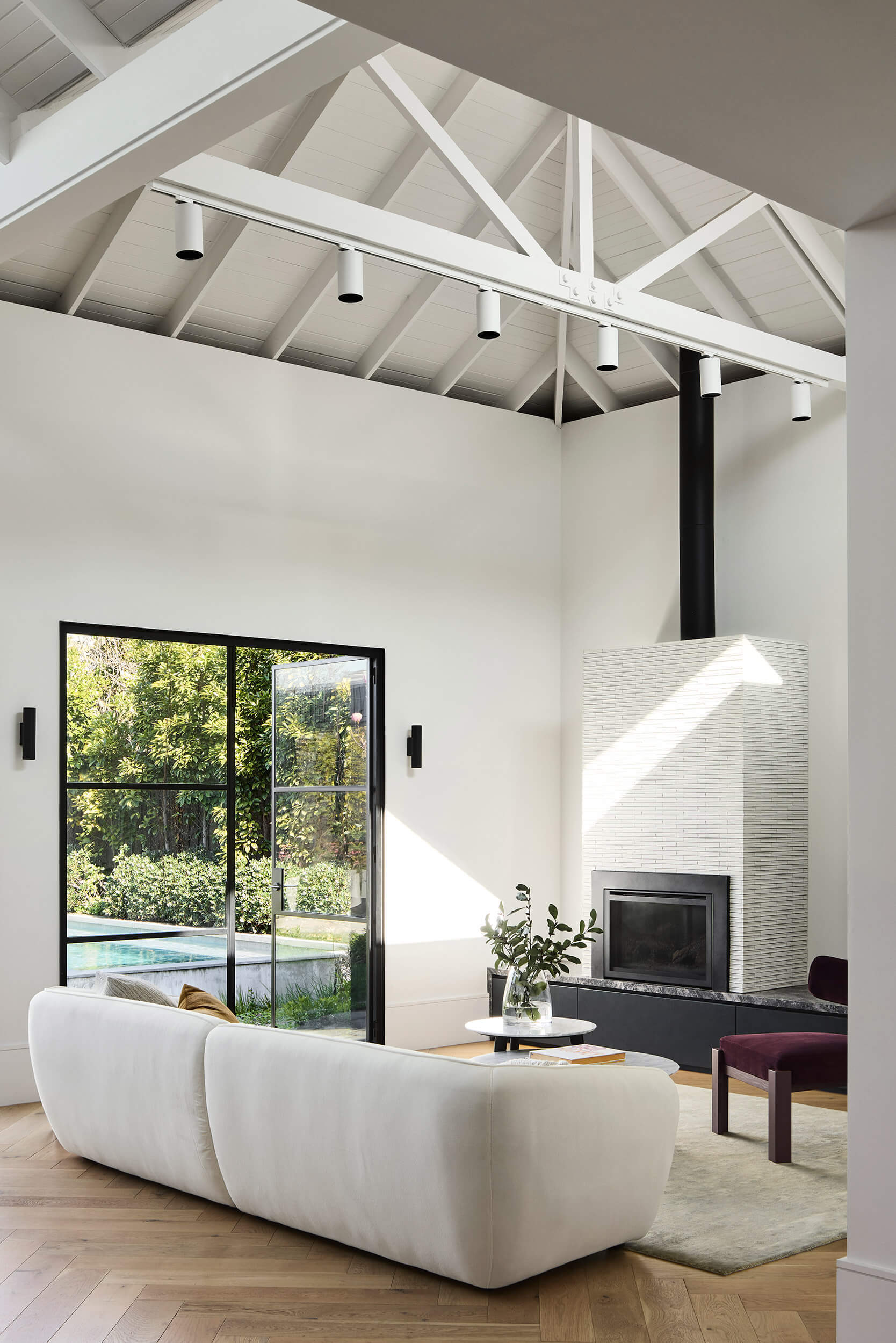
The living, dining, and kitchen areas were merged into a single connected volume, flooded with natural light from large windows with slender steel frames. The garden becomes a visual extension of the interior space, creating a sense of constant connection with nature.
The Kitchen: The Heart of the Home
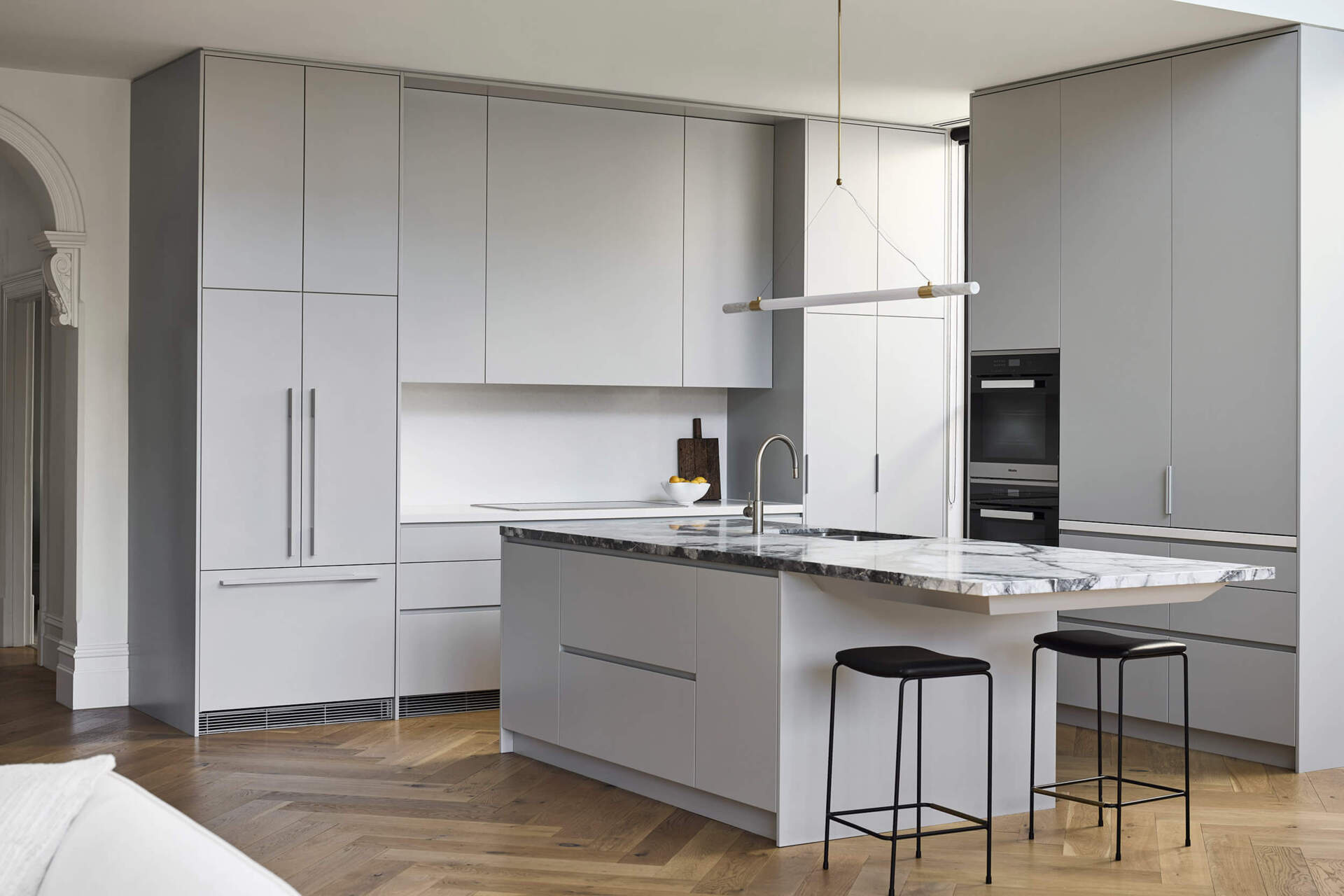
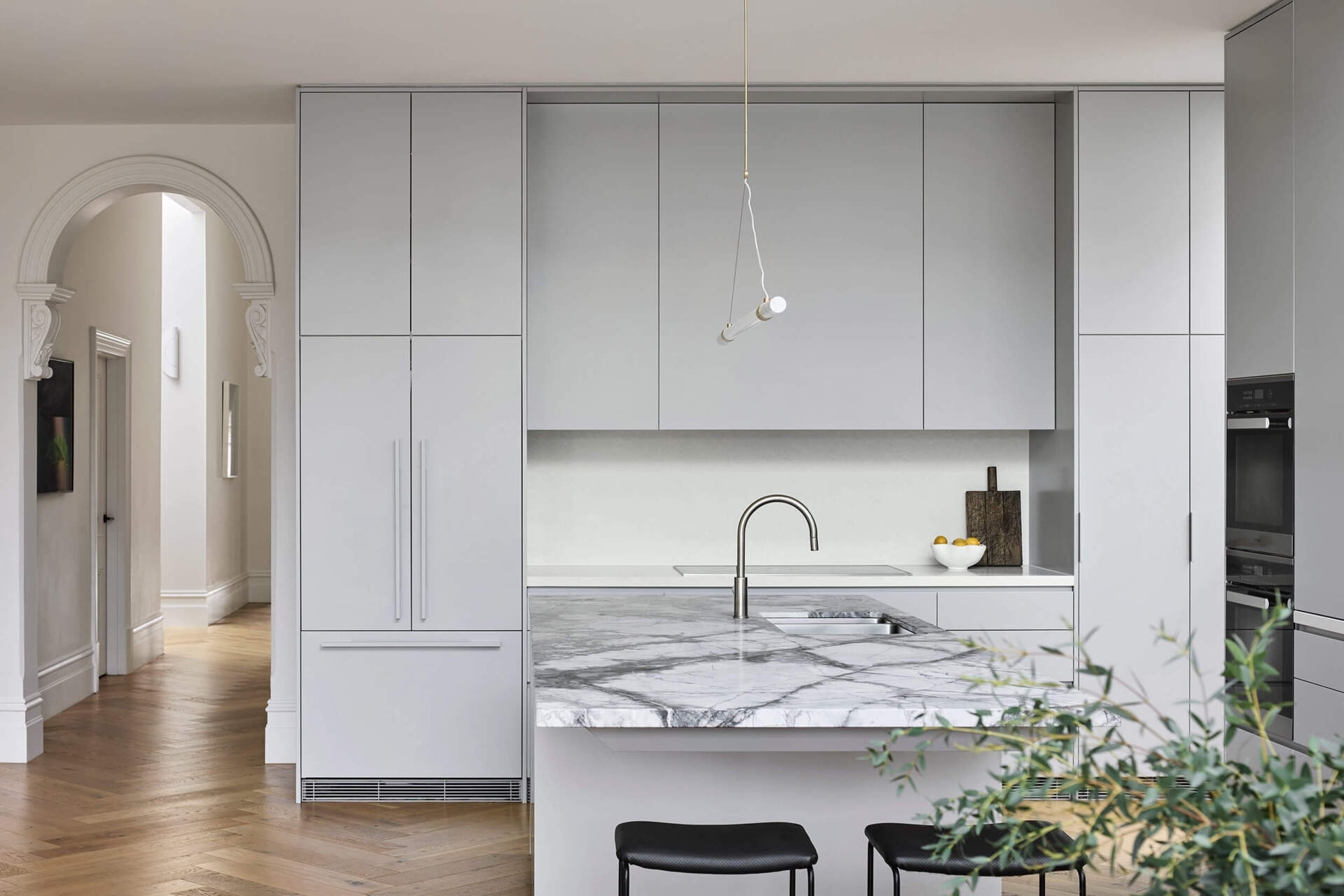
The stone kitchen island is positioned as a central element in the design, functioning as a platform for daily family interaction. Materials were carefully selected, combining natural marble, organic timber, and copper lighting to form a cohesive material palette.
The Front Living Room: Respecting the Legacy
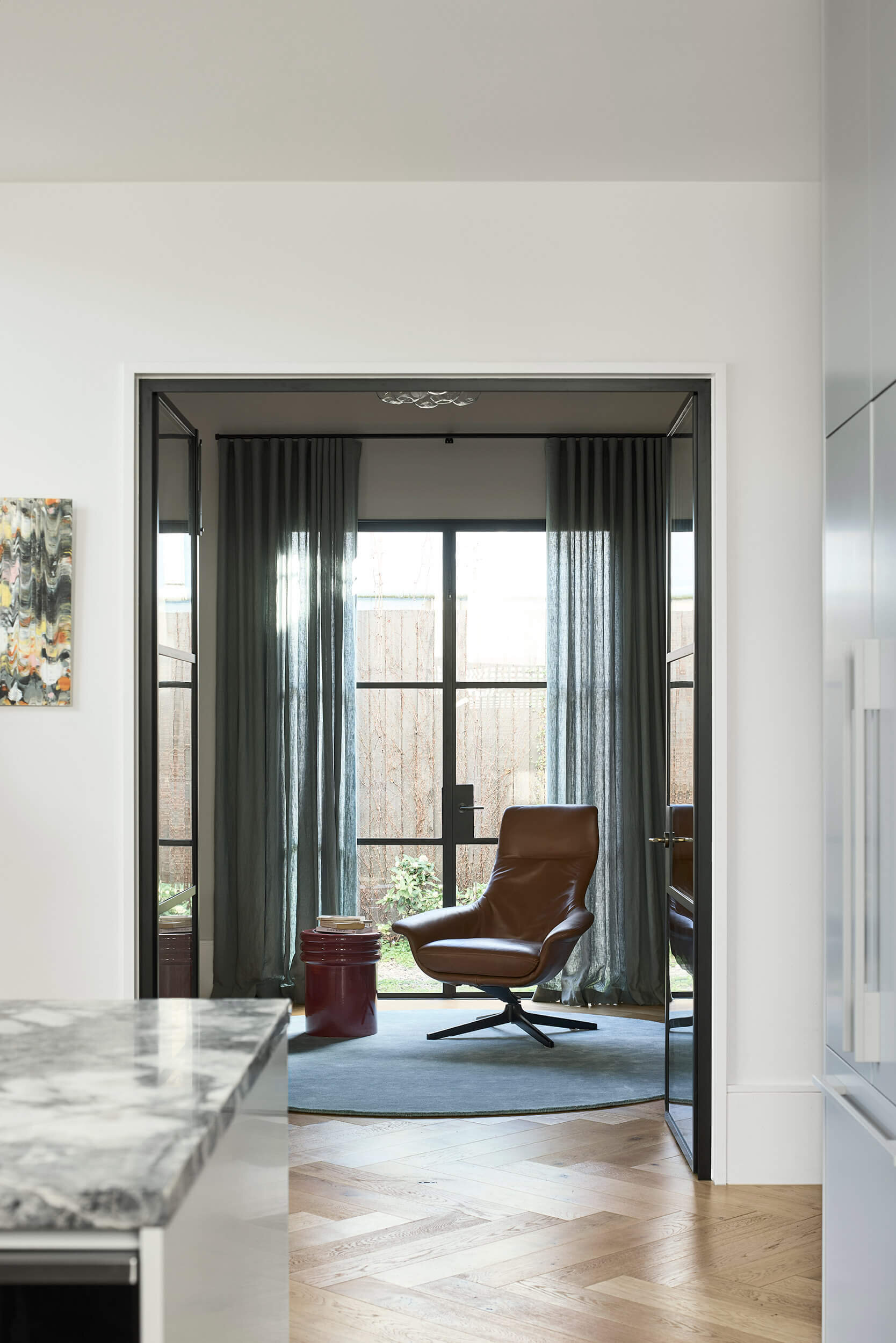
The original character of the front living room was preserved, with subtle improvements to colours and textures to soften the historical severity and make the space more suitable for contemporary use.
Integration with the Landscape: Erasing Boundaries
The blending of interior and exterior is one of the project’s most significant achievements. By extending continuous flooring from the inside to the outdoor patio, the traditional boundaries between built and natural spaces were erased. The garden becomes an integral part of the living experience, enjoyable throughout the different seasons.
Materials and Craftsmanship: A Dialogue of Texture and Colour
The project relied on a refined material palette including:
· Natural stone for floors and walls
· Organic timber for flooring and furniture
· Metals for details and lighting
· Glass for openings and partitions
Sustainability and Energy Efficiency
Non-visible sustainable solutions were integrated, including:
· Advanced thermal insulation systems
· High-performance double-glazed windows
· Energy-efficient lighting systems
· Improved natural ventilation through passive design
Conclusion: A Renewed Legacy for Future Generations
The Day House serves as an inspiring model for how to treat architectural heritage not as a burden to be maintained, but as an opportunity for creativity and renewal. This project proves that the past and present can coexist in a fruitful dialogue that enriches the living experience and preserves the collective memory of a place.
✦ Archup Editorial Insight
The project involves converting a traditional Victorian residence into a contemporary building that meets the needs of a modern family. The design relies on a complete separation between the restored historical volume and the modern addition, creating a clear visual break between the past and present. The challenge lies in achieving functional integration between the two parts, where their relationship remains more of a physical connection than a genuine fusion. Modern materials like glass and dark timber are used in a way that can overshadow the original building’s character in some spaces. The intervention succeeds in improving the flow of movement between interior spaces and providing a direct visual connection with the garden, enhancing the quality of daily life within the home.
Brought to you by the ArchUp Editorial Team
Inspiration starts here. Dive deeper into Architecture, Interior Design, Research, Cities, Design, and cutting-edge Projectson ArchUp.


