The Family Dream Home in 10 Days: How Modular Construction Balances Modernity and Nature

A young family has successfully turned their dream of owning a modern home by the lake into a tangible reality in record time, showcasing the efficiency of prefabricated modular construction. By commissioning Diplombum, a specialist company, they received not only a high-quality residence but also one that was fully assembled in just ten days, presenting a practical model for alternative building methods that respect the environment and meet contemporary needs.
From First Experience to Custom Design: The Evolution of a Living Concept
The story begins with the family’s previous successful experience with a smaller Diplombum model, which built the confidence to commission a larger, fully customized home. The architects took the family’s requirements and expanded their standard design to suit a new site with unique specifications. The design philosophy is based on creating a dialogue between architecture and nature, making the home an integral part of its surroundings rather than an intrusive element.
Building Materials: Where Rustic Soul Meets Modern Industry
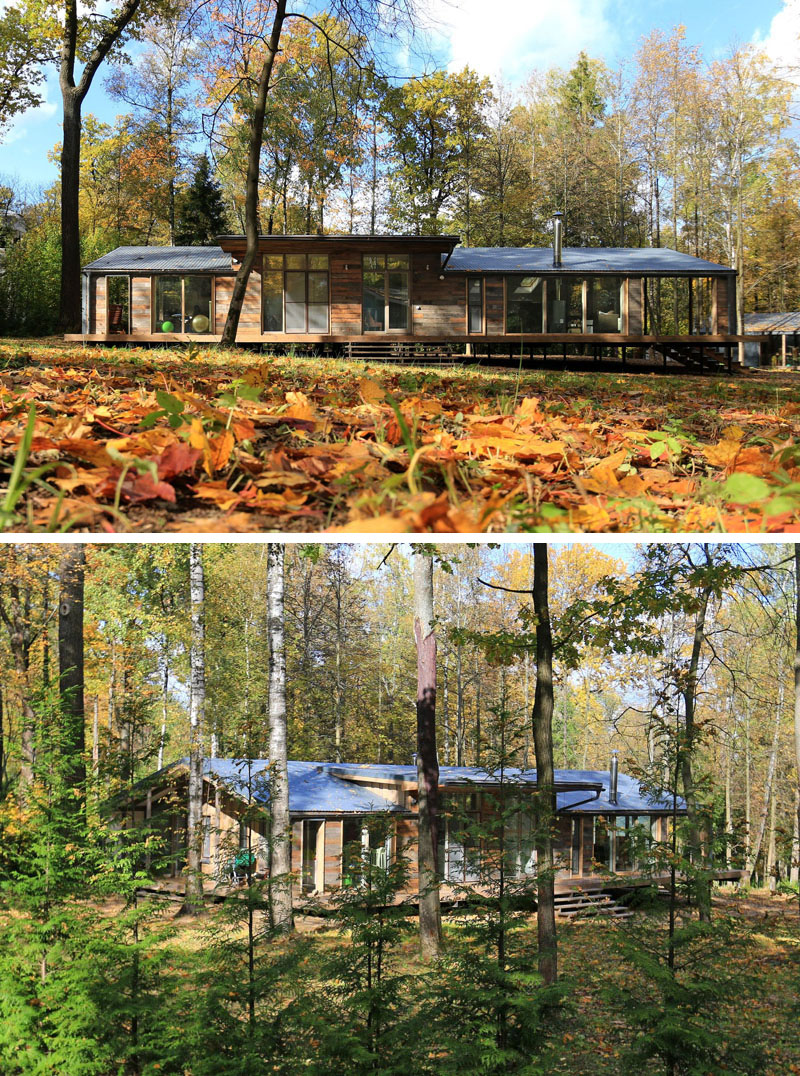
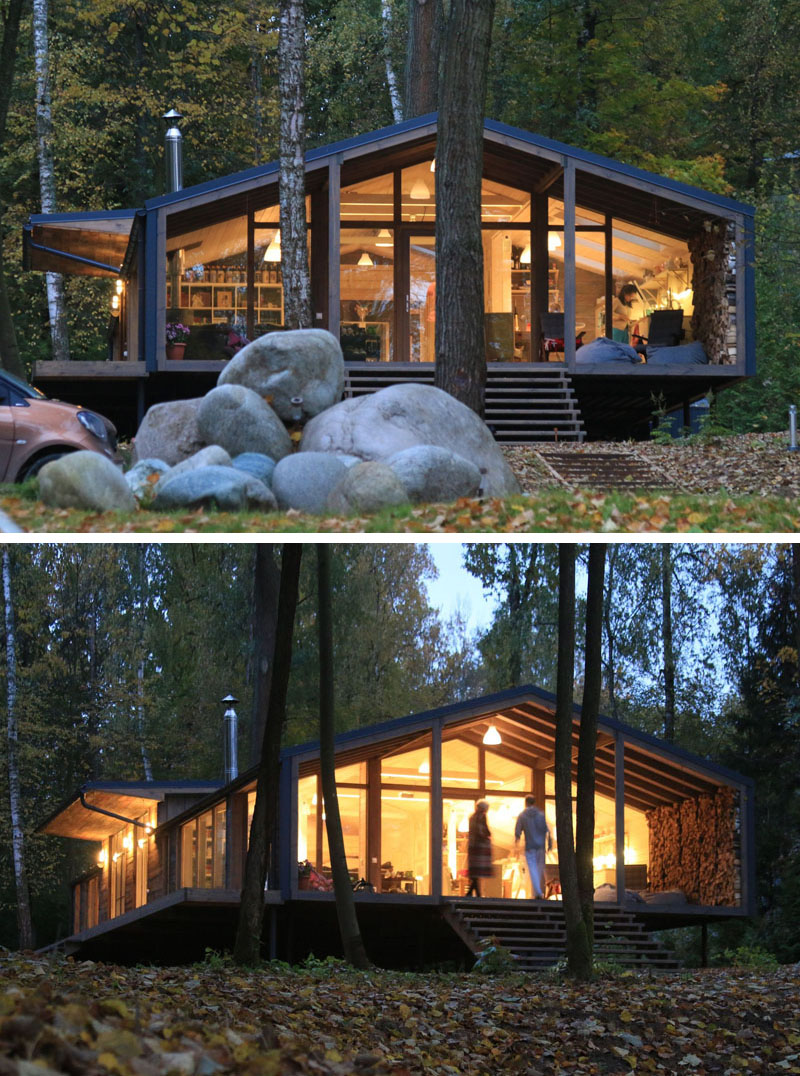
A conscious simplicity characterizes the project through the use of honest materials that express their function without ornamentation. The design blends industrially-sourced materials like the steel frame—ensuring durability and rapid assembly—with reinterpreted traditional materials such as barn siding, which gives the facades an organic and warm character. Large glass facades break down the barriers between inside and outside, allowing natural light to flood in and providing constant views of the landscape, enhancing the feeling of spaciousness and connection to the place.
Just 10 Days: Construction Speed and Efficiency as a Modern Solution
The execution phase of the project represents a quantum leap in construction timelines. All modular units arrived on site fully manufactured and finished, including infrastructure, interior fittings, and even furniture. This method drastically accelerated the building process, with the entire structure assembled in just ten days. This efficiency is not just about saving time; it also minimizes mess, noise, and negative environmental impact on the site, a significant benefit for families who value quiet and sustainability.
Interior Design: The Philosophy of Open, Naturally Lit Spaces
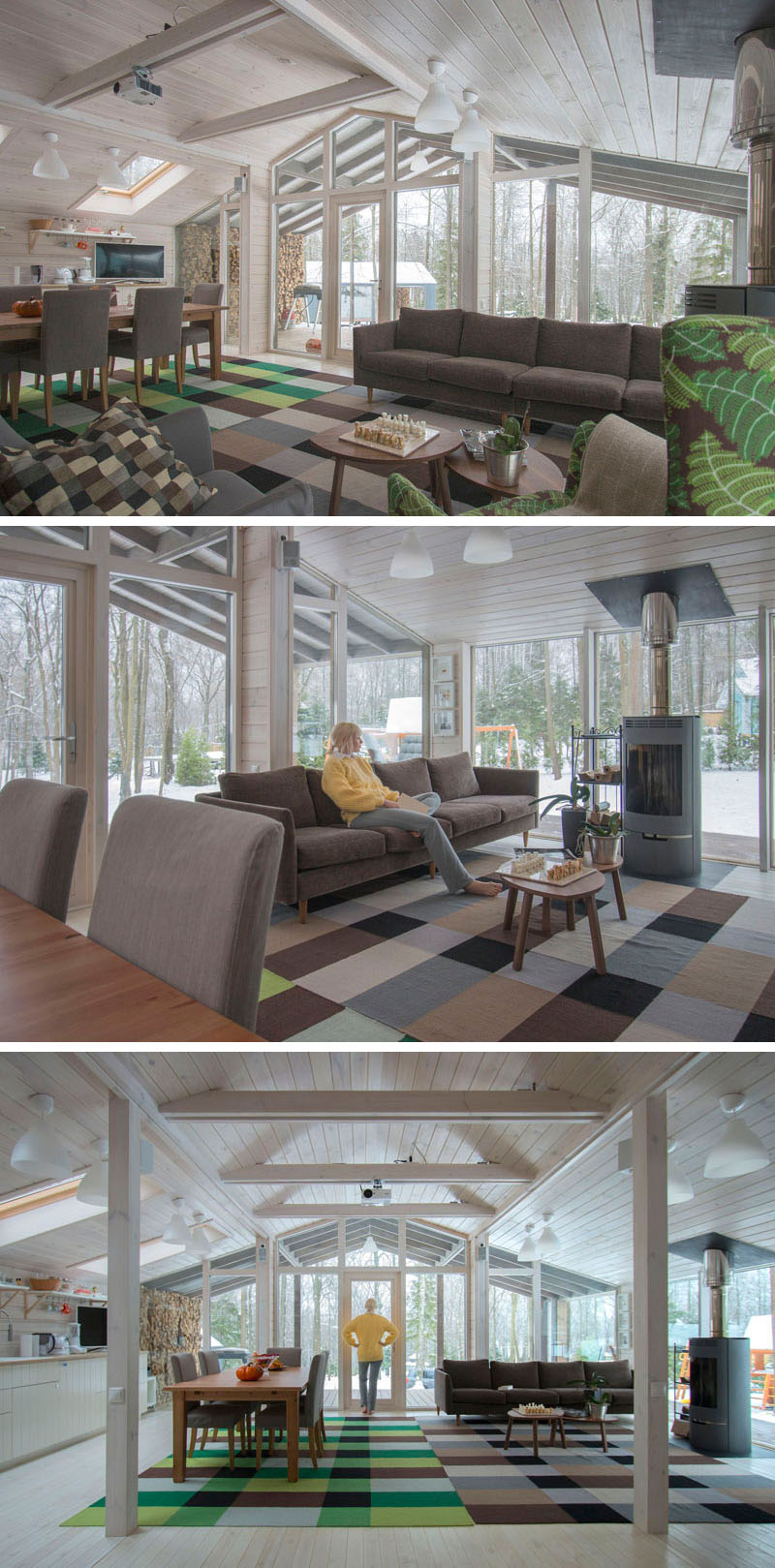
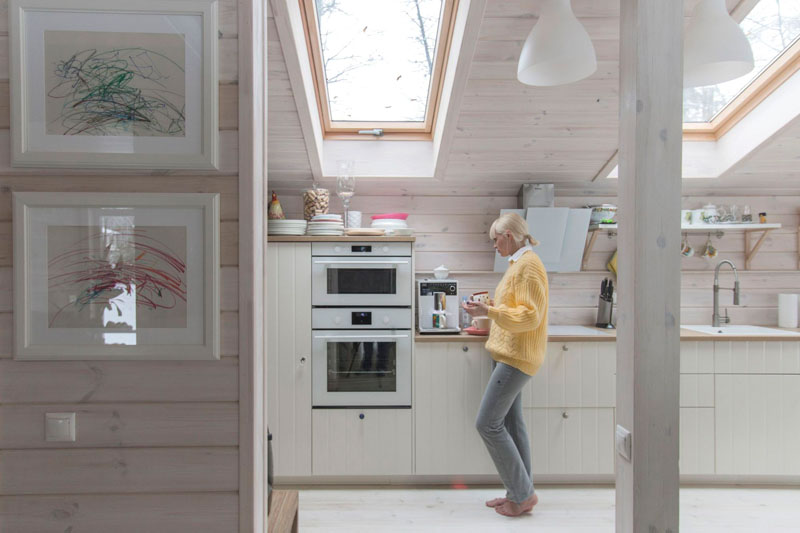
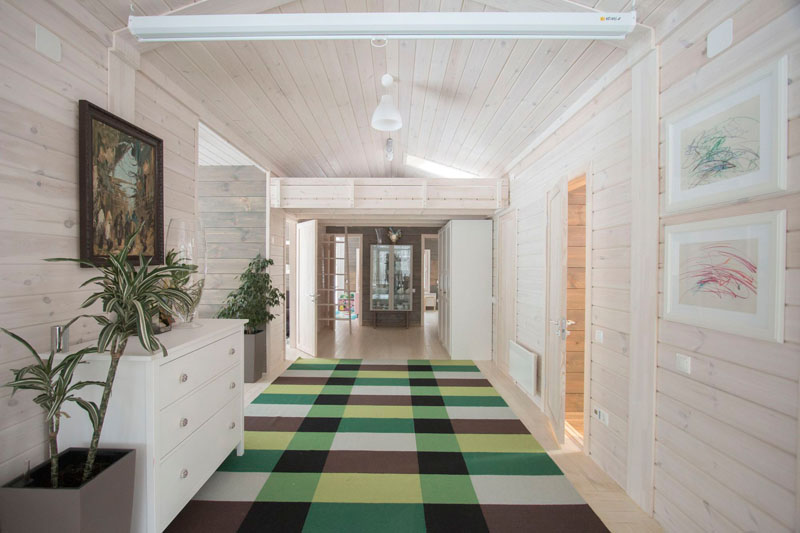
Upon entering, one steps into a world of visual fluidity and brightness, thanks to an interior design conceived by the homeowner, Anastasia Sokolova. The layout is based on an Open Plan concept, integrating the living and dining areas into a single, connected space that fosters family interaction and easy movement. The atmosphere is defined by white-painted pine paneling, which reflects light and contributes to creating bright, airy rooms. Rugs in muted colors are used to define different functional zones without breaking the flow, while skylights and large windows play a pivotal role in bathing the spaces in natural light throughout the day.
The Kitchen: The Vibrant Heart of the Home
The kitchen is positioned practically and elegantly next to the dining area, stretching along one wall to provide an efficient workspace without hindering movement. Light wood cabinets add warmth and simplicity, while the streamlined design maintains functionality, making it an ideal environment for easy and social cooking, seamlessly connected to the main living area.
Thoughtful Layout: Balancing Community Life and Privacy
The entrance leads from the active communal zone to a quiet wing dedicated to private rooms, creating a smooth transition between spaces. The master bedroom includes an ensuite bathroom for maximum comfort, while independent bedrooms are allocated for each child, plus a guest room. The design is completed with a second bathroom and a spacious storage room, ensuring the home supports not only family interaction but also provides areas for privacy and relaxation, enhancing practicality in daily life.
Conclusion: Modular Construction is Not Just a Quick Fix, But a Contemporary Architectural Statement
This home represents more than just a quick solution to housing needs; it is a statement reflecting a contemporary trend towards intelligent and sustainable architecture. It proves that efficiency does not mean sacrificing aesthetics and that privacy can coexist with openness. This model serves as an inspiration for families seeking to realize their dream of living in nature without sacrificing the luxury of modern, intelligent, and practical design that respects its environment and is ready for the future.
✦ ArchUp Editorial Vision
The article explores the ability of prefabricated modular systems to meet the requirements of modern family housing through a lakeside home project. From an architectural perspective, the design raises questions about the capacity of standardized repetition to respond to the contextual specificity of the site, as the fixed pattern of ready-made units may limit adaptability to unique terrain and climatic conditions. Furthermore, the reliance on materials like barn siding and metal, while efficient, invites consideration of their long-term thermal performance and their ability to age gracefully over time in such environments. However, the key strength remains the reduction of the construction timeline to a minimum, thereby minimizing environmental disruption and noise in sensitive natural areas, which constitutes a clear environmental and procedural advantage.
Brought to you by the ArchUp Editorial Team
Inspiration starts here. Dive deeper into Architecture, Interior Design, Research, Cities, Design, and cutting-edge Projectson ArchUp.