The OLUS air purifier unlocks the power of plants

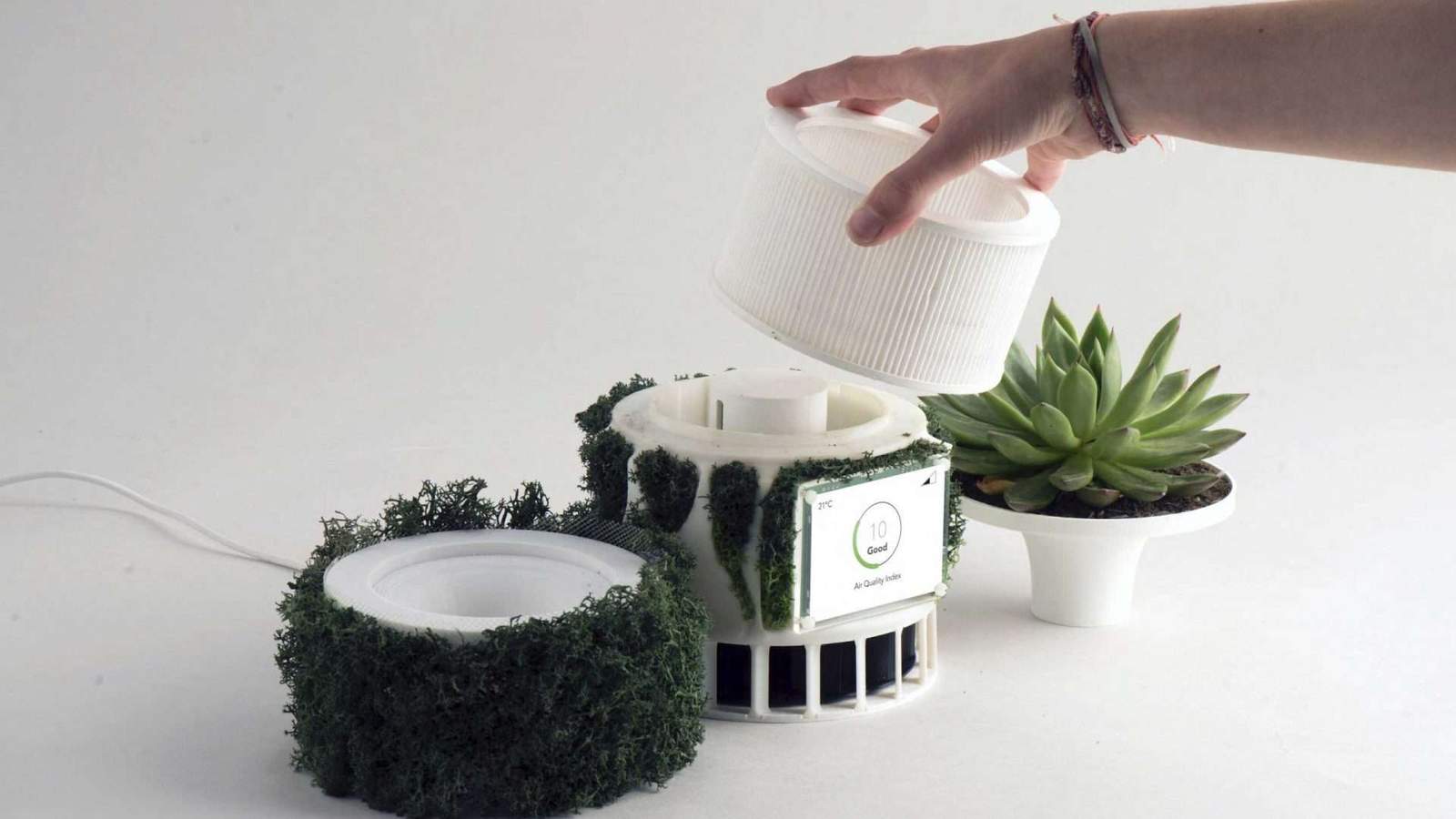
Inspired by the benefits of biophilic design, the OLUS air purifier is an ingenious air filter that proves that plant-based alternatives can be sustainable and effective.
Believe it or not, breathing clean air isn’t recognized as a human right. Despite being aware of the impact bad air can have on us, the United Nations estimates that between 6 and 7 million people die prematurely each year as a result of pollution.
Air pollution is a dual killer: not only is it one of the biggest risks to public health worldwide. But airborne pollutants also exacerbate the climate crisis. Access to pure, fresh air is good for the planet and it’s good for humans. Because it keeps the lungs healthy and improves brain function.
That’s why recently, a lot of air purifier products have appeared on the market and filter concepts. Like the OLUS are receiving extensive attention. What makes OLUS different from industry-standard models, however, is the fully biodegradable, plant-based filters it uses to clean the air.
The OLUS air purifier unlocks the power of plants with its biophilic design
These organic filters are ethically sourced and generate zero waste, minimizing the environmental impact of using an air filter. They are made from Polylactic Acid sustainably sourced from corn plants. And are capable of removing 99% of particulate air pollution.
Developed by product designer Louie Duncan, OLUS uses organic materials and biophilic design to develop a more sustainable, efficient, and compact air purifier. The device works in conjunction with dried moss and a houseplant that sits on top to absorb carbon dioxide. And produce oxygen to create a healthy home.
This is in contrast to the use of standard HEPA filters commonly seen in most air purifiers which take thousands of years to decompose.
“Currently, domestic air purifiers provide a solution, at the expense of the environment where 6000 tonnes of used air filters to landfill every year,” says Duncan.
“These products commonly neglect small urban living spaces, where air pollution is most prominent.”
PLUS provides its benefits within a small, lightweight product and is guided by a circular design process, meaning the product moves from conception to eventual disposal. When we replace the filter every eight months or so, we can return the old filters to the supplier. And then to municipal composting facilities.
Finally, read more on Archup:
Call for Entries: Autumn World Campus Masters Selective Graduation Design Program 2020
Fengyuzhu Metaverse Digital Art Museum Global Bidding Announcement