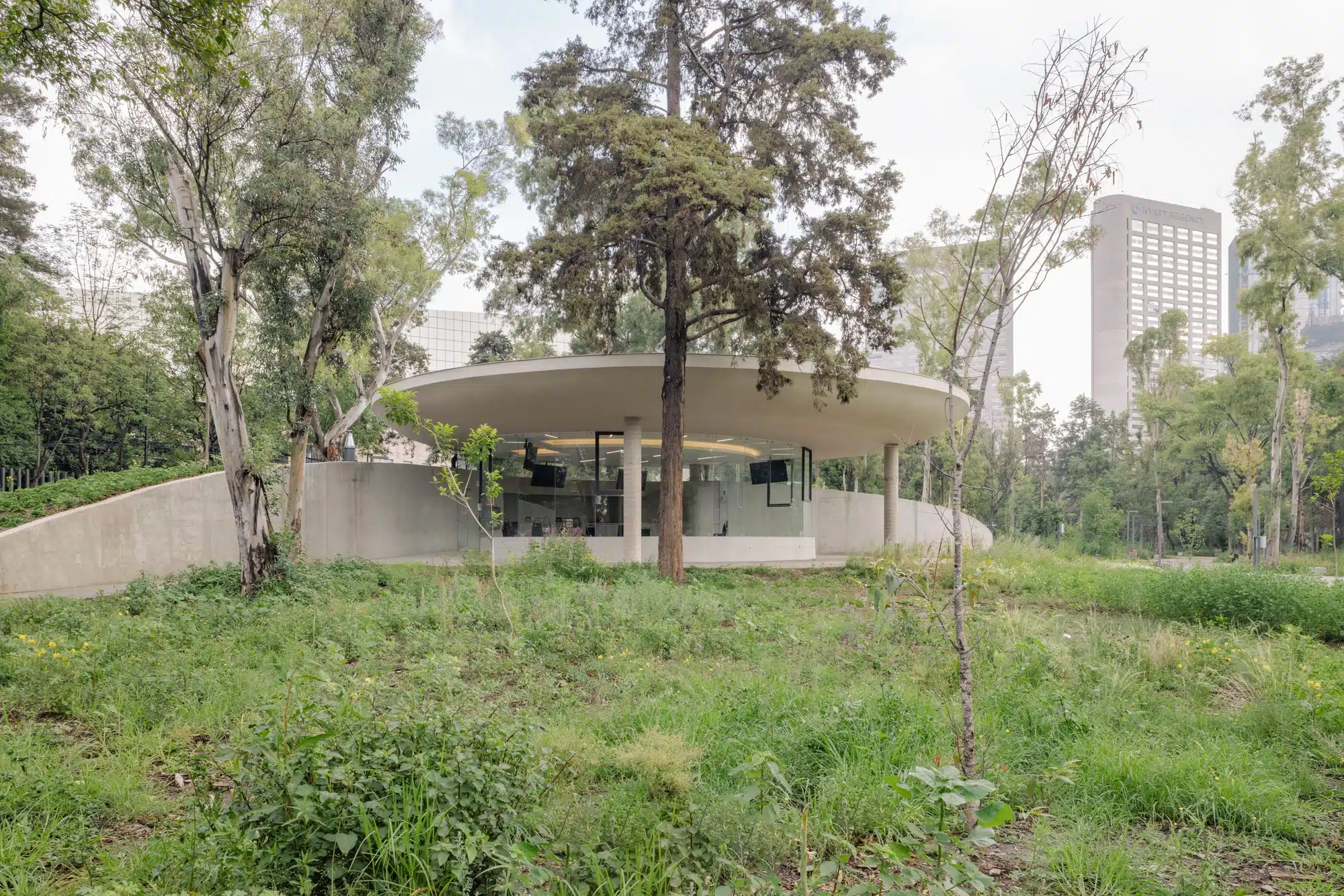
The Ring Bridges River Gorge in Istanbul’s 1,000-Home Beykoz Development

A circular bridge structure will span a river gorge in Turkey’s Beykoz district as part of a major residential development. The project includes nearly 1,000 homes and 100,000 square meters of biodiverse green space along Istanbul’s Black Sea coast.
Three Architectural Firms Shape New Urban District
The Riva neighbourhood development involves a design collective with three international architecture practices. Each firm takes responsibility for separate portions of the site. Moreover, each practice will design an iconic building with social programming to anchor its respective district.
The developer Ion commissioned the collaboration to create a cohesive urban planning vision. This approach divides the project into distinct zones while maintaining overall design continuity. The collective structure allows specialized focus on individual areas within the larger development.

Greenhouse District Centers on Circular Bridge
Snøhetta’s designated area, called Greenhouse, features The Ring as its centerpiece. The circular structure bridges the natural gorge running through the site. This district includes approximately 400 residences alongside selected retail spaces and offices.
The Ring serves as both functional infrastructure and architectural landmark. However, its primary purpose extends beyond connection between gorge sides. The structure will house social programming intended to activate the district and serve residents.
Mixed-Use Development Integrates Green Infrastructure
The broader Riva neighbourhood incorporates diverse building types and public facilities. Plans include a new school and various community amenities. The construction emphasizes integration with natural landscape features.

The 100,000 square meter green space component represents significant investment in biodiversity. Therefore, the development prioritizes ecological sustainability alongside residential density. This balance addresses growing demand for housing in Istanbul while preserving natural systems.
Meanwhile, the Black Sea coastal location presents both opportunities and constraints. The gorge topography influenced the decision to create a bridging structure. The interior design and programming of The Ring will capitalize on dramatic views across the landscape.
The project demonstrates how large-scale residential developments can incorporate landmark architecture with social function. Furthermore, the collaborative approach among three firms creates architectural variety within unified planning principles. This model may influence future mixed-use cities development in rapidly growing urban areas.

A Quick Architectural Snapshot
The Ring forms a circular bridge across a river gorge in Istanbul’s Beykoz district. Part of a 1,000-home development, the structure anchors the Greenhouse neighbourhood designed by Snøhetta. The project includes 100,000 square meters of biodiverse green space along Turkey’s Black Sea coast.
✦ ArchUp Editorial Insight
The Ring emerges from a specific set of market conditions and planning strategies. Istanbul faces mounting housing pressure as its population continues expanding toward peripheral districts. Developers seek differentiation in crowded markets through iconic structures that command premium pricing. Meanwhile, Turkish regulations increasingly mandate green space allocation in large developments.
The collaborative model among three firms reflects risk distribution rather than purely creative ambition. Each practice absorbs responsibility for distinct zones, limiting liability while accelerating delivery timelines. The circular bridge typology serves dual purposes. It solves a topographical challenge while creating marketable imagery for sales campaigns.
Biodiverse green space commitments respond to buyer expectations shaped by post-pandemic priorities. Urban residents now demand nature access as a baseline amenity. The Black Sea coastal location targets buyers seeking alternatives to congested central Istanbul.
This project is the logical outcome of peripheral land availability plus premium differentiation strategies plus evolving buyer expectations for integrated green infrastructure.