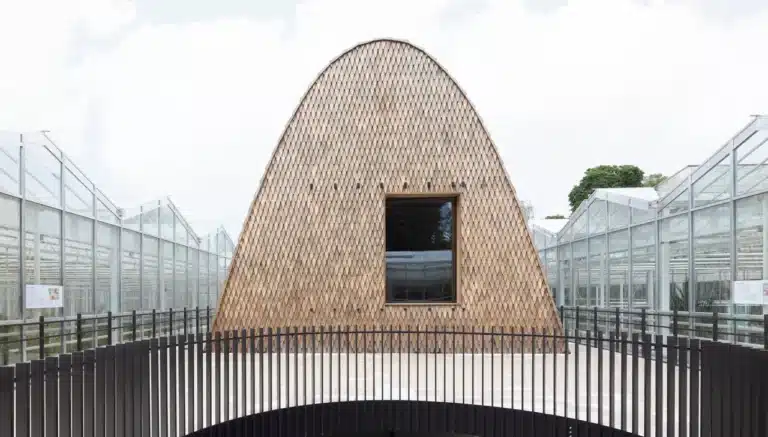
This Wood Greenhouse: Redefining Home Gardens & Climate

Challenges of Home Garden Cultivation
Many home gardeners face recurring difficulties that affect the success of small gardens. Late frost or unexpected cold snaps can destroy seedlings and shorten the growing season. Additionally, the limited space in small gardens makes cultivation more complex, as the gardener must deal with space constraints when planning crops.
The Need for Protected Growing Environments
These daily challenges highlight the importance of finding solutions that protect plants and increase the chances of successful cultivation. One common strategy is the use of wooden greenhouses or protective structures that provide a stable environment for plants, reducing the negative impact of weather fluctuations on growth and extending the growing season.
The Role of Expertise and Design in Garden Improvement
Designing these protective structures is not limited to shielding against weather conditions; it also involves optimizing small spaces and improving airflow and light within the structure. Studies indicate that combining strong materials with smart design enhances the effectiveness of these structures, enabling home gardeners to manage their gardens more efficiently.


Sustainable Materials and Design
The materials used in constructing greenhouses play a significant role in their performance and sustainability. Wood sourced from environmentally certified suppliers gives the structure a natural, warm appearance that harmonizes with any garden and enhances the sense of cohesion between the designed environment and the plants. Additionally, using strong, responsibly sourced wood allows the structure to withstand various outdoor conditions year-round, extending its lifespan and ensuring resilience against weather elements.
Thermal Insulation and Climate Protection
Carefully designed window systems play a crucial role in plant protection. Double-layered windows provide better thermal insulation compared to traditional single-wall panels and protect against UV rays. This allows plants to stay warm during cold months and gain extra protection during extreme heat, contributing to improved growth and reduced environmental stress on the plants.
Ventilation and Heat Management
Temperature control and air circulation are essential for greenhouse success. With multiple easily adjustable vents, such as roof and wall openings, continuous ventilation and thermal balance within the structure are ensured. This design promotes plant health, reduces the risk of humidity- or heat-related diseases, and creates a more stable growing environment throughout the year.

Interior Design Focused on Productivity
The interior design of efficient greenhouses relies on maximizing every available space to enhance productivity. Lower shelves running along the structure provide storage for pots and tools, while dual plant hangers offer vertical growing options, increasing efficiency in small spaces. Additionally, wide doors make moving plants and equipment easier without awkward maneuvers, making garden management smoother.
Space and Dimensions Suitable for Home Gardens
The dimensions of greenhouses affect their usability in backyard gardens. Carefully designed compact spaces strike a balance between productivity and ease of installation, making them a practical choice even for small gardens. This highlights the importance of planning both internal and external dimensions according to the needs of home gardeners, optimizing the use of available land.
Practical Setup and Ease of Use
For beginners, greenhouse assembly is often considered a complex stage. Using pre-assembled and pre-treated components reduces the time and effort required, allowing the gardener to focus on cultivation itself. The practical design also enhances accessibility to plants and ease of management, making greenhouses an effective tool to support productivity and provide a stable growing environment regardless of climatic changes.

✦ ArchUp Editorial Insight
The proliferation of home greenhouses, such as the This Wood Greenhouse project, stems from risk management motivations in urban and domestic agriculture, where frost fluctuations and limited spaces reduce expected yields. Safety standards and material sourcing requirements, alongside labor constraints and supply speed, guide the design outputs toward modular wooden structures with polycarbonate facades that enhance thermal retention and airflow regulation.
The final configurations represent a systematic balancing of capital efficiency, usage density, and climate control: vertical supports and integrated shelving maximize usable volume, while adjustable vents and insulated panels program the environmental regulation within the structure.
In this sense, the greenhouse functions less as a consciously architectural act and more as a visible manifestation of resource allocation mechanisms, risk management, and demographic distribution, revealing the socio-economic apparatus that determines how domestic agricultural infrastructure is deployed and sustained.